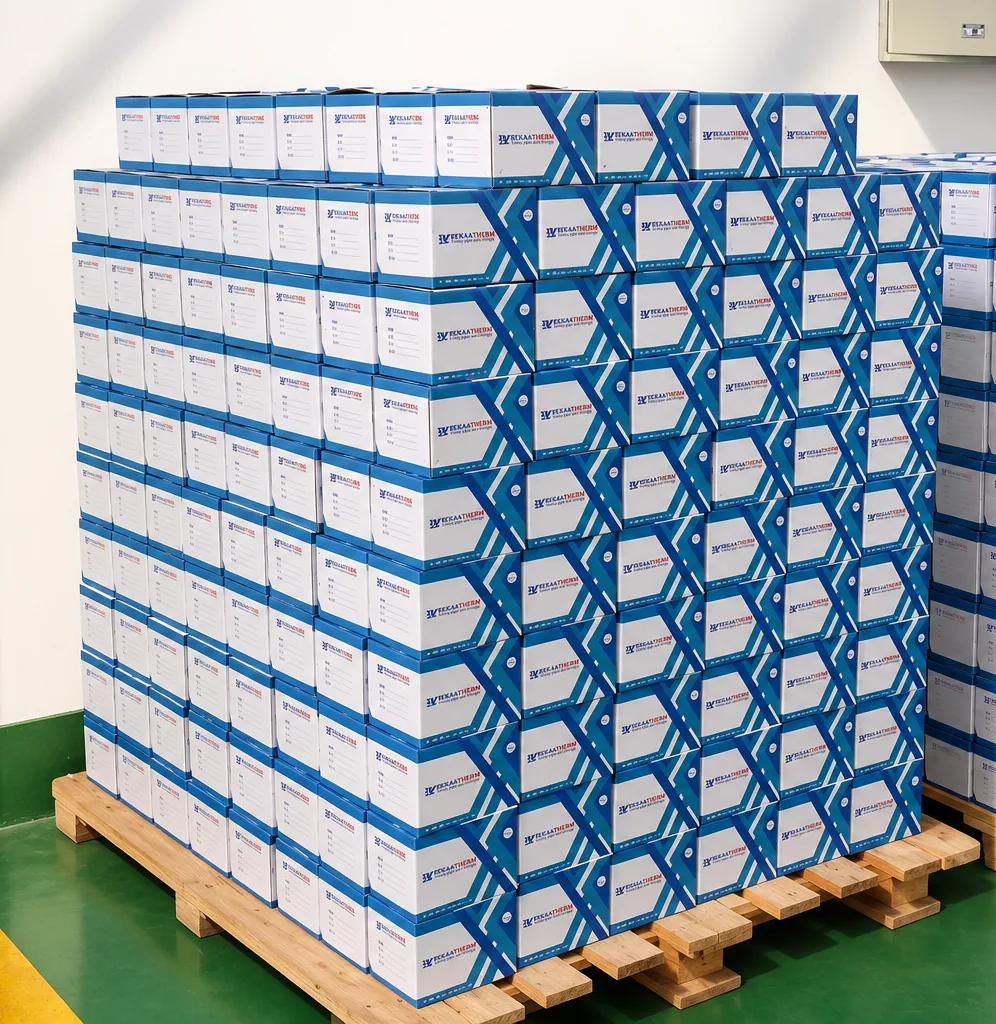
Most articles about import documents for pipe give you the same five-item list: commercial invoice, packing list, bill of lading, certificate of origin, HS code. That list is not wrong, just not enough to move a container of PPR pipe. It treats a piping shipment as generic freight when it is actually two document problems stacked on top of each other — a commercial pack that satisfies customs, and a conformity pack that satisfies whichever water regulator owns the destination market.
There is also a payment problem hiding underneath. An ICC briefing on discrepancy rates, cited by the documentary-credit trade press, puts the share of documents refused on first presentation under a letter of credit at 65–80%. The same pack that clears your container is the pack that releases the seller’s balance. Get one field wrong and both stall at once.
Key Takeaways
- An A.TR movement certificate is not a proof of origin. It certifies free circulation inside the EU–Türkiye Customs Union regardless of where the goods were manufactured. If an EU customs officer asks an origin question, an A.TR does not answer it.
- Since 8 July 2024 EU member states accept A.TR certificates issued electronically by Turkish authorities with a QR code and no wet-ink signature. A broker rejecting one for a missing signature is wrong.
- A mixed pipe container crosses more than one classification. Heading 3917 splits by polymer — 3917 22 for polypropylene (PPR), 3917 21 for polyethylene, 3917 23 for PVC — with fittings under 3917 40. Valves sit outside 3917 entirely.
- When two countries are involved in production, non-preferential origin follows the last substantial transformation under Article 60(2) UCC — the plant that made the pipe, not the port it sailed from and not the brand on the carton.
- CBAM entered its definitive regime on 1 January 2026, but plastics and polymers are not in Annex I. A PPR container does not need authorised CBAM declarant status.
- For Saudi Arabia, an annual SABER PCoC does not clear a container by itself — each shipment needs its own SCoC, and plastic pipes are named on the list requiring an MIMR-approved Declaration of Conformity first.
- ISO 15874-1:2013 states in its own Introduction that it provides no information on unrestricted potable-water use and that national regulations remain in force. A conformity report is never a hygiene approval.
The pack has two halves, and buyers only check one
Split every document you will ever need into two piles. The commercial pile proves what the goods are, what they cost, who owns them and where they came from: invoice, packing list, bill of lading, origin or movement certificate. The conformity pile proves the goods are legally allowed to touch drinking water in the destination country: a hygiene approval, a national scheme certificate, sometimes a shipment-specific certificate issued in the destination’s own portal.
Generic freight guides cover the first pile and stop. That works for garden furniture. It fails for potable-water pipe, because the second pile is market-specific, has the longest lead time, and is the one a first-time importer discovers too late. A WRAS certificate does nothing for you in Riyadh. A SABER shipment certificate does nothing for you in Manchester.
Sequencing matters more than completeness. Commercial documents can be corrected after the goods are made — an amended invoice takes an afternoon. Conformity documents usually cannot, because they attest to a product tested and approved under a specific scheme before it was produced. If the approval was not in place at order time, no amount of paperwork after loading will retrofit it.
Under FOB, the split is also a split of responsibility
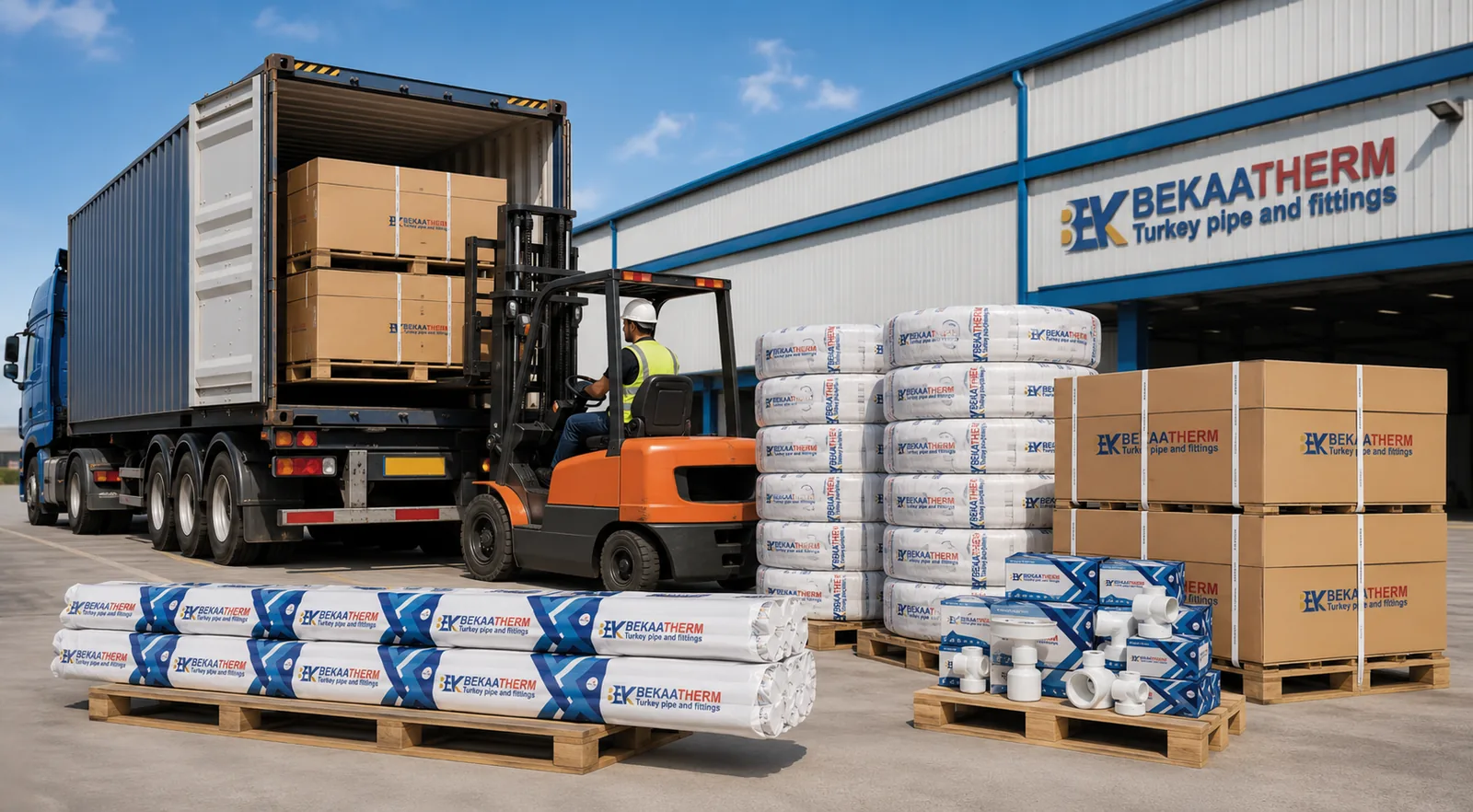
Bekaatherm quotes FOB İstanbul or Mersin by default, with CFR and CIF on request. Under FOB the seller handles export clearance in Türkiye at its own risk and cost, and the buyer owns import clearance at destination — standard Incoterms 2020 practice. Read what that means for documents. The seller produces the origin certificate, the invoice and the packing list. The buyer’s broker is the one standing in front of destination customs with them. So the buyer carries the risk of a document the buyer did not write — the strongest argument there is for specifying the document pack in the purchase order rather than accepting whatever arrives with the shipping advice.
Classifying a mixed pipe container
Heading 3917 covers “tubes, pipes and hoses, and fittings therefor (for example, joints, elbows, flanges), of plastics.” Inside that heading, rigid pipe splits by polymer — which is where a trial container gets interesting, because a first order is rarely single-polymer and never pipe-only.
A Bekaatherm mixed trial container runs roughly 60% pipe, 30% fittings and 10% valves by volume in one 20GP. Apply the classification to that ratio and the container is not one code but at least three, because valves are not plastics-heading goods and are classified separately from 3917.
| Line item in the container | HS subheading (6-digit) | What it covers |
|---|---|---|
| PPR pipe | 3917 22 | Rigid tubes and pipes of polymers of propylene |
| HDPE / PE pipe | 3917 21 | Rigid tubes and pipes of polymers of ethylene |
| UPVC pipe | 3917 23 | Rigid tubes and pipes of polymers of vinyl chloride |
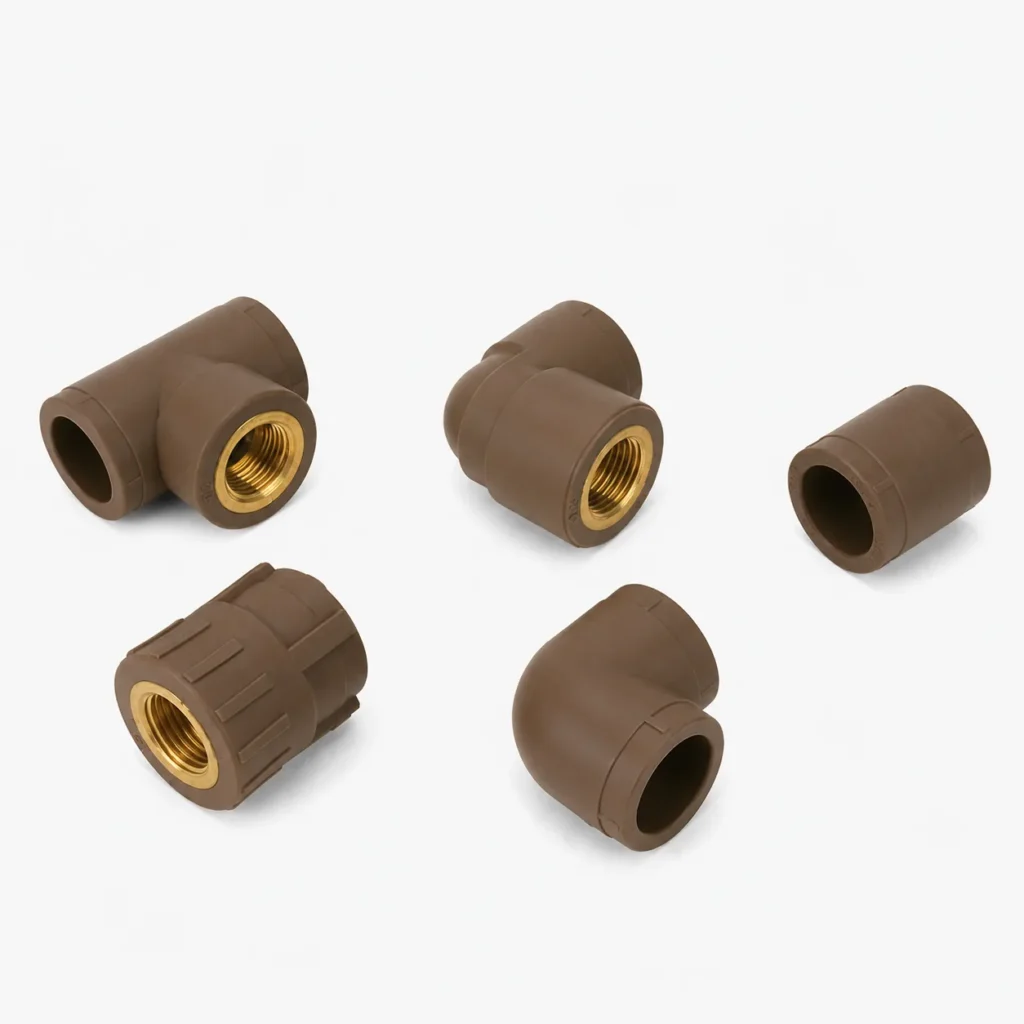
| Sockets, elbows, tees, reducers | 3917 40 | Fittings of plastics |
| Ball valves, stop valves, manifolds | Outside 3917 | Taps, cocks and valves classify in their own heading — confirm the code with your broker |
HS is six digits internationally. Countries add more — the EU Combined Nomenclature runs to eight and TARIC to ten. Your duty rate hangs on those extra digits and on which origin or movement document you present alongside them, which is why a single quoted percentage for “pipe duty” is meaningless. Look up your own 8- or 10-digit code in the destination tariff database before you cost the container, per line item rather than per shipment.
The check to run: take the supplier’s proforma and count the distinct HS codes on it. If a mixed container of pipe, fittings and valves shows one code, the classification has been flattened for convenience and your broker will have to rebuild it at destination — usually while the box sits on the quay.
The A.TR trap: free circulation is not origin
This is the most expensive misunderstanding among EU importers buying from Türkiye, and several forwarder websites reinforce it by filing the A.TR under “origin documents.” The A.TR movement certificate certifies that goods are in free circulation within the EU–Türkiye Customs Union established by Decision No 1/95, regardless of where they were originally manufactured. It allows industrial goods to move between Türkiye and the 27 member states without customs duty. Agricultural products, coal and steel sit outside the Customs Union and cannot travel on an A.TR. Chapter 39 plastics are industrial goods and are inside it, so PPR, HDPE and UPVC pipe qualify.
What the A.TR does not do is state a country of origin. Origin is a separate legal question with separate consequences. Non-preferential origin determines most-favoured-nation treatment and a list of commercial policy measures the European Commission spells out plainly: anti-dumping and countervailing duties, trade embargoes and sanctions, safeguard measures, quantitative restrictions or tariff quotas. It also governs trade statistics, public tenders and origin marking.
Read that list as an importer rather than as a lawyer: anti-dumping exposure on plastic goods lands on the importer of record, not the seller. If your only origin evidence is an A.TR, you hold a duty-free movement document and nothing that answers the question being asked.
The QR-code A.TR argument, settled
One practical note worth keeping in your inbox. From 8 July 2024, EU member states accept A.TR movement certificates issued electronically by the Turkish competent authorities, bearing a QR code and issued without a wet-ink signature, pending adoption of a Decision of the EU–Türkiye Customs Cooperation Committee with retroactive effect. If a broker pushes back on a QR-code A.TR because it is unsigned, that is the paragraph that ends the discussion.
Validity deserves more caution than most sources give it. A four-month period is commonly cited across chambers of commerce and forwarders, but confirm the current one with your own broker rather than treating it as settled law. The operational lesson holds either way: date the certificate against your actual ETA, not your booking date. A transhipment delay can outlive the document.
When your supplier has plants in two countries
Plenty of piping suppliers manufacture in more than one country, and almost no import-documents article addresses what that does to your origin certificate. The law itself is not ambiguous. The European Commission sets out two concepts for non-preferential origin: goods wholly obtained in a single country under Article 60(1) of the Union Customs Code, and goods that underwent a last substantial transformation in the last country of production where two or more countries are involved, under Article 60(2). Each country applies its own rules, which may differ from a third country’s.
For extruded pipe that means origin follows the plant that extruded it. Not the port of loading. Not the head office address. Not the brand printed on the pipe wall. A Turkish company can lawfully ship you a container from Mersin whose contents originate elsewhere — the paperwork simply has to say so.
Bekaatherm supplies from a plant in Türkiye and from a partner plant in China, allocated by market, and the terms behind that arrangement are set out on our global export page. The policy that makes it workable is written confirmation of origin per order on the proforma invoice, before booking, with the certificate of origin, packing list and bill of lading kept consistent. That is not a courtesy. Under Article 60(2) it is the only way the buyer knows in advance which duty treatment, which origin marking and which anti-dumping exposure applies to the box being built.
Ask this before you book: “Which plant will produce this order, and will you state that country of origin in writing on the proforma?” A supplier who cannot answer before production is a supplier who will decide your origin certificate after the goods exist.
The conformity half, market by market
Start with the sentence that reframes this whole section, because it comes from the product standard itself rather than from a supplier. ISO 15874-1:2013 says in its Introduction that regarding potential undesirable effects on the quality of water intended for human consumption caused by the product it covers, “no information is provided as to whether the product can be used without restriction,” and that “existing national regulations concerning the use and/or the characteristics of this product remain in force.”
The standard is telling you in writing that an ISO 15874 conformity report does not answer the potable-water question — national approval still governs. So when a supplier answers “is this pipe approved for drinking water?” with an ISO test report, they have answered a different question.
| Destination | Movement / origin document | Conformity layer to ask about |
|---|---|---|
| EU member states | A.TR for free circulation, plus a certificate of origin if an origin question can arise | National drinking-water approval today; the European system from 2027 |
| EFTA, Morocco, Israel, Tunisia | EUR.1 or EUR-MED | National scheme — confirm per country |
| United Kingdom | Certificate of origin | WRAS approval for plumbing inside the building; Regulation 31 is a different scope |
| Saudi Arabia | Certificate of origin | SABER: annual PCoC plus a per-shipment SCoC, gated by an MIMR-approved DoC |
| Most other markets | Certificate of origin, sometimes consular-legalised | Confirm the local scheme with your broker before ordering |
UK: WRAS approval and Regulation 31 are not the same thing
Importers conflate these constantly. The Drinking Water Inspectorate is precise about scope: Regulation 31 of The Water Supply (Water Quality) Regulations 2016 implements Article 10 of the Drinking Water Directive in England and Wales, and applies to all chemicals and construction products used by water undertakers, from the source of the water up to the point of delivery to the consumer’s building. Scotland and Northern Ireland use Regulation 33.
Note where that scope stops — at the building. PPR hot-and-cold pipe installed inside a building sits after the point of supply, putting it on the WRAS side of the line rather than the Regulation 31 side. Bekaatherm holds WRAS approval, the right certificate to cite for UK plumbing work. If a supplier offers a Regulation 31 listing for internal PPR pipe, ask which product and which scope it actually covers.
Saudi Arabia: the annual certificate does not clear the container
SABER has a two-tier structure that catches out first-time shippers. Intertek, an approved conformity assessment body, describes it cleanly: the Product Certificate of Conformity covers every regulated product against the applicable technical regulation and is valid for one year, while the Shipment Certificate of Conformity is valid for that specific shipment only. Every regulated product is checked for a valid PCoC, and only then is an SCoC issued. A supplier waving a one-year PCoC has done half the job — without the per-shipment SCoC, the container does not clear.
There is a newer gate in front of that. The Saudi Ministry of Industry and Mineral Resources now requires an MIMR-approved Declaration of Conformity for a list of specified HS codes that explicitly includes plastic pipes, alongside ductile iron pipe, ceramic tiles, paints, reinforcing steel and other construction materials. Bureau Veritas states the consequence bluntly — it cannot issue any Shipment Certificate on the SABER portal if the DoC is not available and approved by the MIMR.
Published effective dates for this expansion disagree across conformity bodies, so treat any single date you read as unconfirmed. Confirm the current appendix and its implementation date directly with your own CAB before you book.
A word of caution on CE
Under the Construction Products Regulation, a manufacturer draws up a Declaration of Performance and applies CE marking when the product is covered by a harmonised standard or conforms to a European Technical Assessment. Products with no harmonised standard can use the voluntary European Assessment Document route through a Technical Assessment Body. Regulation (EU) 2024/3110 is progressively replacing Regulation (EU) 305/2011, with most provisions applying from 8 January 2026.
The part suppliers gloss over: CE is not a universal export licence, and a logo on a carton tells you nothing on its own. Ask which standard any CE claim rests on and which conformity route was used. Our certification scope is on the certifications page, and the same question is worth putting to us.
What changed for 2026 — and what you can ignore
EU importers are being sold a lot of compliance anxiety this year. Two of the big items do not apply to a pipe container at all, and knowing that is worth more than another checklist.
CBAM: not your problem
The Carbon Border Adjustment Mechanism has been operating in its definitive regime since 1 January 2026. Annex I covers cement, iron and steel, fertilisers, aluminium, electricity and hydrogen. DEHSt, the German national CBAM competent authority, states that plastics and polymers are not listed among covered goods, and only a very limited number of downstream products such as screws and bolts are included — no complex finished goods.
For a PPR container that settles it. You do not need authorised CBAM declarant status, and the 50-tonne threshold that triggers it for other goods never engages, because pipe is not a CBAM good in the first place. One caveat: polymers are widely discussed as candidates for a future scope extension, so re-check before assuming this is permanent.
EUDR: also not your problem
The EU Deforestation Regulation applies to cattle, cocoa, coffee, oil palm, rubber, soya and wood and products derived from them, with main obligations for large operators from 30 December 2026 and from 30 June 2027 for micro and small enterprises. PPR, HDPE and UPVC pipe are not derived from a listed commodity. Rubber is on the list, so separately classified rubber sealing components could differ — but not the pipe and plastic fittings.
ICS2: a filing that happens before your box sails
This one does touch you, indirectly. ICS2 Release 3 extended Entry Summary Declaration obligations to maritime transport, with house-level filing mandatory from 1 April 2025 and a transition period running to 1 September 2025. Shipments entering or transiting the EU, Norway, Switzerland and Northern Ireland need a complete and accurate ENS before loading.
The ENS is normally the carrier’s or forwarder’s obligation rather than yours, but it is filed using the goods description and HS code the seller supplies. A vague description — “plastic goods” — can cause a problem at origin, before the cargo has moved. Eliminate that risk at purchase-order stage by specifying the description and codes you want used.
The EU drinking-water change on the horizon
Article 11 of Directive (EU) 2020/2184 sets minimum hygiene requirements for materials in contact with drinking water, with implementing acts adopted on 23 April 2024 and a European Positive List of approved starting substances managed through ECHA. National approval schemes across the EU are converging on this single European system from 2027.
Exact cutover wording varies between sources, so do not build a plan around a date from a blog. Build it around a question: ask any supplier which national scheme their current potable-water approval sits under, and what their transition plan to the European system is. A supplier who has not thought about it yet is telling you something about the next three years.
Why the same pack decides whether the seller gets paid
Return to that 65–80% first-presentation refusal rate. It sounds like a bank’s problem until you look at how a pipe order is actually financed.
Bekaatherm’s standard terms are 30% T/T deposit with 70% against copy bill of lading, and an irrevocable L/C at sight accepted from USD 50,000. Read the first one carefully: the balance is triggered by a document. If the B/L is wrong, the seller’s 70% stalls and your cargo stalls in the same instant. Neither party has an incentive to be casual about it, which is worth saying out loud when you ask a supplier to take the document pack seriously.
Under an L/C the discipline gets stricter, because banks examine documents against the credit rather than against reality. The defence is three-way consistency, which is standard trade practice regardless of payment method: invoice, packing list and bill of lading must agree on package count, gross weight, cubic volume, goods description and the name of the importer of record. Bekaatherm applies the same rule to the certificate of origin, packing list and B/L internally.
The five-minute cross-check: lay the invoice, packing list and B/L side by side and confirm four fields match exactly across all three — total packages, gross weight, total CBM, and the consignee’s legal name. Then confirm the goods description on the B/L matches the description used for the ENS filing. Most discrepancies live in these five fields.
One last item belongs here rather than with customs. Some markets still require consular legalisation of the certificate of origin and sometimes the invoice, through the destination country’s embassy, though several states have moved to digital attestation. Requirements change often enough that any published country list should be treated as out of date — confirm with the consulate or your chamber before you print originals.
The pre-order request list
Everything above collapses into one email you send before you place the order, not after. Send it to any pipe supplier, including us.
- Country of origin, in writing, on the proforma: which plant produces this order, stated before booking, not after production.
- Line-by-line HS codes: separate codes for pipe by polymer, for fittings, and for valves — not one flattened code for the container.
- The exact goods description that will be used on the invoice, packing list, B/L and the carrier’s ENS filing.
- Which movement or origin document they will issue for your destination: A.TR, EUR.1, certificate of origin, or a combination.
- The conformity certificate for your market by name, with its scope and validity dates — and for Saudi Arabia, confirmation of both the PCoC and who raises the SCoC.
- Which standard any CE or certification claim rests on and which conformity route was used.
- Whether the destination requires consular legalisation, and who is arranging it.
- A draft set of documents for review before the originals are issued. This single request prevents most first-presentation discrepancies.
Best for / not for
This approach is best for a distributor or importer of record taking delivery on FOB terms, buying a mixed container, into a market with its own water-hygiene scheme. Those three conditions together are what make the document pack non-trivial. They also describe most first orders.
It is more than you need if you are buying delivered-duty-paid from a domestic stockist, where someone else has already carried the import risk and priced it in. It is also not the right frame for a project contractor buying ex-stock locally — your document problem there is submittals and inspector approval, not customs.
How this plays out end to end
Take a distributor in an EU member state placing a first mixed 20GP — roughly 60% pipe, 30% fittings, 10% valves, against about 33 m³ of usable volume and a payload near 28 tonnes. At quotation stage they ask for origin in writing and get it on the proforma. They ask for separate HS codes and receive three groups rather than one, then check those codes in their own destination tariff database rather than trusting a quoted rate.
Production runs 15–25 days for regular in-production sizes. During that window they confirm the drinking-water approval that applies in their country and ask which scheme it sits under ahead of the 2027 convergence. They pay 30% up front. Before the balance falls due against copy B/L, they run the four-field cross-check on the draft documents while corrections are still cheap. The A.TR is dated against ETA, not against the booking. Nobody spends an afternoon on CBAM, because plastics are not in Annex I. None of that is heroic — it is the difference between a container that clears and a container that sits.
Reviewing a first container into a market you have not shipped before?
For importers of record and distributors taking delivery on FOB terms — send your destination country and target line-up, and we will confirm in writing which plant would produce the order, the HS codes per line item, and which movement and conformity documents apply to your market before you commit to anything.
Request a written document plan Ask a question on WhatsAppConclusion
The commercial half of the document pack is generic and fixable. The conformity half is market-specific and cannot be retrofitted after production, which is why the useful work happens at proforma stage rather than at the port. Origin, classification and hygiene approval all get decided before the first pipe is extruded, whether or not anyone writes them down.
If you are scoping a first shipment, work backwards from your destination’s water regulator rather than forwards from a freight checklist. Then put the eight items above in an email and see how quickly the answers come back.
Frequently Asked Questions
Does an A.TR certificate prove the country of origin of my pipe?
No. An A.TR certifies that goods are in free circulation within the EU–Türkiye Customs Union regardless of where they were manufactured. Origin is a separate legal question, and if an origin issue arises you will need a certificate of origin as well.
What HS code do PPR pipes and fittings use?
PPR pipe falls under HS subheading 3917 22, rigid tubes of polymers of propylene, and plastic fittings under 3917 40. Valves classify outside heading 3917 entirely, so a mixed container needs more than one code and your national tariff adds further digits.
Does CBAM apply to imported plastic pipe in 2026?
No. CBAM entered its definitive regime on 1 January 2026, but Annex I covers cement, iron and steel, fertilisers, aluminium, electricity and hydrogen — plastics and polymers are not listed. You do not need authorised CBAM declarant status for a pipe container.
Is a SABER product certificate enough to clear a shipment into Saudi Arabia?
No. The Product Certificate of Conformity is valid for one year, but each shipment also needs its own Shipment Certificate of Conformity. Plastic pipes also sit on the list requiring an MIMR-approved Declaration of Conformity before an SCoC can be issued.
Is an ISO 15874 test report proof that pipe is safe for drinking water?
No, and the standard says so itself. ISO 15874-1:2013 states that no information is provided as to whether the product can be used without restriction for water intended for human consumption, and that existing national regulations remain in force. You still need the destination market’s hygiene approval.
Is WRAS approval the same as Regulation 31 approval in the UK?
No. Regulation 31 covers products used by water undertakers from the source up to the point of delivery to the consumer’s building. Pipe installed inside a building sits after that point, which puts it on the WRAS side rather than the Regulation 31 side.
If a supplier has plants in two countries, which one goes on the certificate of origin?
The plant where the last substantial transformation happened, under Article 60(2) of the Union Customs Code — not the port of loading or the brand on the carton. Ask for the producing country to be confirmed in writing on the proforma invoice before booking.
Under FOB terms, who handles import clearance?
The buyer does. Under FOB the seller carries out export clearance in the country of export at its own risk and cost, and has no obligation to arrange import clearance. That is why the buyer should specify the document pack in the purchase order.
Which documents most often disagree with each other?
The commercial invoice, packing list and bill of lading. Check that total packages, gross weight, total CBM and the consignee’s legal name match exactly across all three before originals are issued, since a mismatch delays customs and payment at the same time.
Before you place the order
For buyers at proforma stage rather than at the port — we will put the origin country, the per-line HS codes and the applicable conformity documents for your market in writing before you commit. Response within 24 hours.
Get the document pack confirmed in writing See how we ship to 118+ countriesThis article describes customs and conformity practice as understood at the time of writing and is not legal or customs advice. Classification, duty treatment, effective dates and market approval requirements change, and several of the rules discussed here have conflicting publication dates across official sources. Confirm your own tariff codes, origin treatment and market conformity requirements with your licensed customs broker and your conformity assessment body before shipping.