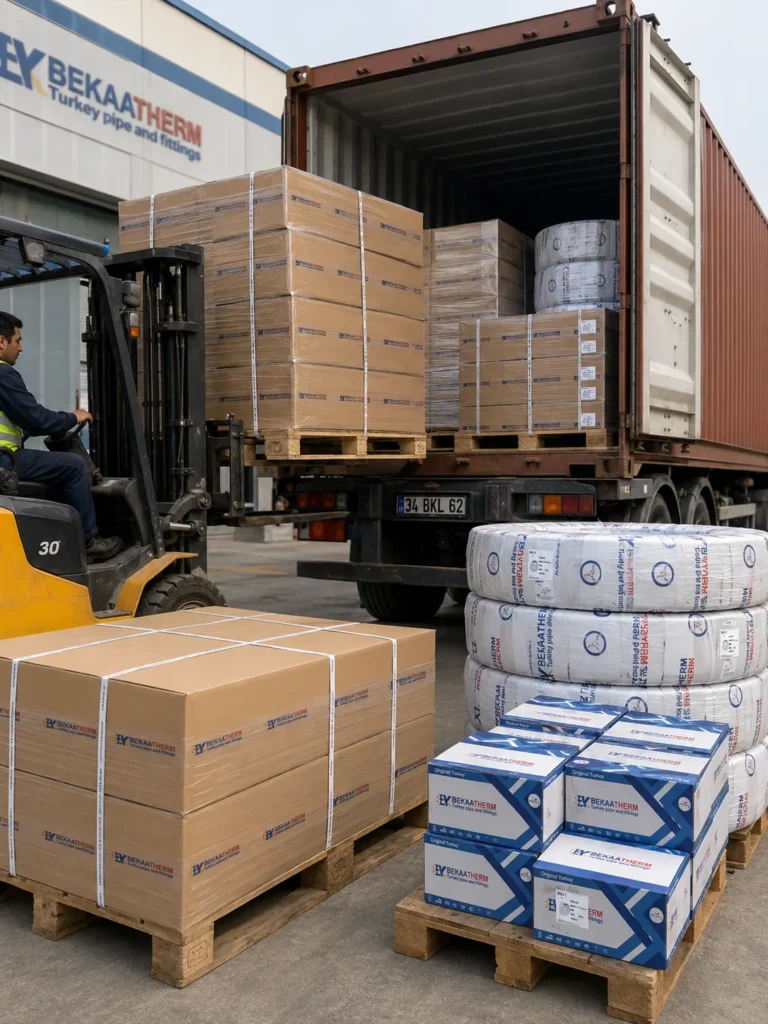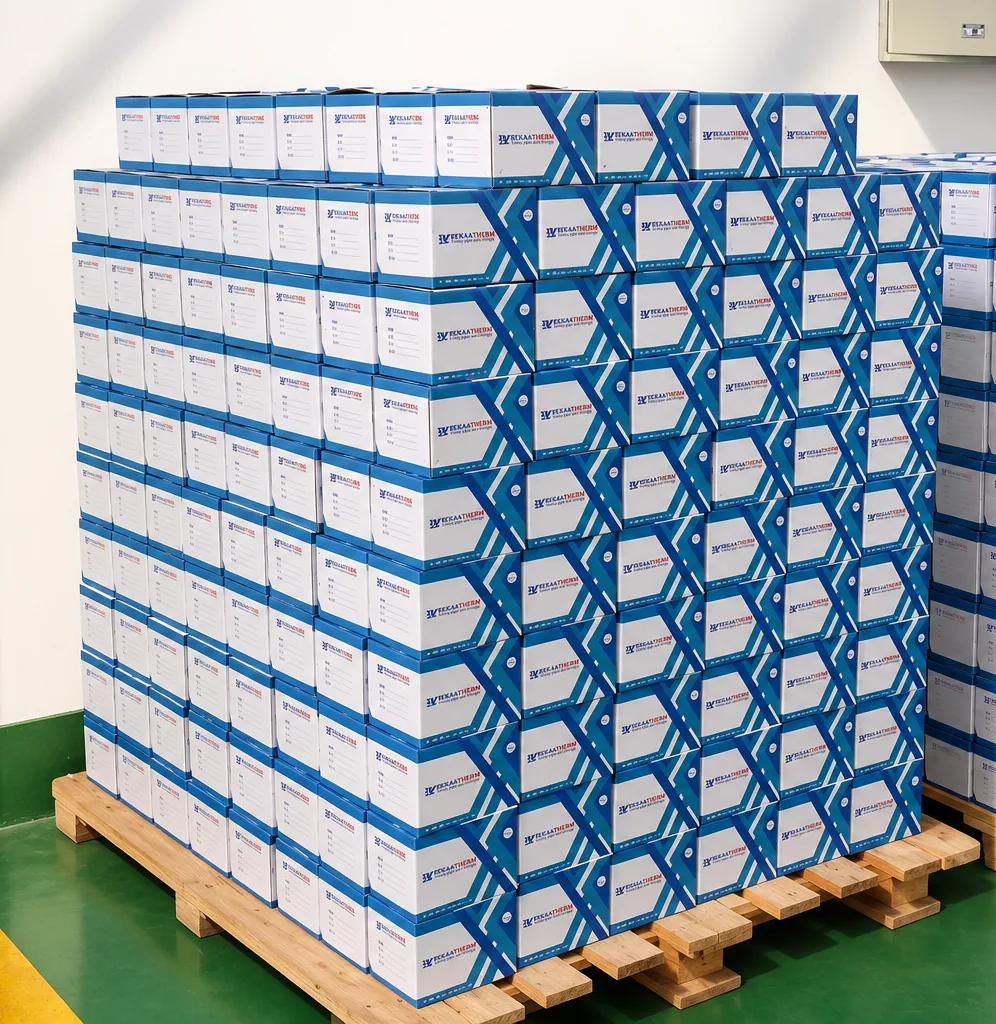
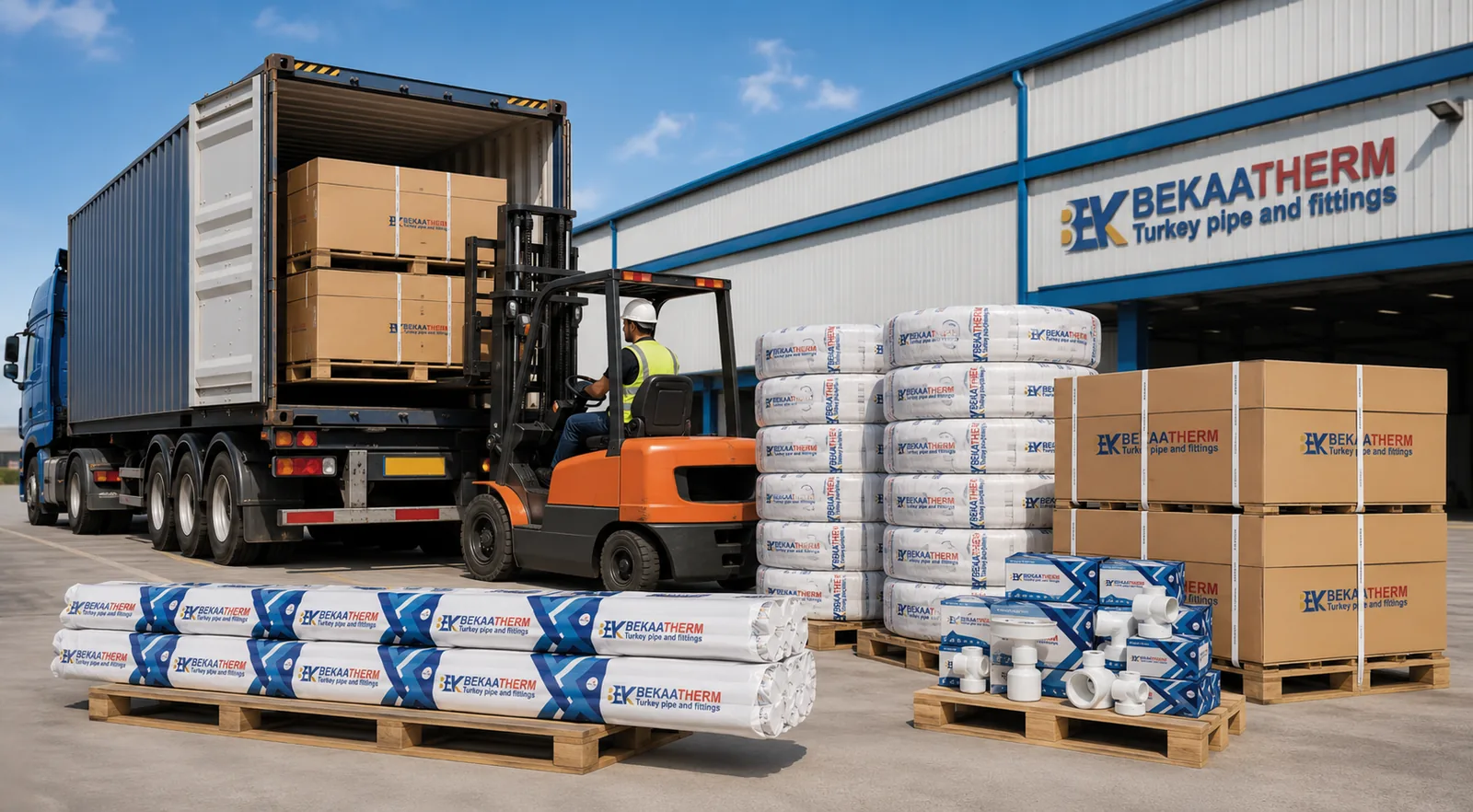
Ask a supplier how many metres of PPR pipe fit in a 20ft container and you will usually get a load plan promised after the deposit. That is backwards. The arithmetic is simple enough to run yourself on any supplier’s proforma, in about fifteen minutes, before you commit a cent — and running it is the only way to catch the mistake that traps importers: paying ocean freight on a box that is one third empty.
Key Takeaways
- A 20GP gives you roughly 33 m³ usable against a ~28 tonne payload. PP-R has a density of roughly 0.90 g/cm³, so a pipe container cubes out on volume long before it weighs out. Payload is almost never your binding constraint.
- A 20GP is about 5.90 m long inside. A 4 m pipe stick fits one deep and leaves a ~1.9 m void — 32% of the floor length — that pipe alone can never fill. That void is the reason mixed containers exist.
- The working split is about 60% pipe, 30% fittings, 10% valves by volume. On 33 m³ that is roughly 19.8 m³ pipe, 9.9 m³ fittings, 3.3 m³ valves.
- You can derive pipe mass per metre yourself from ISO 15874-2:2013 Table 5 wall thicknesses. 20mm PN20 works out at about 0.14 kg/m; 63mm PN20 at about 1.33 kg/m — a factor of nearly ten across one size range.
- ISO wall tolerance is plus-only (+x/0). Real pipe lands at or above your nominal calculation, never below, so a weight-based plan needs headroom built in as a matter of standards, not caution.
- Under SOLAS regulation VI/2, a verified gross mass is a condition of loading. VGM Method 2 is the same line-by-line arithmetic as your load plan — plus dunnage and securing material, the line importers forget.
- A container legal at sea can be illegal on the road at destination if dense valve and brass cartons are blocked at one end. Spread them along the length.
- An A.TR movement certificate proves free circulation, not origin. If you need to know where the goods were made, that is a separate document — and it matters, because supply is allocated across Türkiye and a Chinese partner plant.
Why a pipe container cubes out and never weighs out
Two numbers define a 20GP: roughly 33 m³ usable against a ~28 tonne payload. Most importers watch the tonnes. For plastic pipe, that is the wrong number to watch.
PP-R has a density of roughly 0.90 g/cm³ measured to ISO 1183 — a little under water. Even that overstates the loaded density, because pipe is a thin wall wrapped around air. You will run out of cubic metres with most of your 28 tonnes still unused.
The check that makes it concrete: a 20GP takes roughly 8,000–9,000 m of 20mm PN20 pipe when bundles are telescoped — and that is the 20mm line item inside a mixed load, not a full container. Run the envelope. 9,000 m of 20mm outside diameter, treated as solid cylinders, occupies about 2.8 m³: under 9% of the container. It weighs about 1.2 tonnes against a 28 tonne allowance, or 4% of payload.
So the fast-moving small bore that dominates your sales sheet consumes almost none of your container. Buy only 20mm and you ship air at full freight cost. That single calculation is the whole argument for mixing, and the rest of this article is about what goes in the other 91%.
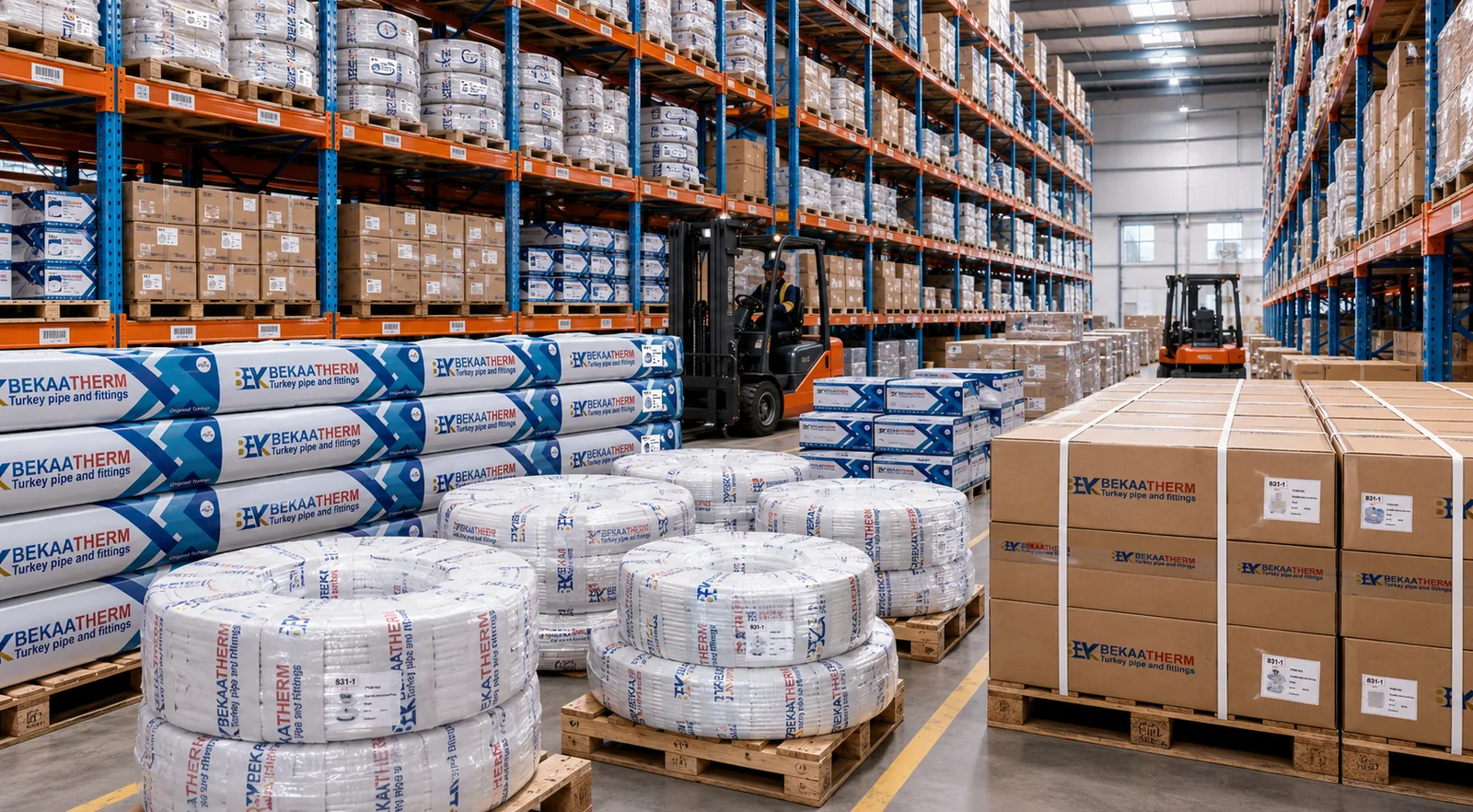
The 1.9 m void: the geometry behind the 60/30/10 mix
A 20GP measures about 5.90 m inside. PPR pipe is typically supplied in 4 m lengths. Subtract: 5.90 − 4.00 = 1.90 m. That leftover strip runs the full width and height of the box and represents 32% of the floor length.
You cannot fill it with more 4 m pipe. Two sticks end to end need 8 m and you have 5.90. So the void is structural — it exists the moment you decide to ship 4 m sticks in a 20ft box, and no amount of clever stacking removes it.
What fits a 1.9 m × 2.35 m × 2.39 m space? Cartons. Fittings cartons, valve cartons, palletised boxes — cargo measured in centimetres, not metres. This reframes the standard mix ratio completely. The working split of about 60% pipe, 30% fittings and 10% valves by volume is not a sales preference or a way to push accessories. It is what the container’s own geometry demands once you accept 4 m sticks.
Apply the ratio to 33 m³ and you get the target envelope for a first order:
| Cargo group | Share of volume | Target on a 33 m³ 20GP | Where it physically sits |
|---|---|---|---|
| Pipe (bagged, telescoped bundles) | about 60% | ~19.8 m³ | First 4 m of floor length, stacked to the roof |
| Fittings (cartons) | about 30% | ~9.9 m³ | The 1.9 m tail, plus voids between bundles |
| Valves and manifolds (dense, brass-cored) | about 10% | ~3.3 m³ | Spread along the floor for weight distribution |
Note the last column. The 10% valve share is small by volume and heavy by mass, and where those cartons sit decides whether your container is legal on the road at the other end — covered further down.
One caveat on the pipe figure: 19.8 m³ is a stowed target, not a solid-material volume. Bagged bundles are round objects in a rectangular box, and telescoping — sliding 20mm inside 32mm inside 63mm — recovers part of that lost space. How much depends on your size mix and the supplier’s bundling. Nobody can publish an honest packing-efficiency percentage for pipe, so any supplier quoting one to two decimal places is guessing. Require a stated loaded quantity per SKU on the proforma instead, and hold them to it.
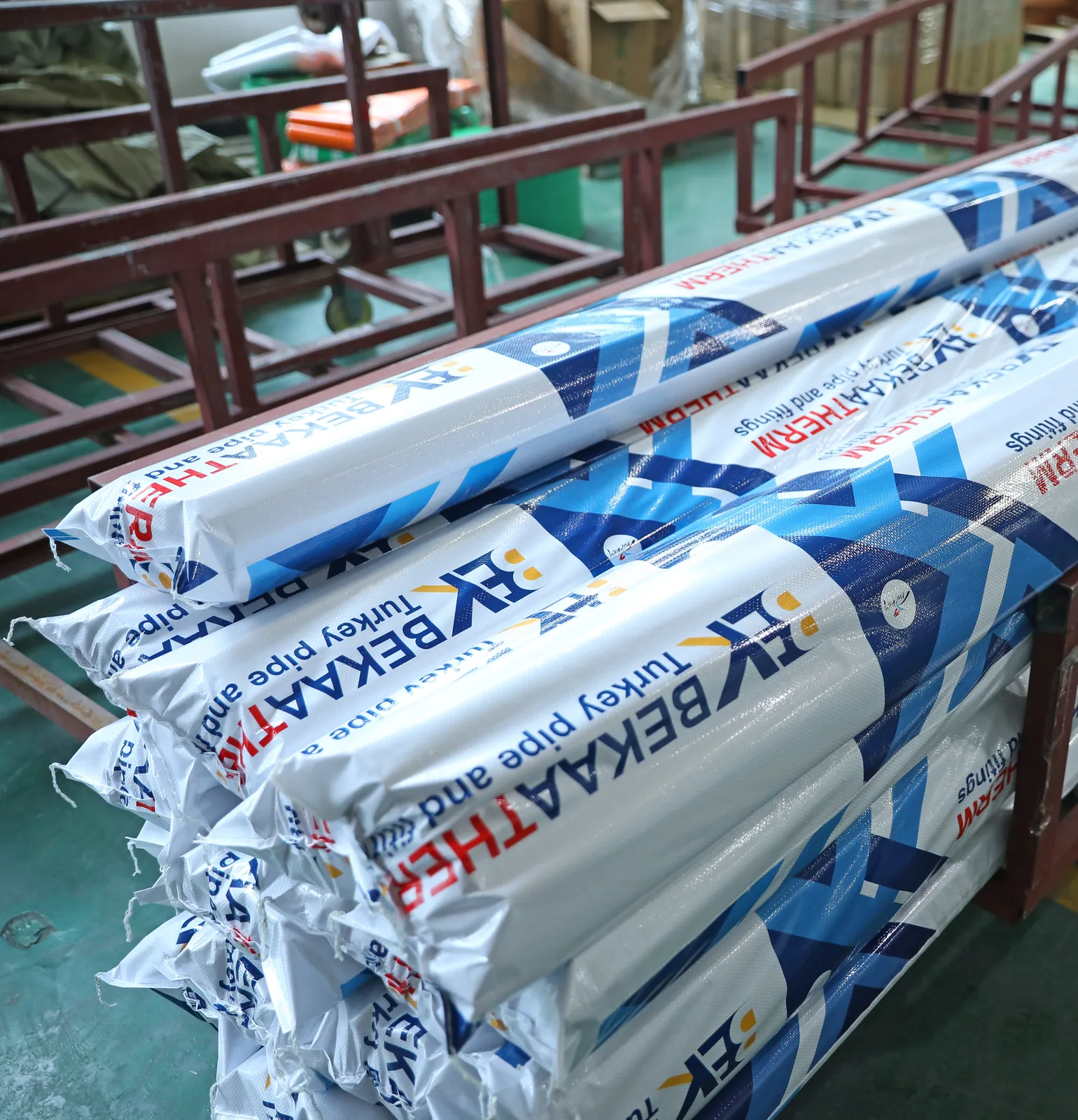
Calculate pipe weight per metre yourself
You do not need a supplier’s weight table. You need two inputs and one formula, and both inputs are public.
The first is wall thickness, which comes from ISO 15874-2:2013 Table 5. For plain PPR at PN20 — pipe series S3.2 — the walls are 2,8 mm at 20mm OD, 3,5 at 25, 4,4 at 32, 5,5 at 40, 6,9 at 50 and 8,6 at 63. The second is density: PP-R runs at roughly 0.90 g/cm³.
Mass per metre, from first principles
mass/m (kg) = π/4 × (OD² − (OD − 2e)²) mm² × 1000 mm × density ÷ 1,000,000
Where OD is outside diameter in mm and e is wall thickness in mm. Worked for 20mm PN20: π/4 × (20² − 14.4²) = 151.3 mm² of cross-section, × 1000 mm × 0.905 g/cm³ gives about 137 g, or 0.137 kg/m.
Run it across the range and the spread is the point:
| Outside diameter | PN20 wall (ISO 15874-2 Table 5) | Nominal mass, calculated | Metres in a 500 kg minimum |
|---|---|---|---|
| 20 mm | 2,8 mm | ~0.14 kg/m | ~3,650 m |
| 25 mm | 3,5 mm | ~0.21 kg/m | ~2,340 m |
| 32 mm | 4,4 mm | ~0.35 kg/m | ~1,450 m |
| 40 mm | 5,5 mm | ~0.54 kg/m | ~930 m |
| 50 mm | 6,9 mm | ~0.85 kg/m | ~590 m |
| 63 mm | 8,6 mm | ~1.33 kg/m | ~375 m |
These are nominal figures calculated from the standard, not factory-measured specs, shown with the formula so you can re-derive every cell. Real pipe runs slightly heavier, and that is not a hedge — it is how the standard is written. ISO 15874-2:2013 expresses wall tolerance as +x/0 mm: for a 2,8 mm wall the tolerance is +0,4 mm, conforming to Grade V of ISO 11922-1. A pipe can legally be thicker than nominal; it cannot legally be thinner.
So your weight calculation is a floor, never a ceiling. On a pipe-led load the headroom is large enough that this rarely bites. It bites hard on a dense mixed load carrying a lot of brass — and that is exactly the error that turns a VGM declaration into a correction after the box is sealed.
One more clause worth knowing when you compare quotes: ISO 15874-2:2013 clause 6.2.2 states that pipes intended to be joined by fusion shall have a minimum wall thickness of 2,0 mm. If a quote shows a thinner wall for a fusion-jointed size, the problem is not the price. Our PPR pipe sizes chart lists the dimensional detail per size if you want to check a specification line by line.
Worked example: filling one 20GP across four systems
Take a distributor opening a new market who wants a full plumbing offer rather than one product line. The entry order is one 20GP mixed container of pipe, fittings and valves, drawing on four systems — PPR, HDPE and PE compression, PP silent drainage and UPVC — across a catalogue of 98 items.
What follows is an illustrative calculation built from the ratios and ISO dimensions above, not a copy of a past shipment. The method is the point — run the same four steps against whatever proforma is in front of you.
Step 1 — Set the volume envelope. 33 m³ usable. Applying the 60/30/10 split gives 19.8 m³ for pipe, 9.9 m³ for fittings, 3.3 m³ for valves. Write those three numbers at the top of the sheet; every SKU decision is now a subtraction from one of them.
Step 2 — Fill the pipe block first, because it sets the geometry. Pipe goes in as full-length bundles occupying the first 4 m of floor. Telescoping earns its keep here: small bores nest inside large ones, so a range spanning 20mm to 63mm stows better than a narrow one. Stock only 20mm and 25mm and you lose the nesting advantage, cubing out early with a light box.
Step 3 — Fill the 1.9 m tail with cartons. Fittings and valve cartons are the only cargo shaped to use it, and this is where a second and third system pay for themselves. Drainage fittings and UPVC parts are carton goods, so they cost nothing in pipe space while widening what you can sell. A single-system container leaves that tail underfilled or stuffed with slow movers.
Step 4 — Check the weight, then check where it sits. Total the calculated pipe mass, add stated carton weights, add pallets and dunnage. Compare with 28 tonnes — on a pipe-led load you will be far under. Then look at distribution, which is the check nobody runs.
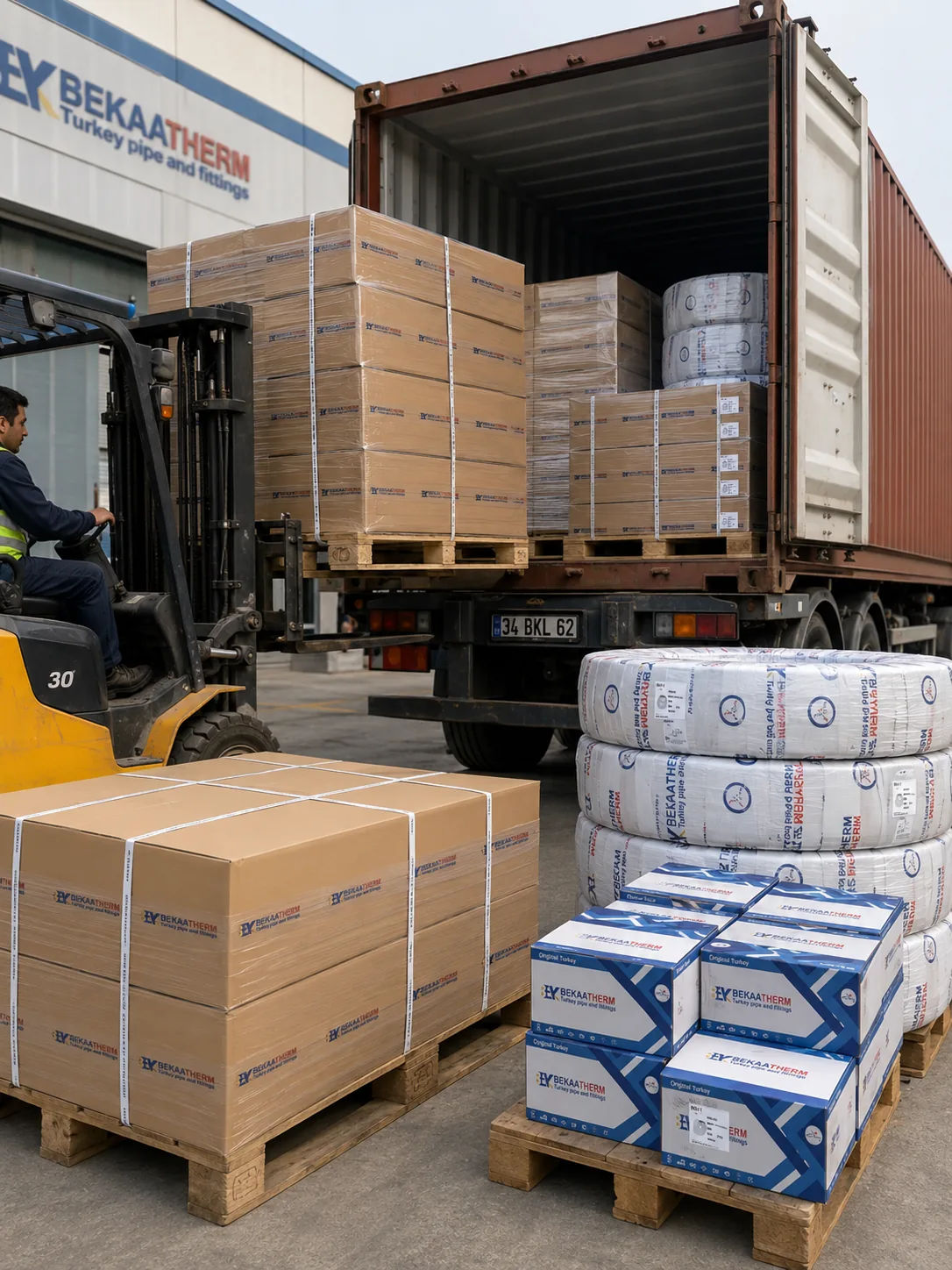
The judgment call underneath all this: one mixed container or two single-product ones? For a first order into a new market, take the mixed container. You learn which sizes actually move before committing cash to depth, and the tail void fills with saleable goods instead of air. Two single-product boxes make sense once you have twelve months of sell-through data showing one line turns fast enough to justify its own container — at which point it is a replenishment decision, not a market-entry bet. The FOB pricing and container loading page covers how loaded quantity feeds the unit price.
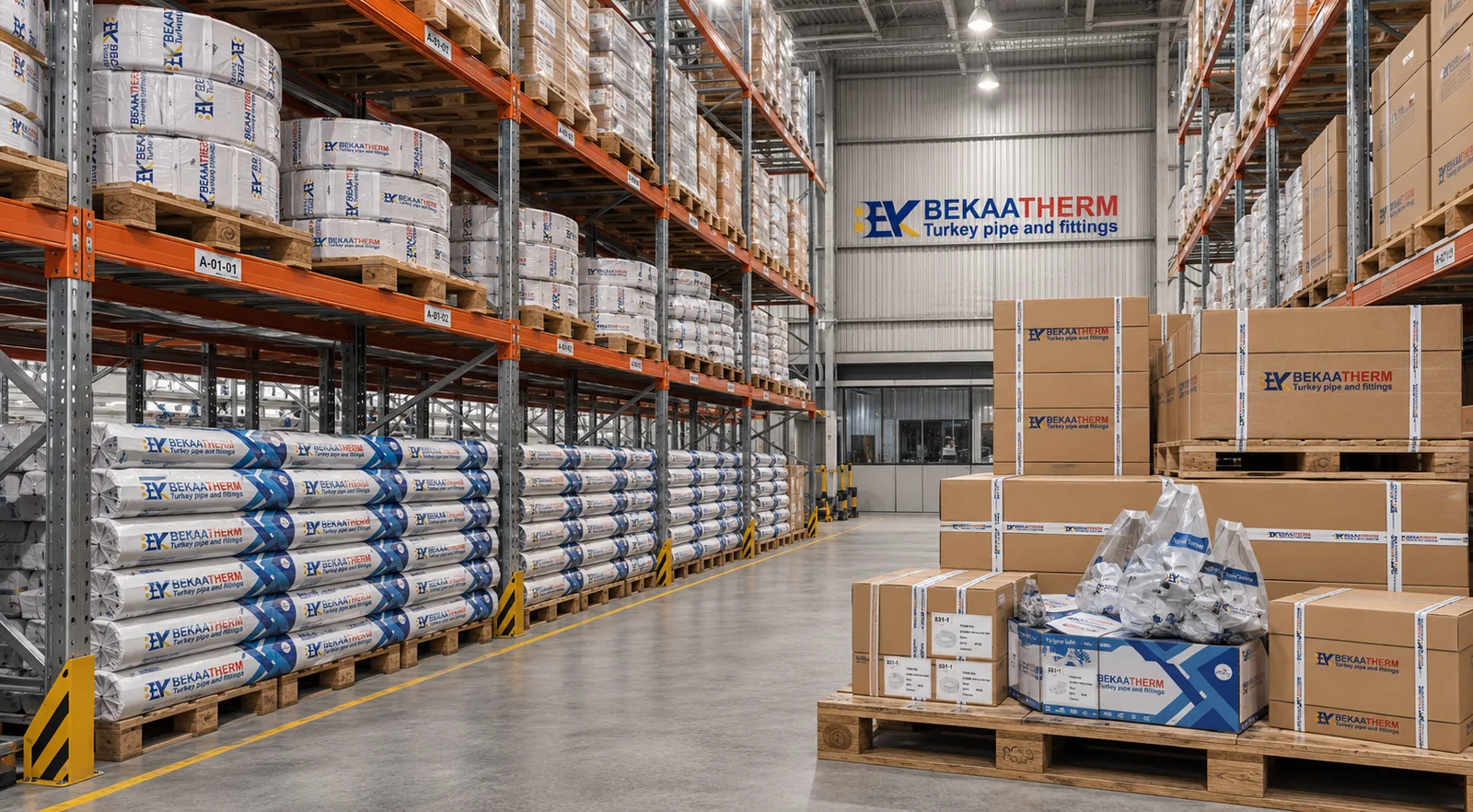
What a 500 kg per-size minimum looks like in metres
Minimums are quoted in kilograms, but you sell in metres. The conversion is where first orders go wrong.
The minimum for a single size is 500 kg per size and colour. Using the calculated masses above, 500 kg of 20mm PN20 is roughly 3,650 m — deep stock for a fast mover. The same 500 kg of 63mm is only about 375 m, or fewer than a hundred 4 m sticks.
Read those two together and the trap is obvious. Every large diameter you add costs a full 500 kg and buys almost no sellable length. A tail of six large sizes “for completeness” eats 3 tonnes and leaves a few hundred metres of each — slow stock tying up the cash you needed for 20mm and 25mm depth. The minimum is also per size and colour: green and white in one diameter are two separate 500 kg commitments, which is the line that surprises distributors serving two market conventions at once.
The discipline for a first container: go deep on the two or three sizes carrying your volume, take single minimums across the mid range, and cover large diameters through fittings and project-specific orders until you have real demand data. The importers and distributors page sets out how minimums, territory terms and the four-system range fit together for a stocking programme.
When to step up to a 40HQ
A 40HQ gives you roughly 76 m³ — about 2.3 times the 20GP. Three situations make the step worth it.
You need 6 m sticks. This one is not a preference, it is geometry. A 6 m stick does not fit a 20GP at all, since the box is only 5.90 m inside. A 40ft container is about 12.03 m internally and takes two 6 m sticks end to end with roughly 30 mm to spare. If your market installs in 6 m lengths, the container decision is already made for you — confirm stick length on the proforma before anything else, because it changes which box is efficient.
You are running a branded first order. Private-label minimums start at one 40HQ, or 3 tonnes per colour on a first branded run. Custom colour and printed bagging carry setup cost that a 20GP cannot absorb.
Your 20GP is cubing out with unfilled demand. If you are consistently leaving SKUs off the order because the box is full at 33 m³, the freight cost per cubic metre of a 40HQ is the better trade. That is a sell-through decision, not a stowage one.
Best for a 20GP: market entry, testing a range, 4 m sticks, cash discipline, and any buyer who wants to learn demand before committing depth. Not for a 20GP: 6 m stick markets, branded runs, or a distributor already turning stock faster than a 33 m³ box can replenish.
VGM at sea, axle limits on the road
Your load plan is not just a commercial document. It is the input to a legal declaration.
Under SOLAS regulation VI/2, adopted by IMO Resolution MSC.380(94) and in force since 1 July 2016, a verified gross mass is a condition for loading a packed container onto a ship, and the shipper is responsible for providing it. No VGM, no loading — there is no informal workaround for a box sitting at the terminal.
Two methods are permitted. Method 1 is weighing the packed container. Method 2 is weighing all packages and cargo items, including the mass of pallets, dunnage and other securing material to be packed in the container, and adding the container’s tare mass to the sum — using a certified method approved by the competent authority of the State where packing was completed.
Method 2 is the same line-by-line arithmetic this article has been teaching. Your load-plan spreadsheet is structurally a Method 2 calculation. The catch is the clause importers skip: pallets, dunnage and securing material count too. A pipe container carries a surprising amount of timber and strapping, and leaving it out is the most common reason a declared figure and a weighbridge figure disagree.
Distribution is a separate problem from total weight, and it is the one that catches people at destination. A container can sit comfortably inside its payload limit and still be illegal on the road, because an axle limit is breached by how the weight sits inside the box. Uneven cargo distribution is the most common cause of axle weight violations.
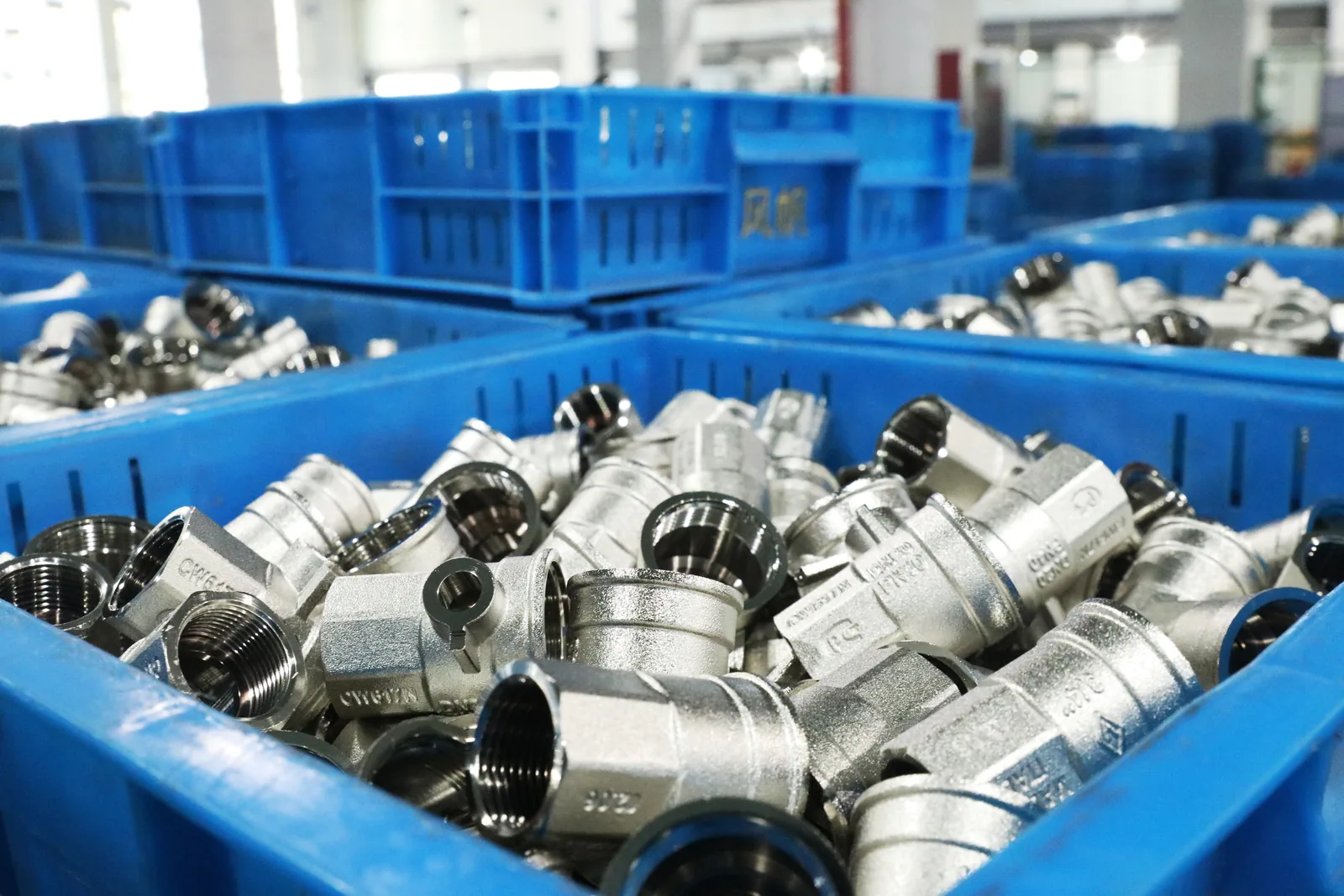
For a mixed pipe container the risk is predictable. Pipe is light and bulky and spreads itself along the floor. Valves, manifolds and brass-cored fittings are dense and arrive in small cartons. Block those cartons at the door end — the natural place, since they load last — and you concentrate most of your mass over one axle group. The rule to give your supplier: spread dense cartons along the container’s length rather than blocking them at one end.
Axle limits differ by country, so check your own road limit before choosing between one heavy container and two lighter ones. The recognised reference for packing and securing practice is the IMO/ILO/UNECE CTU Code, endorsed in 2014 — a non-mandatory code of practice rather than law, whatever some supplier pages imply. Requirements vary by market and by the importer’s role, so confirm the position that applies to you with your customs broker or the relevant authority.
What to demand on the proforma before the deposit
Payment terms are 30% T/T deposit, 70% against copy B/L. That first 30% is the moment your bargaining power drops, so everything ambiguous gets settled before it moves.
A quotation should arrive as three things together: FOB unit price, a container loading plan, and the certificate package. If a supplier sends a price and offers the load plan later, you are being asked to fund a container you cannot verify. Default trade terms are FOB İstanbul or Mersin, with CFR and CIF on request.
Six items to insist on in writing:
- Stated loaded quantity per SKU. Metres or pieces per line, not a total container value. This is the figure you check on arrival.
- Stick length. 4 m or 6 m. It decides which container is efficient and it is the single most expensive assumption to get wrong.
- Bundle outside diameter, sticks per bundle, and bundle weight. These three convert a stowage promise into arithmetic you can check. Bundle configuration is supplier-specific, so no published figure substitutes for asking.
- Carton dimensions and pieces per carton for every fitting and valve line, so you can fill the 30% and 10% blocks with real cube instead of an estimate.
- Total gross weight including pallets and dunnage. The VGM Method 2 sum, agreed before packing rather than corrected after sealing.
- Written confirmation of origin for the order, with certificate of origin, packing list and bill of lading issued to agree with each other.
On timing: regular in-production sizes run 15–25 days; private-label runs 30–45 days; a first colour match or a new mould adds 7–10 days. Build the colour-match allowance into your first branded order rather than discovering it after the deposit clears. Indicative pricing by size sits on the PPR pipe price list page, with firm figures quoted per order.
A.TR, origin and CBAM in 2026
Two customs questions come up on almost every European enquiry, and the common answer to the first one is wrong.
An A.TR movement certificate is not a certificate of origin. Under Decision No 1/2001, Articles 5 and 6, the A.TR provides proof that the conditions for free circulation of industrial products between the EU and Türkiye are met. It certifies the customs status of goods in free circulation — regardless of where those goods were manufactured. An importer who reads “A.TR” as “made in Türkiye” has misread the instrument.
That distinction has teeth here, because supply is genuinely dual-origin: production is allocated between Türkiye and a Chinese partner plant according to market. Origin is not something to assume from the shipping paperwork. It is confirmed in writing per order on the proforma invoice, with certificate of origin, packing list and bill of lading issued to agree. If origin matters for your tender, your duty position or your customer’s specification, ask directly and get the answer on the proforma — do not infer it from an A.TR.
On the framework itself: the EU–Türkiye Customs Union covers industrial products and processed agricultural products, while agricultural, coal and steel products sit outside it under separate arrangements. Plastic pipes are industrial products, so they fall inside it. Since 8 July 2024 the parties also accept electronically issued A.TR certificates.
Does CBAM apply to a plastic pipe container? Not in 2026. The EU Carbon Border Adjustment Mechanism entered its definitive period on 1 January 2026 and covers cement, iron and steel, aluminium, fertilisers, hydrogen and electricity, with a de minimis of 50 tonnes of covered goods per importer per year. Plastic pipes are not in scope. Put one diary note against that, though: a Commission proposal from December 2025 would extend scope to further downstream goods from 1 January 2028, focused on steel- and aluminium-intensive products. Treat the current position as current rather than permanent, and re-check scope before 2028. Customs treatment depends on your product classification and your role as importer, so confirm your own position with a broker.
Frequently asked questions
How many metres of PPR pipe fit in a 20ft container?
There is no single number, because it depends entirely on your diameter mix. As a reference point, a 20GP takes roughly 8,000–9,000 m of 20mm PN20 pipe when bundles are telescoped — and that is the 20mm line item inside a mixed load, not a container of 20mm alone. That quantity occupies under 9% of the container’s 33 m³ and weighs only about 1.2 tonnes. Any supplier quoting one flat metre figure for “a container of pipe” has not looked at your size mix.
Why can’t I just fill a container with the size I sell most?
Because a 20GP is 5.90 m long inside and pipe is typically supplied in 4 m sticks, leaving a 1.9 m void — 32% of the floor length — that pipe cannot occupy. Only carton goods fit it. That is why the usual mixed load runs at about 60% pipe, 30% fittings and 10% valves by volume. A single-size container ships a large volume of air at full freight cost.
Will a pipe container ever hit the 28 tonne payload limit?
Rarely on a pipe-led load. PP-R has a density of roughly 0.90 g/cm³ and pipe is mostly hollow, so a 20GP cubes out on its 33 m³ long before it approaches ~28 tonnes. Weight becomes a live constraint only when the load carries a heavy proportion of brass-cored valves and fittings. Remember that ISO wall tolerance is plus-only, so real weight lands at or above your nominal calculation.
Do 6 m pipe lengths fit in a 20ft container?
No. A 20GP is about 5.90 m internally, so a 6 m stick does not fit at all. A 40ft container is about 12.03 m inside and takes two 6 m sticks end to end with roughly 30 mm to spare. If your market installs in 6 m lengths, your container choice is made for you — confirm stick length on the proforma before you compare quotes.
How do I calculate the weight of a pipe order myself?
Use mass/m = π/4 × (OD² − (OD − 2e)²) × 1000 × density ÷ 1,000,000, with wall thickness e from ISO 15874-2:2013 Table 5 and PP-R density of roughly 0.90 g/cm³. For 20mm PN20 with a 2,8 mm wall that gives about 0.137 kg/m. Treat the result as a nominal floor: ISO tolerance on wall thickness is +x/0, so shipped pipe is at or above the calculation.
Does an A.TR certificate mean the goods were made in Türkiye?
No. Under Decision No 1/2001, the A.TR movement certificate proves that the conditions for free circulation of industrial products between the EU and Türkiye are met. It certifies customs status regardless of where the goods were manufactured, which makes it a different instrument from a certificate of origin. Because supply here is allocated between Türkiye and a Chinese partner plant by market, origin is confirmed in writing per order on the proforma, with certificate of origin, packing list and bill of lading issued to match.
Does CBAM apply to imported plastic pipes in 2026?
Not currently. CBAM entered its definitive period on 1 January 2026 covering cement, iron and steel, aluminium, fertilisers, hydrogen and electricity, with a de minimis of 50 tonnes of covered goods per importer per year. Plastic pipes are outside that scope. A December 2025 Commission proposal would extend scope to further downstream goods from 1 January 2028, focused on steel- and aluminium-intensive products, so re-check the position before then and confirm your own classification with a customs broker.
What does a 500 kg minimum per size work out to in metres?
It depends heavily on diameter. Against the calculated masses, 500 kg is roughly 3,650 m of 20mm PN20 but only about 375 m of 63mm. The minimum applies per size and per colour, so the same diameter in green and white counts as two separate commitments. Adding large diameters for range completeness consumes budget quickly while adding little sellable length.