Every supplier page selling own-brand pipe promises the same three things: custom colours, custom print, custom cartons. None mention the part that costs money if you get it wrong — printing your name on a construction product moves the legal role of manufacturer onto you, and re-branding a WRAS Approved pipe removes your right to claim that approval unless you take a specific second step.
Both are written into public law and public policy, both tightened recently, and both are manageable once you know they exist. That is the difference between a private-label programme that builds a brand and one that gets a stop-sale letter in its second year.
Key Takeaways
- Your logo makes you the manufacturer. Regulation (EU) 2024/3110 Article 26(1) states that a distributor or importer “shall be considered a manufacturer” where “it places a product on the market under its own name or trademark” — and is then subject to the manufacturer obligations of Article 22.
- The date to diarise is 8 January 2026. The new Construction Products Regulation “shall apply as from 8 January 2026”, and Regulation (EU) No 305/2011 “is repealed with effect from 8 January 2026”, subject to a long list of transitional exceptions.
- Re-branding voids a WRAS claim. WRAS policy is that once a product is re-branded, approval cannot be claimed and the Certification Mark may not be used. The fix is a secondary product approval, which lets a third party market an approved product under another trade name with the original manufacturer’s consent.
- Exclusivity is not “nobody else in my country”. Under Regulation (EU) 2022/720 an exclusive territory may be allocated to the supplier itself or to a maximum of five buyers, and while active selling into it can be restricted, passive sales generally cannot.
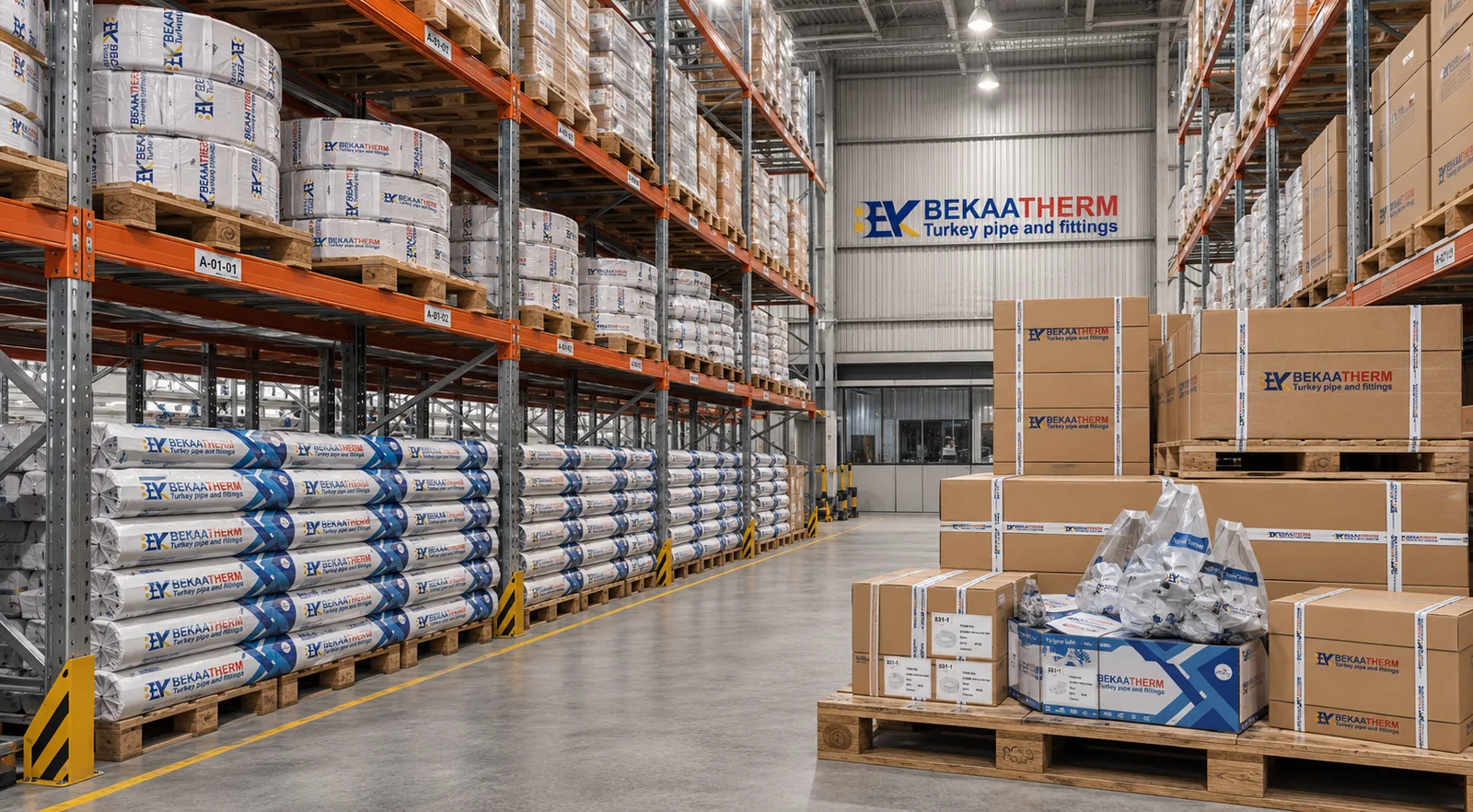
- Our commercial terms for a first branded run: one 40HQ, or 3 tonnes per colour; 30–45 days production, plus 7–10 days if it is a first colour match or a new mould; branded samples in 7–10 days with the sample cost credited against the first bulk order.
Private label and regional exclusivity are two different agreements
Buyers routinely ask for “exclusivity” when what they want is private label, or sign a private-label deal assuming exclusivity came with it. They are separate grants and they fail in separate ways.
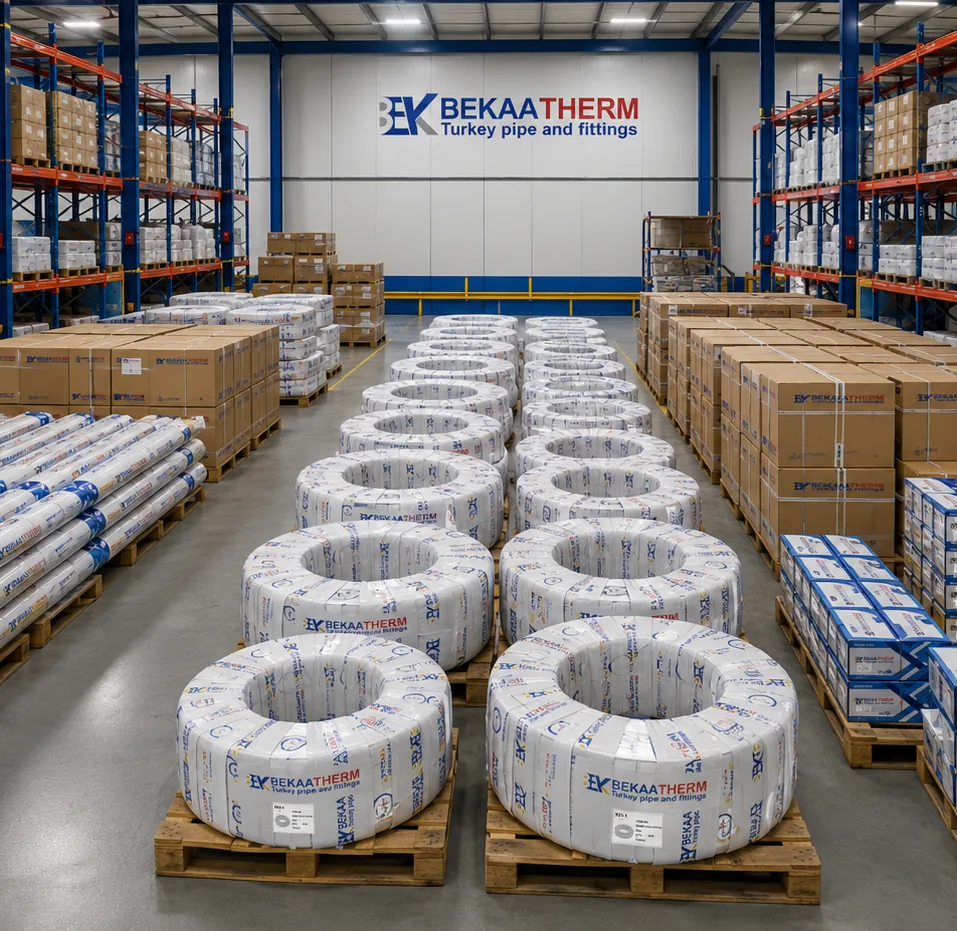
Private label is about whose name is on the product. The pipe is made to the same specification on the same line, and your brand replaces ours on the pipe wall and the carton. That is a manufacturing and intellectual-property arrangement, and it carries the regulatory consequences covered below.
Regional exclusivity is about who else may be supplied in a defined market. It is a distribution arrangement, it lives in competition law, and it says nothing about branding. You can hold exclusivity while selling pipe printed with our name, and you can run a private label with no territorial protection at all.
Most serious programmes combine them, because each covers the other’s weak spot. A private label with no territory protection means a competitor two streets away can import the identical pipe from the same plant and undercut you on a product only you paid to promote. Territory protection with no private label means you spend years building demand for someone else’s brand name.
Best for / not for
A private label is worth it if you already move volume under someone else’s brand, you control the specification conversation with your installers, and you can absorb a per-colour minimum without your cash sitting in slow-moving stock. Own-brand pricing power is real, but it arrives in year two, not on the first container.
It is not for you if your annual take is a mixed container or two, if your market buys strictly on the strength of a recognised European brand mark, or if you are not prepared to keep a declaration of performance and technical documentation on file in your own company’s name. In that case buy the manufacturer-branded product. It ships from the same line, and the compliance file stays our problem.
Who is legally the manufacturer once your logo is on the pipe
This is the single most expensive thing a private-label buyer can misunderstand, and it is stated plainly in the Official Journal text.
Article 26(1) of Regulation (EU) 2024/3110 reads: “An importer or distributor shall be considered a manufacturer for the purposes of this Regulation and shall be subject to the obligations of a manufacturer pursuant to Article 22, where: (a) it places a product on the market under its own name or trademark”. The same trigger fires under points (b) to (e) if you modify the product, declare a different intended use, claim characteristics that deviate from the original declaration, or simply opt to assume the manufacturer role.
There is no volume threshold, no grace period and no exemption for a distributor who “only” changes the print on the pipe wall. The obligation attaches to the act of placing the product on the market under your trademark.
Article 22, headed “Obligations of manufacturers”, is what you then inherit: determining the product type, ensuring performance is assessed, drawing up a declaration of performance and conformity under Articles 13 to 15, affixing CE marking under Articles 17 and 18, and drawing up the technical documentation behind that declaration. In practice, you sign the DoP in your own company’s name and hold the file that supports it.
None of this is new in principle. DIBt’s construction products FAQ confirms the same rule under the outgoing regime: an importer or distributor is considered a manufacturer where he places a construction product on the market under his own name or trademark, and Article 15 CPR then subjects him to the Article 11 manufacturer obligations, including drawing up his own Declaration of Performance. The 2024 Regulation tightens and re-numbers an obligation that already existed.
Requirements vary by product, market and your role in the supply chain, so treat this as the shape of the obligation rather than advice for your case, and confirm current requirements with a regulatory adviser in your country of sale before the first branded run.
What changed on 8 January 2026
If you are planning a branded run for a European market, the calendar matters more this year than it has in a decade.
Article 96 of Regulation (EU) 2024/3110, done at Strasbourg on 27 November 2024, states that it “shall apply as from 8 January 2026”. Certain articles and Annexes I, II, III, IV, VII, IX and X applied earlier, from 7 January 2025, and Article 92 applies from 8 January 2027. The same instrument repeals Regulation (EU) No 305/2011 “with effect from 8 January 2026”, with exceptions for certain articles.
The transition is long rather than abrupt. The Belgian FPS Economy construction products pages set out the tail: full repeal of the old regulation in 2040, European Assessment Documents ceasing in 2031, European Technical Assessments ceasing in 2036. Nothing on your shelf becomes illegal overnight. What changes is which regime your new declarations are written under — a decision to take deliberately rather than discover at a border.
Certificates do not travel with your logo
The second expensive assumption is that a factory’s certificate wardrobe transfers to the branded version of the product. It does not, and the two clearest cases are WRAS and SKZ.
WRAS. Published WRAS policy is that once products or materials are re-branded — typically the product name and the identification markings — approval cannot be claimed, and where a product is re-branded in any way, use of the WRAS Certification Mark is not permitted. If you print your own name on an approved pipe and keep advertising it as WRAS Approved, you are making a claim you no longer hold.
The remedy is not to abandon the approval but to take the route WRAS publishes for exactly this situation. A secondary product approval enables a retailer, wholesaler or other third party to market a WRAS Approved Product under another trade name. The manufacturer’s consent must be obtained first, then WRAS is contacted. It relies on an existing primary approval, applies where the product is re-branded but keeps the same mechanical specification, and expires at the same time as the primary approval. That last clause is the scheduling trap: your secondary approval inherits the primary’s expiry date, not a fresh term from your application. Equivalent routes exist on the materials side.
Competitor private-label pages rarely mention this. They list “WRAS certified” on a capability grid next to “custom logo printing” without noticing that the second disturbs the first.
SKZ. German certification is tied to a production site rather than to a brand name. SKZ states that its certificate is valid for five years, with normally semi-annual auditing of the production facility and testing of the certified products, and that certificates are issued with an individual SKZ mark number. A certificate covering a named plant, audited twice a year under a specific mark number, is not something a private label inherits by changing the logo on the pipe. It stays attached to where and how the pipe is made — the argument for choosing a factory whose site certification you are content to stand behind.
What “exclusive” can and cannot promise
Buyers hear “nobody else in my country gets this pipe”. That is not what an exclusive distribution agreement does in the EU, and a supplier who promises it is either careless or writing something unenforceable.
Under Regulation (EU) 2022/720, an exclusive distribution system means the supplier allocates a territory or customer group exclusively to itself or to a maximum of five buyers, and restricts its other buyers from actively selling into that territory or group. Two consequences follow, and both surprise people.
First, “exclusive” can lawfully mean shared with up to four other distributors, and the supplier may reserve the territory to itself as well. If you want to be the only one, that has to be negotiated and written down — it is not what the word means by default.
Second, and more practically: active sales into your territory may be restricted, but passive sales generally may not. If a distributor in a neighbouring country actively targets your market — local advertising, a localised web page, direct approaches to your customers — that is what your agreement can shut down. If a buyer in your country contacts them unprompted and they fill the order, that is a passive sale, and no clause is going to stop it. Any protection you are offered should be read against that line.
A written territorial grant is normally lawful for a supplier of this size because of the same regulation’s safe harbour: it exempts vertical agreements where the supplier’s market share does not exceed 30% of the relevant market on which it sells and the buyer’s does not exceed 30% of the market on which it purchases. How the relevant market gets defined varies, so take local advice before relying on it.
Bekaatherm’s policy is that regional exclusivity is available to private-label partners, agreed in writing per market. We do not publish contract wording, and you should be sceptical of any supplier that publishes a clause library instead of negotiating one with you. What a written grant must settle: the territory, the product scope, the term, the volume test that keeps it alive, what happens if that test is missed, and whether the supplier retains the right to sell direct.
The commercial terms of a first branded run
Here are our actual numbers, which is the part the template contract pages ranking for this topic cannot give you.
| Term | Own-brand / private-label order |
|---|---|
| Minimum first branded run | One 40HQ, or 3 tonnes per colour |
| Production lead time | 30–45 days |
| First colour match or new mould | Add 7–10 days |
| Branded samples | 7–10 days; sample cost credited against the first bulk order |
| Container volume (40HQ) | Roughly 76 m³ usable |
| Payment | 30% T/T deposit, 70% against copy B/L |
| Letter of credit | Irrevocable L/C at sight accepted from USD 50,000 |
| Trade terms | FOB İstanbul or Mersin by default; CFR and CIF on request |
| Territory | Regional exclusivity available, agreed in writing per market |
| Warranty | 50-year warranty against material and manufacturing defects |
Two of those rows deserve more than a cell. The minimum is expressed per colour because colour is a raw-material changeover, not a print change — a masterbatch swap costs line time whether you order three tonnes or thirty. Buyers planning a four-colour launch on one container are planning four minimums. Launch one colour properly and add the range on the second order.
The 7–10 days for a first colour match is not padding either. Matching a brand colour in pigmented polypropylene and confirming it survives extrusion is iterative, and the sample you approve becomes the reference every later batch is judged against. That is why the branded sample cost is credited against the first bulk order — the sample is the specification, so it should not be a barrier to getting it right.
The 50-year warranty covers material and manufacturing defects, and it is set to match the 50-year design life at rated pressure and 20°C under ISO 15874. It is a commercial undertaking about how the pipe was made, not a promise that any installation lasts fifty years regardless of how it was fitted or what it carries.
For buyers costing a first branded container. If you already know the sizes and colour you want to launch with, send the list and we will come back with FOB pricing, the loading plan for the 40HQ and the certificate package that applies to your market. If you are still at the stage of checking whether the numbers work at all, the price list page covers the structure without an email.
Price a first branded runOrigin, HS codes and what your carton may claim
Private-label buyers print things on cartons that customs officers read literally. Three points are worth settling before artwork is approved.
Origin is a documented fact, not a design choice. We supply from Turkiye and from a partner plant in China, with origin allocated by market and confirmed in writing per order on the proforma invoice, and the certificate of origin, packing list and bill of lading kept consistent. The “Made in” line on your packaging has to match the goods in the box. EU non-preferential rules of origin apply to origin marking as well as to MFN treatment, commercial policy measures, trade statistics and public tenders, and Article 60 of the Union Customs Code sets the two concepts — goods wholly obtained in one country, or goods whose last substantial transformation occurred there. If you intend to print a country of origin, fix the sourcing for that SKU first and confirm the marking with your broker.
An A.TR is not an origin document. The A.TR movement certificate confirms that goods are in free circulation within the EU–Turkiye customs union, and is requested by the Turkish supplier from the Turkish Customs Administration. As the Netherlands Enterprise Agency’s guidance on the A.TR makes clear, it is a free-circulation document rather than proof of origin. It handles duty treatment; the certificate of origin handles origin. You may need both.
A mixed container crosses two headings. Rigid polypropylene pipe classifies under HS 3917.22, “tubes, pipes and hoses, rigid, of polymers of propylene”. Fittings go under 3917.40, so a container carrying both crosses two headings, which affects how the entry is prepared. Duty rates differ by country of import and change over time, so confirm yours with a customs broker, quoting 3917.22 for pipe and 3917.40 for fittings rather than a figure from a supplier’s blog.
One more thing to do before the first branded run, not after: register your trademark in each destination market. Turkiye is a member of the Madrid Protocol, with international applications filed through WIPO and handled by the Turkish Patent and Trademark Office. Ordering tonnes of pipe printed with a mark you have not secured locally is a risk that sits entirely on your side of the transaction.
How a first branded programme actually runs
Take a distributor launching an own-brand hot-and-cold system in a single European market, starting from a signed intent in early spring.
The territory conversation happens first, because it determines whether the rest is worth doing. Territory, product scope, term, volume test and whether we retain direct sales all get settled in writing for that market. In parallel — not afterwards — the buyer files the trademark locally and asks us for written consent to pursue a WRAS secondary product approval, since consent must be obtained before WRAS is contacted and the approval will expire with the primary one regardless of when it is granted.
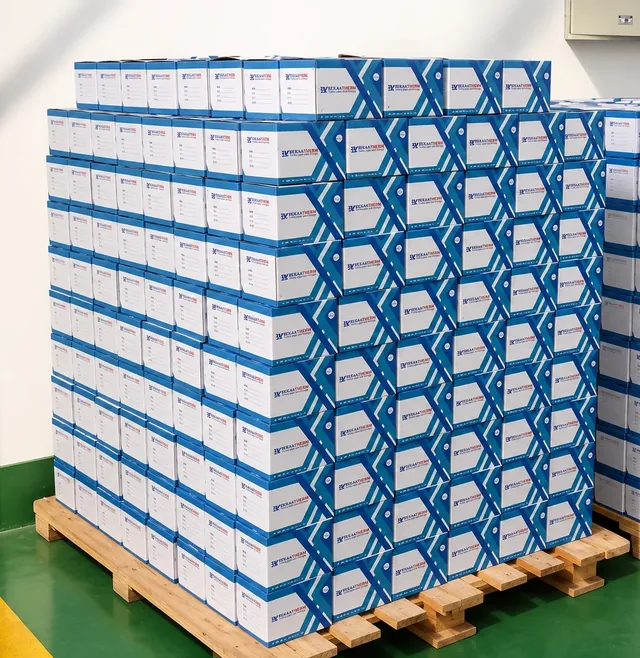
Then the colour. Artwork and a target colour come to us, branded samples come back in 7–10 days, and the approved sample becomes the reference for every later batch. The sample cost is credited against the first bulk order. If this is a first colour match, the production clock carries 7–10 days more than a stock order would.
Production runs 30–45 days against a 30% T/T deposit, or an irrevocable L/C at sight if the order is USD 50,000 or more. The order is built to fill one 40HQ — roughly 76 m³ usable — or to at least 3 tonnes of the launch colour. While the line runs, the buyer’s compliance file gets built rather than improvised: the declaration of performance in their own company name, the supporting technical documentation, and the origin set on the proforma invoice matched to what the carton will say.
Goods go FOB İstanbul or Mersin by default, with CFR and CIF available, and the 70% balance falls due against copy B/L. Counting the colour match, production and a first-time approval running alongside, a realistic first-container timeline is roughly two to three months from signed intent to sailing. The item most likely to slip it is not manufacturing. It is a trademark filing or a secondary approval left until the pipe was already made.
What we check before accepting a private-label partner
Vetting runs both ways. A factory that accepts any branded order without questions is telling you something about how it will handle yours. Our checks are short.
- Whether the market is already committed to another partner, because exclusivity is agreed in writing per market and we will not grant the same territory twice.
- Whether the volume behind the request supports a per-colour minimum, or whether the buyer is better served by manufacturer-branded stock for another year.
- Whether the trademark is registered, or at least filed, in the destination market before a print run is scheduled.
- Which certifications the destination market actually requires, and whether a re-branded product needs a secondary approval route before it can be marketed with the same claims.
- Which origin the market will be served from, so it can be confirmed in writing on the proforma invoice and kept consistent across the certificate of origin, packing list and bill of lading.
Behind that sits the reason a private label is worth attaching to this plant at all: 30 years of manufacturing, a 120,000 m² site, 1000+ staff, 10,000 moulds, 98 items across four systems, and export into 118+ countries. The system carries SKZ, ISO 15874, CE and WRAS certification. A brand you build on top of that inherits the production consistency; what it does not inherit, as covered above, is the certificate itself.
If you want the full commercial picture — what we print, what we can match, how the artwork process runs and what the agreement covers — the OEM and private-label programme page sets it out, and the importers and distributors page covers the same ground for buyers who want territory protection without changing the brand on the pipe.
Frequently Asked Questions
What is the minimum order for a private-label pipe run?
One 40HQ, or 3 tonnes per colour on a first branded run. The minimum is per colour because changing colour means a raw-material changeover on the line, not just a change of print. A 40HQ gives roughly 76 m³ of usable volume.
How long does a branded order take compared with a stock order?
Production runs 30–45 days. Add 7–10 days if it is a first colour match or a new mould. Branded samples come back in 7–10 days before production starts, and the sample cost is credited against the first bulk order.
Can I still claim WRAS approval on pipe printed with my own brand?
Not automatically. WRAS policy is that once a product is re-branded, approval cannot be claimed and the Certification Mark may not be used. The published route is a secondary product approval, which lets a third party market a WRAS Approved Product under another trade name once the manufacturer’s consent is obtained. It relies on the existing primary approval and expires at the same time as it.
Who is legally the manufacturer once my logo is on the pipe?
You are, for regulatory purposes in the EU. Article 26(1)(a) of Regulation (EU) 2024/3110 provides that an importer or distributor shall be considered a manufacturer where it places a product on the market under its own name or trademark, and is then subject to the manufacturer obligations of Article 22 — including drawing up the declaration of performance and the supporting technical documentation. Confirm how this applies to your product and market with a regulatory adviser.
Does regional exclusivity mean nobody else in my country can buy this pipe?
No. Under Regulation (EU) 2022/720 an exclusive distribution system allocates a territory to the supplier itself or to a maximum of five buyers. Active selling into your territory by other distributors can be restricted; passive sales, where a customer approaches them unprompted, generally cannot. If you want sole rights, that has to be negotiated and written into the agreement.
What HS codes do private-label PPR pipe and fittings ship under?
Rigid polypropylene pipe falls under HS 3917.22, tubes, pipes and hoses of polymers of propylene. Fittings fall under 3917.40. A mixed container crosses both headings. Duty rates vary by country of import, so confirm yours with a customs broker rather than relying on a published figure.
Can I print “Made in Türkiye” on my own branded cartons?
Only if that is where the goods in the box were made. We supply from Turkiye and from a partner plant in China, with origin allocated by market and confirmed in writing on the proforma invoice, and the certificate of origin, packing list and bill of lading kept consistent. EU non-preferential rules of origin apply to origin marking, so fix the sourcing for that SKU before artwork is approved and confirm the marking with your broker.
What is the payment structure for a first branded order?
30% T/T deposit with the balance of 70% against copy B/L. An irrevocable L/C at sight is accepted from USD 50,000. Trade terms are FOB İstanbul or Mersin by default, with CFR and CIF available on request.
For distributors ready to discuss a specific market. Tell us the territory, the sizes and the launch colour, and we will come back on availability of exclusivity for that market, the certificate route your re-branded product will need, and FOB pricing against a 40HQ. If your question is only about which approvals apply where, the certifications page answers it without a conversation.
Discuss exclusivity for your market Message us on WhatsApp