Most pages that rank for “PPR pipe HSN code” hand you one number and stop. That is enough to raise an invoice inside India. It is not enough to clear a container, because the moment your order contains sockets, elbows and tees alongside the pipe, a second code enters the picture — and the code for fittings does not follow the polymer.
Below: the codes, the one split that causes most reclassifications, and the market-by-market paperwork that actually stops shipments. Duty percentages that could not be verified against an official tariff source are not printed here. That gap is deliberate, and the method for closing it yourself is in the fourth section.
Key Takeaways
- All plastic pipe and plastic pipe fittings sit under one HS heading: 3917 — tubes, pipes and hoses, and fittings therefor, of plastics.
- Rigid pipe splits by polymer. PPR is 3917.22 (polymers of propylene), HDPE is 3917.21 (polymers of ethylene), UPVC is 3917.23 (polymers of vinyl chloride).
- Fittings break out. Sockets, elbows, tees and flanges classify in 3917.40 regardless of polymer — a PPR elbow is not 3917.22. This is the single most common error on a mixed pipe-and-fitting invoice.
- “HSN code” and “HS code” agree on the first six digits. India extends to 8 digits, the EU to 10, and the GCC moved to a 12-digit unified tariff — 1 January 2025 in Bahrain, Kuwait, Oman, Qatar and Saudi Arabia, 1 August 2025 in the UAE.
- In India, HSN 3917 attracts 18% GST — 9% CGST plus 9% SGST intra-state, or a single 18% IGST on an inter-state sale or an import.
- Turkish-origin goods reach the EU at 0% third-country duty on a valid A.TR, under Decision 1/95 of the EC-Turkey Association Council, in force since 1 July 1996.
- A.TR proves free circulation, not origin. Anti-dumping and countervailing duties follow the goods’ origin and survive the routing, which is why some buyers ask for a separate certificate of origin alongside it.
- Duty is rarely what stops a container. SABER, GOEIC factory registration, SONCAP and PVoC gate the shipment before or at arrival, and most of them must be handled before the vessel sails.
The codes: 3917 and the four questions that fix your subheading
Heading 3917 of the Harmonized System reads: tubes, pipes and hoses, and fittings therefor (for example, joints, elbows, flanges), of plastics. Everything a plumbing importer buys from a plastics extruder lands inside it. The work is in the two digits after that.
Two questions fix the six-digit subheading for pipe. Rigid or flexible? Rigid runs 3917.21 to 3917.29; flexible drops to the 3917.3 group. PPR, HDPE and UPVC pressure and drainage pipe are all rigid, so the flexible branch does not apply to a standard plumbing container. Then: which polymer? That gives the last digit.
| HS subheading | Official description | What ships under it |
|---|---|---|
| 3917.21 | Tubes, pipes and hoses, rigid, of polymers of ethylene | HDPE and PE100 pressure pipe, PE water mains, irrigation mains |
| 3917.22 | Tubes, pipes and hoses, rigid, of polymers of propylene | PPR hot and cold water pipe, fibreglass-composite PPR, PP drainage pipe |
| 3917.23 | Tubes, pipes and hoses, rigid, of polymers of vinyl chloride | UPVC pressure pipe, UPVC soil and waste, sewer pipe |
| 3917.29 | Tubes, pipes and hoses, rigid, of other plastics | Rigid pipe of polymers not covered above |
| 3917.40 | Fittings (for example, joints, elbows, flanges), of plastics, for tubes, pipes and hoses | Every plastic fitting, any polymer: PPR sockets and tees, PP compression fittings, UPVC bends |
A fibreglass-reinforced PPR pipe still classifies as a polypropylene pipe: the reinforcement is a middle layer of the same PP-R matrix with glass fibre in it, not a separate material laminated on, so the pipe stays in 3917.22. Aluminium-composite PPR is the harder case, because a metal layer is genuinely present. Put that construction to your broker in writing rather than assuming — the answer turns on which material gives the article its essential character.
Why your fittings are not the same code as your pipe
This is the part the aggregator pages never mention, and it is the reason mixed containers get reclassified at the border.
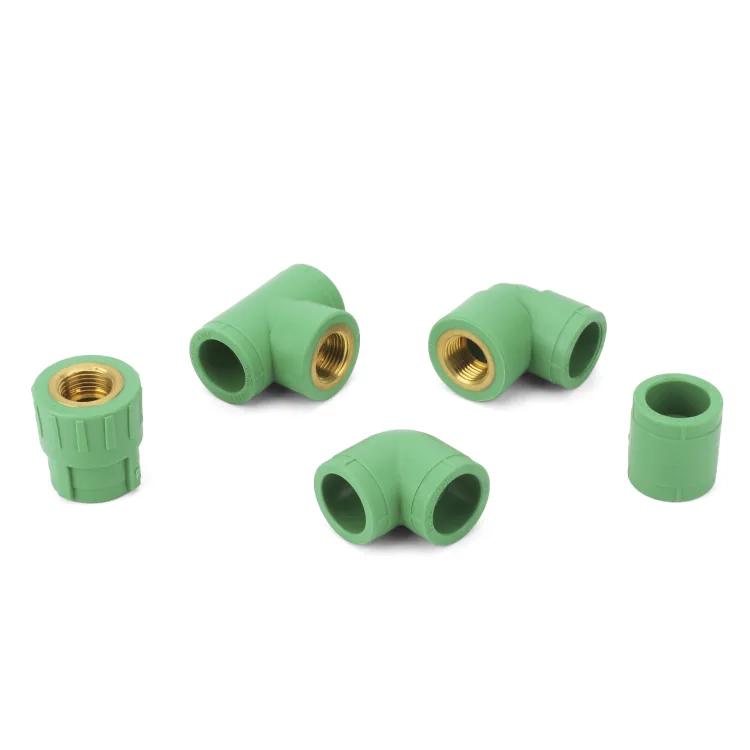
Subheading 3917.40 covers fittings — joints, elbows, flanges — of plastics, for tubes, pipes and hoses. It does not say “of polypropylene” or “of PVC”. Polymer is irrelevant at this level. A green PPR socket, a blue PP compression coupling and a white UPVC bend all classify in 3917.40, sitting next to each other, while the pipe they connect to sits in three different subheadings.
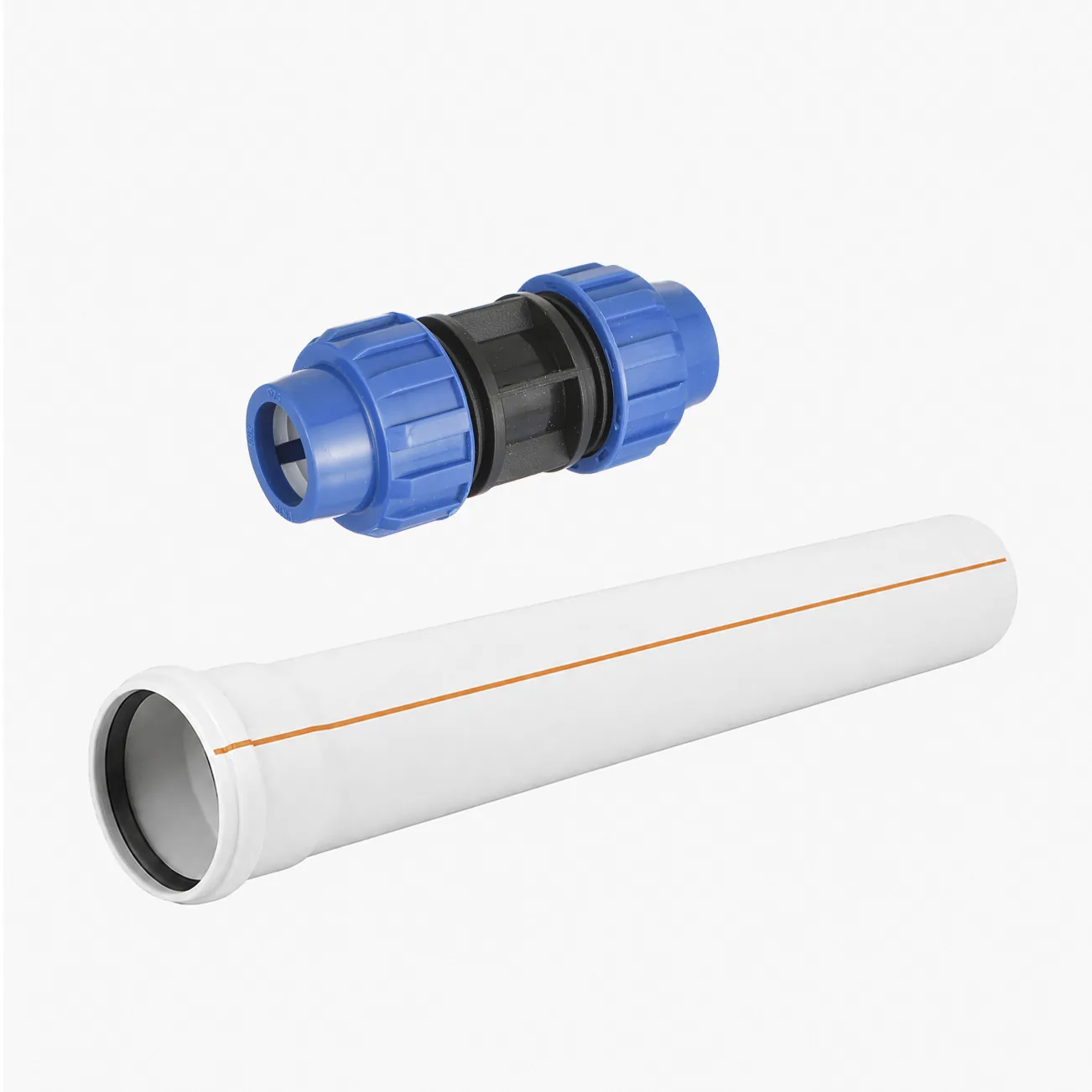
The failure looks like this. An importer buys a mixed trial container, sees “PPR pipe and fittings” on the packing list, and enters the whole consignment on one line under 3917.22. Customs opens the container, finds cartons of elbows, and reclassifies the fitting portion into 3917.40. The entry is amended, the duty recalculated on the corrected split, and the clearance sits idle while that happens. If the two subheadings carry different rates in that market — which they can — the importer also owes the difference, plus whatever the local penalty regime attaches to an incorrect declaration.
The fix is one line on the commercial invoice: separate the pipe value from the fitting value, put the correct subheading against each, and let the broker enter two lines instead of one. It costs nothing at invoicing and is expensive to retrofit at the port.
Valves are a third case again. A plastic-bodied ball valve is not a fitting in the 3917 sense — valves have their own heading in chapter 84, and a container carrying PPR ball valves and manifolds alongside pipe and fittings is a three-heading entry, not a two-line one. Put that question to your broker with the actual product photographs, not the product name.
HSN, HS, CN, GCC 12-digit: which one does your buyer need?
The same six digits travel under four different labels. The Harmonized System, run by the World Customs Organization, is internationally fixed to six digits. Every country then extends it for its own tariff and statistics, and the extensions do not match each other.
India calls its version the HSN code and runs to eight digits. An Indian buyer’s HSN 39172100 and an exporter’s HS 3917.21 describe exactly the same goods — the first six digits are identical, the last two are India’s own statistical split. So when a purchase order asks for “the PPR pipe HSN code”, the answer starts at 3917.22 and the buyer’s own tariff supplies the rest.
The EU runs 10-digit Combined Nomenclature codes, and its split is not by polymer. Each rigid subheading divides into a -10 line (seamless and of a length exceeding the maximum cross-sectional dimension, whether or not surface-worked, but not otherwise worked) and a -90 line for everything else. For polypropylene pipe that means 39172210 against 39172290. Your straight lengths land in -10 or -90 according to how they were finished — a question about the production process, not about the resin.
The Gulf moved further. The GCC Integrated Customs Tariff, a 12-digit unified customs code system, applies across all six GCC states: from 1 January 2025 in Bahrain, Kuwait, Oman, Qatar and Saudi Arabia, and from 1 August 2025 in the UAE, which is phasing it in by declaration type through to 2027. Paperwork for a Saudi or Emirati shipment now quotes twelve digits, not eight or ten. If your documentation template still carries an 8-digit Gulf code, it is out of date.
| Market | Code length | What decides the extension |
|---|---|---|
| WCO baseline (all countries) | 6 digits | Rigid vs flexible, then polymer; fittings separate at 3917.40 |
| India (HSN) | 8 digits | National statistical split; first 6 digits identical to HS |
| EU (Combined Nomenclature) | 10 digits | -10 seamless / not otherwise worked, vs -90 other — not polymer |
| GCC (Saudi Arabia, UAE and four others) | 12 digits | GCC Integrated Customs Tariff. 1 Jan 2025 in Bahrain, Kuwait, Oman, Qatar, Saudi Arabia; 1 Aug 2025 in the UAE (phased) |
How to find your own duty rate instead of trusting a table
Duty percentages for 3917 are quoted freely across dozens of code-lookup sites. The EU and Indian figures could not be confirmed against the official tariff databases when this page was compiled, so they are not printed here. Aggregator numbers are scraped, undated and frequently stale by a tariff cycle or two — and a rate that was right last year is worth nothing to a shipment clearing next month.
Look it up yourself. Three inputs are needed, and a rate quoted without all three is not a rate:
- The full national code, not the 6-digit subheading. Rates attach at 8, 10 or 12 digits depending on the market.
- The country of origin of the goods, not the port of loading. Preferential rates, quotas and trade defence measures are all origin-driven.
- The date of import. Tariff schedules change on published dates and preferential rates phase.
For the EU, that means TARIC or Access2Markets against the 10-digit CN code. For India, the CBIC tariff via ICEGATE. For the EAEU states — Armenia, Belarus, Kazakhstan, Kyrgyzstan and Russia — the rate is not a national decision at all: customs duty rates are set supranationally by the Eurasian Economic Commission in the Common Customs Tariff and apply uniformly across all members, so a Kazakh importer and a Belarusian importer read the same number off the same schedule.
One figure did survive verification across multiple independent sources, so it is safe to print: HSN 3917 attracts 18% GST in India, charged as 9% CGST plus 9% SGST on an intra-state sale, or as a single 18% IGST on an inter-state sale or an import. That is the tax most searches for “PPR pipe HSN code” are actually after, and it is separate from the import duty stack that sits above it.
For importers building a landed-cost model before they commit to a container. Send us the destination country and the product mix you are pricing, and we will return the HS lines split the way we would invoice them, plus the certificate package available for that market. Useful if you need to hand your broker something concrete before the rate lookup. Not a substitute for your own tariff check — we do not quote duty rates for your jurisdiction.
The EU: A.TR, the customs union, and the origin trap
For a European buyer, the tariff line for 3917 is usually beside the point. What matters is the EU-Turkey customs union.
Decision 1/95 of the EC-Turkey Association Council, adopted on 22 December 1995, established the final phase of that customs union, and it entered into force on 1 July 1996. It provides free movement — elimination of customs duties and quantitative restrictions — for industrial products. Agricultural products under Annex I of the Treaty and coal and steel products are carved out and run under separate preferential agreements based on originating status. Plastic pipe under chapter 39 is an industrial product, so it sits inside the customs union.
The document that carries the benefit is the A.TR movement certificate. With a valid A.TR, the EU third-country duty on the consignment goes to 0%. Since July 2024, electronically issued A.TR certificates bearing a QR code are accepted without a wet-ink signature, which removes one of the older courier delays.
A.TR is not a certificate of origin, and the difference costs money
This is where importers get caught. A.TR proves that goods are in free circulation in Turkey or the EU. That means either produced there, or imported from a third country with all import duties paid. It is a free-circulation status document. It says nothing about where the goods were made.
Anti-dumping and countervailing duties follow the goods’ origin, not their routing. Goods of third-country origin that are merely released into free circulation in Turkey keep that third-country origin, and they remain exposed to origin-based trade defence measures even while moving on an A.TR. The A.TR zeroes the third-country customs duty. It does not neutralise an anti-dumping measure aimed at the country where the goods were made. This is precisely why an experienced European buyer will ask for a separate Turkish certificate of origin alongside the A.TR rather than accepting the A.TR as proof of both.
Why we state this plainly rather than glossing it
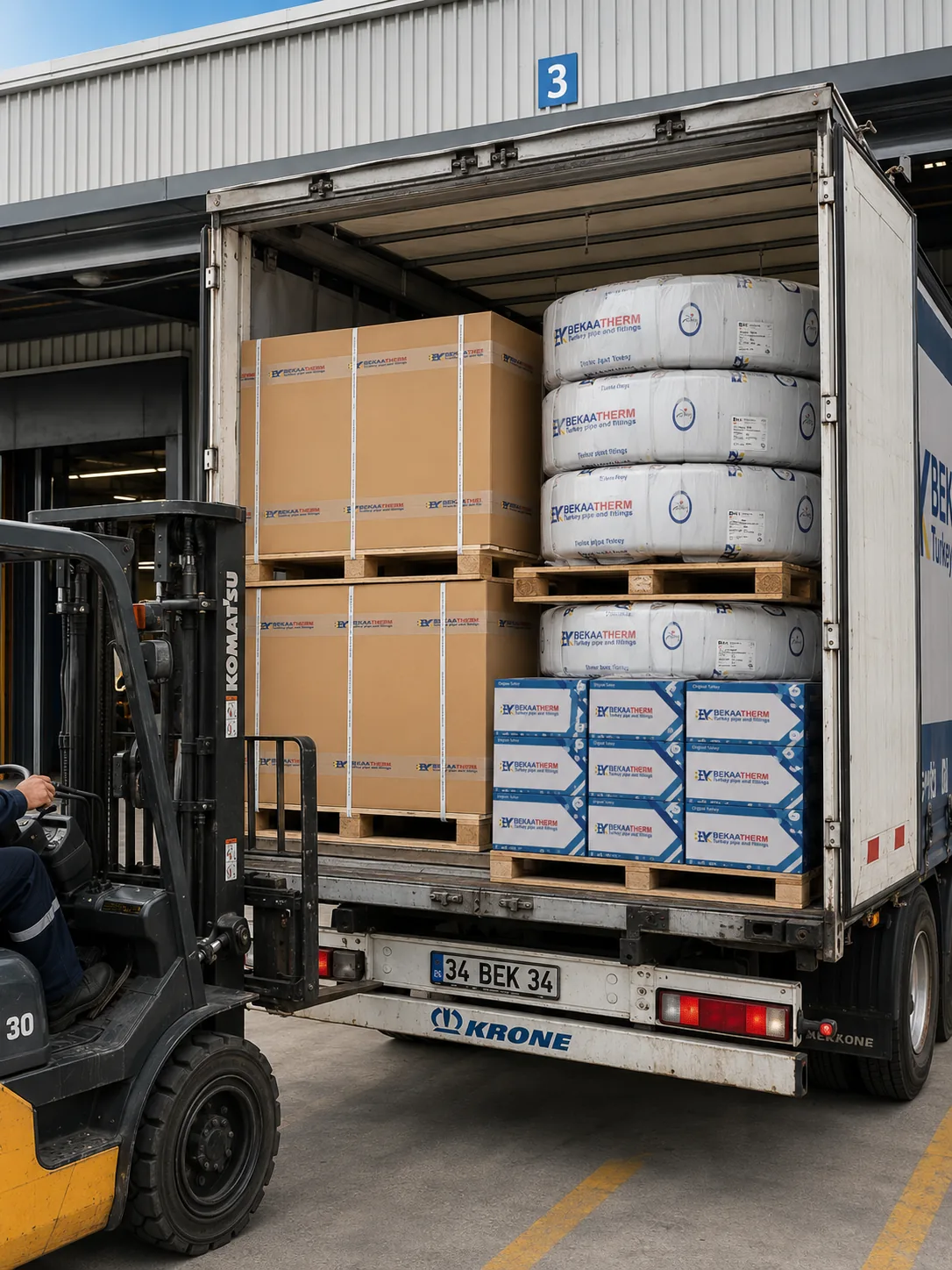
Bekaatherm supplies from two origins: Türkiye plus a Chinese partner plant, allocated by market. That makes the A.TR-versus-origin distinction operational rather than academic for anyone buying from us, and it would be dishonest to publish a page about EU duty without saying so.
The handling is procedural. Origin is confirmed in writing on the proforma invoice, per order, before anything is produced — so the buyer knows which origin they are contracting for when they approve the proforma, not when the documents arrive. Türkiye-origin goods are marked Made in Türkiye / TR. The certificate of origin, packing list and bill of lading are then kept consistent with each other and with that proforma. Buying for a European market with an active trade defence measure in your product scope? Say so at the enquiry stage, and origin allocation becomes part of the order terms rather than a downstream surprise.
Gulf markets: the 5% floor and the SABER gate
Saudi Arabia and the UAE both apply the GCC common external tariff. That tariff of at least five percent is levied on most goods imported from outside the GCC, and duties are assessed ad valorem on the CIF value — freight and insurance are inside the dutiable base, which is why an FOB-versus-CIF decision changes the duty payable and not only the freight bill. Confirm the specific rate for your 12-digit code with your clearing agent, because “at least five percent” is a floor, not a fixed number.
Duty is the easy part in Saudi Arabia. Conformity is what stops containers.
Products falling under a SASO technical regulation need two certificates, not one. A Product Certificate of Conformity (PCoC) covers the product line, and a separate Shipment Certificate of Conformity (SCoC) is required for every single consignment. Holding a valid PCoC does not exempt a shipment from needing its own fresh SCoC. Importers new to the market routinely budget for the first certificate and not the second.
There is a newer layer on top. Bureau Veritas has notified that conformity assessment bodies cannot issue any Shipment Certificate on the SABER portal if the Declaration of Conformity is not available and approved by the Saudi Ministry of Industry and Mineral Resources (MIMR). The covered list explicitly includes plastic pipes and fittings, under Saudi 12-digit codes 391729000001–003 and 391740000000. Note that 391740 line: it is the fittings code again, named separately, which is one more reason the fittings split is not a paperwork nicety.
No implementation date is attached to that requirement here. Published dates in circulation for the broader MIMR declaration programme conflict with each other, and the notices that carry firm dates cover steel and ferro-alloy codes rather than plastics. Confirm the current Appendix scope with your conformity assessment body before you book the vessel — that is a five-minute email, and it is the difference between a container that clears and a container that sits.
Egypt, Nigeria, Kenya: certified before the vessel sails
Three markets, one shared lesson: the gate is upstream of the port.
Egypt runs a requirement that has nothing to do with duty at all. Under Decree 43/2016, listed products may only enter Egypt if the producing factory — or the trademark owner — is registered in advance in the GOEIC register. Consignments from unregistered factories are not accepted, regardless of duty paid. An importer can have the tariff classification perfect, the duty calculated to the piastre, the funds in place, and still be unable to clear the goods because the factory is not on the list. Registration is a supplier-side process with a lead time, so it belongs in the sourcing conversation, not the shipping one.
Nigeria runs SONCAP under the Standards Organisation of Nigeria. Kenya runs PVoC — Pre-Export Verification of Conformity — a conformity assessment applied in the exporting country against Kenyan technical regulations and mandatory standards. The operative word in both is pre-export. The inspection and certification happen in the country of manufacture, before shipment. Discover the requirement after the container has sailed and you are looking at destination inspection at a penalty, or a return.
For a plastics pipe shipment, the practical consequence is that your conformity file has to exist before the loading date. Product standards quoted on the invoice and test certificates need to match what the inspector is checking against: PPR to ISO 15874-1, -2, -3 and -5 with DIN 8077 and DIN 8078 for dimensions and general quality requirements; HDPE to ISO 4427, EN 12201 and DIN 8074/8075; PP compression fittings to ISO 14236; UPVC drainage and sewer to EN 1329 and EN 1401. Supporting certification — SKZ, ISO, CE and WRAS — carries the file. A standard number written on the invoice that does not appear on any test report is worse than writing nothing, because it invites the inspector to ask for the report.
A worked mixed container, split across HS lines
Abstract rules get ignored. Here is what the split looks like on a real first order.
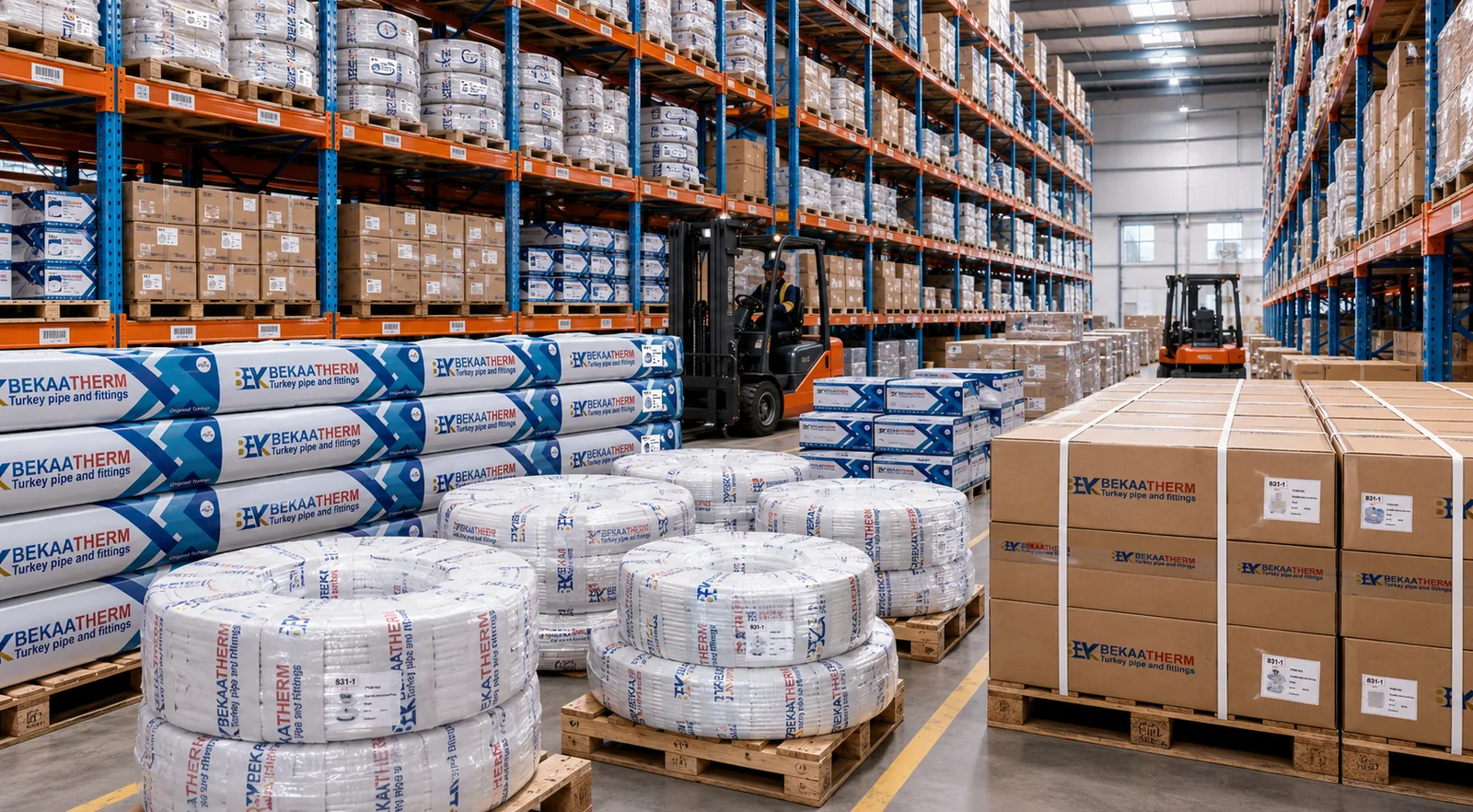
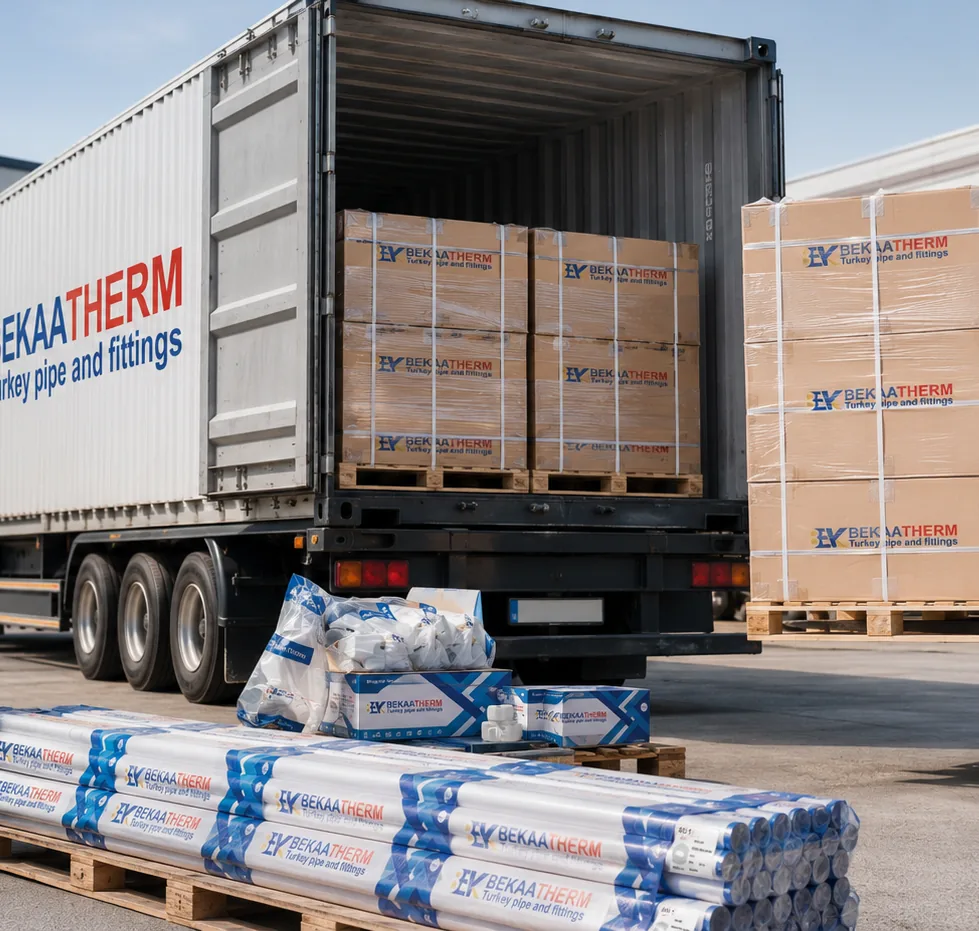
Our minimum for a mixed trial order is one 20GP container carrying pipe, fittings and valves. A 20GP gives roughly 33 m³ usable against a payload of about 28 tonnes, and takes roughly 8,000–9,000 m of 20 mm PN20 pipe when the bundles are telescoped. A typical mix runs about 60% pipe, 30% fittings and 10% valves by volume.
Read that mix against the classification rules and the conclusion is unavoidable: a mixed trial container is never a single-line customs entry. The 60% pipe portion splits across 3917.21, 3917.22 or 3917.23 by polymer. The 30% fittings portion goes to 3917.40 whatever the polymer. The 10% valves portion is a separate conversation with your broker entirely. Three physical product groups, at least three declaration lines.
| Invoice line | HS subheading | Standard to quote alongside it |
|---|---|---|
| PPR pipe, hot and cold water | 3917.22 | ISO 15874-2, DIN 8077, DIN 8078 |
| HDPE / PE pressure pipe | 3917.21 | ISO 4427, EN 12201, DIN 8074/8075 |
| UPVC drainage and sewer pipe | 3917.23 | EN 1329, EN 1401 |
| PPR fittings — sockets, elbows, tees | 3917.40 | ISO 15874-3 |
| PP compression fittings | 3917.40 | ISO 14236 |
| Ball valves and manifolds | Confirm with your broker — valves are not 3917 | ISO 15874-5 for system suitability |
Timing matters as much as the split. Regular in-production sizes run 15–25 days; an OEM or private-label run needs 30–45 days. Add conformity lead time on top for a SABER, SONCAP or PVoC market — certification runs in parallel with production, but only if it starts when production does. Payment terms are 30% T/T deposit with 70% against copy B/L, and an irrevocable L/C at sight is accepted from USD 50,000. That matters here because the L/C document list and the customs document set must be drafted to agree. A gap between what the bank requires and what customs requires is a self-inflicted delay.
Best for, and not for
This approach fits you if: you are importing a mixed pipe-and-fitting container for the first time, you are quoting a landed cost to a project client and need the duty base right, or you are a European buyer weighing Turkish supply against another origin and need to understand what the A.TR does and does not cover.
This is not for you if: you are a domestic Indian trader who only needs an HSN code for a GST invoice — take 3917.22 and the 18% GST figure and stop reading. It is also not for you if you need a binding classification ruling. A binding ruling comes from your customs authority, not from a supplier’s website, and if the classification of a specific construction is genuinely contested, apply for one.
The documents that must agree with each other
Most customs holds traceable to paperwork come from the same cause: two documents in the pack describe the same goods differently. Nobody is trying to defraud anyone. A description gets updated on the invoice and not on the packing list, or a certificate is issued against the catalogue product name while the bill of lading carries the shipping mark.
Run this check before the documents go out, not after:
- Origin. The certificate of origin, the packing list and the bill of lading state one origin and it is the same one. For a dual-origin supplier that is the single highest-value check in the pack.
- HS lines. Every HS code on the commercial invoice appears on the packing list against the same goods description and the same quantity unit.
- Fittings separated. The fittings value is broken out on its own 3917.40 line rather than folded into the pipe line.
- Standards. Any standard number quoted on the invoice is backed by a test report or certificate in the pack, covering the sizes actually shipped.
- Marking. Pipe surface print, carton labels and the shipping marks on the packing list read the same way. An inspector compares the print on the pipe to the paper.
- Conformity documents. For SABER, SONCAP, PVoC or GOEIC markets, the certificate references the same consignment and the same shipper as the bill of lading.
Nothing on that list is difficult. All of it is cheap before loading and expensive after arrival, and the ratio between those two costs is the whole argument for checking.
For buyers about to place a first mixed container and wanting the paperwork right the first time. Send your destination market and product mix. We will confirm the origin allocation in writing on the proforma before production starts, split the invoice by HS line, and tell you which conformity route applies in your market. If you are still at the stage of comparing certification scope, the certifications page covers SKZ, ISO, CE and WRAS without needing to email anyone.
Classification and duty information here is general guidance compiled from the sources linked above and is current as of publication. Tariff rates, conformity programme scopes and code structures change. Nothing on this page is a binding tariff classification or a substitute for advice from your customs broker or the customs authority in your import market.
Frequently Asked Questions
What is the HSN code for PPR pipe?
PPR pipe classifies under HS subheading 3917.22 — tubes, pipes and hoses, rigid, of polymers of propylene. In India the HSN code extends this to eight digits, but the first six digits are the same. PPR fittings do not share this code; they classify in 3917.40.
What is the HS code for HDPE pipe and UPVC pipe?
Rigid HDPE and other PE pipe classifies in 3917.21, tubes, pipes and hoses, rigid, of polymers of ethylene. Rigid UPVC and PVC pipe classifies in 3917.23, of polymers of vinyl chloride. Rigid pipe of any other plastic falls to 3917.29.
Do plastic pipe fittings use the same HS code as the pipe?
No. Fittings such as joints, elbows and flanges classify in 3917.40 regardless of polymer. A PPR socket, a PP compression coupling and a UPVC bend all sit in 3917.40, while the pipe they connect sits in 3917.21, 3917.22 or 3917.23. Entering a mixed container on a single pipe code is the most common reclassification trigger.
Is an HSN code the same as an HS code?
The first six digits are identical. HS is the World Customs Organization’s six-digit international standard; India’s HSN extends it to eight digits for national tariff and statistical purposes. An Indian buyer’s HSN 39172100 and an exporter’s HS 3917.21 describe the same goods.
What GST rate applies to HSN 3917 in India?
HSN 3917 attracts 18% GST. On an intra-state sale that is charged as 9% CGST plus 9% SGST; on an inter-state sale or an import it is a single 18% IGST. This is separate from basic customs duty and any other import levies, which should be checked against the current CBIC tariff.
Do Turkish pipes enter the EU duty free, and what document is required?
Plastic pipe is an industrial product under chapter 39 and sits inside the EU-Turkey customs union established by Decision 1/95 of the EC-Turkey Association Council, in force since 1 July 1996. With a valid A.TR movement certificate the EU third-country duty on the consignment goes to 0%. Since July 2024 electronically issued A.TR certificates with a QR code are accepted without a wet-ink signature.
Is an A.TR certificate proof of Turkish origin?
No. A.TR proves free circulation status — that goods were either produced in Turkey or the EU, or imported from a third country with all import duties paid. It is not an origin document. Anti-dumping and countervailing duties follow the goods’ origin rather than their routing, so third-country goods released into free circulation in Turkey remain exposed to origin-based trade defence measures even when moving on an A.TR. Buyers in scope of such measures should ask for a separate certificate of origin.
What duty applies to plastic pipe in Saudi Arabia and the UAE?
Both apply the GCC common external tariff of at least five percent on most goods imported from outside the GCC, assessed ad valorem on the CIF value. Since 1 January 2025 the GCC Integrated Customs Tariff has used 12-digit codes, with the UAE moving across from 1 August 2025, so confirm the exact rate against your full 12-digit code with a local clearing agent.
What conformity paperwork does a Saudi shipment of plastic pipe need?
Products under a SASO technical regulation need a Product Certificate of Conformity for the product line and a separate Shipment Certificate of Conformity for every individual consignment. Bureau Veritas has also notified that conformity assessment bodies cannot issue a Shipment Certificate on SABER without a Declaration of Conformity approved by the Saudi Ministry of Industry and Mineral Resources, and the covered list explicitly includes plastic pipes and fittings under Saudi codes 391729000001–003 and 391740000000. Confirm the current Appendix scope with your conformity assessment body before booking.
What can block an Egyptian import even when the duty is paid?
Decree 43/2016 requires that the producing factory, or the trademark owner, is registered in advance in the GOEIC register for listed products. Consignments from unregistered factories are not accepted regardless of duty paid, so factory registration status belongs in the supplier selection conversation rather than the shipping one.
Why does this page not publish EU or Indian import duty percentages?
Because we could not confirm them against TARIC, Access2Markets or the CBIC tariff at the time of writing, and an unverified duty rate copied from an aggregator is worse than no figure at all. Duty attaches to the full national code, the origin of the goods and the date of import — look it up against those three inputs in the official database for your market. The 18% Indian GST figure is published here because it was corroborated across multiple independent sources.