Payment terms on an import order decide one thing above all: how many days your money sits outside your control while the goods are still someone else’s problem. A distributor buying a container of PPR pipe from Türkiye sees a proforma invoice reading “30% T/T deposit, 70% against copy B/L, FOB İstanbul.” Four short clauses. Each moves cash, risk, or both, and only one is about price.
Most guides define T/T and L/C, then stop. The part that costs buyers money sits one layer down. Under ICC UCP 600 sub-article 14(b) a bank has a maximum of five banking days after presentation to decide whether your documents comply — and under article 16(f), a bank that misses the refusal deadline loses the right to call them discrepant at all. On the other side, a Turkish exporter is not free to offer open account indefinitely: the Central Bank of the Republic of Türkiye requires export proceeds to be repatriated within 180 days of the actual export date. That is regulation, not haggling, and knowing it changes the shape of the negotiation.
Key takeaways
- The standard structure here is 30% T/T deposit and 70% against copy bill of lading. Your balance falls due when the goods are on board and the shipping documents exist — not when the container reaches your port.
- An irrevocable letter of credit at sight is accepted from USD 50,000. Below that value, bank charges usually eat more margin than the credit protects.
- Banks get five banking days maximum to examine documents (UCP 600 sub-article 14(b)), and a refusal notice must be sent by the close of that fifth day or the bank is precluded from refusing (16(c)–16(f)).
- Transport documents must be presented within 21 calendar days of shipment and before the credit expires (14(c)). A short credit validity plus a long ocean leg is how a clean shipment still goes unpaid.
- Under FOB and CIF, risk passes when the goods are on board the vessel. CIF moves the cost of carriage and insurance to the seller; it does not move the risk point.
- CIF default insurance is Institute Cargo Clauses (C), not all-risks. Incoterms 2020 sets the higher Clauses (A) level as default under CIP, not CIF.
- A Turkish exporter must repatriate proceeds within 180 days of actual export, and where the contract states a longer maturity, within 90 days of that maturity — with the term evidenced in writing to the bank.
What 30/70 against copy B/L actually does to your cash
Our standard term is 30% telegraphic transfer deposit, with the remaining 70% payable against a copy bill of lading. Read that second half slowly, because it is where buyers misjudge their cash position. A copy B/L means the goods have been loaded and the carrier has issued the transport document. The balance falls due at that point — not on arrival, not after customs clearance, not after your first resale.
The deposit is really the moment production capacity gets committed. Regular in-production sizes run 15 to 25 days; a private-label run takes 30 to 45 days; a first colour match or new mould adds another 7 to 10. During that window the deposit is spent, the goods do not exist yet, and you hold nothing but a proforma invoice. That is the genuinely exposed part of the term, and it is short.
The 70% is a different exposure. You pay against a document proving the goods are on board, then wait out the ocean leg holding cargo you have paid for in full. Sell on 60-day terms to your own trade customers and you are looking at three months of working capital in one container. The way to shrink that is not to fight the payment split — it is to fill the container correctly the first time.
Loading maths that changes the cash number
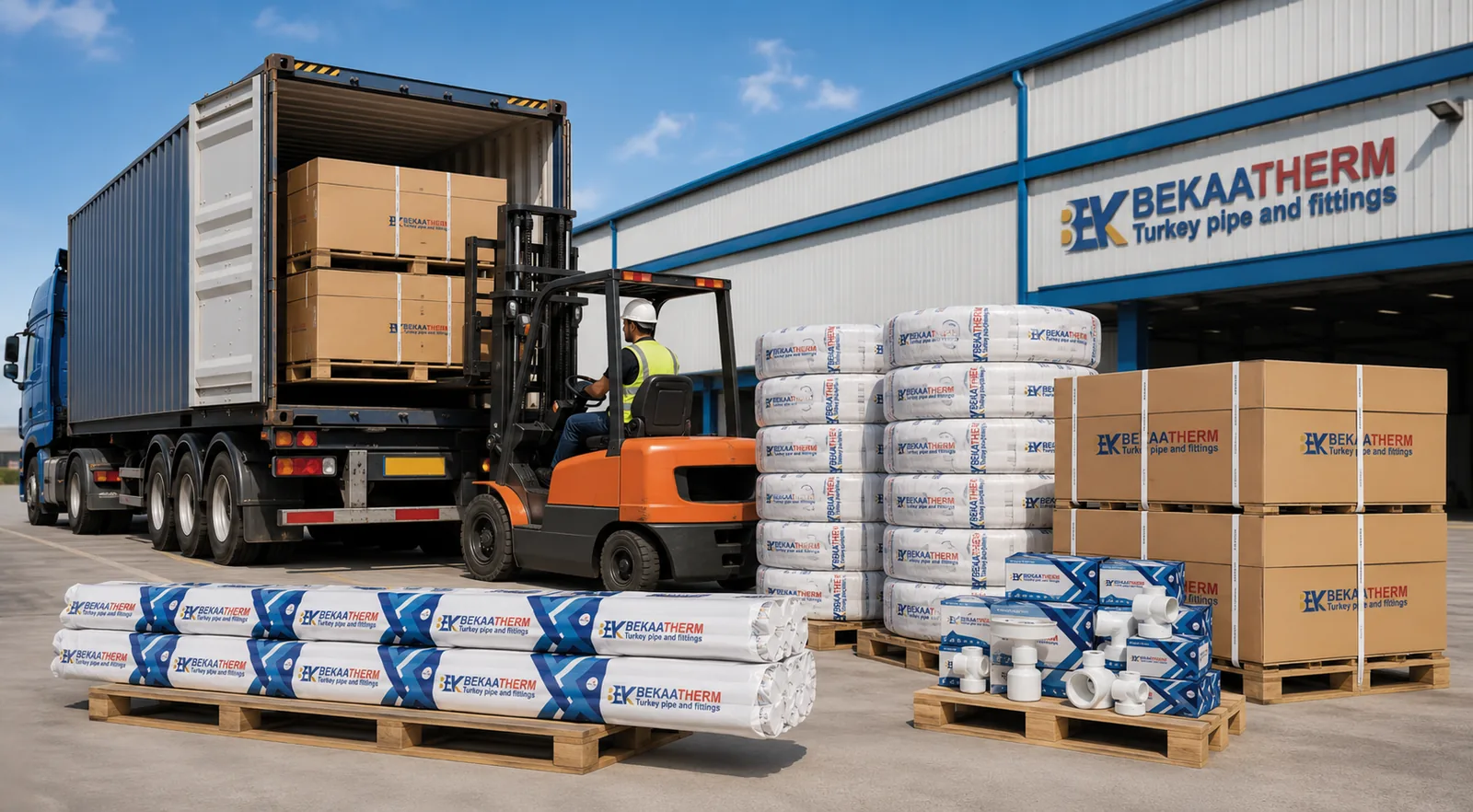
A 20GP gives roughly 33 m³ of usable volume against about a 28 tonne payload, and a 40HQ gives roughly 76 m³. Pipe is a volume cargo, not a weight cargo, so the volume number binds first almost every time. As a reference point, a 20GP takes roughly 8,000 to 9,000 metres of 20mm PN20 pipe when the bundles are telescoped. A mixed load typically runs about 60% pipe, 30% fittings and 10% valves by volume — and fittings are what quietly stop a distributor from placing an emergency air-freight order eight weeks after landing.
Trial orders start at one 20GP mixed container. Single-size orders have a floor of 500 kg per size and colour, and a branded first run needs one 40HQ, or 3 tonnes per colour. Those numbers set your minimum cash commitment; the payment term only decides when it moves.
T/T or L/C: the honest threshold
Our position, stated plainly: for a first order under USD 50,000, a letter of credit is usually the wrong instrument — and we say so even though the L/C protects us more than it protects you. We accept an irrevocable L/C at sight from USD 50,000 upward. Below that, issuance, advising, amendment and discrepancy charges look material against the value of the goods, and you have added two banks and a document-examination process to a transaction a 30/70 split already handles.
“At sight” means the issuing bank pays when compliant documents are presented. A usance credit — written as “60 days after B/L date” or similar — defers that payment, which improves your cash cycle but changes what the seller is financing. Ask for usance only if you can live with a longer credit validity, because the presentation deadlines below apply either way.
| Term | When your money moves | Who is exposed, and when | Sensible use |
|---|---|---|---|
| 30% T/T deposit, 70% against copy B/L | 30% at order, 70% once loaded and B/L issued | Buyer carries the deposit through the production window | Trial and repeat containers; the default here |
| Irrevocable L/C at sight | On presentation of compliant documents | Seller carries document risk; buyer carries bank cost | Accepted from USD 50,000 |
| Usance L/C | At the stated maturity after presentation or B/L date | Seller finances the deferral and repatriation clock | Established accounts; term must be documented |
| Open account | After arrival, on agreed credit days | Seller carries everything, inside a legal deadline | Rare; constrained by repatriation rules |
One caution about the L/C literature online. Many articles repeat a figure for how often documentary presentations are refused first time. We will not print a percentage, because the sources circulating it attribute it to no ICC survey and no year. What is not in dispute is that first presentations are refused often enough that experienced traders reconcile every document against the credit before it reaches the bank. That procedure is worth more to you than the statistic.
30/70 T/T is best for distributors placing one to a few containers a year who can carry a deposit through a three to four week production window. It executes fastest, costs least in bank charges, and adds no document-examination step. It is not for buyers whose lender or treasury policy demands documentary control, or whose internal approvals cannot release a deposit against a proforma invoice — a credit fits those controls better even at higher cost.
An L/C at sight is best for orders at or above USD 50,000, first transactions where neither side has a track record, and markets where your bank expects documentary settlement. It is not for small repeat orders, or for anyone treating a credit as a substitute for checking the goods. A letter of credit tests documents, not pipe. It pays against a compliant presentation whether or not the certification pack behind it is what you expected — which is why certificate scope belongs on the proforma, and why samples exist before the first bulk order.
What is the difference between D/P, D/A and a letter of credit?
Under D/P and D/A the banks only pass documents along and never promise to pay; under a letter of credit the issuing bank itself undertakes to pay against compliant documents. That single difference — a bank’s undertaking versus a bank’s courier service — is why collections are cheaper and why they sit between T/T and L/C on every risk scale.
Documentary collections run under the ICC’s Uniform Rules for Collections, URC 522, in force since 1 January 1996. The exporter ships, hands the bill of lading and invoice to its bank, and instructs the buyer’s bank to release them either against payment (D/P, also called CAD, cash against documents) or against the buyer’s acceptance of a time draft (D/A). Neither bank examines the documents for compliance the way UCP 600 requires, and neither is liable if the buyer walks away. The table puts the five instruments on one axis.
| Instrument (rules) | When the buyer pays | Buyer’s main exposure | Seller’s main exposure | Bank cost (relative) |
|---|---|---|---|---|
| 30% T/T deposit, 70% against copy B/L (sales contract only) | 30% at order; 70% when the copy B/L is issued | Deposit through the 15–25 day production window; balance paid before inspection at destination | Goods loaded before the 70% arrives | Lowest — wire fees only |
| D/P, documents against payment (URC 522) | At its own bank, to take up the B/L after the vessel has sailed | Pays against documents, not goods; no deposit at risk | Buyer declines the documents and the container sits at the destination port at the seller’s cost | Low — collection fees at both banks |
| D/A, documents against acceptance (URC 522) | At maturity of the accepted draft, e.g. 60 days after sight | Minimal — goods in hand before payment | Unsecured credit to the buyer after title has passed; repatriation clock still running | Low |
| Irrevocable L/C at sight (UCP 600) | Issuing bank pays on a compliant presentation; buyer reimburses the bank | Issuance, advising and amendment fees; a credit tests documents, not pipe | Discrepancies; 21-day presentation window; five banking days for examination | Highest — two banks and a document check |
| Open account (sales contract only) | After arrival, on agreed credit days | None | Everything, inside the CBRT 180-day repatriation deadline | Lowest |
| Sources: ICC Uniform Rules for Collections, URC 522 (1995 revision, in force 1 January 1996); ICC UCP 600 (2007 revision) sub-articles 14(b), 14(c), 16(c)–(f); ICC Incoterms 2020 for the risk-transfer point; Central Bank of the Republic of Türkiye, Export Circular (180-day repatriation rule). Fee levels are relative, not quoted amounts — ask each bank for its schedule. | ||||
Where a collection genuinely helps a distributor is the middle case: an order under USD 50,000, where a letter of credit costs more than it protects, but with a treasury policy that will not release a 30% deposit against a proforma. D/P removes the deposit and keeps a bank between the two parties without the UCP 600 apparatus. What it does not do is protect the buyer against the goods: the bill of lading is released against payment, and by then the container is at sea. That is the same document-not-pipe caveat as a letter of credit, which is why the customs and document pack — certificate of origin, packing list and B/L agreeing with each other — matters more under a collection than the instrument does.
On our side the two instruments on the proforma are the ones already stated: 30% T/T deposit, 70% against copy B/L, and an irrevocable L/C at sight accepted from USD 50,000. Documentary collection is a conversation to have in writing at proforma stage rather than an assumed option, because for a Turkish exporter a D/A maturity has to be documented for the bank under the repatriation rules just like any other deferred term. Whichever instrument is chosen, the certificate pack that ships with the goods names the schemes by number — SKZ, ISO 15874, CE and WRAS — so a document checker can match certificate holder to invoice name; the SKZ register is the place to verify the German one. And because a collection or a credit is only ever as clean as the container behind it, the loading plan should be fixed before the instrument: our 20GP mixed-container planning guide covers the 60/30/10 split that keeps a first order off emergency air freight.
The four UCP 600 deadlines that decide whether you get paid attention
If you open a letter of credit, the rulebook is the ICC’s Uniform Customs and Practice for Documentary Credits, UCP 600. Four provisions do most of the practical work.
- Five banking days to examine (14(b)). A bank has a maximum of five banking days following the day of presentation to determine whether a presentation complies. UCP 600 removed the older “reasonable time” standard, so there is now a hard ceiling rather than a judgement call.
- 21 calendar days to present transport documents (14(c)). A presentation including original transport documents must be made no later than 21 calendar days after the shipment date, and in any event no later than the credit’s expiry date.
- Documents must not conflict (14(d)). Data in a document must not conflict with data in that document, in any other stipulated document, or in the credit itself.
- Refuse by day five or lose the right (16(c)–16(f)). A single notice stating each discrepancy must be sent by telecommunication no later than the close of the fifth banking day following presentation. A bank that fails to act in accordance with those provisions is precluded from claiming the documents are discrepant.
That last one is the buyer-protective rule almost everyone skips. A bank cannot sit on a presentation, watch the market move, then produce a discrepancy list on day twelve. If you are relying on a credit, diary the fifth banking day after presentation and ask what happened on it. The 21-day rule deserves the same attention for a different reason: a short credit validity against a long ocean leg is one of the most common ways a physically perfect shipment ends up unpaid on a technicality. Set validity against the actual routing, not an optimistic one.
On charges: bank amendment and discrepancy fees vary by bank and country, and the figures quoted in trade blogs are not reliable. Ask your issuing bank for its discrepancy fee schedule in writing before the credit is opened, and treat it as landed cost rather than a surprise. If you present electronically, the current ICC supplement is eUCP Version 2.1, a 14-article supplement to UCP 600 aligned with the UNCITRAL Model Law on Electronic Transferable Records.
Who carries the risk: FOB, CFR, CIF and the insurance trap
We quote FOB İstanbul or Mersin by default, with CFR and CIF on request. The most useful thing to understand about all three: the point where cost transfers and the point where risk transfers are not the same point. Under the ICC Incoterms 2020 rules, risk passes from seller to buyer when the goods are on board the vessel — under FOB and CIF alike. CIF adds the seller’s obligation to pay carriage and insurance to the named destination port. It does not push the risk point forward to that port.
Put concretely: if a container of yours is damaged mid-ocean on CIF terms, the loss is on your side of the risk line. What you have is an insurance claim — which is where the second trap sits.
Under Incoterms 2020, CIF default cover is Institute Cargo Clauses (C) — a limited named-perils level. Clauses (A), the broad cover, is the default under CIP, not CIF.
A buyer who assumes “CIF means it is insured” is typically under-insured by default. You can agree higher cover, but you have to ask for it and have it written into the contract. Against the value of a full container, it is a small line item.
One more trap. FAS, FOB, CFR and CIF are reserved for sea and inland waterway transport under Incoterms 2020, yet buyers routinely write FOB on shipments actually handed over at an inland depot. FCA is the correct rule for that handover. Each Incoterms rule is set out in the official ICC text as ten seller obligations (A1–A10) against ten buyer obligations (B1–B10) — if a dispute ever reaches your lawyer, that grid is what they will read.
| Rule | Seller pays freight? | Risk passes | Insurance default |
|---|---|---|---|
| FOB | No | Goods on board the vessel | None required of the seller |
| CFR | Yes, to destination port | Goods on board the vessel | None required of the seller |
| CIF | Yes, plus insurance | Goods on board the vessel | Institute Cargo Clauses (C) |
| CIP | Yes, plus insurance | On handover to the first carrier | Institute Cargo Clauses (A) |
Why a Turkish supplier pushes back on open account
Every distributor eventually asks: why can’t I just pay after I sell the goods? With a Turkish supplier the answer is not commercial posture. It is the Central Bank of the Republic of Türkiye’s Export Circular, which requires export proceeds to be brought into the country within a maximum of 180 days from the actual export date, and in principle directly and without delay once the importer pays. That is why an exporter here cannot casually offer 150-day open account on top of a 40-day sailing. The clock runs from the export date, not from your payment date.
There is a documented path for longer terms, and it is the useful part for a distributor. Where the sales contract provides for a maturity beyond 180 days from actual export, proceeds must be brought in within 90 days of that maturity — and the exporter must present the contract, or a proforma invoice or bill evidencing the term, to the intermediary bank. Extended terms are not forbidden. They are conditional on being written down. If you want 90 or 120 days on repeat orders, ask for the term to be stated on the proforma from the start, because that is exactly the paperwork the exporter’s bank will want to see.
Two more provisions explain supplier behaviour that otherwise looks strange. At least 35% of export proceeds tied to a documented foreign-exchange purchase must be sold to the intermediary bank, which sells it on to the Central Bank the same day at the announced buying rate — in force through 31 January 2027 inclusive. And banks may write off shortfalls up to USD 15,000 per customs declaration regardless of payment method, plus shortfalls above that but not exceeding USD 100,000 and up to 10% of the declared value. Below the first threshold a small unpaid balance is administratively closable; above it, the exporter has an open file with its bank. That is why a supplier chases a modest final balance harder than the amount alone would justify.
These are current regulatory positions and they do change. Treat the figures above as the state of the circular as cited, and confirm the current position with your bank or a trade finance adviser before building a payment structure around them.
Dual-origin supply and the documents that must agree
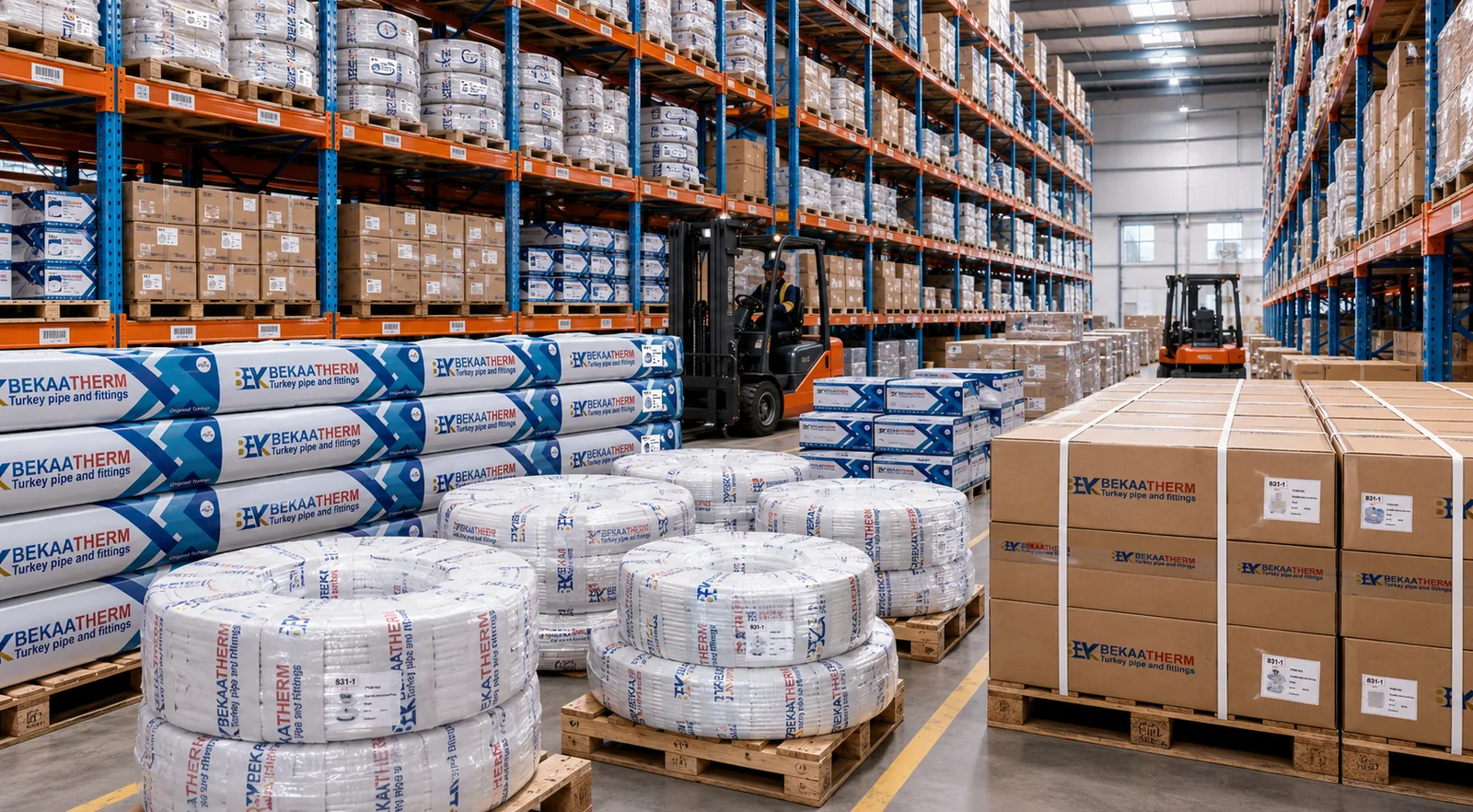
We supply from two origins: our plant in Türkiye and a partner plant in China. Origin is allocated by market and confirmed in writing on the proforma invoice for every order before anything ships. This belongs in a payment-terms article because origin is where a payment problem and a clearance problem meet.
Recall UCP 600 sub-article 14(d): data in a document must not conflict with data in any other stipulated document or in the credit. A certificate of origin naming one country while the bill of lading shows a load port in another is exactly the conflict a document checker is paid to find. Our rule is that the certificate of origin, packing list and bill of lading must agree — same shipper, consignee, port, quantity and weight. If those three disagree you get a discrepant presentation and a stalled customs entry from one root cause. Confirm origin in writing before the deposit, and make sure any credit you open describes the shipment in terms the actual origin can satisfy.
Classification and preference documents
Plastic pipes and fittings fall under HS heading 3917 — tubes, pipes and hoses and their fittings, of plastics. Rigid tubes of polymers of propylene sit at 3917.22, and fittings at 3917.40. We stop at six digits deliberately: national tariff codes run to eight or ten digits and the duty attached is specific to your country. Check your own national tariff under heading 3917 rather than trusting a figure printed in an article like this one.
For Türkiye-to-EU shipments, one document distinction is worth carrying. The A.TR movement certificate evidences free-circulation status under the Türkiye–EU Customs Union; it is not a certificate of origin. EUR.1 is the document evidencing preferential origin. Buyers conflate the two, ask for the wrong one on the credit, and find the presentation refused. Confirm which your entry requires with your customs broker, since requirements vary by product and by the importer’s role.
What we put on the proforma before a deposit moves
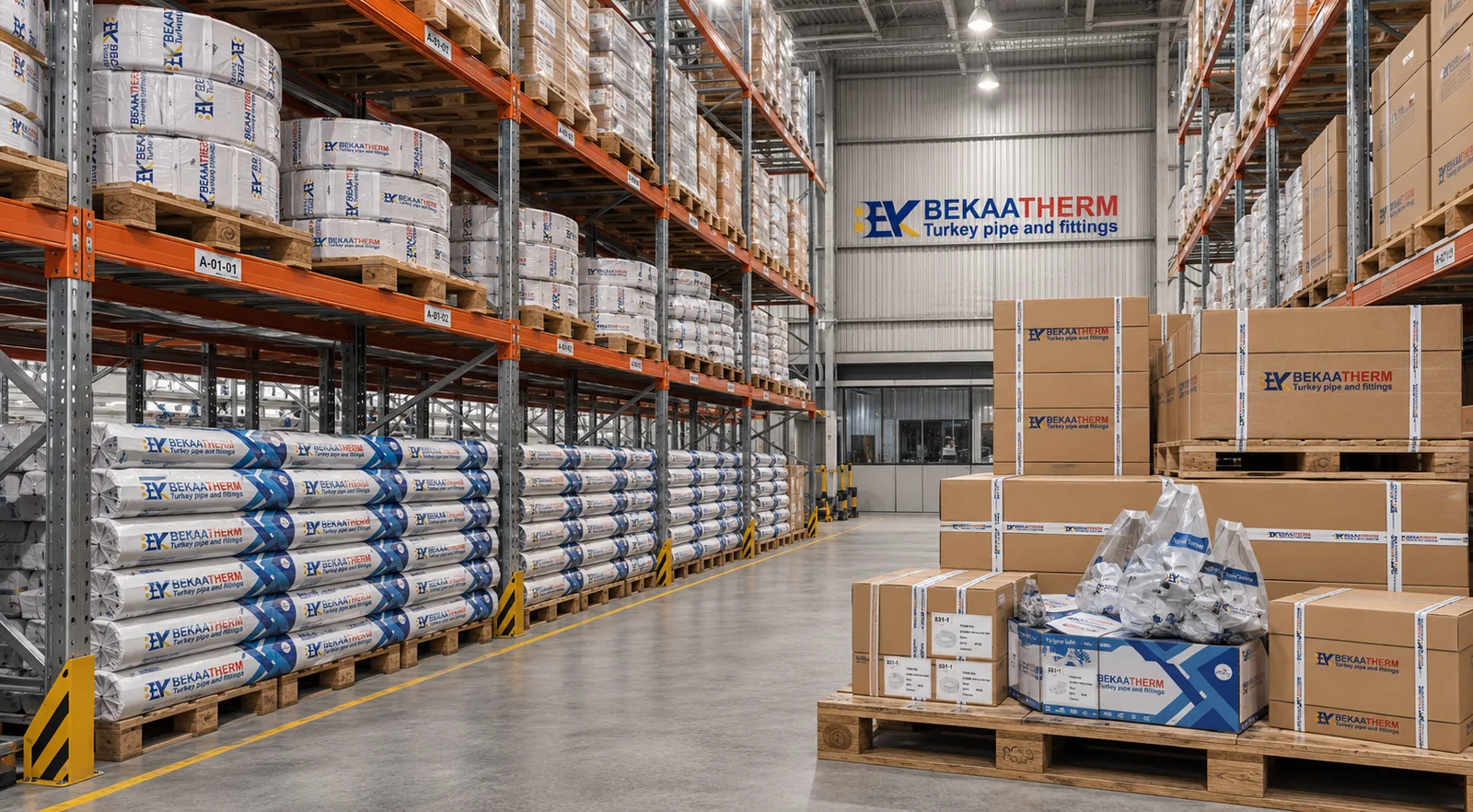
A proforma invoice is not a formality. It fixes the payment term, the origin and the loading plan, and under the CBRT circular it can be the document evidencing an extended payment term to a bank. Ours carries a fixed set of items — insist on every one of them from any supplier, not only from us.
- Payment term in full: 30% T/T deposit, 70% against copy B/L — or the agreed credit type and maturity where a longer term was negotiated.
- Trade term and named port: FOB İstanbul or FOB Mersin by default, CFR or CIF on request, always with the port named.
- Origin, confirmed in writing: Türkiye or the partner plant, allocated per market, stated per order.
- Loading plan: container type, volume against the 33 m³ or 76 m³ envelope, and the pipe-to-fittings-to-valves split.
- Lead time against a date: 15–25 days for regular sizes, 30–45 for private label, plus 7–10 for a first colour match or new mould.
- Certificate pack: which certifications apply to which line, so your inspector and your customs entry work from the same list.
Price is quoted on request, and a quotation contains the FOB unit price, the loading plan and the certificate pack together. That combination is deliberate: a unit price without a loading plan says nothing about landed cost per metre, and a loading plan without a certificate pack says nothing about whether the goods will clear. Before committing to a full container, standard samples are free for up to three items on freight-collect terms, and branded samples take 7 to 10 days with the cost credited against the first bulk order.
One container, end to end: where the cash actually sits
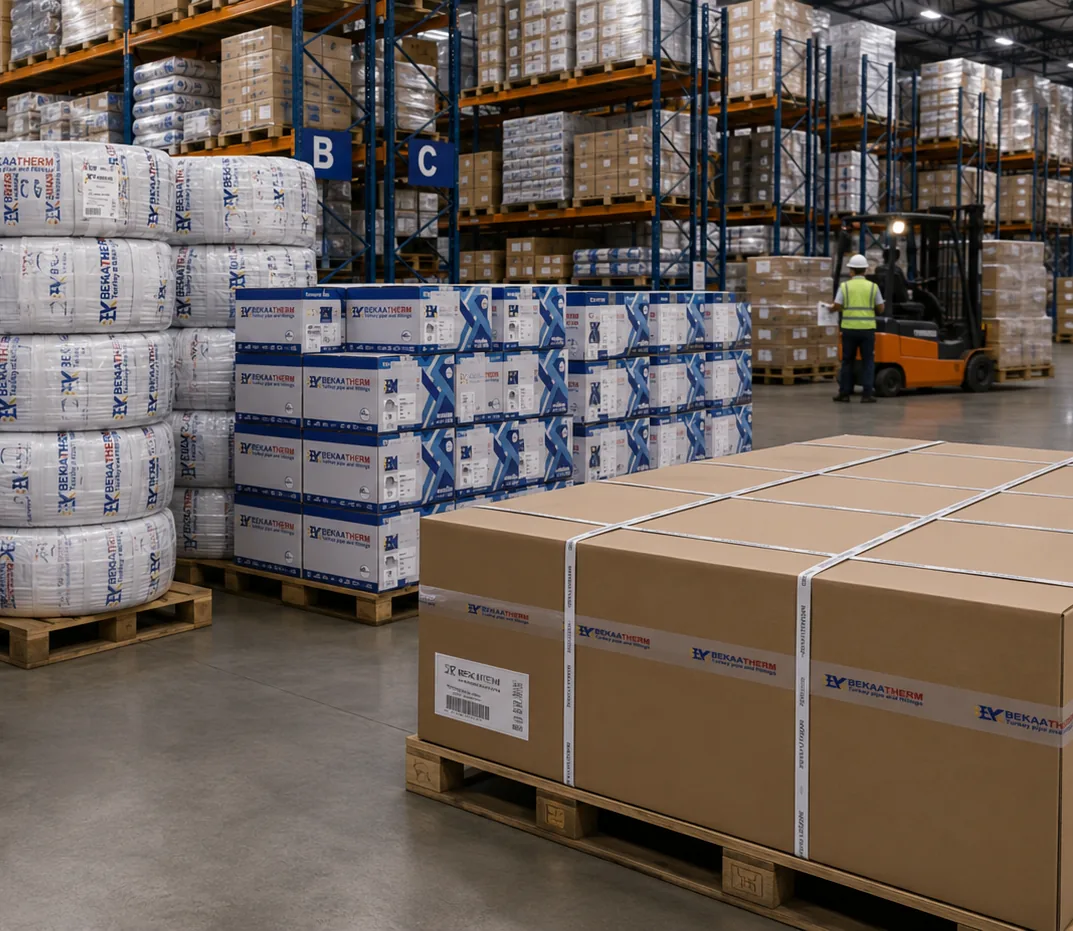
Take a distributor placing a first mixed 20GP in regular in-production sizes, on 30/70 terms, FOB İstanbul. The 30% deposit goes out and production is committed. At 15 to 25 days for regular sizes, the buyer is exposed on that deposit for three to four weeks with nothing physical to show for it — and a first colour match adds another 7 to 10 days.
Loading follows, with the 33 m³ usable volume binding before the 28 tonne payload does. The goods go on board: that is the risk transfer point under FOB, so from that moment the cargo is the buyer’s risk even though the balance has not yet been paid. The copy bill of lading is issued and the 70% falls due. Two documents matter more than the invoice here — the certificate of origin and the packing list, both of which must agree with the B/L. With a credit in play, transport documents must be presented within 21 calendar days of shipment and before expiry, and the bank then has five banking days to examine and, if refusing, to say so.
Then the ocean leg, clearance, and your own sales cycle. Count it honestly: deposit to final resale on a first container is a multi-month working capital commitment, and the payment term is only the first third of it. That calculation should decide your container size and mix, not the unit price on the quotation. For the pricing and loading side in detail, our guide to FOB pricing and container loading covers how the two interact, and the importers and distributors page sets out how repeat accounts and regional exclusivity are structured.
Conclusion
Payment terms look like a price negotiation and behave like a risk allocation. The deposit buys production capacity, the balance against copy B/L falls due at loading rather than arrival, risk under FOB and CIF passes when the goods go on board, and CIF gives you Clauses (C) cover unless you ask for more. On the supplier side, the 180-day repatriation rule is why an extended term must be written into the contract rather than agreed by handshake.
Before committing a deposit, get five things onto one proforma invoice and read them together: payment term, trade term with a named port, origin, loading plan, certificate pack. Whichever one is missing is the one that will cost you.
Frequently Asked Questions
What does “70% against copy B/L” mean in practice?
It means the balance falls due once the goods are loaded and the carrier has issued the bill of lading, not when the container arrives at your port. You are paying against proof of shipment, then waiting out the ocean leg holding cargo you have already paid for in full.
At what order value is a letter of credit worth the bank cost?
We accept an irrevocable letter of credit at sight from USD 50,000. Below that value, issuance, advising and discrepancy charges tend to outweigh what the credit protects, and a 30% deposit with the balance against copy bill of lading handles the transaction more cheaply.
How long does a bank have to check documents under a letter of credit?
A maximum of five banking days following the day of presentation, under UCP 600 sub-article 14(b). If the bank is refusing, it must give a single notice stating each discrepancy by the close of that fifth banking day, or it is precluded from claiming the documents are discrepant.
If I buy CIF, is my cargo fully insured?
Not by default. Under Incoterms 2020, CIF requires only Institute Cargo Clauses (C) cover, which is a limited named-perils level; the broad Clauses (A) cover is the default under CIP instead. You can agree higher cover on CIF, but it has to be requested and written into the contract.
Can I get 90 or 120-day payment terms on repeat orders?
Extended terms are possible but they must be documented. Turkish exporters must repatriate proceeds within 180 days of actual export, and where a contract sets a longer maturity, within 90 days of that maturity with the term evidenced to the bank. Ask for the term to be stated on the proforma invoice.
Why was my letter of credit refused when the shipment was fine?
Usually because the documents conflicted with each other. UCP 600 sub-article 14(d) requires that data in one document not conflict with any other stipulated document or the credit, so a mismatch in shipper, consignee, port, quantity or weight is enough. Reconcile all documents before presenting.
How do I confirm the origin of my order before I pay?
Ask for it in writing on the proforma invoice. We supply from Türkiye and from a partner plant in China, with origin allocated by market and confirmed per order, and the certificate of origin, packing list and bill of lading must agree with each other before anything ships.