
Material choice is the earliest, most expensive and hardest-to-reverse decision on a piping project. Get it wrong and you either burst a line, standard PVC can’t take hot water or high pressure, blow the budget on copper and skilled soldering labour, or import the wrong grade and stall at customs. The three fears behind every material argument are the same: will it hold hot water and pressure, how many years will it really last, and is it safe for drinking water? This guide settles those on one page, layers in the real specification numbers you actually order against, then shows where PPR earns its place as the volume material to specify and stock.
A quick reality check before the comparison. In North America the plumbing conversation is dominated by PEX and copper, so most English-language guides you’ll find are written for a US homeowner replacing a bathroom. But across the Middle East, Asia, Africa and Eastern Europe, the markets that move real project and container volume, the default hot-and-cold-water material is PPR. If you’re a contractor pricing a residential tower, an importer choosing what to stock for your region, or a sourcing agent answering a client’s spec question, this guide is written from that side of the table: bulk supply, pressure classes, certifications and total installed cost, not a weekend DIY swap.
What Are PPR, PVC, PEX and Copper Pipe?
Before you compare them, it helps to know what each material actually is, because they were built for different jobs. Confusing them is where most costly specification mistakes start: someone runs standard PVC on a hot-water line because it was cheap, or budgets for copper on a job where fused PPR would have been faster and half the installed cost. Here is the plain-English version project buyers and importers use on site.
| PPR | Polypropylene Random Copolymer |
| Joined by | Heat fusion, one fused joint |
| Built for | Hot & cold water, heating, potable |
| PVC | Polyvinyl Chloride |
| Joined by | Solvent cement (glue) |
| Built for | Cold water, drainage, waste |
| PEX | Cross-linked Polyethylene |
| Joined by | Crimp / clamp / push-fit |
| Built for | Flexible hot & cold runs, retrofit |
| Copper | Traditional metal pipe |
| Joined by | Solder / braze |
| Built for | Premium / legacy hot & cold |
PPR (Polypropylene Random Copolymer) is a rigid thermoplastic pipe for hot and cold water, drinking water and heating. It is joined by heat fusion, pipe and fitting are heated and pressed together so they melt into one homogeneous, fitting-free joint with no glue and no solder. Because the joint is the same material as the pipe, there is no separate seam to age, creep or fail. It comes in PN16/PN20/PN25 pressure grades and green, white or coffee/brown series, and dominates across the Middle East, Asia, Africa and Eastern Europe. At Bekaatherm it is offered in three constructions, plain PPR, PPR-AL-PPR aluminium composite and fiberglass composite, so one material family covers plain hot/cold runs right through to low-expansion heating loops.
PVC (Polyvinyl Chloride) is a low-cost rigid pipe mainly for cold water, drainage and waste, joined by solvent cement (glue). Standard PVC softens under heat, so it is not a hot-water material; CPVC is a separate, higher-temperature grade often confused with it. For soil and waste stacks, a purpose-built UPVC drainage system with gasket-sealed joints is the quieter, more modern successor. PEX (Cross-linked Polyethylene) is a flexible tube for hot and cold water, joined with mechanical fittings, very popular in North American DIY and residential plumbing, where its flexibility speeds retrofits, but every connection is a mechanical fitting rather than a fused joint, which means every fitting is a potential future service point. Copper is a traditional metal pipe joined by soldering or brazing: durable and heat-tolerant, but the highest material cost, it needs skilled labour and can corrode or pinhole-leak in aggressive or low-pH water.
PPR vs PVC vs PEX vs Copper: Side-by-Side
Here is the one table that settles most specification arguments. Read it top to bottom and the pattern is hard to miss: for anything that carries hot water under pressure and has to stay leak-free for decades, PPR and copper lead, and PPR does it without corrosion, without solder joints and at a fraction of copper’s installed cost. Values below are typical for standard grades; always confirm against the manufacturer’s datasheet for the exact product and pressure class you order.
| Criterion | PPR | PVC | PEX | Copper |
|---|---|---|---|---|
| Max continuous temp | ~70°C (peaks ~95°C) | ~60°C (CPVC higher; std PVC cold) | ~70–90°C | Very high |
| Pressure rating | PN16 / PN20 / PN25 | Low–medium (schedule) | Medium | High |
| Design lifespan | ~50 years | ~25–40 years (cold) | ~40–50 years | ~50+ years |
| Jointing | Heat fusion, one fused joint, no glue/solder | Solvent cement (glue) | Crimp / clamp / push-fit | Solder / braze |
| Failure point at joint | None (homogeneous weld) | Glue seam can fail | Mechanical fitting per joint | Solder joint / pinhole |
| Relative material cost | Low–medium | Lowest | Medium | Highest |
| Skilled labour needed | Low (fusion tool) | Low | Low–medium | High (soldering) |
| Drinking-water safe | Yes (WRAS-grade material) | Cold potable only (varies) | Yes | Yes |
| Corrosion / scaling | None (inert) | None | None | Can corrode / pinhole |
| Best-use scenario | Hot & cold water, heating, potable | Cold water, drainage, waste | Retrofit / flexible runs | Premium / legacy metal |
Download this comparison as a one-page sheet
Reading the Spec Sheet: PN, Temperature and Wall Thickness
The comparison table above is the summary; when you actually place an order, three numbers decide it, pressure class (PN), operating temperature and wall thickness. This is where PPR is genuinely easy to specify, because it is sold in clean, internationally recognised PN grades rather than fuzzy “schedules”. PN is simply the pipe’s nominal pressure rating in bar at 20°C: PN20 is rated for 20 bar and PN25 for 25 bar at reference temperature. As water gets hotter the safe working pressure derates, which is exactly why heating and hot-water lines step up to PN25 and to composite constructions.
| Grade | Nominal pressure | Where it fits |
|---|---|---|
| PN16 | 16 bar @ 20°C | Cold water & lower-pressure runs |
| PN20 | 20 bar @ 20°C | General hot & cold water, the workhorse grade |
| PN25 | 25 bar @ 20°C | Hot water & heating, higher-pressure risers |
The other lever is wall thickness. For the same 20–63 mm outside diameters, a higher PN class means a thicker wall, that is what carries the extra pressure. The real Bekaatherm dimensions below show it plainly: at 32 mm OD, plain PPR steps from a 4.4 mm wall at PN20 to a 5.4 mm wall at PN25; at 63 mm it goes from 8.6 mm to 10.5 mm. Composite constructions (aluminium and fiberglass) keep the same OD-based sizing while adding a reinforcing layer that cuts thermal expansion. This is the “hard data” a datasheet gives you that a glued or crimped system rarely states as cleanly.
| OD (mm) | Plain PN20 | Plain PN25 | AL-composite PN20 | AL-composite PN25 | Fiberglass PN20 | Fiberglass PN25 |
|---|---|---|---|---|---|---|
| 20 | 20 × 2.8 | 20 × 3.4 | 20 × 3.1 | 20 × 3.4 | 20 × 2.8 | 20 × 3.4 |
| 25 | 25 × 3.5 | 25 × 4.2 | 25 × 3.3 | 25 × 4.2 | 25 × 3.5 | 25 × 4.2 |
| 32 | 32 × 4.4 | 32 × 5.4 | 32 × 4.1 | 32 × 5.4 | 32 × 4.4 | 32 × 5.4 |
| 40 | 40 × 5.5 | 40 × 6.7 | 40 × 5.0 | 40 × 6.7 | 40 × 5.5 | 40 × 6.7 |
| 50 | 50 × 6.9 | 50 × 8.4 | 50 × 5.5 | 50 × 8.4 | 50 × 6.9 | 50 × 8.4 |
| 63 | 63 × 8.6 | 63 × 10.5 | 63 × 7.0 | 63 × 10.5 | 63 × 8.6 | 63 × 10.5 |
Dimensions are outside diameter × wall thickness in mm, from the Bekaatherm catalogue. Article codes run BK-001–012 for plain PPR, BK-01–12 for aluminium composite and BK-13–24 for fiberglass composite, each across PN20 and PN25. See the full PPR pipe range for the complete size, weight and packaging tables.
When PPR Is the Right Pipe to Specify
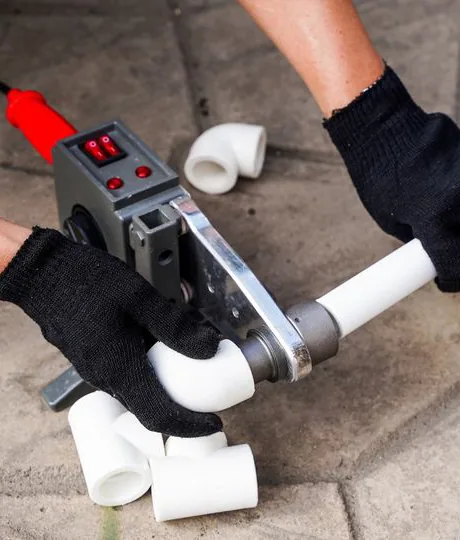
The comparison table points to one clear pattern: for hot and cold water, heating loops and pressurised drinking water, PPR is the material that balances performance, safety and cost. That is exactly why PPR dominates piping across the Middle East, Asia, Africa and Eastern Europe, and why project buyers and importers keep specifying it.
- Hot water & heating, PN20/PN25 PPR carries continuous hot water near 70°C with short peaks toward 95°C; fiberglass-composite and aluminium-composite PPR cut thermal expansion for radiator, floor and wall heating.
- One leak-free system, heat fusion melts pipe and fitting into a single homogeneous joint. No glue to fail, no solder joints to pinhole, the failure points that plague PVC and copper simply aren’t there.
- Drinking-water safe, inert, corrosion-free polypropylene, produced under WRAS and SKZ certification; nothing leaches, nothing corrodes into the water path.
- Total installed cost, lower material cost than copper and no skilled soldering labour; a fusion joint takes seconds and needs no drying time like glued PVC on large systems.
- 50-year service life, from 100% high-grade raw material, PPR is built for decades, not years.
- One supplier, full system, pipe, fittings, valves and manifolds in matching material and colour, so clearance and reorders come from a single source.
Where PPR Actually Goes: Real Applications
Specifications only matter because of where the pipe ends up. Across a single building, PPR quietly does most of the water-carrying work, from the in-wall hot and cold risers, to concealed ceiling and shaft runs, to the radiator tie-ins and the underfloor and manifold heating circuits. Composite grades take the heating loops where thermal expansion and stability matter most; plain PPR handles the general hot and cold distribution. The images below show the same material family in the roles PVC, PEX and copper are each only partly suited to.
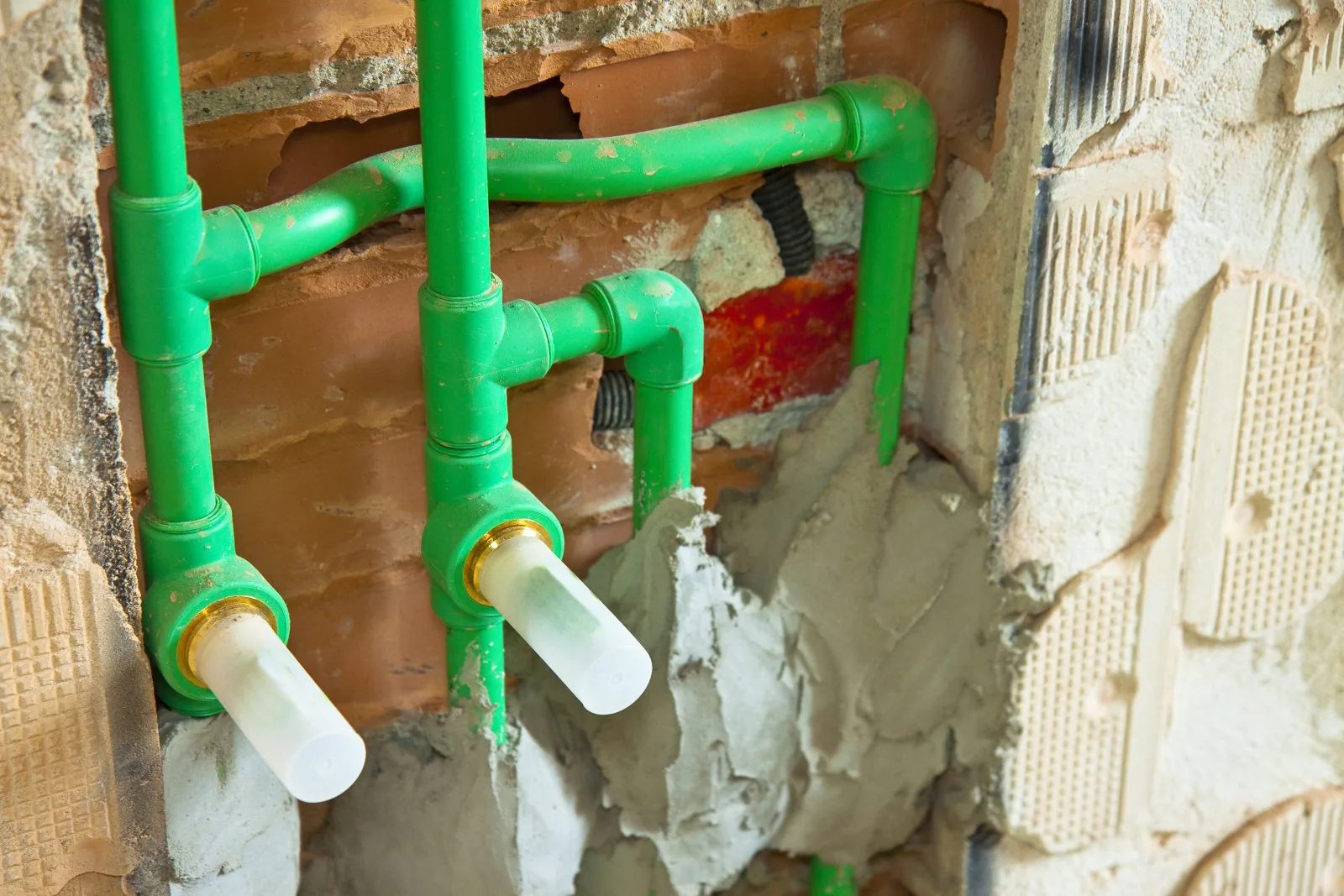
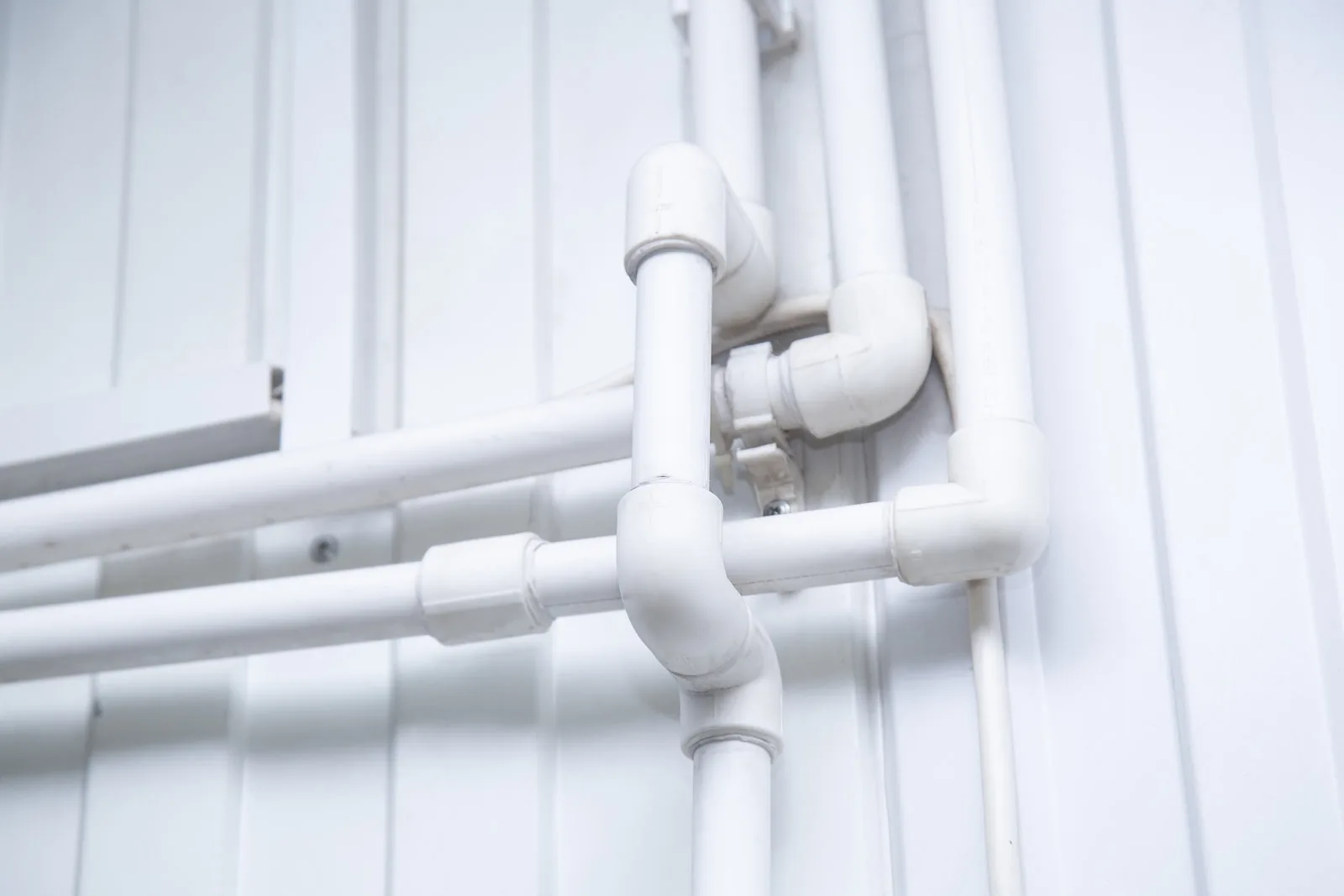

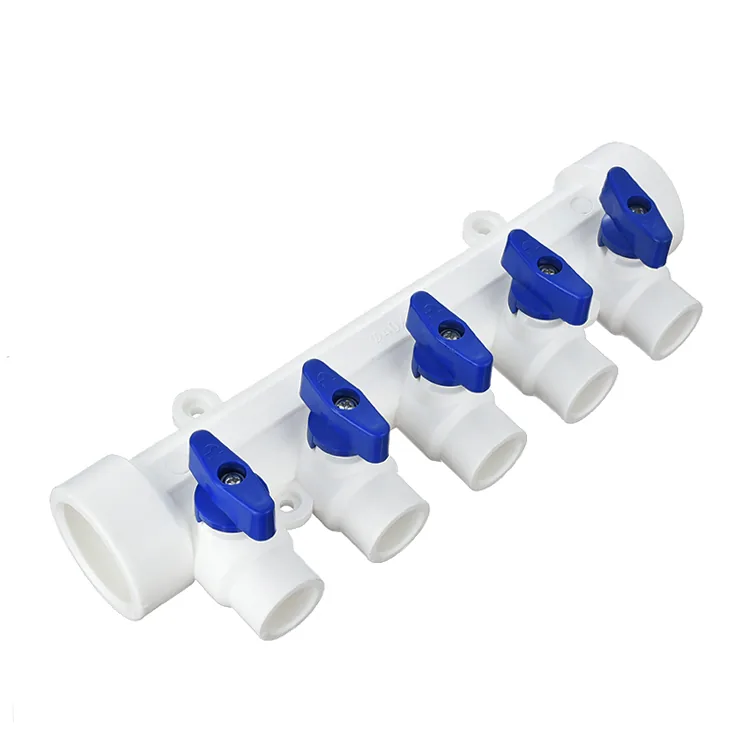
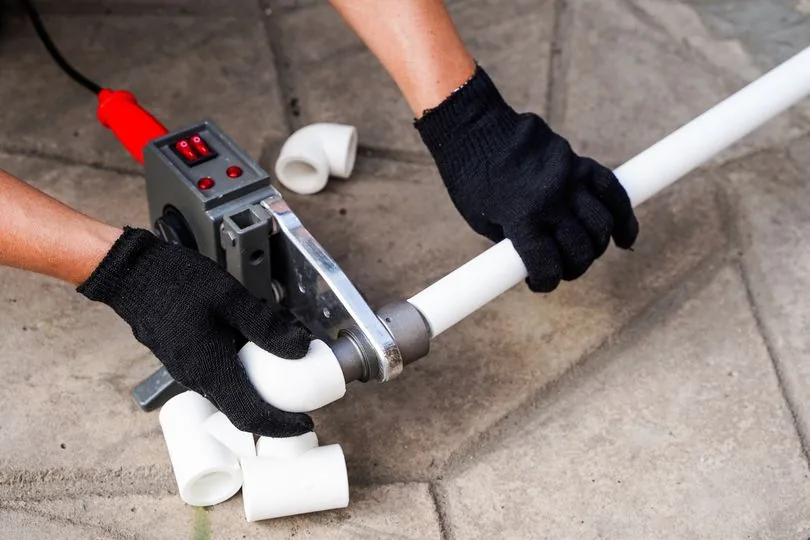
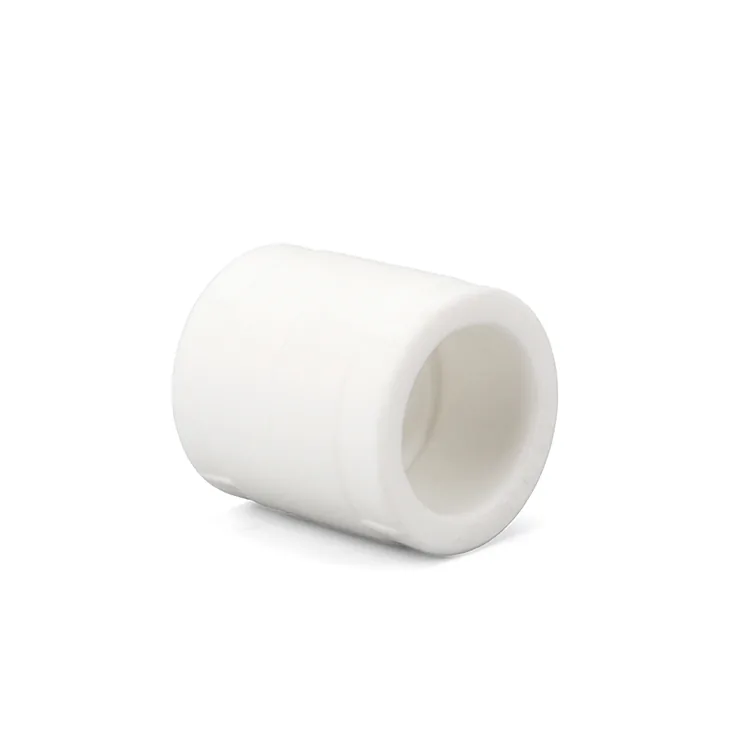
The takeaway for a specifier: instead of mixing PVC for cold, copper for hot and a separate metal solution for heating, one PPR system, with its matching fittings and valves and manifolds, covers the whole potable and heating envelope, and pairs with UPVC drainage for waste and HDPE / PP compression for the outdoor supply.
Which Pipe for Which Project? A Quick Decision Guide
Material choice is really scenario choice. Use this as a fast specification shortcut, then confirm the pressure class (PN) against the datasheet. Notice how few scenarios genuinely need copper or standard PVC once a good PPR range is on the shelf, and how PPR, UPVC drainage and HDPE / PP compression between them cover a whole building’s water lines.
| Project scenario | Recommended material | Why |
|---|---|---|
| Residential hot & cold water | PPR (PN20) | Fused joints, hot-water rated, potable-safe |
| Radiator / floor / wall heating | PPR (fiberglass / aluminium composite, PN25) | Low expansion, heat-stable, leak-free |
| High-rise hot-water risers | PPR (PN25) | Higher pressure class, thicker wall |
| Drinking-water supply | PPR or copper | Inert, WRAS-grade PPR; corrosion-free |
| Cold water & waste / drainage | PVC (or UPVC drainage) | Lowest cost where heat isn’t a factor |
| Retrofit / tight flexible runs | PEX | Flexibility speeds awkward routing |
| Outdoor / municipal water & irrigation | PE / HDHDPE / PP compression | Weld-free mechanical joints, PN10-rated |
For most residential, commercial and light-industrial hot/cold and heating work, the bulk of what importers and contractors buy, PPR is the volume material to stock and specify, with UPVC drainage and PE/HDHDPE / PP compression fittings covering the waste and outdoor lines around it.
Get a project material list & quote
Three PPR Series, One System: Green · White · Coffee
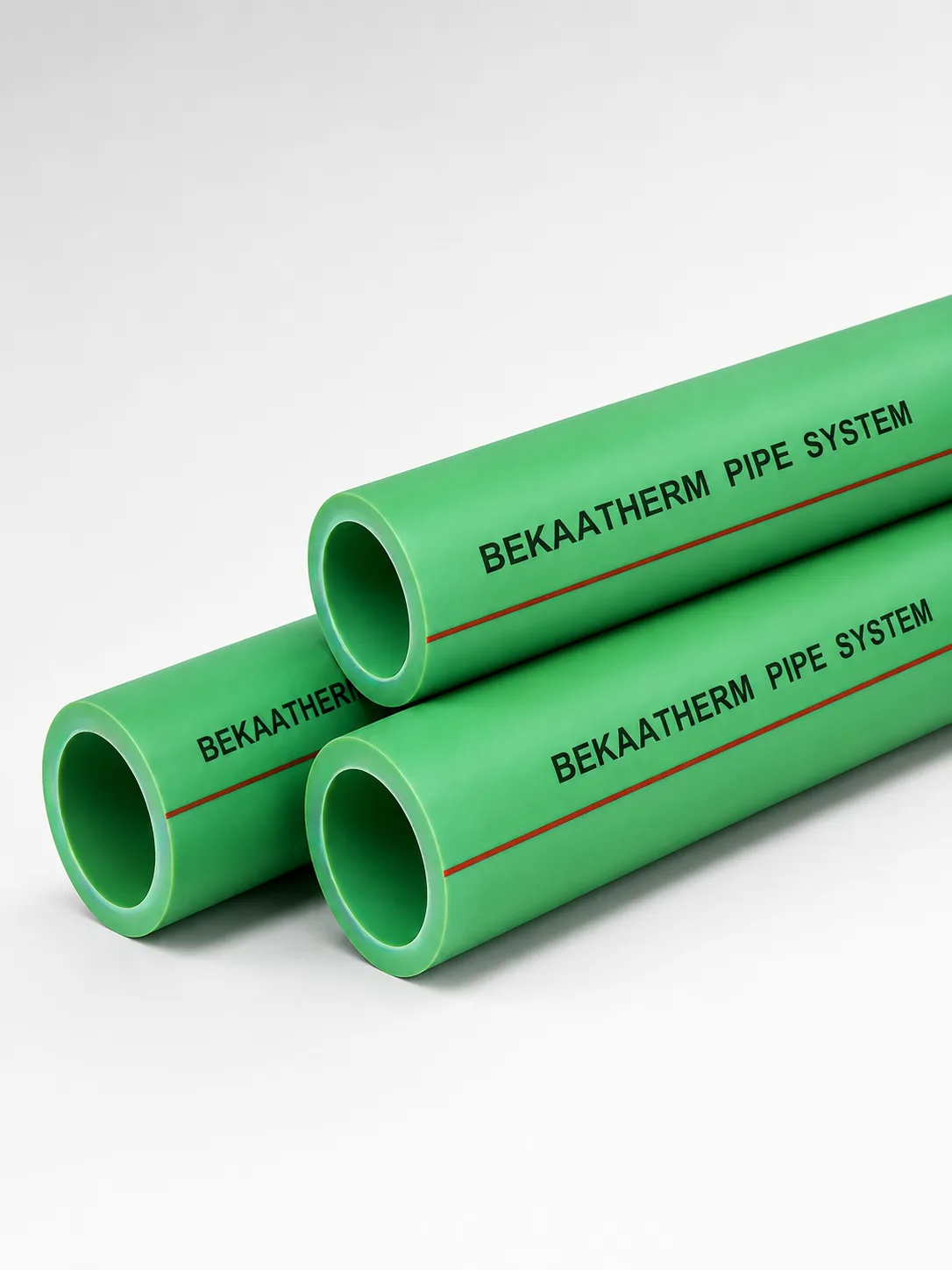
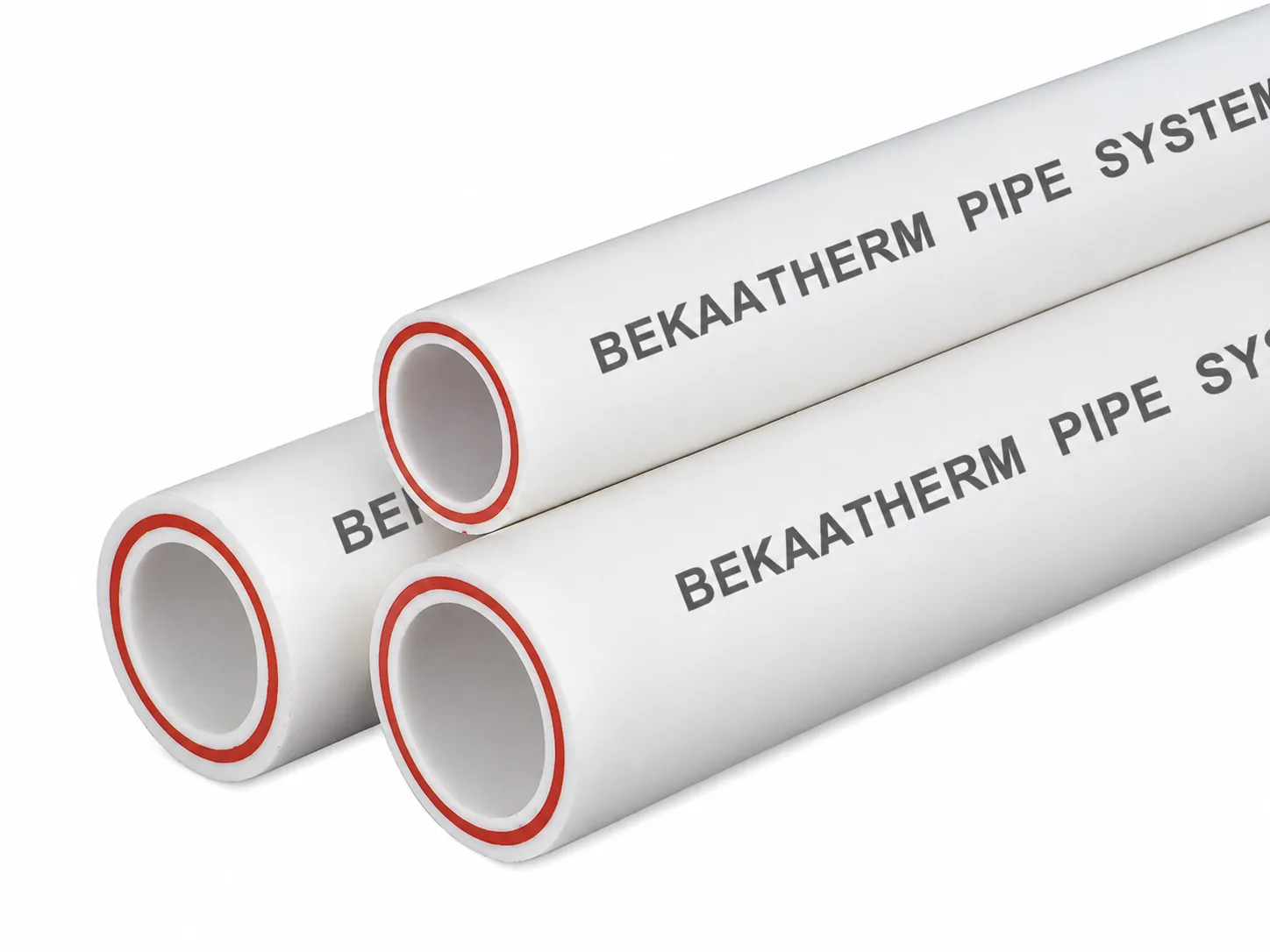
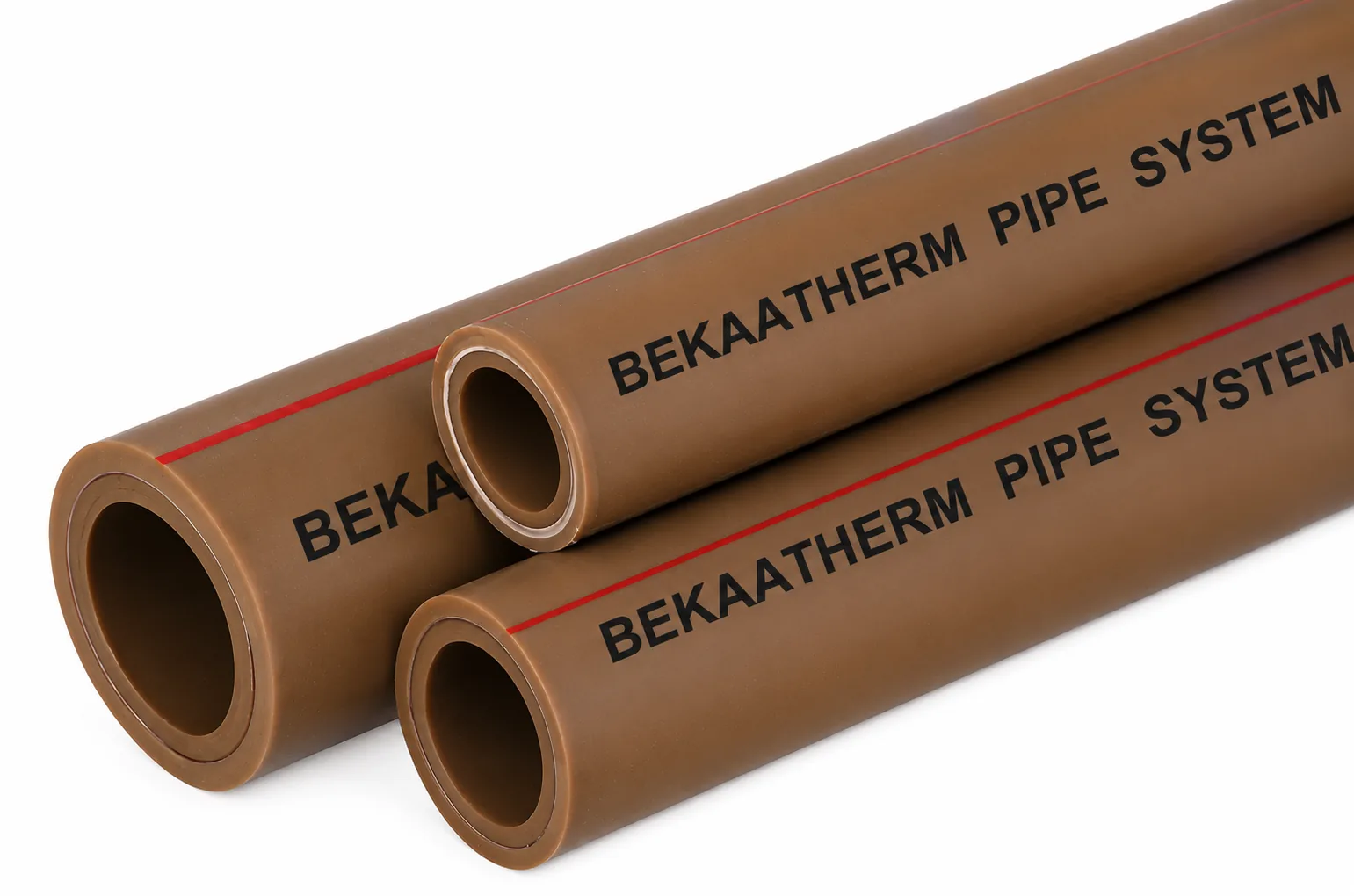
One more decision buyers ask about: colour. PPR is offered in three colour series, green, white and coffee/brown, across the same PN20/PN25 grades and the same plain, aluminium-composite and fiberglass constructions. Colour is a market and branding preference, not a performance change: the material, pressure classes and fusion behaviour are identical. Importers pick the series their region expects; OEM and private-label buyers use colour to differentiate their own brand line. Fittings, valves and manifolds are supplied in matching colour so an installation reads as one clean system.
Brand it as your own, OEM & private label
Specifying PPR? Source It from a 30-Year Manufacturer
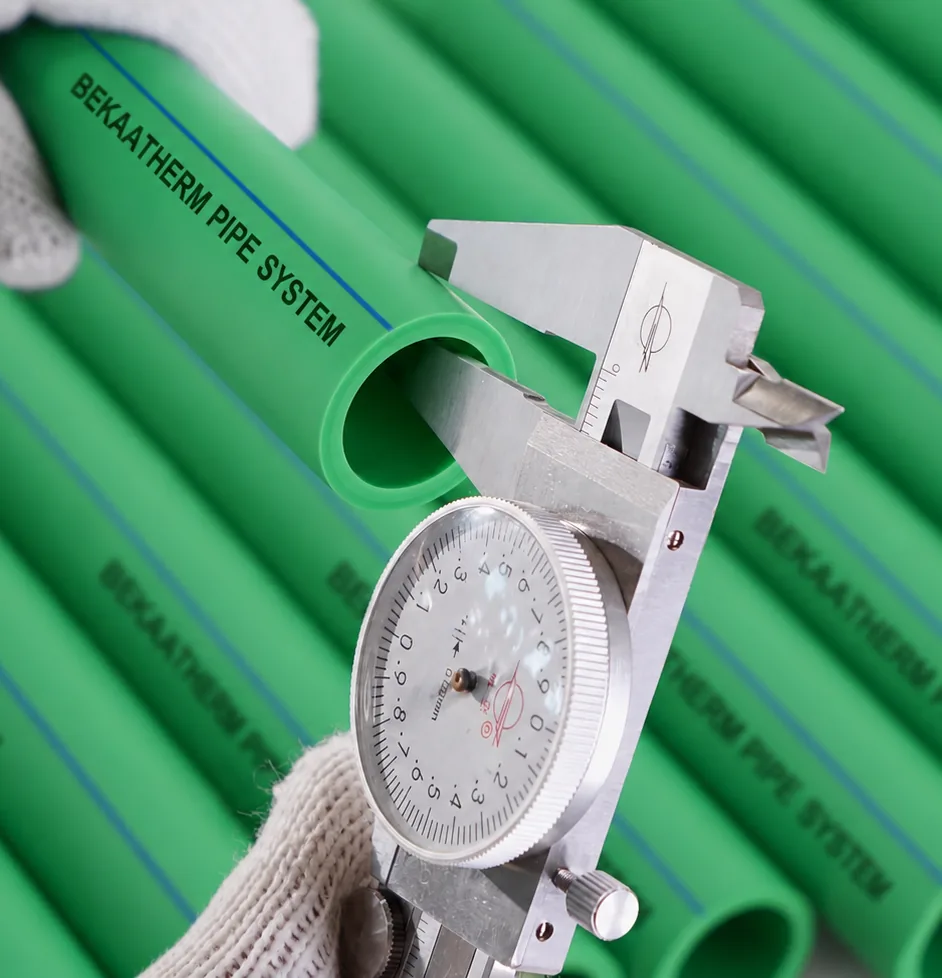
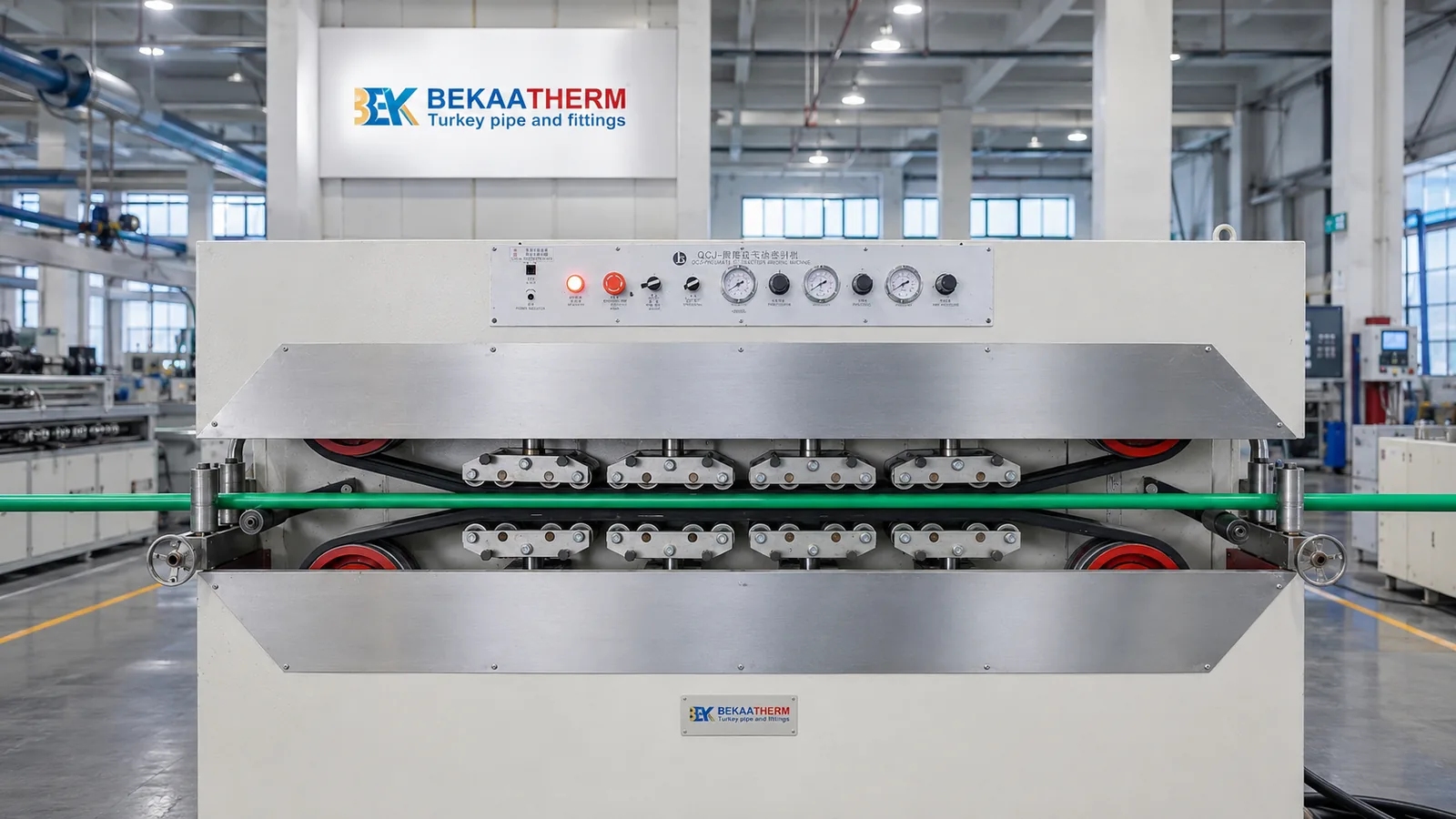
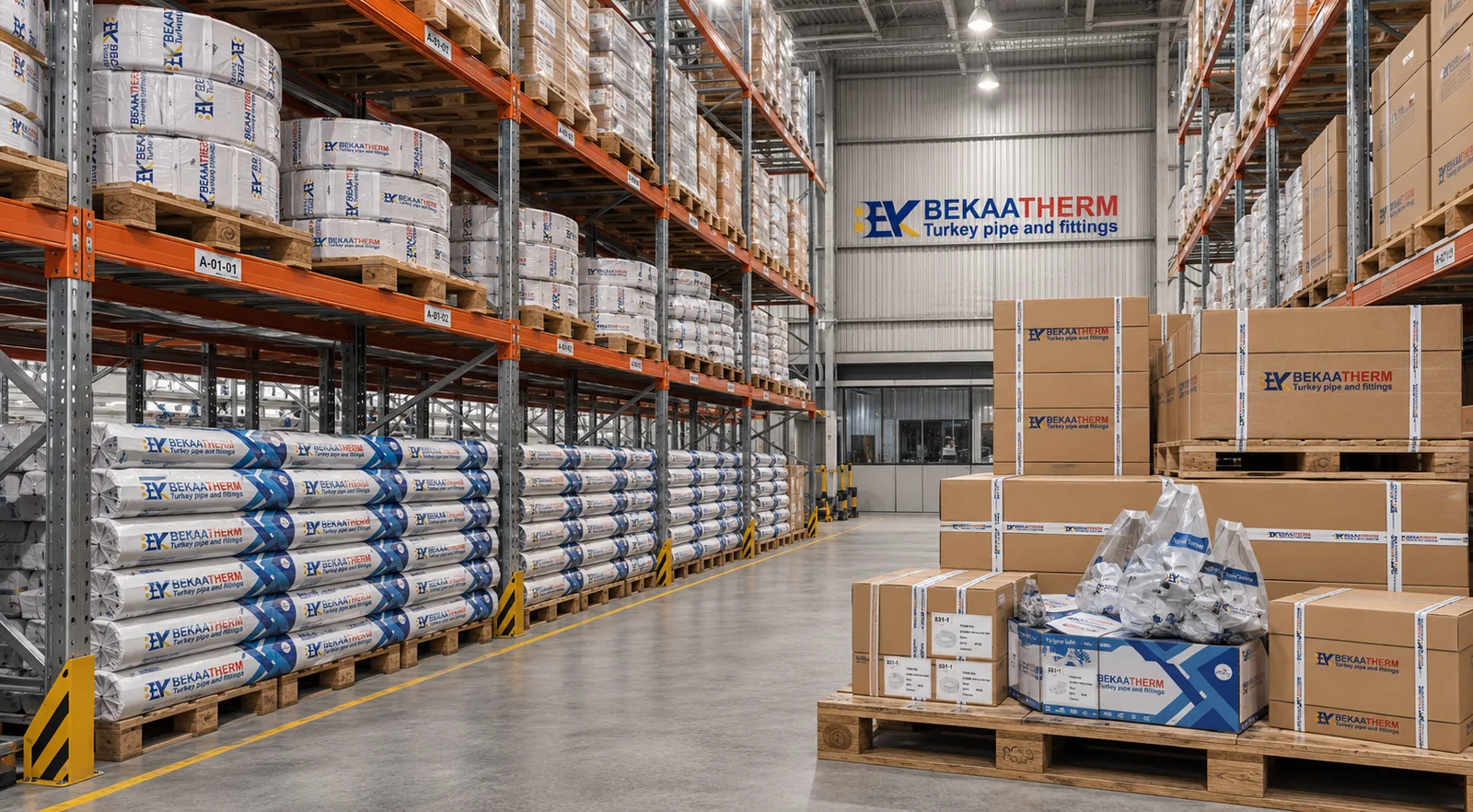
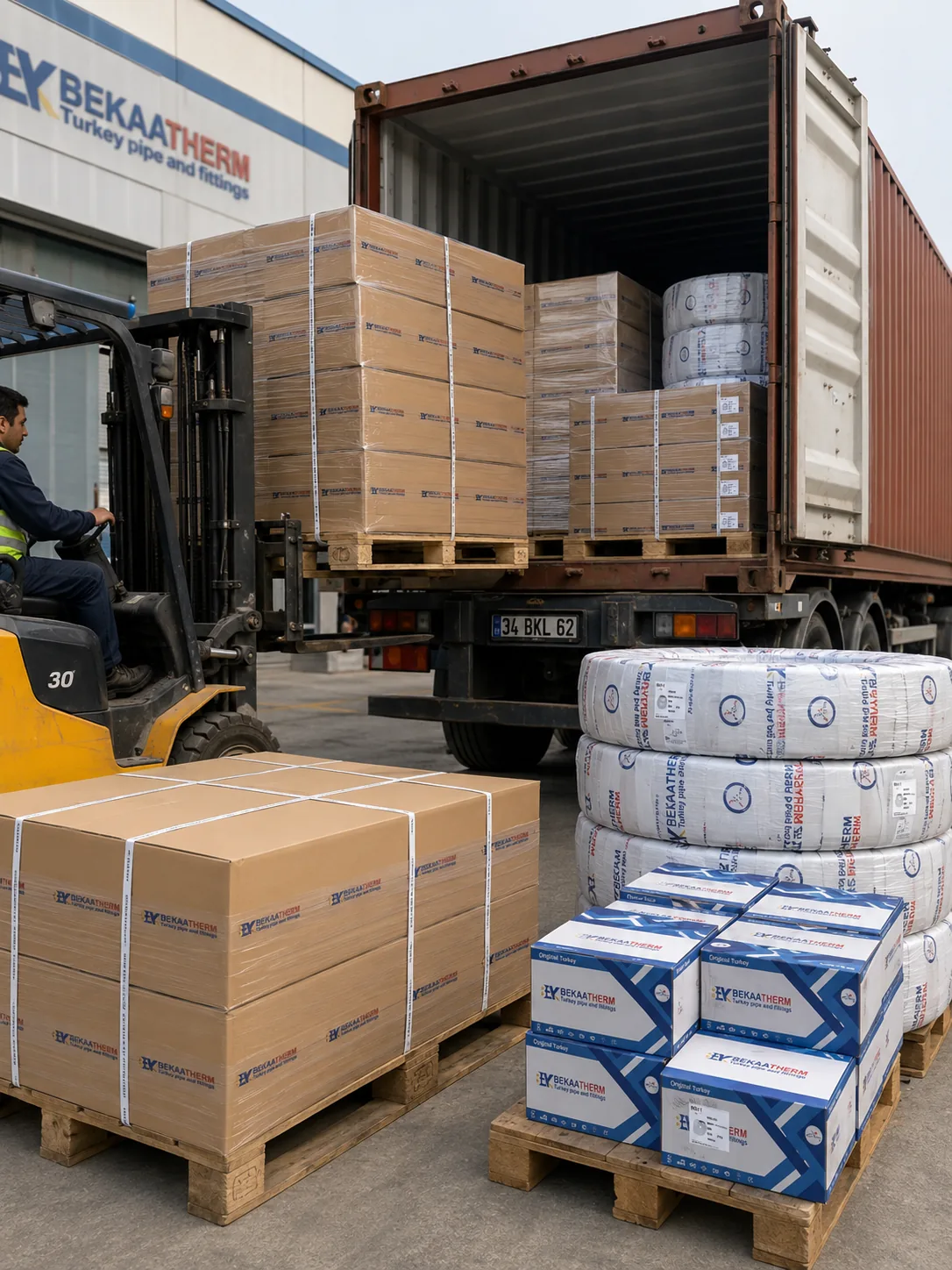
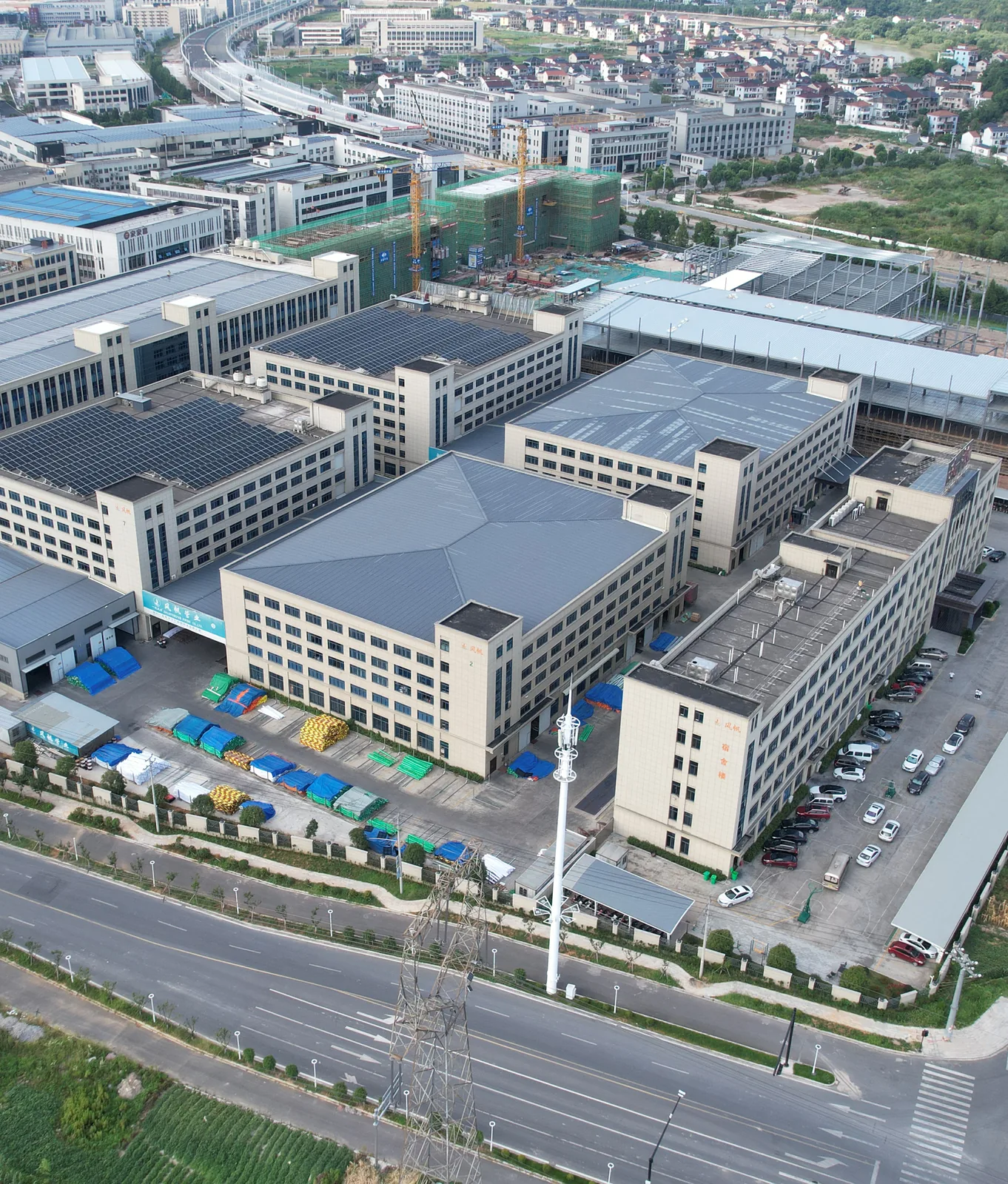
If PPR is the right material for your project or your market, the next question is who makes it well. Bekaatherm has manufactured PPR, PEX and PE piping systems for 30 years, from a 120,000 m² plant with 1,000+ staff and 10,000 moulds, and exports to 118+ countries as a Made in Türkiye brand. That combination matters here: this comparison isn’t written by a blog aggregator, but by a factory that has produced PPR for three decades and can back the numbers above with certified product and a full pipe-plus-fitting range.
| Manufacturing experience | 30+ years (PPR / PEX / PE systems) |
| Plant area | 120,000 m² |
| Team | 1,000+ staff |
| Moulds | 10,000 sets |
| Raw material | 100% high-grade |
| Certifications | SKZ (Germany) · ISO 15874 · CE · WRAS |
| Export reach | 118+ countries |
| Range | PPR pipe (PN20/PN25, fiberglass & aluminium composite) + fittings, valves & manifolds, one supplier |
The SKZ mark (Germany) is described in our documentation as one of the most demanding certifications in the piping industry, it audits both product quality and the production process behind it, alongside ISO 15874, CE and WRAS for drinking-water safety. Certificate numbers are available on request. Whether you’re a contractor specifying a heating system, an importer stocking a region, or an OEM brand wanting your own label, we supply the full PPR system, pipe, fittings, valves and manifolds, at low MOQ, with certification documents available on request.