Most PEX pipe plumbing specifications written before 2025 now reference a withdrawn edition of the standard. The entire ISO 15875 series covering PE-X hot and cold water piping was technically revised and re-issued in October 2025 — the first revision since 2003 — and PPI TN-53, the guide to PEX chlorine resistance ratings, was revised the same month. If your tender cites ISO 15875-2:2003, it is a full edition out of date.
The 2025 text also added something buyers can act on: oxygen permeability requirements moved into the pipe standard itself, at Clause 6.4. PEX genuinely beats PPR on flexibility, freeze tolerance and cold-weather install speed. PPR beats PEX on joint integrity. What separates them in the field comes down to two spec checks you can run on a physical sample in under a minute, and almost nobody writing on this topic explains either one.
Key Takeaways
- The PE-X standard is newer than the PPR one right now. EN ISO 15875-2:2025 published 28 October 2025, replacing the 2003 edition plus its amendments. ISO 15874 (PP-R) parts 1, 2, 3 and 5 are registered as Approved Work Items but not yet published, so ISO 15874-2:2013 with Amd 1:2018 and Amd 2:2022 remains fully in force.
- Read the first digit of the PEX printline code. ASTM F876 requires a four-digit material designation code on every PEX pipe. First digit 0 means chlorine resistance was not tested or not met; 1, 3 and 5 mean progressively higher rated exposure, with 5 covering 100% of the time at 140 °F.
- Both materials extrapolate to 50 years, by the same method. ISO 15875-2 limits extrapolation of the design stress line to a maximum of 50 years; PEX for potable water must extrapolate to a minimum 50-year lifetime under ASTM F2023. “PEX lasts 20–50 years, PPR lasts 50+” is blog folklore with no standard behind it.
- Ask for an ISO 17455 report, not a barrier claim. ISO 17455:2005 is the test method that actually measures oxygen permeability of a barrier pipe. A printed “EVOH” line on the pipe is a claim; a lab report referencing ISO 17455 and DIN 4726 is evidence.
- PEX-a, -b and -c are manufacturing methods, not quality grades. All three must meet the same standard requirements for pressure and temperature rating, minimum bending radius and wall thickness.
- The joint is the real design difference. A PEX system depends on a mechanical interface — crimp ring, clamp or expansion sleeve — at every connection. A correctly heat-fused PPR socket is a homogeneous weld with no ring and no gasket.
- Beyond the tested envelope, the rating stops applying. PPI states that continuous recirculation of hot chlorinated water above 140 °F (60 °C) sits outside the intended application of the standard chlorine ratings.
What actually changed in the 2025 standards year
Standards revisions rarely make the news, and this one deserved to. ISO 15875-2, the part of the PE-X standard governing the pipes themselves, was approved as a second edition and published in its European form on 28 October 2025. It cancels and replaces EN ISO 15875-2:2003 along with its A1:2007 and A2:2020 amendments. Part 1, the general requirements, was approved on 10 October 2025 and released on 31 October.
The changes are substantive rather than editorial. The 2025 edition adds a new Clause 4 of generic requirements, Formula (2) for the 110 °C reference curves, and subclauses covering barrier layers, adhesives and outer-layer thermal stability. The diameter range now extends to 250 mm. Oxygen permeability requirements were added at Clause 6.4. Annex B changed from informative to normative — a requirement now, not guidance — and a new Annex C covers thermal stability testing.
One clause settles an argument that runs through every PPR-versus-PEX blog on the internet. ISO 15875-2 states that the determined sigma-value shall remain on or above the corresponding reference line up to the extrapolation time, limited to a maximum of 50 years. Read that carefully: 50 years is a cap on how far the standard permits you to extrapolate a stress-regression line, not a prediction that a pipe dies at 50. PPR uses the same extrapolation basis under ISO 15874. So when a competitor page says PEX lasts 20 to 50 years while PPR lasts 50-plus, it is comparing a made-up number against a standards artefact.
The honest position on which standard is newer
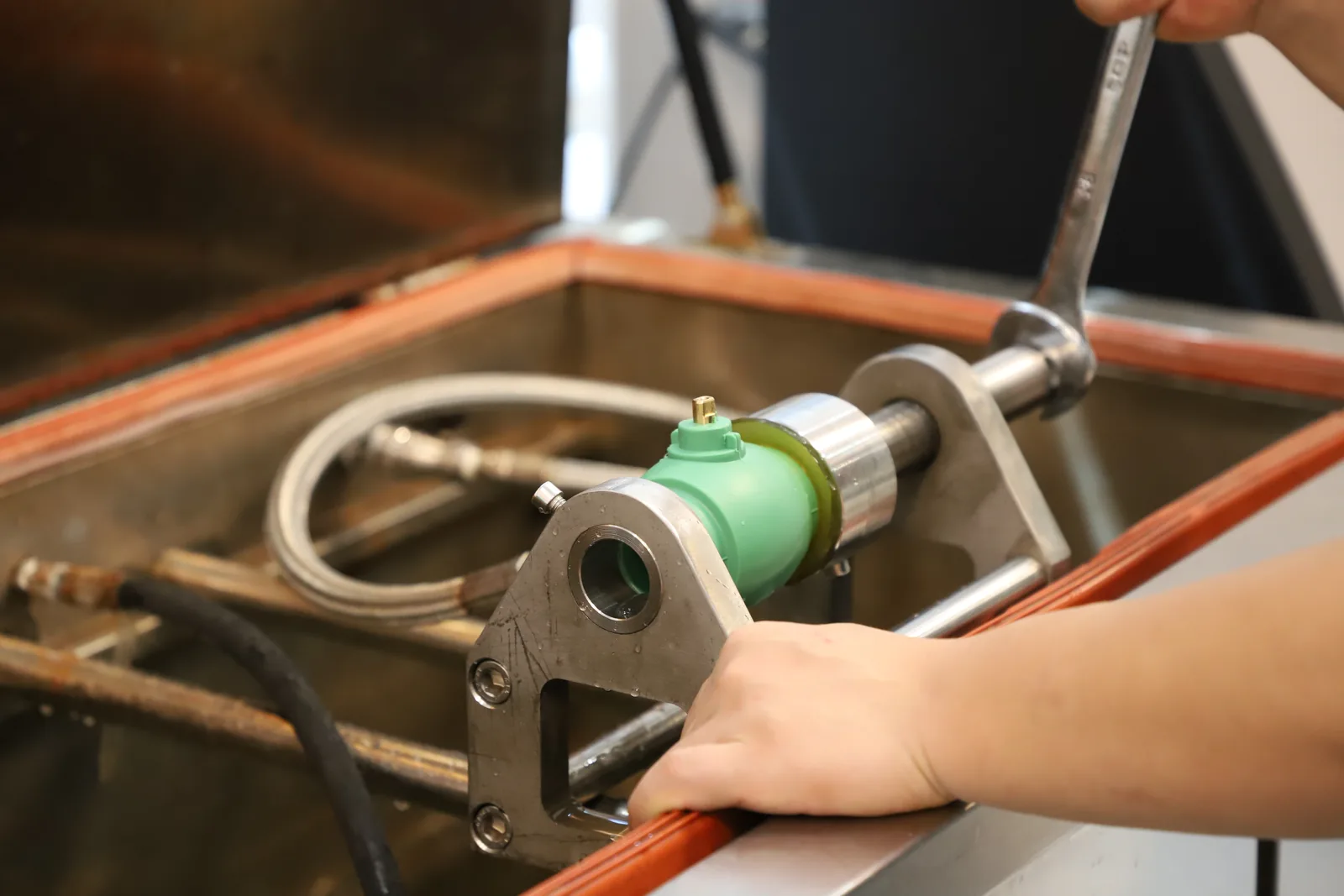
Here is where a PPR manufacturer has to concede a point. As of the current cycle the PE-X series is the newer text. ISO/AWI 15874-1, -2, -3 and -5 are registered as Approved Work Items under ISO/TC 138/SC 2, meaning the PP-R revision is still in committee. That is not a weakness in PPR — the in-force edition, ISO 15874-2:2013 with Amendment 1:2018 and Amendment 2:2022 adding the impact test, is fully valid and is what certification bodies audit against. But if a consultant asks which standard was rewritten most recently, the answer is the PEX one.
| Standard reference | PE-X (PEX) | PP-R (PPR) |
|---|---|---|
| System standard family | ISO 15875 parts 1, 2, 3, 5 | ISO 15874 parts 1, 2, 3, 5 |
| Current pipe-part edition | 2nd edition, EN ISO 15875-2:2025 (28 Oct 2025) | ISO 15874-2:2013 + Amd 1:2018 + Amd 2:2022 |
| Revision status | Published; replaces 2003 edition | Approved Work Items under ISO/TC 138/SC 2 |
| Extrapolation cap on design stress | Maximum 50 years | Same 50-year extrapolation basis |
| Dimensional / quality companions | ASTM F876 and CSA B137.5 in North America | DIN 8077 dimensions, DIN 8078 general quality |
Check one: reading the four-digit code on PEX pipe
This is the most useful thing in this article, and it takes ten seconds on a physical sample. ASTM F876 requires a four-digit material designation code on the printline of every compliant PEX pipe. Each digit means something specific, and together they tell you more than any brochure will.
| Digit position | What it declares | Values and meaning |
|---|---|---|
| 1st | Chlorine resistance, tested to ASTM F2023 | 0 = not tested or not met; 1 = 25% at 140 °F and 75% at 73.4 °F; 3 = 50% / 50%; 5 = 100% at 140 °F. Digits 2 and 4 reserved. |
| 2nd | UV resistance, tested to ASTM F2657 | 0 = none or untested; 1 = one month; 2 = three months; 3 = six months |
| 3rd and 4th | PPI recommended hydrostatic design stress at 73.4 °F | 06 = 630 psi HDS; 08 = 800 psi HDS |
So a pipe stamped 5306 declares the top chlorine category, six months of UV tolerance and a 630 psi hydrostatic design stress. A pipe stamped 0006 declares that nobody tested it for chlorine or UV. Both can be sold legitimately. Only one belongs on a recirculating hot water loop in a hotel.
The practical rule for a distributor: for a continuously circulating domestic hot water line, you want the first digit to be 5. For a straightforward branch supply with no recirculation, a 1 or a 3 may be adequate depending on local water chemistry. A leading 0 on hot water work should stop the conversation.
Ask the supplier to photograph the printline on the actual production run, not a catalogue page. The code is molded into the sales unit, so it cannot be edited after the fact.
What the chlorine rating protects against — and its limits
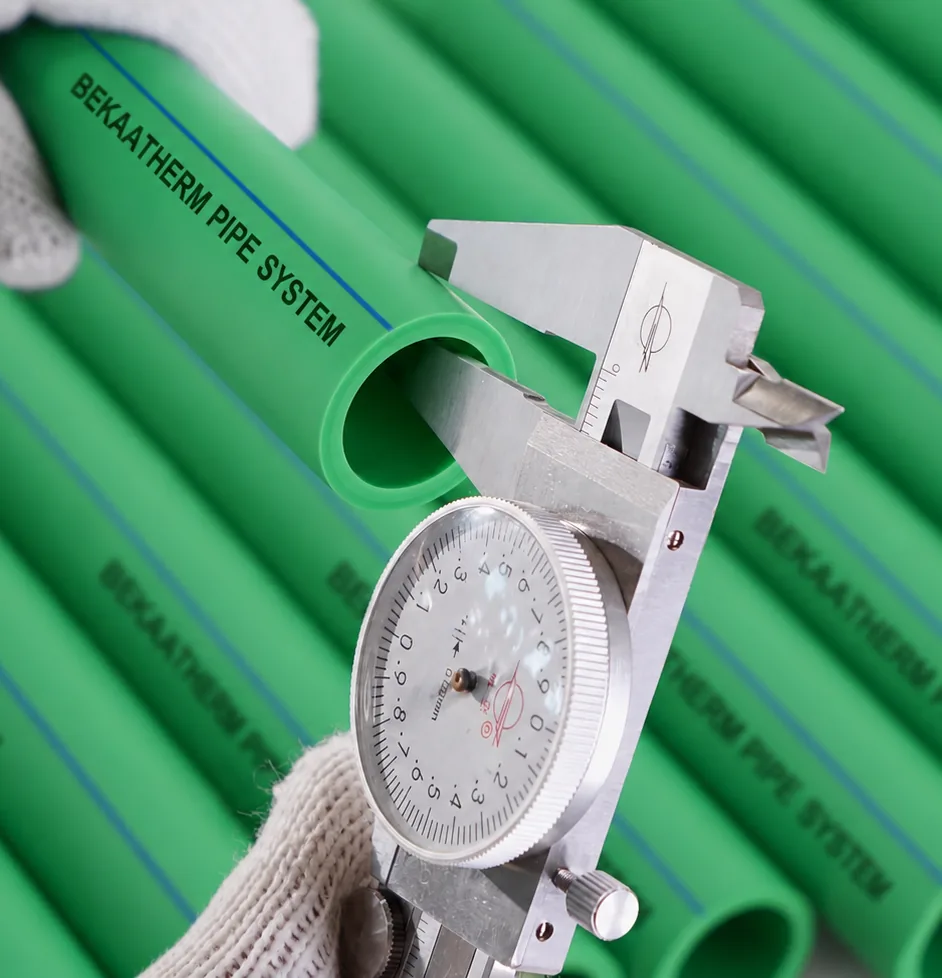
Chlorinated hot water attacks polyethylene by oxidation. The chlorine rating measures how long a specific PEX formulation resists that attack under defined lab conditions. Those conditions matter, because the rating only holds inside them.
ASTM F2023 specifies a test fluid with a minimum oxidative reduction potential of 825 mV. Labs typically run reverse-osmosis water at 4.3 ± 0.3 ppm free chlorine and pH 6.8 ± 0.2. The procedure extrapolates the life expectancy of a hot water plumbing pipe at a domestic hot water temperature of 140 °F and a pressure of 80 psi, evaluating continuous recirculation, timed recirculation and traditional domestic conditions. The product must extrapolate to a minimum 50-year lifetime to pass.
Now the boundary. The Plastics Pipe Institute states in TN-53 that continuous recirculation of hot chlorinated water above 140 °F (60 °C) is beyond the intended application of the standard chlorine ratings. Frequent or continuous exposure past the F2023 envelope — ORP above 825 mV, pressures above 80 psig, or temperatures above 140 °F — may cause premature oxidation and eventual brittleness of the PEX material. That document was itself revised in October 2025, the second current-year increment in this comparison.
There is a fair counterpoint, and it belongs here. PPI’s position is that chloramines are less aggressive than free chlorine to PEX, so testing with free chlorine per ASTM F2023 gives a conservative estimate of time to failure. Many municipal systems dose chloramine instead. If yours does, the F2023 rating is likely understating the pipe’s real margin rather than overstating it.
Where PPR sits on the same question
Polypropylene random copolymer carries no equivalent chlorine designation code, because ISO 15874 handles durability through application classes instead. Each class pairs a design temperature, a limited period at an elevated maximum, and a short malfunction allowance with a design pressure. PPR’s suitability for a hot recirculating line gets established through the class-plus-series selection rather than a printed digit — different logic, not superior logic. Our own PPR is built to a 50-year design life at rated pressure and 20 °C under ISO 15874, and the 50-year warranty against material and manufacturing defects is matched to it.
Check two: verifying an oxygen barrier claim
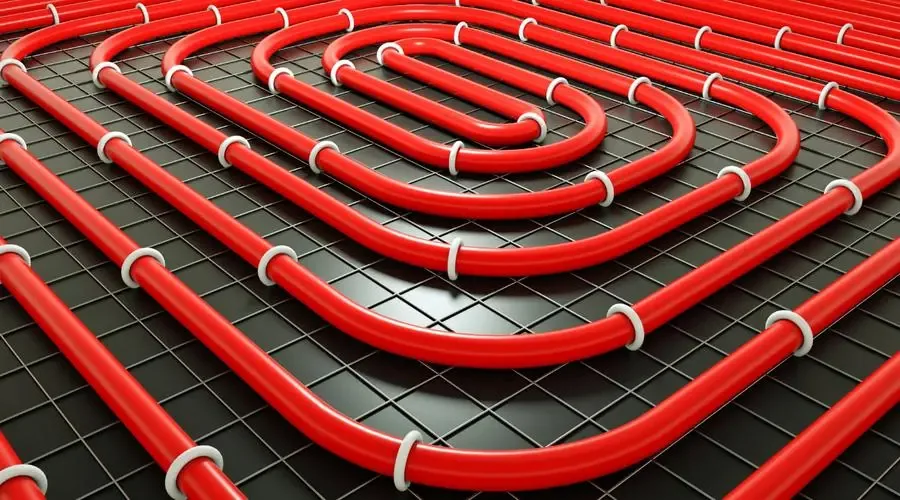
If the pipe feeds a closed heating circuit — underfloor loops, radiator connections, anything with steel or cast iron components and a circulating pump — oxygen diffusing through the pipe wall corrodes the metal parts from the inside. That is what an oxygen barrier layer prevents, and it is one of the easiest claims in the industry to print without earning.
Two documents make the claim checkable. ISO 17455:2005, “Plastics piping systems — Multilayer pipes — Determination of the oxygen permeability of the barrier pipe”, specifies the two test methods, dynamic and static, that actually measure permeability. It was reviewed and confirmed in 2021, so it remains current. Alongside it, DIN 4726 sets the German requirement for pipes in embedded warm-water surface heating and radiator connecting systems; the current edition is DIN 4726:2024-12, replacing the 2017-10 edition.
The permeability limits usually quoted against DIN 4726 are 0.32 mg per square metre per day at 40 °C and 3.60 mg per square metre per day at 80 °C. Treat those as figures commonly cited in accredited lab reports rather than a direct quotation from the paywalled DIN text. The number to chase is not the limit anyway — it is whether a report exists at all.
A genuine barrier declaration is a dated test report from an accredited laboratory, naming the pipe construction and dimension, referencing ISO 17455 as the method and DIN 4726 as the requirement. Reports in exactly that format are routine in the European market. If a supplier answers “yes, it has EVOH” and cannot produce one, you are buying a printed word. With oxygen permeability requirements now sitting inside ISO 15875-2 itself at Clause 6.4, a PE-X pipe claiming barrier performance has a clearer obligation than it did under the 2003 text.
Why the pressure numbers are not directly comparable
Almost every comparison page on this subject makes the same mistake: it puts a PEX psi-at-temperature figure next to a PPR temperature limit and declares a winner. Those are two different rating conventions, and lining them up produces a number that means nothing.
ASTM F876 rates PEX by pressure at specific temperatures. At SDR 9, the ratings are 160 psi at 73 °F (23 °C), 100 psi at 180 °F (82 °C) and 80 psi at 200 °F (93 °C). Those come out of the standard’s formula, P = 2 × HDS / (SDR − 1); at a hydrostatic design stress of 630 psi and SDR 9 that gives 157.5 psi, rounded to 160. The current edition is ASTM F876-24.
ISO 15874 works differently. It defines application classes, each with a design temperature held for most of the service life, a higher maximum permitted for a limited period, and a short malfunction allowance. You then select a PN class — the wall thickness series — to suit that application class and the design pressure. The output is a class-and-series selection, not a psi-at-temperature table.
To compare the two honestly you have to fix the variables first: state the application class, the SDR or PN series, the design temperature and the design pressure, and only then compare wall thickness and allowable stress. Any page that skips that step and tells you “PPR handles 90 °C, PEX handles 82 °C” is reading two unrelated tables. For the PPR side worked through with real wall thicknesses, our PN20 versus PN25 breakdown covers how the pressure class maps to service conditions.
Joints, install speed and where each system hides its cost
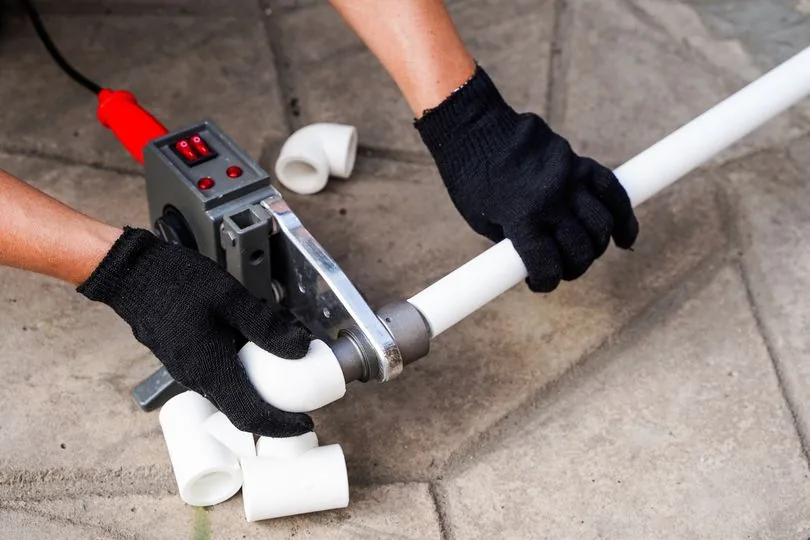
The joint is the genuine structural difference between these systems. A PEX system’s integrity depends on a mechanical interface at every connection — a crimp ring, a clamp, or a cold expansion sleeve compressed onto a barbed fitting. A correctly heat-fused PPR socket is different in kind: pipe wall and fitting socket melt into a homogeneous weld with no ring, no gasket, no separate sealing element.
That cuts both ways. The PPR weld has nothing to loosen, back off or corrode, but it is only as good as the operator — wrong dwell time on the heating tool, a contaminated socket, or fusing in the wet, and you have built a defect you cannot see. The PEX mechanical joint tolerates a mediocre installer far better and goes in faster in a cold building, but every connection introduces a component interface the PPR joint does not have.
Where the money actually goes
Skip the per-metre price comparisons you find elsewhere; they are unsourced and vary by market anyway. The structural point is more useful: the two systems put their cost in different places. PEX pushes cost into fittings and tooling — every joint consumes a ring or sleeve plus an insert, and the crimp or expansion tool is a capital item needing calibration. PPR pushes cost into labour — the fittings are cheap polymer and the welding machine is inexpensive, but you pay for installer skill and for the time each joint takes to heat, insert and cool.
Which reads cheaper on a landed-cost sheet depends on your labour market. Where trained fusion installers are abundant, PPR usually wins total installed cost. Where labour is expensive or scarce and crews rotate, PEX often wins despite the higher component spend. Anyone quoting a fixed percentage of savings across all markets is guessing.
PEX-a versus PEX-b: what the letters really mean
Distributors get sold PEX-a as the premium grade constantly. The letters describe how the polyethylene was crosslinked, nothing more: PEX-a by peroxide, PEX-b by silane, PEX-c by electron beam.
The clearest statement comes from a PEX manufacturer arguing against its own marketing convenience. Viega’s technical white paper calls the a/b/c designations a holdover from early European tubing standards, and states that all types of PEX must meet the same standards — pressure and temperature rating, minimum bending radius, and wall thickness. There are real handling differences around bend behaviour and kink recovery, and an installer with a preference usually has a reason. But “PEX-a is the good one” is not a spec claim you can put in a tender.
One caveat applies to both materials equally: designation codes only indicate whether a product meets a standard, not whether it exceeds it, or by how much. The same is true of a PN rating on PPR. A pipe that scrapes through a test and one that clears it by a wide margin print the identical mark. That is why the report matters more than the marking.
Best for / not for: choosing by market conditions
The correct answer depends on three variables that have nothing to do with which material is “better”: your climate, your water chemistry, and your installer base. Here is where each system genuinely wins.
PEX is the better choice when
- Freezing is a real risk. Crosslinked polyethylene tolerates expansion from freezing water far better than rigid polymer — the strongest single argument for PEX in cold-climate residential work.
- Runs are long and routing is awkward. Coil-supplied tubing on home-run manifolds eliminates joints entirely between manifold and fixture. Fewer joints, fewer failure points.
- The crew is not fusion-trained. A mechanical joint made with a calibrated tool is more repeatable across a rotating labour pool than a heat-fused socket.
- Renovation work in occupied buildings. No hot tool sitting in a finished room, and tubing that snakes through existing cavities.
PPR is the better choice when
- The line is buried, embedded or concealed. A fused joint inside a wall chase or slab has no mechanical component that can relax over decades. This is the strongest case for PPR, and it is a design argument rather than a statistic.
- Hot water recirculates continuously at elevated temperature. Where a system runs past the ASTM F2023 envelope PPI describes, class-based ISO 15874 selection is a cleaner specification path than hunting for a chlorine digit that covers the duty.
- Larger diameters and commercial risers. PPR fitting ranges and fusion practice scale into commercial diameters in a way coil-based PEX systems generally do not.
- You need one certified system, not a parts collection. Pipe, fittings and valves qualified together under ISO 15874-5 for fitness for purpose is a different assurance from individually compliant components. Our own PPR pipe system range is specified on that basis — 98 items across 4 systems, so the pipe series, fittings and valves on a given project come from one qualified set rather than three sourcing decisions.
Neither is right when
If your utility runs aggressive free chlorine at elevated ORP and your building demands continuous 24-hour hot water recirculation above 60 °C, neither a standard PEX chlorine rating nor a default PPR class selection is a decision to make from a web page. That combination sits at the edge of what both standards contemplate. Requirements also vary by market — some jurisdictions restrict particular materials for potable use regardless of international certification, so confirm current local approval requirements with your building authority or a licensed consultant before committing a specification.
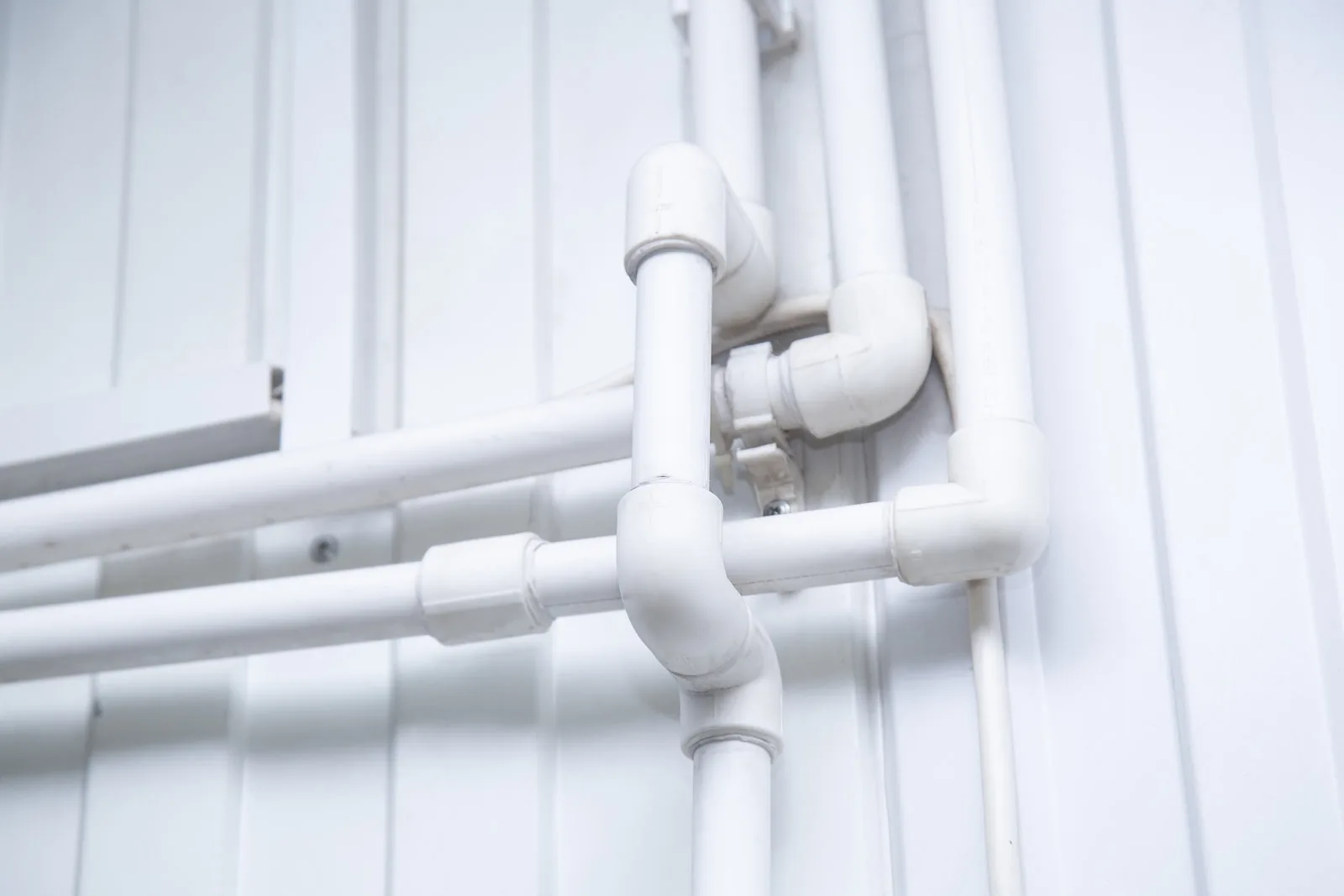
How we verify a piping system before it ships
Everything above is a check you can run on a supplier. Here is what those checks look like from the manufacturing side — the process any serious PPR or PEX supplier should be able to walk you through without preparation.
Our certification basis is SKZ in Germany, ISO 15874, CE and WRAS, and each means a different thing. SKZ is third-party surveillance of the production process, not a one-time sample test. ISO 15874 is the system standard the product is built and tested to. CE relates to European market placement, WRAS to suitability for contact with potable water in the UK regime. A supplier listing four marks without being able to say what each covers has usually bought paper rather than passed audits — the scope of ours is on our certifications page.
On the production side, wall thickness is measured against DIN 8077 dimensions and general quality against DIN 8078, with hydrostatic pressure testing run batch by batch rather than on a launch sample. The published design basis is a 50-year design life at rated pressure and 20 °C under ISO 15874, and the 50-year warranty against material and manufacturing defects is deliberately matched to that figure rather than set independently.
One point of transparency buyers should demand of every supplier, including us. We run a dual-origin supply arrangement — production in Türkiye and a partner plant in China, allocated by market. Which origin serves your order is confirmed in writing on the proforma invoice before you pay a deposit, and the certificate of origin, packing list and bill of lading are issued consistently against it. A supplier who will not put origin in writing at proforma stage deserves more attention than any brochure claim.
The verdict, with the caveat it deserves
For concealed and embedded hot water distribution in a market with trained fusion installers, PPR is the system we would specify, and the reason is the joint rather than the polymer. A fused socket has no mechanical component to relax over a fifty-year design life. For cold-climate residential work, retrofit plumbing, and any project where the crew rotates and the routing is awkward, PEX is the better tool — freeze tolerance and jointless home runs are real engineering advantages, not marketing.
What should not be in doubt is the verification. Whichever material you pick, ask for the document rather than the mark: the printline photograph and the ASTM F2023 basis if it is PEX, the ISO 15874 test reports and the ISO 17455 barrier report if a barrier is claimed on either. Suppliers who hold those files send them the same day. That response time is itself the most reliable signal in this comparison.
Frequently Asked Questions
Is PPR better than PEX for hot water?
For concealed or embedded hot water lines installed by fusion-trained crews, PPR’s homogeneous welded joint is the stronger design. PEX wins on freeze tolerance, flexibility and install speed in cold-climate or retrofit work. Neither material wins on every axis.
Does my existing PEX specification reference a withdrawn standard?
If it cites ISO 15875-2:2003, yes. EN ISO 15875-2:2025 was published on 28 October 2025 and cancels the 2003 edition along with its A1:2007 and A2:2020 amendments. Update the reference before your next tender.
What does the first digit on a PEX printline mean?
It is the chlorine resistance rating under ASTM F876, tested to ASTM F2023. A 0 means untested or not meeting the requirement; 5 means the pipe is rated for 100% of the time at 140 °F, which is what a recirculating hot water loop needs.
How do I verify an oxygen barrier claim on heating pipe?
Ask for an accredited lab test report naming the pipe construction and dimension, referencing ISO 17455:2005 as the test method and DIN 4726 as the requirement. A printed “EVOH” marking without a dated report behind it is a claim, not evidence.
Is PEX-a genuinely better than PEX-b?
Not as a spec claim. The letters denote the crosslinking method — peroxide, silane or electron beam — and all types must meet the same standard requirements for pressure and temperature rating, minimum bending radius and wall thickness. Judge the designation code, not the letter.
Can I compare PEX psi ratings directly against PPR temperature limits?
No. ASTM F876 rates PEX by pressure at a stated temperature, while ISO 15874 rates PPR through application classes and a PN series. A meaningful comparison requires fixing the application class, the SDR or PN series, and the design temperature and pressure first.
Do PPR and PEX both really last 50 years?
Fifty years is an extrapolation limit written into both standards, not a predicted failure date. ISO 15875-2 caps design-stress extrapolation at 50 years, and PEX for potable water must extrapolate to a minimum 50-year lifetime under ASTM F2023.