A private-label PPR pipe fitting range is not a shopping list. It is a set of four decisions — which fitting families, which diameters, which thread type, which colour — and only one of them is cosmetic. The other three change your certification position, your minimum order, and your lead time.
Here is the number most first-time brand owners miss: a colour change is a certification event. Under the WRAS scheme, each material variation — colour, filler content, or manufacturing site — has to be tested on its own. Pick a house colour that nobody has tested, and the approval you thought you were buying does not travel with it. That single fact reorders the whole planning sequence, so this article runs the sequence in the order that protects you rather than the order that feels natural.
Key Takeaways
- One fitting SKU serves every pressure class at a given diameter. The socket is sized to the pipe’s outside diameter, and the outside diameter does not change between PN classes — only the wall thickness and bore do. This is why a fittings range is structurally far shorter than a pipe range.
- Rebranding breaks a WRAS approval. Once a product is re-branded, WRAS Approval cannot be claimed on it; the rebranded version needs a Secondary Product Approval, and the applicant must have the primary holder’s written consent.
- Plan 3 tonnes per colour on a first branded run, or one 40HQ container. Standard in-production sizes run 15–25 days; a private-label run takes 30–45 days, plus 7–10 days when a first colour match or a new mould is involved.
- An A.TR certificate is not a certificate of origin. It evidences free circulation inside the EU–Türkiye Customs Union and says nothing about where the goods were produced.
- Build the range from fitting families in the ISO 15874-3 scope multiplied by the diameters your own market installs. A range shaped this way typically lands near 40 lines, but the count that matters is the one your demand data produces.
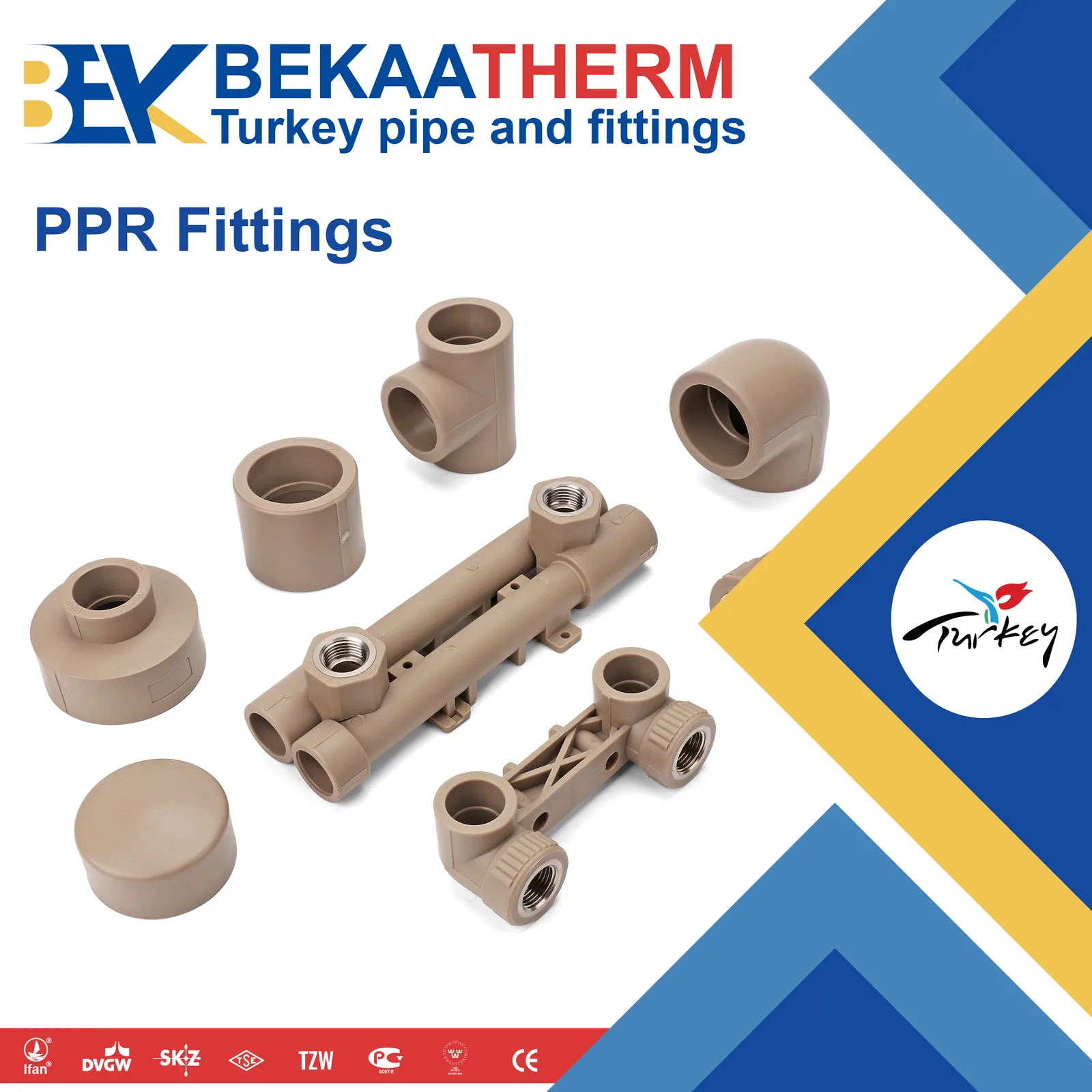
Why the fittings range is shorter than the pipe range
Start here, because it kills the most expensive planning mistake — assuming you need a separate fitting for every pressure class you stock.
PP-R is joined by socket fusion, which welds on the outside surface of the pipe. So the fitting socket is machined to the pipe’s outside diameter. Under the dimensional standard (DIN 8077, with general quality requirements in DIN 8078), the outside diameter for a given nominal size is fixed. Raising the pressure class thickens the wall inward, shrinking the bore, leaving the outside diameter untouched.
The practical result: one 25 mm elbow fits 25 mm pipe in every PN class you carry. Your pipe range multiplies by pressure class. Your fittings range does not. If a supplier quotes you a fittings matrix with separate part numbers per PN, ask them why — either they are describing something other than socket fusion, or the matrix is padded.
Wall thickness values per size and class are the pipe side of the decision, and they belong in a table rather than in prose. Our PPR pipe sizes chart carries the dimensional detail; this page stays on the fittings.
Step 1 — Fix the fitting families before the SKU count
The governing standard for PP-R fittings is ISO 15874-3:2013, reviewed and confirmed in 2023. Its scope names four construction types: socket fusion fittings, electrofusion fittings, mechanical fittings, and fittings with incorporated inserts. Anything a supplier offers you sits in one of those buckets, and the bucket determines how it is tested.
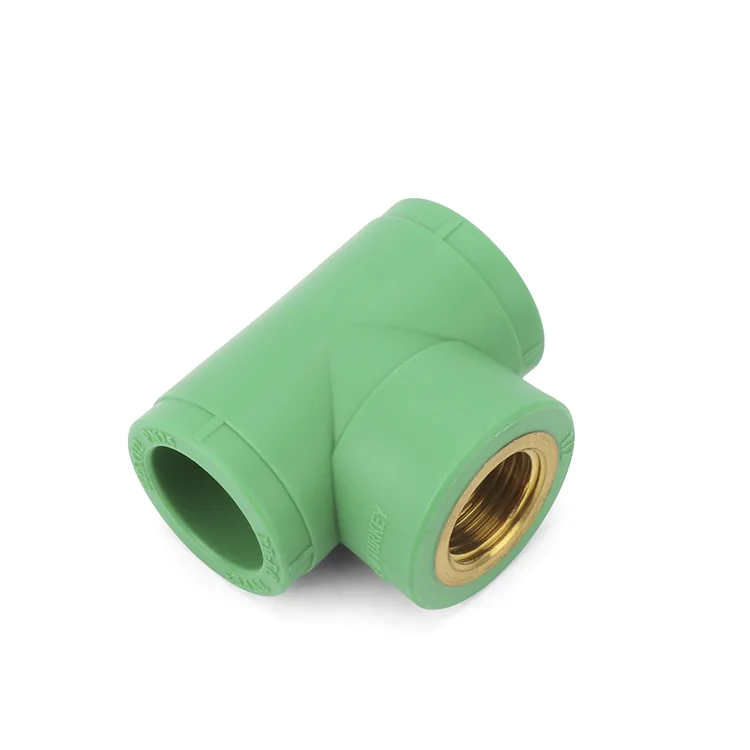
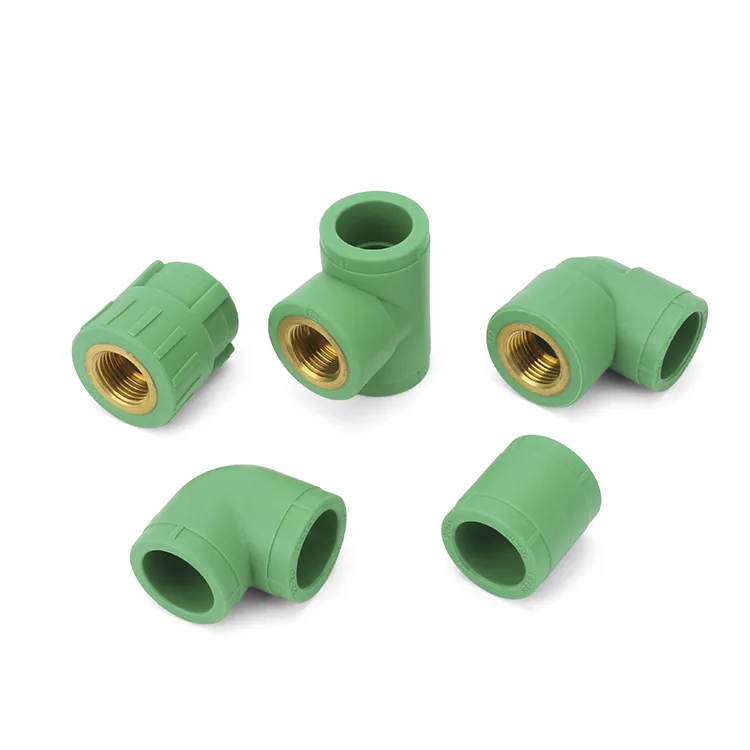
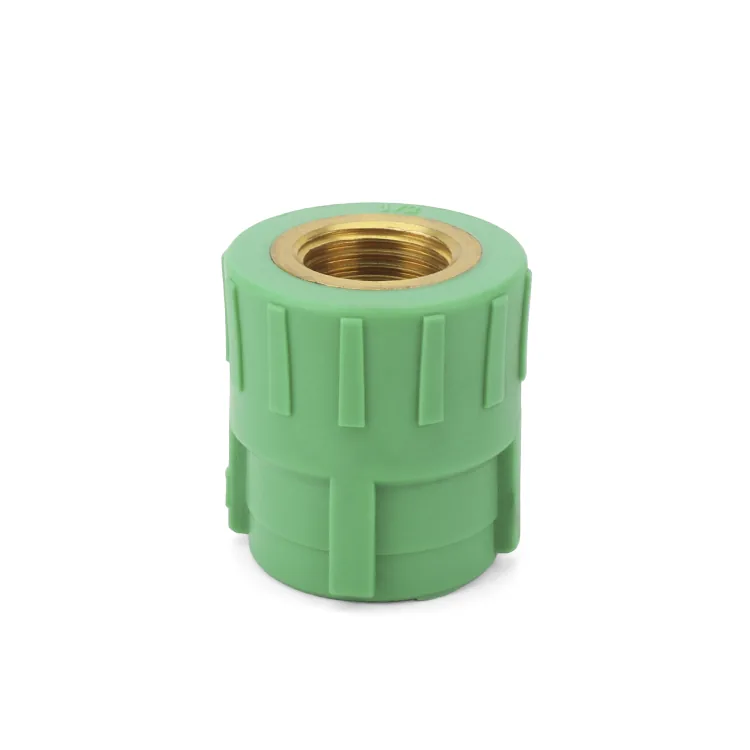
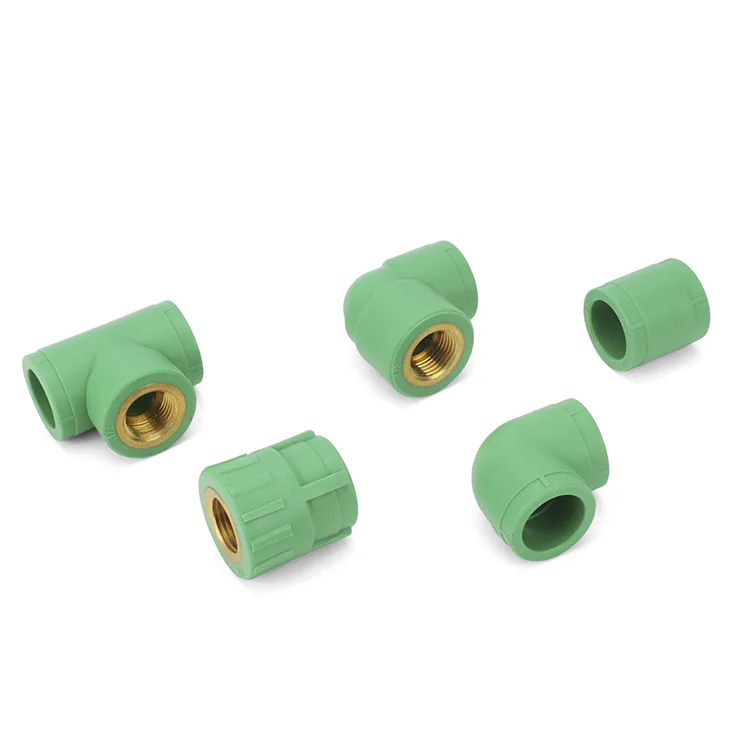
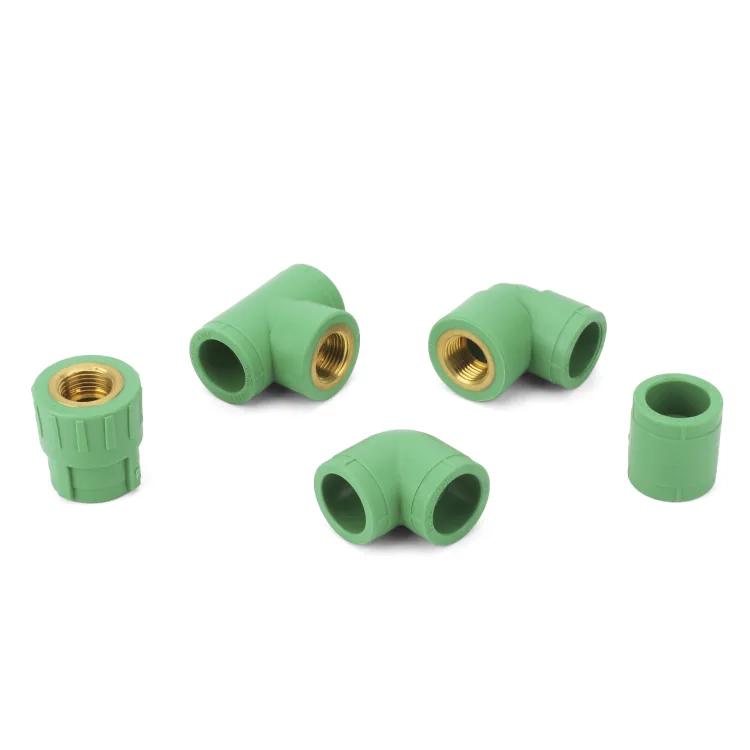
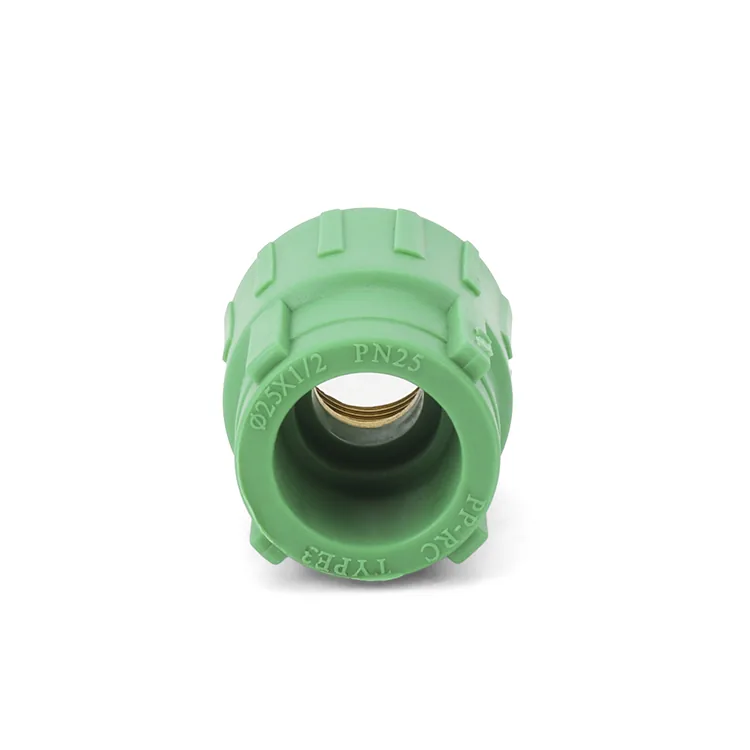
For a hot-and-cold water range aimed at buildings, the load-bearing families are socket fusion parts and insert fittings — the brass-threaded transitions that let a plastic system meet a tap, a meter, a boiler, or a radiator valve. The transition points are where the range earns its keep. A distributor who stocks every elbow but runs out of female threaded sockets has a warehouse full of parts that cannot terminate a run.
How to size the range against your own market
There is no universal SKU count, and any supplier who hands you one without asking about your market is selling you their stock list rather than your range. The method that works:
- List the diameters your market actually installs. Not the catalogue’s full span — the four or five sizes that carry residential branch and riser work where you sell.
- Multiply by the plain fusion families. Coupling, 90° elbow, 45° elbow, equal tee, end cap. These run across every diameter you listed.
- Add the threaded transitions only where they exist in the field. Male and female threaded sockets, elbows and tees, concentrated in the smaller diameters where fixtures connect.
- Add reducers between adjacent diameters only. Reducers are the long tail that quietly doubles a range. Every step you stock has to be a step installers actually make.
- Count what falls out. A range built this way usually lands somewhere near 40 lines, but treat that as the shape of the answer, not the answer. Your own sell-through data governs.
Run this against a 98-item catalogue spanning 4 systems and you will typically use well under half of it on a first order. That is the correct outcome. A first container should prove your demand assumptions, not warehouse them.
Step 2 — Settle the thread family before you commit tooling
Insert fittings carry a metal thread, and outside North America two families dominate: BSP parallel threads to ISO 228-1 (designated G) and BSP taper threads to ISO 7-1 (designated R for external, Rp for internal). They are not interchangeable in the way installers sometimes assume.
A taper thread seals on the thread flanks themselves and needs a sealant to close the helical leak path. A parallel thread does not seal on the thread at all — it needs a gasket or an O-ring on a machined face. Put a parallel male into a taper female and you have a joint that tightens up and still weeps.
Confirm the thread family with the plumbing authority or wholesaler network in your destination market before locking the threaded half of your range. Getting it wrong turns a third of your container into stock you cannot sell.
This is a genuine market-by-market question and we will not guess it for you. The cost of a wrong assumption lands entirely on the importer, not the factory.
Step 3 — The colour decision is a certification decision
This is the section that costs brand owners the most money, and it is the one no PPR fittings listicle covers.
If you are selling into a market that recognises WRAS approval, understand what happens when your name goes on the product. Once products or materials are re-branded, WRAS Approval cannot be claimed on them. The scope of an existing approval does not extend to rebranded material unless the Scheme agrees otherwise. What the rebranded product needs is a Secondary Product Approval.
A Secondary Product Approval exists exactly for this situation: it lets a retailer, wholesaler, or other trade party market a WRAS Approved Product under a different trade name. You do not have to be the primary approval holder to apply. But you do have to obtain the primary holder’s written consent first — which means your certification position depends on a document only your supplier can give you.
Then read the dependency clause carefully, because it speaks directly to the fear that keeps private-label buyers awake. Any change to the primary approval, including its withdrawal, automatically applies to any secondary approval built on it. WRAS notifies the secondary holder but is not obliged to explain why. Your brand’s compliance can be switched off by an event at a factory you do not own, and you may never be told the reason.
Two more scheme mechanics belong on your planning sheet. WRAS fitting and material approvals are valid for a maximum of five years before the product must be re-approved. And each material variation — colour, filler content, or manufacturing site — must be tested; changing suppliers, adjusting formulations, or moving production can invalidate an approval you are relying on.
| Decision | Certification effect | What it costs you |
|---|---|---|
| Keep supplier branding | Primary approval applies as issued | No brand equity of your own |
| Your brand, existing colour | Needs Secondary Product Approval plus written consent | Application time; dependency on primary holder |
| Your brand, new house colour | Colour is a material variation requiring its own testing | 3 t per colour MOQ, plus 7–10 days for first colour match |
| Change production site later | Manufacturing site is a tested variation | Approval may no longer be valid; re-check before shipping |
Requirements differ by market, product type, and the role you play in the supply chain, so confirm your specific position with the scheme or a compliance consultant before you print packaging. The pattern above is what you should be asking about.
Verify the claim yourself — don’t take our word for it
Any supplier can put four certification logos on a poster. The check takes about two minutes: the WRAS Approvals Directory is free to search online by company name, product type, or the product’s unique approval number. Ask your supplier for the approval number, then look it up yourself rather than accepting a logo or a scanned PDF.
Do the same on the German side. SKZ tests PP-R pipes and fittings against DIN EN ISO 15874 parts 1, 2, 3, 5 and 7, covering PP-H, PP-B, PP-R and PP-RCT. Their certification also includes on-site production monitoring — inspectors visit production sites worldwide in accordance with DIN EN ISO/IEC 17020, and SKZ’s certification body is DAkkS-accredited under ISO/IEC 17065. A certificate backed by a site visit is a different animal from one that never was.
One naming point worth policing in your own documents: the system standard is ISO 15874, and part 5 covers fitness for purpose of the system. If a datasheet says “ISO TYPE-5”, that is a corrupted reference and a sign nobody technical reviewed it.
Step 4 — Fit the range into a container
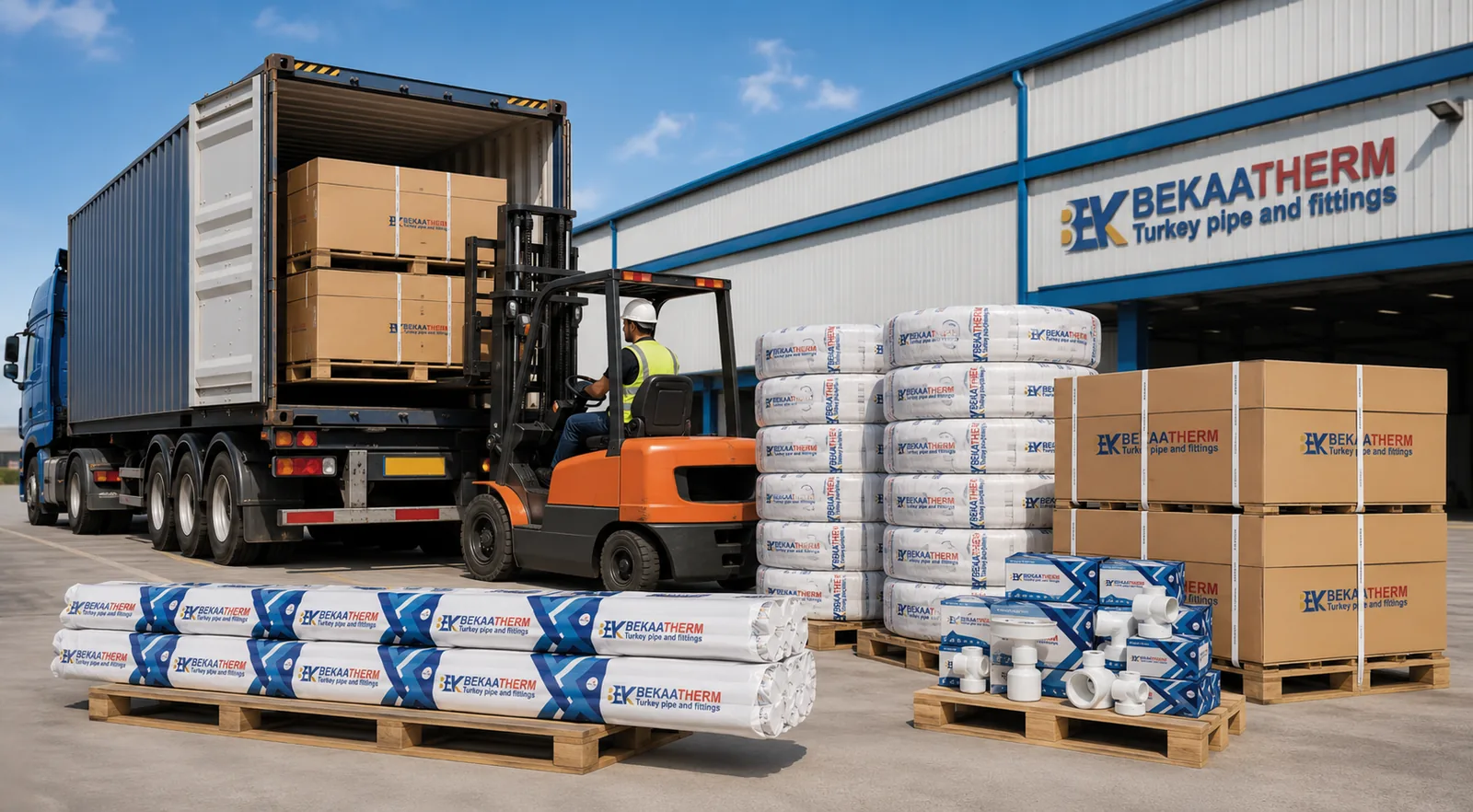
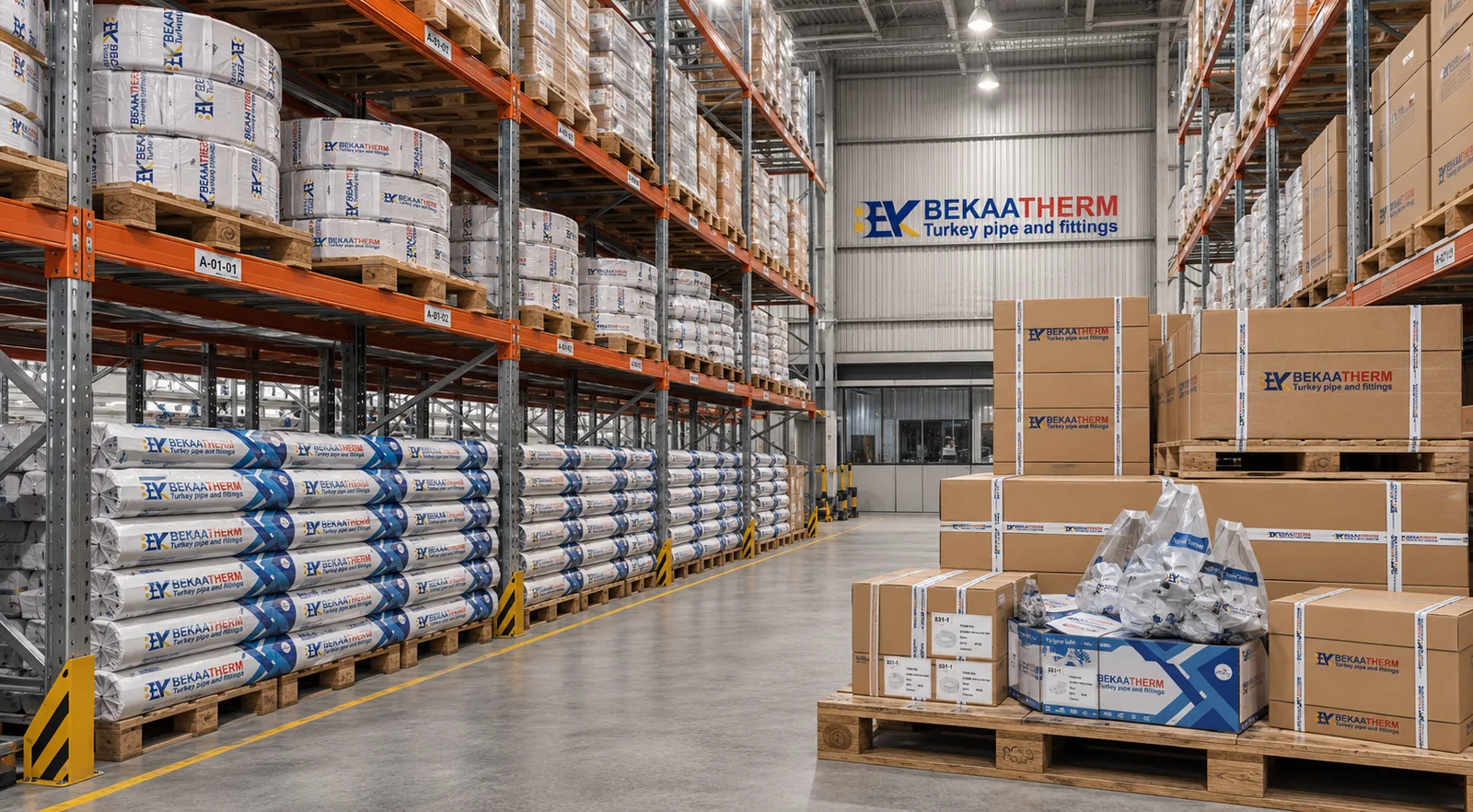
Fittings are light and bulky; pipe is long and bulky. A container fills up on volume long before it reaches its weight limit, which is why a fittings-heavy order behaves differently from a pipe order.
A 20GP gives you roughly 33 m³ of usable volume against a payload of about 28 tonnes. A 40HQ gives roughly 76 m³. On a mixed load, a workable split is about 60% pipe, 30% fittings and 10% valves by volume — a starting point to argue with once your own sell-through says otherwise.
| Order type | Minimum | Lead time |
|---|---|---|
| Mixed trial order, supplier branding | One 20GP mixed container (pipe + fittings + valves) | 15–25 days for regular in-production sizes |
| Single size and colour | 500 kg per size and colour | 15–25 days |
| First private-label run | One 40HQ, or 3 tonnes per colour | 30–45 days |
| First colour match or new mould | As above | Add 7–10 days |
Note what that 3 tonnes per colour does to a multi-colour brand plan. Green and white are two separate 3-tonne commitments, not one order split in half. Brand owners who want a full colour story on launch routinely discover their first order is twice the size they budgeted for. Launch on one colour, prove the demand, add the second on the repeat.
On terms: 30% T/T deposit with 70% against copy B/L is the default, and an irrevocable L/C at sight is accepted from USD 50,000. Shipment goes FOB İstanbul or Mersin by default, with CFR and CIF available on request. Samples work in your favour during planning — standard samples are free up to 3 items with freight collect, and branded samples take 7–10 days with the sample cost credited against your first bulk order.
Step 5 — Get the paperwork consistent before the container moves
Plastic pipe fittings classify under HS heading 3917, which covers tubes, pipes and hoses and fittings therefor — joints, elbows, flanges — of plastics. Subheading 3917.40 is specifically “Fittings”.
We are not going to print a duty rate for it. Line rates move, they differ by destination and by trade agreement, and a number copied off a blog into your landed-cost model is worse than no number. Classify under 3917.40, pull your own line rate from the destination tariff database, and confirm it with your customs broker before you price the container.
The A.TR trap for EU importers
If you are importing into the EU from Türkiye, this distinction is worth more than any spec on this page.
The EU–Türkiye Customs Union is based on the status of goods in free circulation, and it covers industrial products, including plastics — it excludes agricultural products and coal and steel products. The document that moves goods under it is the A.TR movement certificate. And an A.TR certificate evidences free circulation. It is not a proof of origin. It does not attest where the goods were produced.
Buyers conflate the two constantly. If your marketing, your tender documents, or your customer contracts depend on a specific country of manufacture, an A.TR will not substantiate that claim — you need a certificate of origin, and it needs to agree with your other documents. One administrative update worth knowing: since 8 July 2024, EU Member States agreed to accept A.TR certificates issued electronically by the Turkish authorities, bearing a QR code and without a wet-ink signature, pending formal adoption of a Customs Cooperation Committee decision with retroactive effect.
How we handle dual-origin supply
We supply from two origins: our Türkiye plant and a partner plant in China. Origin is allocated by market, and we would rather tell you that in an article than have you find it on a bill of lading.
What we commit to on every order: the origin is confirmed in writing on the proforma invoice before you pay a deposit, and the certificate of origin, the packing list and the bill of lading all state the same thing. If you are building a brand on a country-of-manufacture claim, tell us at the quotation stage so the allocation is locked before tooling starts — not after your cartons are printed.
One capability figure is worth knowing for range planning: we hold 10,000 moulds. That is why a long-tail size does not automatically mean new tooling, and why the 7–10 day adder applies to a first colour match rather than to most size requests.
A worked sequence, start to finish
Here is the whole thing in the order that keeps your options open longest. An importer opening a new market with a private-label PPR fitting range would run it like this.
- Week 0 — Fix the diameters. Pull the sizes your market installs from your own sales history or your wholesaler’s. Everything downstream multiplies off this list.
- Week 0 — Confirm the thread family. ISO 228-1 parallel or ISO 7-1 taper, verified with the destination plumbing authority. Do it now; it constrains the insert-fitting half of the range.
- Week 1 — Request samples. Standard samples are free up to 3 items, freight collect. Get the fusion fit and the thread engagement in an installer’s hands before you commit.
- Week 1 — Verify certifications yourself. Approval numbers into the WRAS directory. Check which ISO 15874 parts the SKZ scope covers. Do not accept logos.
- Week 2 — Settle branding and colour. If you need a Secondary Product Approval, start the written-consent conversation here, not after production. If you want a house colour, accept the 3-tonne-per-colour commitment and the 7–10 day colour-match adder.
- Week 2 — Lock origin in writing. Get the origin allocation on the proforma invoice before the deposit, and check the certificate of origin, packing list and B/L will agree.
- Week 3 — Classify and cost. HS 3917.40, your own destination line rate, confirmed with your broker. If you are an EU importer, remember the A.TR does not answer the origin question.
- Weeks 4–10 — Production. 30–45 days for a private-label run, plus the colour-match or new-mould adder. 30% deposit up front, 70% against copy B/L.
Best for — and not for
This approach is best for importers and brand owners placing a first container into a market they already sell pipe into, who have real demand data for diameters and want to prove a range before widening it. It also suits distributors who need a defensible answer when a specifier asks who tested the product and to which standard.
It is not for buyers who need a handful of boxes below the 500 kg per size and colour minimum — that is a local wholesaler’s job, not a factory’s, and we will say so rather than waste your time. It also does not suit anyone who needs stock on the water in under three weeks with their own brand on it: 30–45 days for a private-label run is the honest number, and no amount of pressure on the sales desk compresses a colour match.
What the warranty actually covers
Our fittings carry a 50-year warranty against material and manufacturing defects. That figure corresponds to the 50-year design life at rated pressure and 20°C under ISO 15874 — the standard’s reference condition, not a promise about every installation.
Read the temperature qualifier carefully, because it is where the number gets abused across this industry. Design life models are pressure- and temperature-dependent; a system run continuously hotter or at higher pressure than its rating does not inherit the same curve. A supplier quoting “50 years” with no condition attached is quoting a marketing number. Ask which part of ISO 15874 they are citing and at what temperature.
For a brand owner this matters twice over, because the warranty your customers hear about is the one printed on your packaging. Make sure the conditions you print match the conditions the factory actually warrants.
Conclusion
The SKU count is the easy part of range planning. The decisions that actually bind you are the thread family, the colour, and the origin — each one commits tooling, minimum quantities, or a certification position that is difficult to unwind once cartons are printed. Sequencing them correctly costs nothing; getting them backwards costs a container.
If you are shaping a first branded order, work out your diameter list and your thread family first, then bring both to a supplier conversation. You will get a far more useful quotation than a request for “a price on PPR fittings” ever produces.
If a quotation is premature: the PPR pipe price list page explains how our pricing is structured, our certifications page lists the scopes to check if you are auditing us against the WRAS and SKZ steps above, and the OEM and private-label page covers branding, packaging and territory. To talk it through, message us on WhatsApp or email sales18-ifan@ifangroup.com.
Frequently Asked Questions
Do I need different PPR fittings for PN20 and PN25 pipe?
No. PP-R is joined by socket fusion on the outside of the pipe, and the outside diameter for a given nominal size is fixed by the standard. Raising the pressure class thickens the wall inward, so one fitting SKU serves every PN class at that diameter.
If I put my own brand on a WRAS approved fitting, is it still approved?
Not automatically. Once a product is re-branded, WRAS Approval cannot be claimed on it, and the scope of the original approval does not extend to rebranded material. The rebranded version requires a Secondary Product Approval, which needs the primary approval holder’s written consent.
Does changing the colour of my private-label fittings affect certification?
It can. Each material variation, including colour, filler content and manufacturing site, must be tested. A new house colour is a material variation rather than a cosmetic choice, and it also triggers a 3 tonne per colour minimum plus 7–10 days for the first colour match.
How long is a WRAS approval valid?
WRAS fitting approvals and material approvals are valid for a maximum of five years, after which the product must be re-approved. Check the expiry alongside the approval number when you verify a supplier’s claim in the online directory.
Does an A.TR certificate prove the goods were made in Türkiye?
No. The A.TR movement certificate evidences that goods are in free circulation within the EU–Türkiye Customs Union. It is a free-circulation document, not a proof of origin, and it does not attest where the goods were produced. Ask for a certificate of origin if manufacture location matters to you.
What HS code do PPR fittings ship under?
Plastic pipe fittings fall under HS heading 3917, covering tubes, pipes, hoses and fittings therefor of plastics, with subheading 3917.40 for fittings. Duty rates vary by destination, so pull your own line rate from the destination tariff database and confirm it with a customs broker.
What is the minimum order for a first private-label fittings run?
One 40HQ container, or 3 tonnes per colour on a first branded run, with a 30–45 day lead time. If you are testing the market without your own branding, a single 20GP mixed container of pipe, fittings and valves is the entry point at 15–25 days.
Standards and scheme references: ISO 15874-3:2013 · SKZ plastic pipe system testing · WRAS Approvals · European Commission — Türkiye customs union and preferential arrangements. Certification scopes, tariff line rates and scheme requirements change; verify current status against the source before relying on it commercially.