Ask ten suppliers what PPR pipe colour means and you will get ten confident answers, most of them wrong. Green is potable. White is hot. Grey is fibre-reinforced. Coffee is premium. None of that is written in any standard. ISO 15874-2:2013 lists eight things a PP-R pipe must be marked with, and colour is not one of them — the standard even says outright that “slight variations in appearance of the colour are permitted,” which is not language you use about a safety-critical property.
But colour is not meaningless either, and the place it bites is the certificate. Pull up the WRAS Approvals Directory and read an actual PP-R entry: approval #2201517 reads “Green coloured, extruded PPR pipe.” The colour is written into the approved product description. WRAS approval is bound to a formulation, and a colour masterbatch is a formulation input. So the sentence that matters to anyone putting their own brand on a pipe is this: colour tells you nothing about the grade, and everything about which certificate your batch is still legally covered by.
Key Takeaways
- Colour is not a marked property. ISO 15874-2:2013 Table 12 lists the minimum required markings — standard number, manufacturer, dimensions, dimension class, material, application class with operating pressure, opacity if declared, and production data. Colour is absent.
- The only optical property ISO regulates is opacity. Clause 5.2: pipes declared opaque must not transmit more than 0,2 % of visible light, tested to ISO 7686. That is a light-transmission limit, not a colour rule.
- “Green = NSF 61 potable, white = hot water” is false. NSF/ANSI/CAN 61 contains no colour provision, and application class is printed on the pipe (e.g. Class 1/10 bar), never inferred from the body colour.
- WRAS names the colour in the approval. Live directory entries read “Green coloured (with red stripe),” “Black or green coloured, injection moulded PPR fittings,” and so on. The approval describes a coloured product, not a generic one.
- A colour swap can void a WRAS approval. WRAS.Appr-310 v4.0 clause 8 makes approval conditional on no change in formulation; clause 9 says failure to notify the Scheme before a modification invalidates the approval and removes it from the Directory.
- Green does not mean UV-resistant. One WRAS-listed pipe (#2207536) has a green inner layer and puts the UV stabiliser in a separate black outer layer. The protection lives in the stabilised layer, not the visible colour.
- Your own colour costs a run, not a premium. A single size and colour starts at 500 kg; a first branded run is one 40HQ, or 3 tonnes per colour, and a first colour match adds 7–10 days to the lead time.
What ISO 15874 actually says about colour
Most articles claiming that “international standards regulate PPR colour coding” never cite a clause. There is a reason for that. ISO 15874-2:2013, the part of the standard that governs PP-R pipes themselves, handles colour in three places, and all three point the same way.
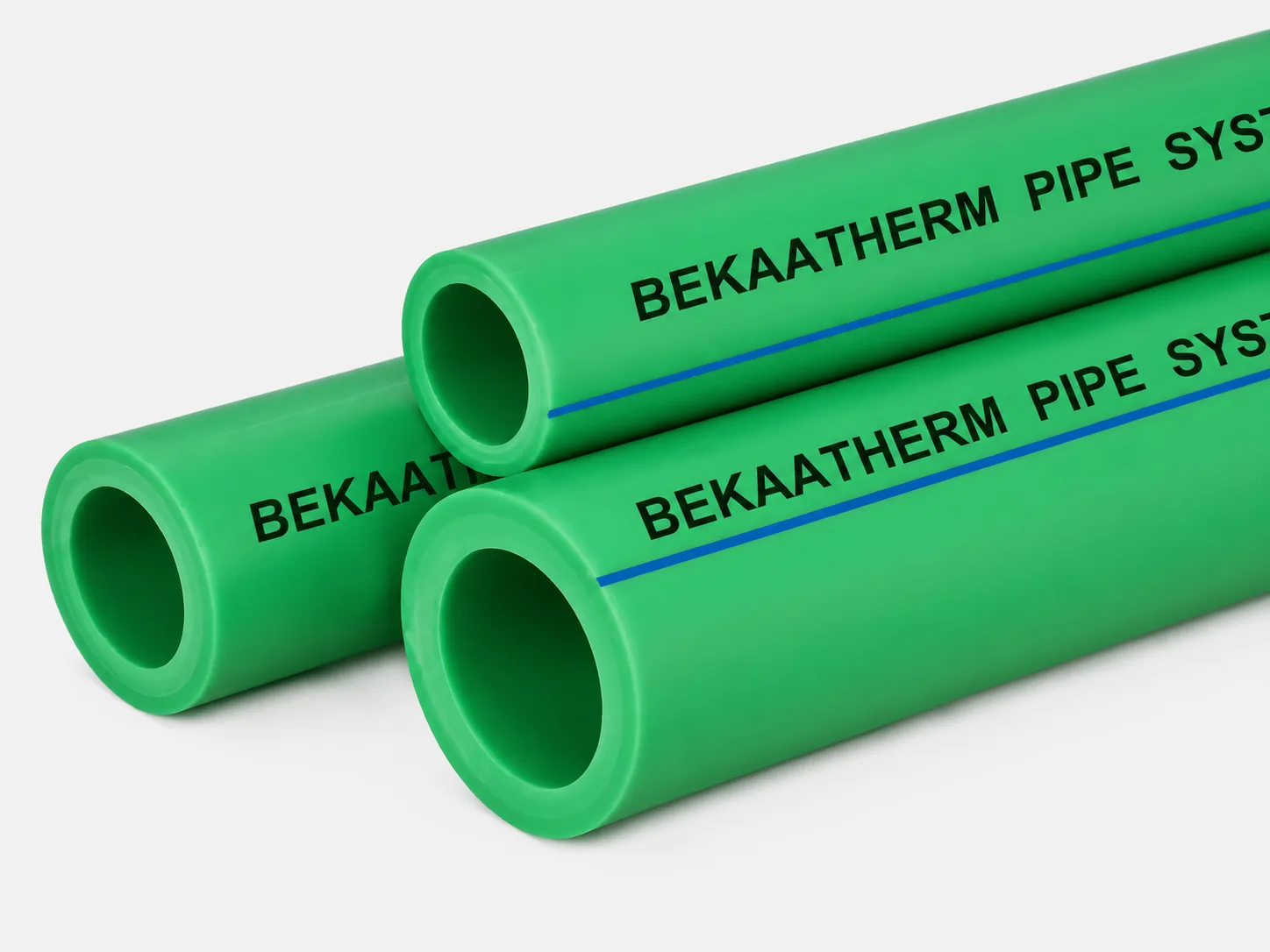
Clause 5.1 covers appearance. It requires that the material contain no visible impurities, then adds that slight variations in the appearance of the colour are permitted. Standards do not permit variation in properties that matter. Clause 5.2 covers opacity, the only optical property the standard puts a number on: pipes the manufacturer declares opaque must not transmit more than 0,2 % of visible light when tested to ISO 7686. That is a light-transmission threshold, and it says nothing about which colour delivers it. A dark pipe and a pale pipe can both pass; a translucent pipe of any shade fails.
Then there is Table 12, the minimum required marking list. Eight items: the standard number, the manufacturer’s name or trade mark, nominal outside diameter and wall thickness (16 x 2,2 for example), the pipe dimension class, the material (PP-R), the application class combined with operating pressure (Class 1/10 bar for example), opacity if the manufacturer declares it, and the manufacturer’s production information — period in year and month, plus a site name or code where a manufacturer produces at more than one location. Colour appears nowhere on that list. If colour carried grade information, ISO would have made you print it.
The one place ISO does constrain colour is almost a joke at the myth’s expense. Clause 10.1 requires that where printing is used, the colouring of the printed information must differ from the basic colouring of the pipe. In other words, the standard’s only interest in body colour is making sure it does not hide the marking that actually carries the data.
The four colour myths, and what replaces them
These four claims circulate on nearly every PPR colour page online, usually stated as fact and never sourced. Each one has a specific, checkable answer.
| The claim you will read | What the source documents say | Read this instead |
|---|---|---|
| Green is certified for cold potable water; white is for hot | NSF/ANSI/CAN 61 has no colour provision. ISO 15874-2 scope covers water “whether or not intended for human consumption” | The application class printed on the pipe, plus the potable certificate |
| White PPR is higher quality than green | ISO 15874-2 clause 5.1 permits colour variation as an appearance matter | Dimension class, PN rating and the test regime behind the certificate |
| Green PPR resists UV, so it can run outdoors | WRAS #2207536 places the UV stabiliser in a black outer layer, with green inside | Whether a UV-stabilised layer is declared in the product description |
| Grey means fibre-reinforced | WRAS #2212535 is a glass-fibre middle-layer pipe described as green with a white stripe | The layer construction stated on the datasheet or approval entry |
Why the UV myth is the expensive one
The potable and quality myths cost you an argument. The UV myth costs you a pipe run. Photo-degradation in polyolefins is handled by a stabiliser package, and carbon black is the long-established mechanism — it absorbs UV before it reaches the polymer chain. That is a formulation and layer decision, not a shade decision, which is what WRAS approval #2207536 shows in a live listing: an extruded multi-layered pipe with a green PP-R inner layer, a red PP-R/glass-filler middle layer, and a black PP-R/UV-stabiliser outer layer. The green layer sits inside the wall doing no UV work at all.
So when a supplier says their green pipe is fine on a roof, ask which layer holds the stabiliser. A pipe that is opaque under ISO 7686 has proved it blocks visible light through the wall. It has proved nothing about years of direct sun.
How to read the printing on the pipe
If colour is not the signal, the print line is. ISO 15874-2 clause 10.1 requires the marking to be printed or formed directly on the pipe not less than once per metre, and to stay legible after storage, handling and installation. That last requirement is a quiet quality test in itself: marking that scuffs off in the container was never compliant.
Walk a print line left to right and you can reconstruct the specification. The standard number tells you which rulebook applies. The dimension pair (16 x 2,2) gives outside diameter and wall thickness, which together fix the pressure capability — wall thickness is why two 20mm pipes can carry different PN ratings. The application class combined with operating pressure is the field most buyers skip and most disputes turn on, because it encodes the service condition the pipe was designed for, not just a bar number. Production period and site code let you trace a batch back when a claim lands two years later.
A pipe with no site code from a manufacturer running several plants is missing a marking ISO 15874-2 Table 12 requires. That is a documentation flag worth raising before the container is booked.
Marking also settles the potability question that colour cannot. ISO 15874-2’s scope covers hot and cold water installations inside buildings “for the conveyance of water whether or not intended for human consumption” — deliberately agnostic. Drinking-water suitability comes from a separate approval: WRAS in the UK, KTW-BWGL in Germany, NSF/ANSI/CAN 61 in North America. Each attaches to a formulation and a certificate number you can look up. Our breakdown of SKZ, CE and WRAS certification covers what each mark does and does not include.
Where colour does carry legal weight: WRAS
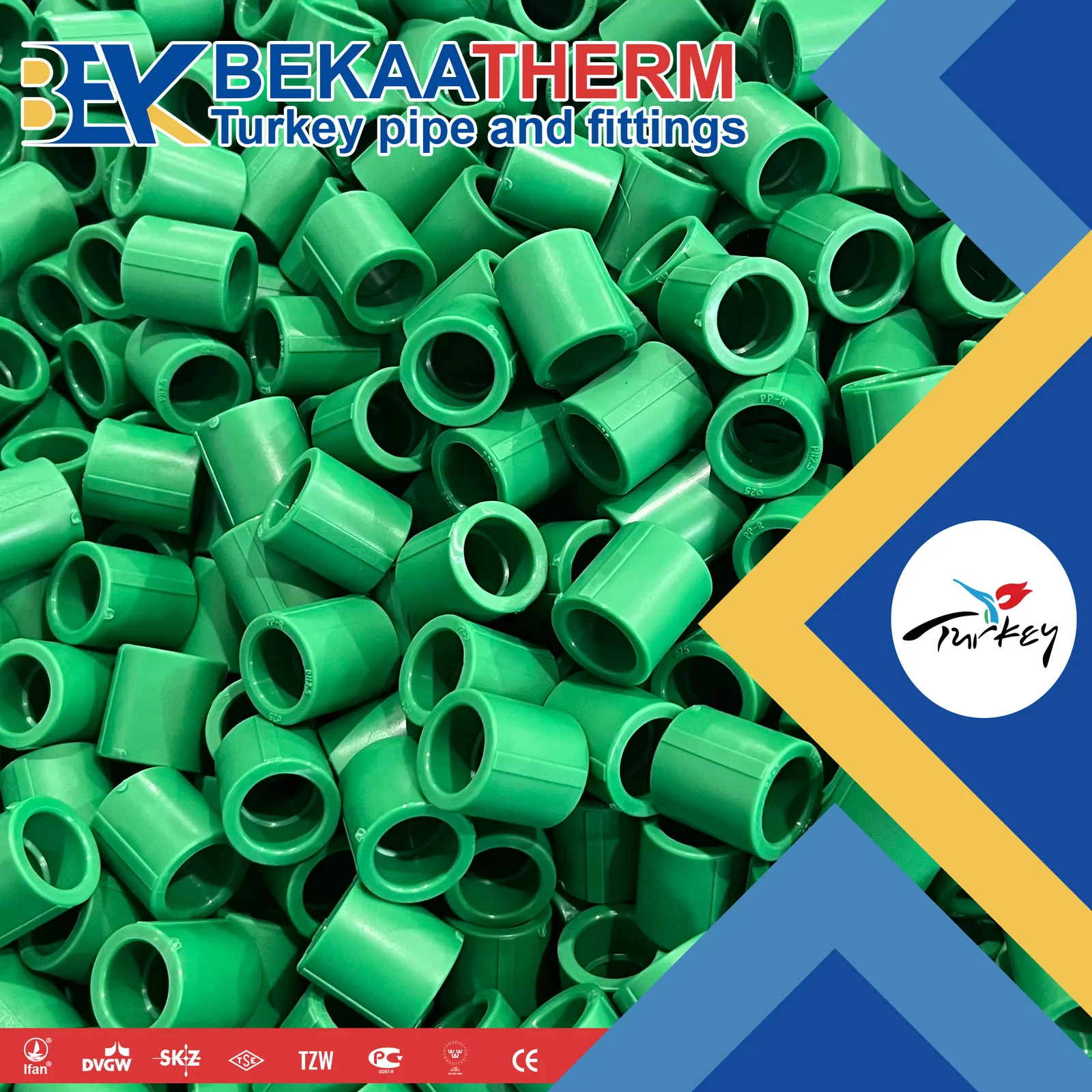
Here is the part almost nobody writing about PPR colour covers, and it is the part that can cost a distributor a market. WRAS writes the colour into the approval scope, verbatim, as part of the product description. These are live PP-R entries from the Approvals Directory, quoted as they appear:
- #2201517: “Green coloured, extruded PPR pipe.” Expiry 31/01/2027.
- #2202542: “Green coloured (with red stripe), single layered, extruded PPR pipe.” Expiry 28/02/2027.
- #2202565: “Green coloured, opaque, extruded PPR pipe.” Expiry 28/02/2027.
- #2205562: “Green coloured (with black external stripe), extruded PP-R pipe.” Expiry 31/05/2027.
- #2205564: “Black or green coloured, injection moulded PPR fittings.” Expiry 31/05/2027.
- #2212535: “Green coloured (with white stripe), extruded, multi-layered pipe comprising of a PP-RCT inner & outer layer and glass fibre middle layer.” Expiry 31/12/2027.
Notice what the directory is telling you. The stripe is in scope. “Black or green” is written out where both are covered. This is not a generic approval that happens to be green — it is an approval for a green product, bound to the formulation that was tested. Clause 8 of WRAS Material Approval Guidance WRAS.Appr-310 v4.0, issued 26 November 2024, states that approval is valid for up to five years “on the basis that there will be no change in formulation, or to the source or nature of ingredients or in the method or site of manufacture or method of application during the lifetime of the approval.”
Clause 9 puts teeth in it. No modification may be made without first notifying the Scheme, and failure to comply “will invalidate an approval and result in its removal from the WRAS Approvals Directory.” A colour masterbatch swap is a change in formulation and in the source of an ingredient. Do it quietly and the approval still printed on your catalogue may no longer exist.
The clause that makes a colour range affordable
WRAS anticipated this, and clause 54 is the one to quote back to any supplier who tells you a second colour means starting from zero. Where the only variation between products in a range is the colour — same basic formulation, same manufacturing conditions, same method and site of manufacture, same raw-ingredient suppliers — approval of the range may be obtained by full testing of one sample plus limited testing of the various coloured samples. WRAS asks you to contact them for the specific test requirements, which is the correct process rather than a shortcut.
A three-colour range is not three full approval programmes. But it only works if every other variable holds, which is why changing pigment supplier mid-contract is more dangerous than adding a colour deliberately at the start. Approvals also run on a clock: maximum five years, expired approvals deleted from the Directory within a month of expiry, and full testing required once an approval has been expired more than two years. Assessment is against BS 6920 Parts 1 and 2, with Part 3 added for hot-water use.
For importers and private-label brands who need the approval scope checked before the pigment changes — not after. Our certification page lists what we hold and which product scopes they cover.
Colourants are a drinking-water input, not a decoration
Regulators care about pigment because a colourant is a starting substance in a material that touches drinking water. Germany makes this explicit. The KTW-BWGL — the evaluation criteria for plastics and other organic materials in contact with drinking water — has been legally binding for plastics, organic coatings and lubricants since 21 March 2021, under section 15 of the German Drinking Water Ordinance. It carries a general part on requirements and tests, plus a polymer-specific part with positive lists of the starting materials that may be used. Not on the list for that polymer, not permitted. Elastomers and TPE joined in March 2022 with a transitional period originally running to 1 March 2025, extended in February 2025 to 1 July 2026.
The bigger change is European and it lands soon. Six acts were published on 23 April 2024 under Directive (EU) 2020/2184: Implementing Decisions (EU) 2024/365, 2024/367 and 2024/368, and Delegated Regulations (EU) 2024/369, 2024/370 and 2024/371. They entered into force on 15 May 2024 and generally apply from 31 December 2026. Decision 2024/367 establishes the first European positive lists; Regulation 2024/369 sets the procedure for adding to or removing from those lists; Regulation 2024/371 establishes harmonised specifications for marking products in contact with water intended for human consumption.
Transitional relief exists but it is finite. Substances approved by Member States between 13 July 2021 and 31 December 2026 may continue in use until 31 December 2032, and products holding a valid national attestation of conformity on 31 December 2026 get the same runway. For a brand planning a new colour into an EU market, the question is whether your pigment package is on a European positive list or riding a national approval whose clock is now visible. Requirements vary by product, market and the importer’s role, so confirm the current position with the relevant national authority before committing to tooling.
North America reaches the same place by another route. NSF/ANSI/CAN 61 sets minimum criteria for evaluating the health effects of materials in contact with drinking water, and explicitly does not establish performance, taste and odour, or microbial-growth requirements. It contains no colour specification and designates no colour as the potable colour. Certification attaches to a formulation.
Green, white, grey, coffee: best for / not for
With the technical claims cleared away, colour becomes what it actually is — a commercial and market-recognition variable. The four common bodies, stated as market convention rather than specification.
Green
Best for: markets where installers read green as “this is the PPR system,” and the UK in particular, where PP-R pipe in the live WRAS Directory is overwhelmingly described as green coloured. If your buyer’s plumbers already know green, matching it removes friction at the merchant counter. Not for: a brand trying to stand out on a shelf full of green, and never as a shortcut to claiming potable status or UV resistance.
White
Best for: exposed runs in finished interiors where the pipe needs to disappear against a wall. Not for: anyone assuming white signals a higher grade. It does not, and white shows site dirt and adhesive marks more than green does on long exposed runs.
Grey
Best for: mechanical and plant-room work where grey reads as industrial, and ranges wanting visual separation from a green domestic line. Not for: inferring fibre reinforcement. WRAS #2212535 is a glass-fibre middle-layer pipe described as green with a white stripe, which kills the grey-equals-fibre rule outright. Read the layer construction instead; ours is set out in the fibreglass versus aluminium composite comparison.
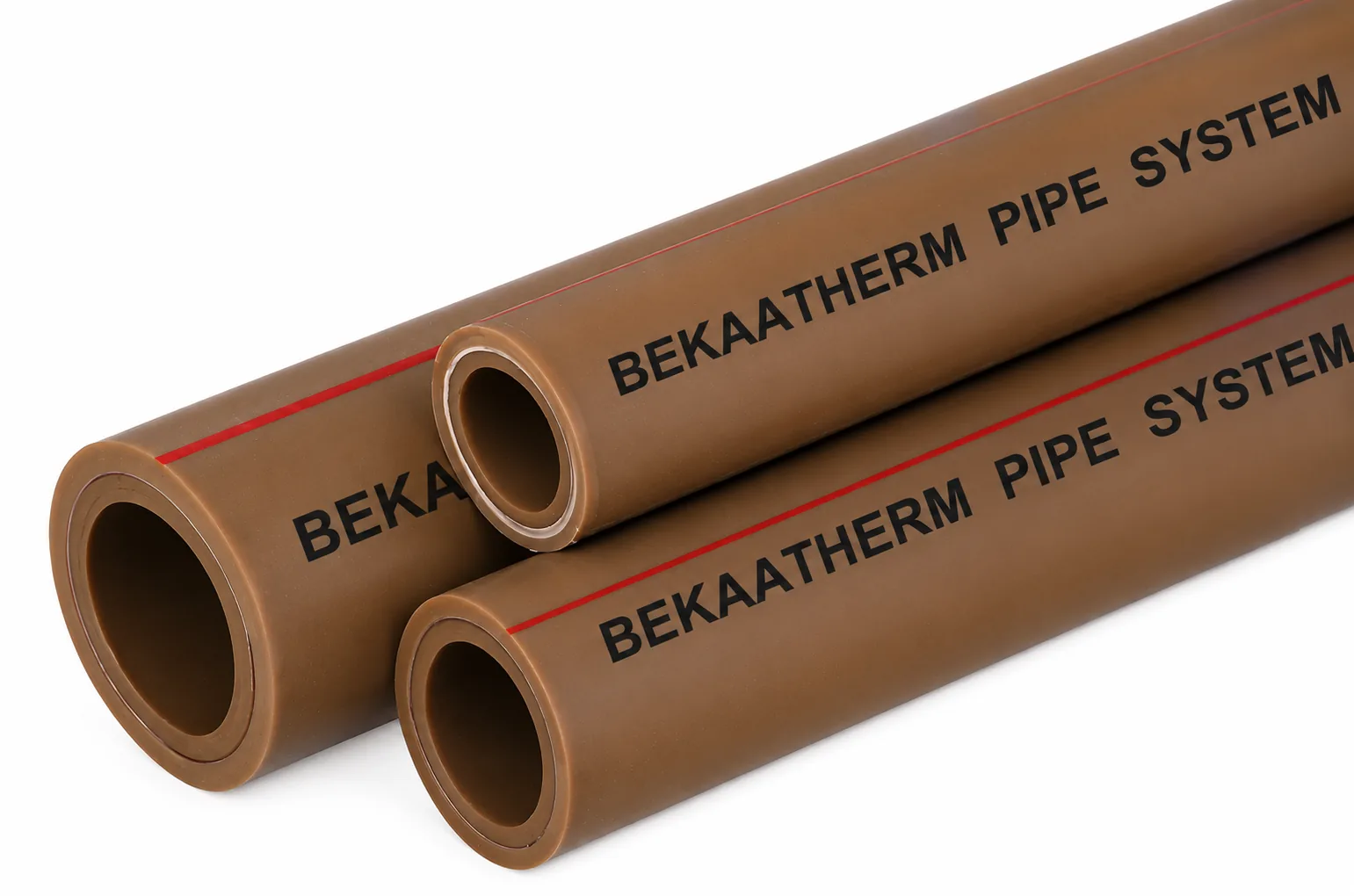
Coffee / brown
Best for: brand differentiation, plain and simple. Coffee is the honest proof of the argument: no standards body assigns any meaning to brown PP-R, and some markets use it for heating lines or a premium look purely by local convention. Not for: any market where the distributor needs colour to communicate service type — outside that local habit, nobody reads it the way you intend.
One caution that catches contractors on UK sites. Under BS 1710, the identification colour for a pipeline is applied marking — bands and labels — not the material’s own colour. The basic identification colour for water services is green (BS 4800 12 D 45), and potable water is distinguished by an additional blue safety band, with other water services carrying different code colours. A green PP-R pipe body does not by itself declare potable service under BS 1710. The bands do.
What your own colour costs in MOQ and lead time
The pigment itself is a minor addition by mass. What costs money is the changeover: purging the line between colours, the scrap at the transition, and holding a separate stock line for each colour and size combination. That is why minimums are stated per colour, not per product. Anyone quoting you a masterbatch percentage as though it explains your price is selling you the cheapest part of the equation.
| Scenario | Minimum | Lead time |
|---|---|---|
| Single size in a stock colour | 500 kg per size and colour | 15–25 days for regular in-production sizes |
| First branded run, your own colour | One 40HQ, or 3 tonnes per colour | 30–45 days |
| First colour match or new mould | As above | Add 7–10 days |
| Branded sample before committing | Sample cost credited against the first bulk order | 7–10 days |
The branded sample line is the one to use. A colour decision made from a screen render or a pigment chip is a decision made blind — PP-R colour reads differently in a 63mm wall than in a 20mm one, and differently again under merchant lighting. Seven to ten days and a sample cost that comes back off your first bulk order is a cheap way to avoid discovering the problem on a 40HQ. Full commercial terms sit on the private-label page, including regional exclusivity, which is agreed in writing per market rather than promised verbally.
How we check a colour change before accepting it
A colour request looks like a marketing decision and arrives like one, usually late in a negotiation. It is a compliance decision. This is the sequence we run before a new colour goes on a line, and it is worth asking any supplier to walk you through theirs.
- Name the destination markets first. The colour question is downstream of the certificate question, and the strictest destination sets the rule for the batch.
- Check the approval scope wording, not the certificate title. WRAS entries describe the product including its colour and any stripe. A target colour outside the approved description gets resolved with the Scheme before production, not after.
- Hold every other variable constant. Clause 54 relief depends on same formulation, same manufacturing conditions, same method and site, same raw-ingredient suppliers. Changing pigment and resin supplier in one revision forfeits the simpler route.
- Get the certifier’s answer in writing. WRAS documents its position in clauses 8, 9 and 54. Other schemes may treat colour differently, so ask each one directly rather than assuming the WRAS logic transfers.
- Confirm the production site on the marking. Table 12 requires a site name or code where a manufacturer produces at different sites. Colour changes often coincide with line changes.
- Run the branded sample before the container. Seven to ten days, cost credited against the first bulk order, and it settles both the colour match and the print contrast clause 10.1 requires.
The last one has a technical trap in it. Clause 10.1 requires the printed information to differ in colour from the pipe body. Pick a dark brand colour for the body and a supplier who prints in black by default, and the marking becomes hard to read — which is a compliance problem, not a cosmetic one, since legibility must survive storage, handling and installation.
Worked example: a private-label colour swap
Take a distributor building a brand for the UK and a second Gulf market. He sells green PP-R today under a supplier’s WRAS-listed approval. His agency delivers a brand identity in deep grey, and he asks for the pipe body to match. Here is how the decision actually plays out.
The UK leg is the constraint. His cover is an approval whose description reads “green coloured, extruded PPR pipe,” and grey is not inside that description. Under clause 9 he cannot produce grey and keep selling on the same approval. Two realistic options: keep green for the UK and run grey only in the Gulf, or take the clause 54 route and add grey through full testing of one sample plus limited testing of the coloured samples, holding formulation, site and ingredient suppliers constant. Clause 54 says to contact WRAS for the test requirements, so that timeline is theirs to set.
Then the arithmetic decides it. Two colours means two stock lines: 3 tonnes per colour on a first branded run, 500 kg per size and colour thereafter. If his UK volume is a container a quarter, splitting colours doubles his slowest-moving SKUs for a visual preference. The cleaner answer is usually to keep the pipe body in the approved colour and spend the grey on print, caps and shrink-wrap, where no approval scope is involved. Same shelf impact, no certification exposure.
If he still wants grey: branded sample in 7–10 days to confirm shade and print contrast, WRAS contacted in parallel on the clause 54 route, first branded run at one 40HQ or 3 tonnes per colour with 30–45 days plus 7–10 for the colour match. That is six to eight weeks of production calendar before the WRAS timeline is added — which is why the conversation belongs at the start of a brand project, not after the artwork is signed off.
Conclusion
Colour tells you nothing about grade, pressure class, potability or UV performance. Those live in the marking ISO 15874-2 Table 12 requires and in the certificate behind it. What colour does affect is which approval covers your batch, and that exposure is real: a WRAS approval names the colour, is bound to the formulation, and can be invalidated by a change made without notifying the Scheme.
If you are choosing a colour for a brand, start from the destination markets and their certification schemes, then work back to the shade. When you want to compare the underlying specification rather than the colour, the PP-R pipe range sets out dimension classes, pressure ratings and the standards each line is built to — and every one of them is available in green, white or coffee without changing a single one of those numbers.
For buyers deciding between suppliers on grade rather than appearance: the PP-R range page lists dimension classes, pressure ratings and the standards each line is manufactured to, in all three body colours.
Frequently Asked Questions
Does green PPR mean cold water and white mean hot?
No. ISO 15874-2 requires the application class and operating pressure to be printed on the pipe, for example Class 1/10 bar, and never requires colour to be marked at all. Read the print line, not the shade.
Is white PPR better quality than green?
No. ISO 15874-2 clause 5.1 treats colour as an appearance matter and permits slight variations in it. Quality is set by dimension class, pressure rating, the resin and the test regime behind the certificate.
Can I install green PPR outdoors because green blocks UV?
Not on that basis. UV protection comes from a stabilised layer — WRAS approval #2207536 puts the stabiliser in a black outer layer with green inside. Ask which layer holds the stabiliser before planning any exposed run.
Will changing the pipe colour invalidate my WRAS approval?
It can. WRAS.Appr-310 v4.0 clause 9 requires prior notification of any modification, and failure to comply invalidates the approval and removes it from the Directory. Clause 54 offers a route for colour-only ranges — contact WRAS for the test requirements.
What is the minimum order for my own PPR colour?
One 40HQ, or 3 tonnes per colour on a first branded run, then 500 kg per size and colour. A first colour match adds 7–10 days on top of the 30–45 day private-label lead time.
What does coffee or brown PPR pipe signify?
Nothing standardised. No standards body assigns a technical meaning to brown PP-R. Some markets use it for heating lines or a premium look by local convention, which is why the marking and certificate remain the only reliable reference.
What changes for EU drinking-water products on 31 December 2026?
Six acts published 23 April 2024 under Directive (EU) 2020/2184 generally apply from that date, including the first European positive lists. Products with a valid national attestation on 31 December 2026 have a transitional period to 31 December 2032.