Search “q-trap plumbing” and you get the same answer from a dozen pages: P, Q and S traps are classified according to their shape. That sentence is true and almost useless. No building inspector on earth checks the letter of your trap. They check two numbers — the trap diameter in millimetres and the depth of the water seal in millimetres — and those two numbers are set by the appliance, not by the shape of the casting.
Here is the part the shape-based articles never mention. A 40mm trap on a bath needs a 50mm seal. The same 40mm trap on a kitchen sink needs a 75mm seal. Same diameter, same letter, different requirement — because one of them passes food solids and the other does not. Get that backwards on a fit-out and the fix is behind tiles.
Key Takeaways
- “Q-trap” is a trade term, not a standard. No EN, ISO, BS or IPC document defines a Q-trap or publishes a seal depth for one. It is a live SWR catalogue item in India at 110mm / 4 inch, and effectively absent from European and US specification.
- Specify in millimetres, not letters. Approved Document H Table 1 sets a 32mm trap with a 75mm seal for a washbasin, 40mm with 50mm for a bath or shower, and 40mm with 75mm for a sink, washing machine or dishwasher.
- 25mm is not a specification. Part H paragraph 1.3 requires traps to retain a minimum 25mm seal under working and test conditions. That is the residual you must still have after siphonage — not the seal depth you buy.
- S-traps are prohibited by the IPC, along with bell traps, drum traps, crown-vented traps and any trap relying on moving parts (section 1002.3). Self-siphonage is the reason.
- A correct trap still gurgles if the branch is wrong. An unventilated washbasin branch is capped at 1.7m on 30mm pipe, but 3.0m on 40mm and 4.0m on 50mm (Part H Table 2). Bigger pipe buys length.
- Waterless traps have no standard at all. The BPF Pipes Group confirmed in June 2025 that no BS, EN or ISO standard for waterless traps exists, and Approved Document H does not mention them.
- Ask suppliers for EN 274-1, the European product standard for waste fittings, traps and overflows for sanitary appliances.
What a Q-trap actually is — and why no standard defines it
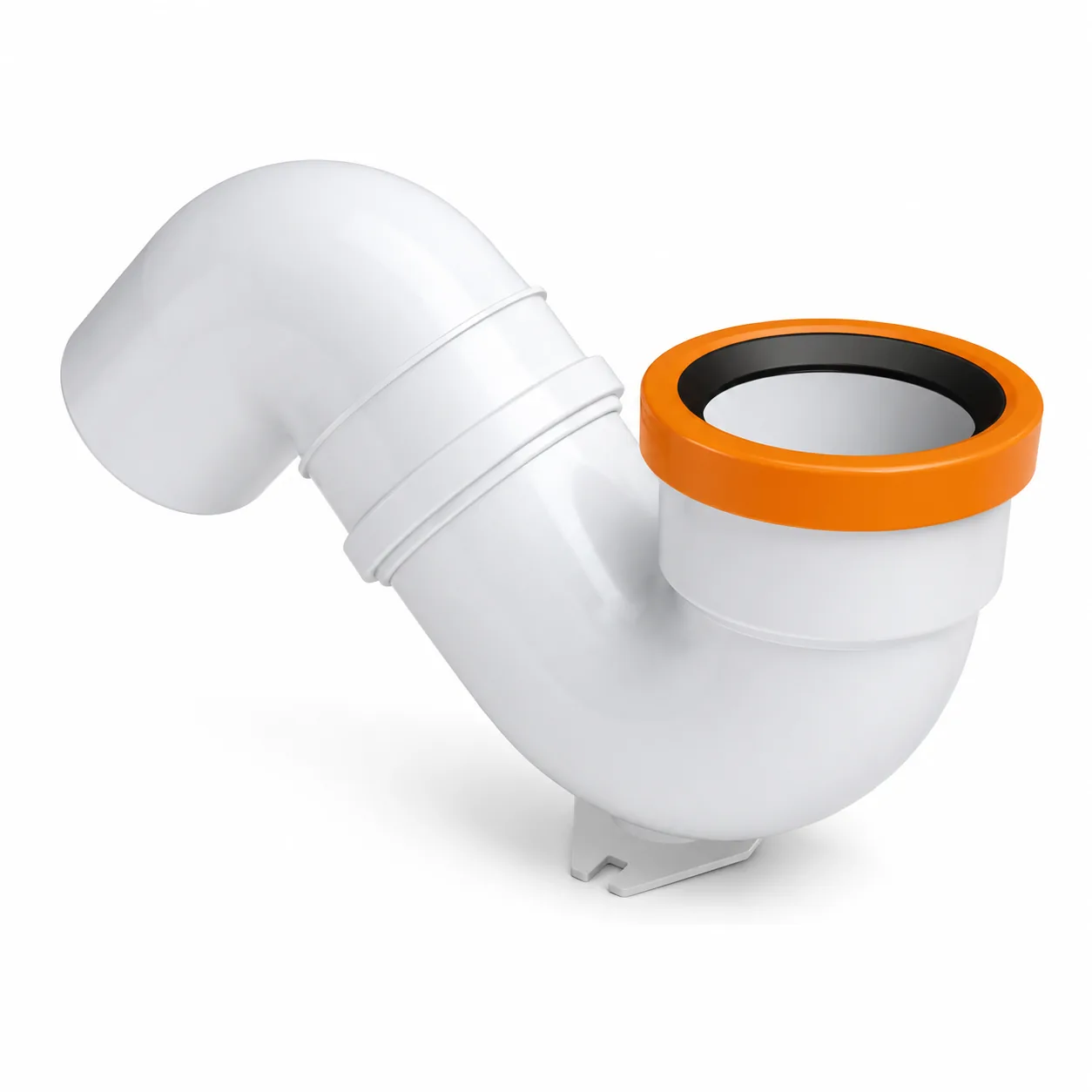
A Q-trap sits under a water closet. In form it is close to an S-trap, but the outlet turns through roughly a quarter bend rather than dropping straight down — which is where the letter comes from. It is specified on upper floors rather than the ground floor, because that is where the discharge has to pass down through the floor slab and then run horizontally to the stack.
The term is real commercially. Finolex lists a Q-Trap in its SWR (soil, waste and rain) range, and Ashirvad lists one too, typically at 110mm / 4 inch. Buying for the Indian subcontinent, a Q-trap is a normal line item and your supplier will know exactly what you mean.
What does not exist is a Q-trap standard. Searches of EN 274, EN 12056-2, EN 1253, Approved Document H and the International Plumbing Code return no occurrence of the term. No standards body publishes a water-seal depth for one, and no manufacturer datasheet gives one either — the catalogue entries list the 110mm body size and stop. General-reference pages classify P, Q and S traps “according to their shape” and give no distinct performance requirement for the Q form, which is precisely the problem.
The shape letter tells you how the pipe is routed. It tells you nothing a building inspector checks. Route by letter if you like — but specify in millimetres.
For a WC, the governing requirement is the pan outlet row of the Part H table, not the letter on the fitting: a pan outlet under 80mm takes a 75mm trap with a 50mm seal, and a pan outlet over 80mm takes a 100mm trap with a 50mm seal. That is the number to write on the drawing.
The table that replaces the letters: seal depth by appliance
This is Table 1 of Approved Document H, and it is the single most useful thing on this page. Note what it is organised by: the appliance. Not the trap shape.
| Appliance | Min. trap size | Depth of seal |
|---|---|---|
| Washbasin / bidet | 32mm | 75mm |
| Bath / shower | 40mm | 50mm |
| Sink / washing machine / dishwasher | 40mm | 75mm |
| Food waste disposal / urinal bowl | 40mm | 75mm |
| WC pan outlet, up to 80mm | 75mm | 50mm |
| WC pan outlet, over 80mm | 100mm | 50mm |
Why a bath gets 50mm and a sink gets 75mm
Same 40mm trap, different seal, and there is a reason. The BPF Pipes Group puts it plainly: a 40mm trap on a bath or shower requires a 50mm seal, whereas the same diameter trap on a dishwasher, kitchen sink or washing machine requires a deeper 75mm seal, “to ensure that the seals continue to function should solids (e.g. food waste) pass through the fitting.” Bath water is clean. Sink water carries fat, rice and coffee grounds, and a deeper column of water tolerates the fouling without dropping below the working minimum.
The 25mm figure that gets misquoted constantly
Part H paragraph 1.3 says every point of discharge should be fitted with a trap to stop foul air entering the building, and that “under working and test conditions traps should retain a minimum seal of 25mm of water or equivalent.” Plenty of pages read that as “25mm traps are allowed.” They are not. The 25mm is the residual seal that must survive a pressure fluctuation — the floor you must not fall through. You still buy the 50mm or 75mm from the table, and the 25mm is what is left after the system has done its worst.
When 38mm is legitimate
Table 1 carries three footnotes that almost no competing page reproduces, and they matter on real jobs. Where appliances discharge directly to a gully, the depth of seal may be reduced to not less than 38mm. Traps on appliances with a flat bottom (trailing waste discharge) that discharge to a gully with a grating may also have a reduced seal of not less than 38mm. Separately, the seal may be reduced to 50mm only with flush grated wastes without plugs on spray tap basins. So yes — a shallower trap on an outside gully can be compliant. Read the footnote before you rely on it, and confirm the detail with your building control body, since interpretation varies by project.
For appliances outside the main table, Part H Table A3 adds a sanitary towel macerator at 40mm trap and 75mm seal, an industrial food waste disposal unit at 50mm and 75mm, and a urinal stall serving one to six person positions at 65mm and 50mm.
The European design standard agrees
Under EN 12056-2, the gravity drainage design standard for inside buildings, the depth of water seal shall be not less than 50mm. The UK national annex specifies 50mm or 75mm for Class III installations depending on the fixture — the same split as Part H. A resealing trap is defined there as one with a physical minimum seal of 50mm that keeps at least 25mm after siphonage. Part H defers complex systems in larger buildings to BS EN 12056, so on a tower you are in that document anyway.
P vs S vs Q: the geometry behind the code ban
The three letters describe where the outlet goes after the U-bend. A P-trap leaves horizontally into a wall. An S-trap drops vertically through the floor. A Q-trap sits between the two, turning through about a quarter bend on its way down. That difference is not cosmetic — it decides whether the trap keeps its water.
In an S-trap the vertical drop starts immediately after the U-bend. A full basin emptying down that drop behaves like a piston: the falling column pulls a partial vacuum behind it and drags the seal out, leaving the bend dry and a clear path open for sewer gas. That is self-siphonage. A P-trap’s horizontal arm breaks it, because the water has to travel sideways before it can fall, so it never gets the continuous vertical run siphoning needs.
Codes have taken a position on this. IPC section 1002.3 prohibits S-traps, bell traps, drum traps, crown-vented traps, and any trap that depends on moving parts to maintain its seal. S-traps are also prohibited under the Uniform Plumbing Code. Because a Q-trap is geometrically part of the S-trap family — outlet turning down through the floor — that prohibition is the practical reason Q-traps are effectively unspecifiable in the US and most of Europe, while remaining standard SWR product in India. No code text names the word “Q-trap”; the ban is on the geometry, and the Q shares it.
| Type | Outlet direction | Code position | Where you meet it |
|---|---|---|---|
| P-trap | Horizontal into wall | Accepted everywhere | Default for basins, sinks, baths |
| S-trap | Straight down through floor | Prohibited by IPC 1002.3 and UPC | Legacy and refurbishment work |
| Q-trap | Quarter bend, then down | No standard defines it; shares the S geometry | Indian SWR, upper-floor WCs, 110mm |
| Bottle trap | Horizontal, compact body | Accepted; EN 274-1 / BS 3943 | Exposed basins, cloakrooms |
Bottle traps: best for, and definitely not for
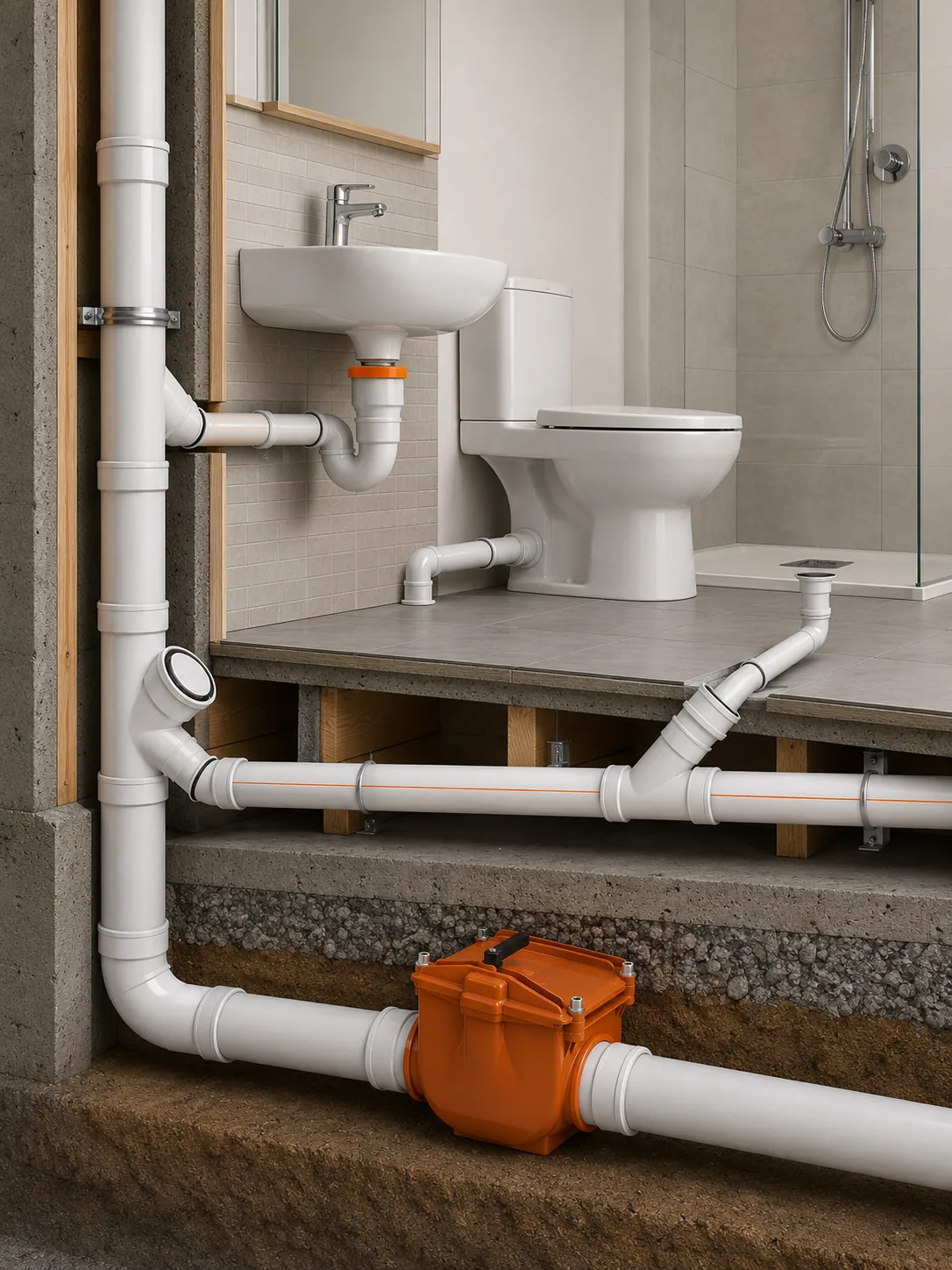
A bottle trap holds its seal in a cylindrical body that unscrews from below, rather than in a U-bend. It is shorter front to back than a P-trap, which is the whole reason it exists: it fits behind a pedestal where a P-trap’s arm would foul the wall.
Best for
- Exposed basin installations: cloakrooms and hotel bathrooms where the trap is visible and a chrome bottle body is the specified look.
- Tight pedestal cavities: where there is not enough depth behind the basin for a P-trap arm plus its fall.
- Jobs needing a deep seal in a short body: bottle traps are available with 75mm seals, supplied to BS 3943 and EN 274-1 — which covers the washbasin’s 75mm requirement.
- Anywhere access matters: the body unscrews by hand for clearing, which satisfies the removability principle in Part H paragraph 1.6.
Not for
- Kitchen sinks: this is the one to remember. Flow dissipates around the bottle instead of following a full-bore U, so a bottle trap restricts flow more than a P or S trap and accumulates debris faster. On a sink carrying food waste that means repeat callbacks.
- Washing machine and dishwasher connections: same problem, plus a pumped discharge the restricted body is poorly suited to.
- Concealed positions: putting a debris-prone fitting behind a panel converts a five-minute clean into a joinery job.
The straight answer: use a bottle trap where it is seen, a P-trap where it is worked. The flow penalty is well attested across the trade, but no published litres-per-second comparison exists, so treat it as engineering consensus rather than a measured figure.
The accessibility rule that decides it on site
Part H paragraph 1.6 is short and often ignored: if a trap forms part of an appliance the appliance should be removable, and all other traps should be fitted directly after the appliance and should be removable or fitted with a cleaning eye. Paragraph 1.25 adds that rodding points should be provided to reach any lengths of discharge pipe that cannot be reached by removing traps or appliances with internal traps. Before you close a duct, ask which of those two routes the next person has.
Ten ways a seal is lost (only two are the trap’s fault)
Most articles list three causes of a smelly bathroom: siphonage, evaporation, leaks. The BPF Pipes Group documents ten, and the extra seven are where the awkward site problems live.
- Self-siphonage: the appliance’s own discharge pulls its seal out. The S-trap failure mode.
- Induced siphonage: another appliance discharging past your branch drags your seal with it.
- Compression (back pressure): air pushed ahead of a slug of water lower in the stack blows the seal back into the room.
- Evaporation: the empty-property failure. Roughly 2.5mm per week in average UK conditions.
- Wind effect (wavering out): gusts across the stack terminal rock the seal until it spills over the weir.
- Foaming: detergent backing up in multi-storey stacks — a real problem in apartment blocks with a shared laundry riser.
- Momentum: a violent discharge carries the seal straight through.
- Capillary action: a strand of hair or fabric hanging over the trap weir siphons the seal away slowly and invisibly.
- Leakage: a weeping joint or cracked body.
- Movement: motor caravans, boats and trains, where the seal sloshes out in transit.
The evaporation rate is worth the arithmetic, because it explains the most common complaint on handover. At 2.5mm per week, a 50mm seal would theoretically be dry in roughly 20 weeks — that is arithmetic from the published rate, not a measured result, and real losses vary with temperature and ventilation. The shape of it is right, though: a flat left empty over a long summer will smell, and the trap is doing nothing wrong. Run the taps for thirty seconds and it goes away.
Capillary action produces the call-back nobody can diagnose. Seal depth correct, branch within limits, room still smells — because a strand of hair draped over the weir is quietly wicking the trap dry. You will not see it unless you pull the trap off and look.
Why a correct trap still gurgles: branch length and fall
Here is where installers lose days. The trap is right, the seal depth is right, and the basin still glugs and empties itself. The fault is almost never the trap — it is the branch pipe it discharges into. Part H Table 2 caps the length of an unventilated branch, and the numbers are counter-intuitive.
| Pipe diameter | Max length | Gradient (mm fall per metre) |
|---|---|---|
| 30mm | 1.7m | 18–22 |
| 30mm | 1.1m | 18–44 |
| 30mm | 0.7m | 18–87 |
| 40mm | 3.0m | 18–44 |
| 50mm | 4.0m | 18–44 |
Read the first three rows again. On 30mm pipe, steepening the fall makes the permitted run shorter, not longer — 1.7m at a gentle 18–22mm/m, down to 0.7m if you let it fall at up to 87mm/m. Steep pipe empties fast, and fast-moving water siphons. The instinct to “give it plenty of fall” is what dries the trap.
The bigger lever is diameter. Going from 30mm to 40mm takes the permitted unventilated run from 1.1m to 3.0m at the same gradient band, and 50mm buys 4.0m. If a basin is stranded away from the stack, the answer is usually a larger branch, not a cleverer trap.
Past those limits the branch has to be ventilated — by a branch ventilating pipe, by a ventilating stack, or internally by an air admittance valve (paragraph 1.20). If you fit a branch ventilating pipe, it should connect to the discharge pipe within 750mm of the trap, and above the highest spillover level of the appliances served. One appliance needs at least 25mm diameter, rising to at least 32mm where the branch runs longer than 15m or turns through more than five bends.
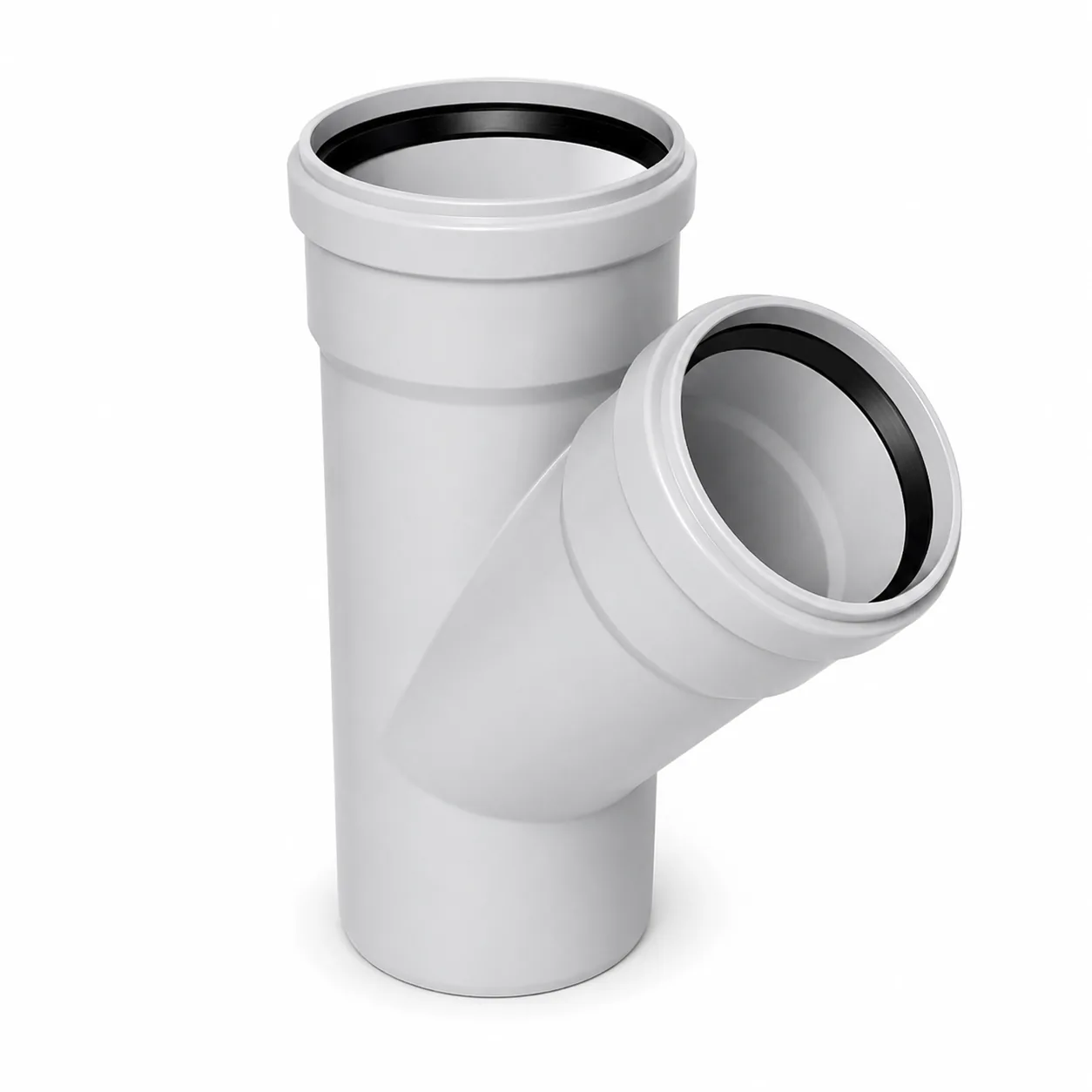
One more link between the trap and the pipe schedule: paragraph 1.15 requires that pipes serving a single appliance have at least the same diameter as the appliance trap. A 40mm sink trap cannot discharge into a 32mm branch. That single rule is what turns your trap schedule into a fittings order, because every branch diameter you write down then has to exist as a real socket, bend and junction in the UPVC drainage pipe and fittings range you are pricing.
Waterless traps and the standards gap
Waterless traps — membrane or flap devices that seal without a water column — solve the evaporation problem neatly, and get proposed for exactly the situations where evaporation bites: infrequently used facilities, floor gullies in dry plant rooms, holiday lets.
There is a catch worth knowing before ordering a container of them. The BPF Pipes Group stated in June 2025 that there are currently no British, European or International standards for waterless traps for above-ground drainage systems, and that they are not specifically mentioned in Approved Document H. Assessments lean on other national or sector performance standards instead — manufacturers cite ATS 5200.047-2005, BS EN 1253-6, BS EN 1253-7 and BS EN 1253-8.
That is not a reason to refuse them, but it is a reason to ask a harder question. With no EN certificate to hold a supplier to, ask which performance standard the product was assessed against and whether a third-party accredited body did the assessment. “Complies with all relevant standards” is not an answer when the relevant standards do not exist — a supplier who can put the actual test certificates and third-party approvals in front of you is answering a different, better question. Acceptability also depends on your building control body and the destination market’s national code — confirm before specifying.
For floor gullies the picture is clearer, because Europe did standardise those. EN 1253-1:2015 covers trapped floor gullies with a water seal of at least 50mm. Gullies with shallower seals sit under EN 1253-6, mechanical-closure gullies under EN 1253-7, and combined mechanical-plus-water-seal gullies under EN 1253-8. If someone offers you a sub-50mm floor gully, the honest version of that conversation names 1253-6.
Which standard to put in the enquiry
For the traps themselves, the product standard to name is EN 274 — “Waste fittings for sanitary appliances”, in three parts: EN 274-1:2002 for requirements, EN 274-2:2002 for test methods, EN 274-3:2002 for quality control. It sets dimensional, performance, materials and marking requirements for waste outlets, traps and overflows on sinks, shower trays, basins, bidets and baths connected to gravity drainage. BS EN 274-1:2002 is confirmed current, with corrigendum AMD 14959 issued 9 February 2004. In the UK, BS 3943 for thermoplastics waste traps sits alongside it.
Specifying traps and drainage pipework end to end
Take a real case. A contractor is fitting out 60 apartments, each with a bathroom (basin, bath, WC) and a kitchen (sink, dishwasher, washing machine). The trap and pipe schedule falls out of the table almost mechanically.
Each basin takes a 32mm trap with a 75mm seal. Each bath takes 40mm with a 50mm seal. The sink, dishwasher and washing machine each take 40mm with a 75mm seal. The WCs take the pan-outlet row — for a standard 100mm pan outlet, a 100mm trap with a 50mm seal. Then paragraph 1.15 sets the branch diameters: nothing smaller than the trap it serves, so the basin branch is at least 32mm and every kitchen branch is at least 40mm.
Now check the runs against Table 2. A kitchen sink 2.4m from the stack on a 40mm branch at 18–44mm/m fall sits inside the 3.0m limit and needs no ventilation. Move that sink to an island 3.6m away and you are outside it — so either go to 50mm, which buys 4.0m, or ventilate the branch, connecting the ventilating pipe within 750mm of the trap. Multiply by 60 apartments and that one decision changes the fittings count and the labour on every floor. Material is the other line in that schedule: the same branch and stack layout can be built in UPVC or in a PP low-noise drainage system, which is the usual answer where a stack runs behind a bedroom wall.
The pipework side has moved this year. EN 1329-1:2026, the PVC-U soil and waste discharge standard, was published on 5 May 2026 and supersedes EN 1329-1:2020. The change that matters to an importer is material: recyclate is now permitted up to 100%, the scope covers virgin, reworked and pre- or post-consumer recyclate, and conformity must be demonstrated with one 100% virgin formulation plus a second at maximum recyclate content. Annealing was also introduced before Vicat softening temperature testing to cut measurement scatter.
The practical question for a buyer: which formulation does the certificate on your desk actually cover? Under the dual-formulation rule a supplier can hold conformity for both the virgin and the maximum-recyclate formulation, and those are not the same product arriving on the pallet. Ask which one is being shipped. EN 1329-1 governs the pipe and fitting system the trap discharges into — it does not specify the traps themselves.
How we check a drainage specification before quoting
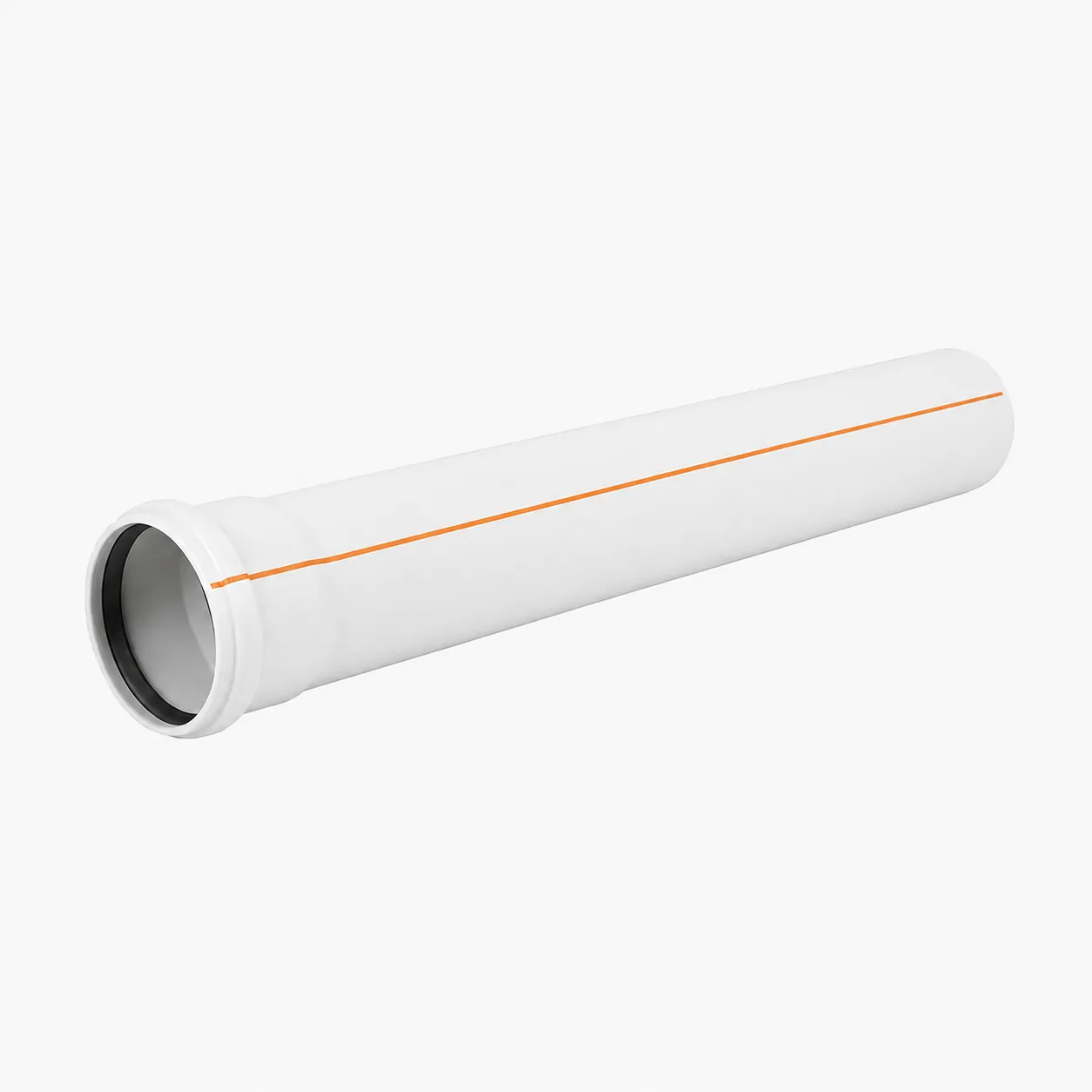
When a drainage enquiry reaches our export desk, the schedule gets read against four things before a price goes out. First, the destination market’s code — Part H, EN 12056-2 or an IPC-derived code — because that decides whether an S or Q geometry in the drawing is specifiable at all. Second, the branch diameters against the trap sizes, since a 32mm branch under a 40mm trap is a drawing error we would rather catch than ship. Third, the standard cited for the pipe and fittings: our UPVC drainage is supplied to EN 1329 and EN 1401, and our PP compression fittings to ISO 14236. Fourth, the container mix, because drainage BOMs skew to fittings and a 20GP fills on volume long before it fills on weight — the minimum order quantities, lead times and payment terms that follow from that mix are worth reading before you split a package across two shipments.
Two scope notes, so nobody orders the wrong thing. Bekaatherm manufactures the UPVC and PP drainage pipe and fittings that traps connect into across 98 items and 4 piping systems — we do not present ourselves as a trap manufacturer, and the trap schedule above is specification guidance, not a catalogue. And our 50-year warranty against material and manufacturing defects, matched to the 50-year design life at rated pressure and 20°C under ISO 15874, applies to the PPR system — different material family, different standard, so do not read it onto drainage components.
Conclusion
The letters describe routing. The millimetres describe compliance. A Q-trap is a real product you can buy at 110mm for an Indian SWR job, and it is also a term no standards body defines — both of those are true, and knowing which situation you are in decides whether your drawing survives inspection. When you write the schedule, write 32mm trap / 75mm seal, not “basin trap”.
If you are pricing a drainage package, the useful next step is to check your branch diameters against the trap sizes in Table 1 and the run lengths against Table 2 before the fittings order goes out. That hour is cheaper than the rework, and it tells you what pipe you actually need.
Frequently Asked Questions
What is a Q-trap in plumbing?
A Q-trap is a WC trap close in form to an S-trap, with the outlet turned through roughly a quarter bend so the discharge passes down through the floor. It is a standard SWR catalogue item in India, typically 110mm or 4 inch, used on upper floors rather than the ground floor.
What water seal depth does a Q-trap need?
No standards body publishes a seal depth for a Q-trap specifically, because no EN, ISO, BS or IPC document defines the type. Specify against the appliance instead: Approved Document H Table 1 gives a WC pan outlet over 80mm a 100mm trap with a 50mm seal.
Are S-traps illegal?
S-traps are prohibited under both the International Plumbing Code and the Uniform Plumbing Code. IPC section 1002.3 also prohibits bell traps, crown-vented traps, drum traps and traps depending on moving parts. The reason is self-siphonage — the vertical drop pulls the seal out behind the discharge.
Is a 50mm or 75mm seal required?
It depends on the appliance, not the trap shape. Under Part H Table 1, baths, showers and WCs take a 50mm seal, while washbasins, sinks, washing machines and dishwashers take 75mm. The deeper seal handles solids passing through the fitting.
Why does my bathroom smell after a holiday?
The trap has evaporated. The BPF Pipes Group puts average UK seal loss through evaporation at 2.5mm per week, so a 50mm seal left unused would theoretically be dry in roughly 20 weeks. Running the taps for thirty seconds refills the seal.
Can I use a bottle trap on a kitchen sink?
It is not the right choice. Flow dissipates around the bottle rather than following a full-bore U, so bottle traps restrict flow more than a P-trap and collect debris faster. Keep them for basins and cloakrooms where space is tight, and use a P-trap where food waste passes.
Which standard should a trap supplier conform to?
Ask for EN 274-1:2002, the European requirements standard for waste fittings, traps and overflows for sanitary appliances. In the UK, BS 3943 covers thermoplastics waste traps. For waterless traps no BS, EN or ISO standard exists, so ask which performance standard the assessment used.
How long can an unventilated basin branch run?
Part H Table 2 allows 1.7m on 30mm pipe at an 18–22mm per metre fall, 3.0m on 40mm and 4.0m on 50mm at 18–44mm per metre. Beyond those limits the branch needs a ventilating pipe, a ventilating stack or an air admittance valve.