A supplier sends you “12 dB(A), tested to EN 14366.” That sentence is missing four things a specifier needs, and without them the number cannot be compared with the one on the next supplier’s datasheet. Which edition of the standard? At what flow rate? Which quantity — airborne or structure-borne? Which pipe clamp was on the rig? Miss any one of them and you are comparing two numbers that were never measured the same way.
EN 14366 is a laboratory measurement method for the noise a drainage stack makes when water runs down it. It is not a pass mark, it sets no limit, and it does not tell you how loud the pipe will be in your building. This page covers what the rig does, what changed in the 2023 rewrite, and how to read a test report so a misleading claim cannot get past you.
Key Takeaways
- The current edition is EN 14366-1:2023. CEN approved it on 28 May 2023; BS EN 14366-1:2023 was published on 25 July 2023 and became effective on 19 January 2024. It supersedes EN 14366:2004+A1:2019, which is withdrawn.
- The 2023 rewrite changed the measured quantity. The old edition reported normalized sound pressure levels. The new one determines airborne sound power level plus three structure-borne quantities — free velocity, blocked force and mobility. Old and new numbers are not the same kind of number.
- Annex C converts legacy data, but the converted value is not certified. The standard states that transformed values “cannot be used as certified values obtained by test, but only for comparison with new tests.” This is the single most useful sentence in the document when you audit a supplier’s paperwork.
- Flow rate is half the claim. The standard permits a continuous flow from 0,5 to 8 l/s. Real test reports tabulate 0.5, 1.0, 2.0 and 4.0 l/s — four different answers for one system. A dB at 2 l/s does not compare with a dB at 4 l/s.
- The structure-borne figure is normalised to a 100 mm concrete reference wall. It assumes force-source behaviour and may not be adapted for pipes installed in lightweight buildings. Steel-frame and timber-frame projects cannot read the published dB straight off the page.
- The lab value is input to a prediction, not a result. In-situ levels come from EN 12354-5:2023, which takes the pipe data plus the receiving room’s absorption and the building’s own junctions and supporting elements.
- No European standard limits drainage noise. The limit is national. In Germany, DIN 4109 sets a maximum installation sound level of 30 dB under the standard requirement and 25 dB under the increased requirement — and those limits protect the neighbouring dwelling, not your own.
- A 1 dB gap between two brochures is noise. Re-installing the identical system from scratch moved the measured level by up to 1.1 dB in published repeatability work.
What EN 14366 actually measures
The full title of the current edition is “Laboratory measurement of airborne and structure-borne sound from service equipment — Part 1: Application rules for waste water installations.” Every word of that is load-bearing. Laboratory: the number comes from a controlled rig, not a building. Airborne and structure-borne: two separate mechanisms, measured separately. Application rules: it tells a lab how to run a test, not a manufacturer what to achieve.
Airborne sound is what you would hear standing next to an exposed stack — the pipe wall vibrates and radiates into the air. Structure-borne sound is what your neighbour hears. Water shakes the pipe, the pipe shakes the clamp, the clamp shakes the wall, and the wall radiates into a room nobody has entered. Field measurement work reported at ERBNAM 2022 found that structure-borne sound often dominates the sound pressure level in practical application. The mechanism most datasheets say least about is usually the one that generates the complaint.
The scope is narrower than people assume. It covers waste water and rainwater piping systems and parts of them, made of any common material, with natural ventilation. It does not cover the sources of the waste water — no lavatories, no toilets, no bathtubs, no active units. An EN 14366 report tells you about the pipe and its fixings, and nothing about the appliance that fills them.
One more boundary matters on large projects. The 2004 edition described “commonly used diameters (up to 150 mm)”; the catalogued scope of the 2023 edition states up to 160 mm. Either way the tested envelope stops below the top of a commercial drainage range. Bekatherm’s PP drainage system runs DN 50–200 mm, so its largest diameters sit outside the band the standard describes. If a supplier implies one dB figure covers every size they sell, ask.
The 2023 rewrite, and the Annex C trap
The old edition was criticised for two things: the requirements were heavy to satisfy, and the data it produced did not feed the available prediction models well. A review was already running when Amendment A1:2019 appeared. The result was a rebuild rather than a patch.
Here is the change in one line. The 2004 edition reported normalized sound pressure levels. EN 14366-1:2023 determines the piping system’s airborne sound power level, plus three structure-borne source quantities — free velocity, blocked force and mobility. That is the same characterisation approach EN 15657:2017 uses for building service equipment generally. A source characterised that way can be dropped into a prediction model for any receiving structure. A sound pressure level measured against one fixed reference wall cannot.
The sentence to quote back at a supplier
EN 14366-1:2023 provides a method to transform quantities measured to EN 14366:2004+A1:2019 into the quantities the new edition uses. The conversion lives in Annex C. But the standard is explicit that the calculated values “cannot be used as certified values obtained by test, but only for comparison with new tests.”
In plain terms: a converted legacy number is a planning aid, not evidence. If a datasheet presents a 2023-format quantity that was actually derived from a pre-2023 test through Annex C, and does not say so, the paperwork is claiming a status the standard denies it.
This is why an undated citation is a problem rather than a pedantic detail. A spec clause reading “tested in accordance with EN 14366” now points at a withdrawn document as easily as a current one, and the supplier gets to choose which. Write the edition and the year. A report against the 2004+A1:2019 text is not automatically disqualifying — plenty of honest test data predates 2023 — but it should be labelled.
Inside the rig: two rooms, one bend
The setup is two rooms. A source room, where the airborne sound is determined, and an adjacent receiving room — in practice a basement test room — where sound pressure level is measured to get at the structure-borne component indirectly. You are not measuring the pipe in isolation. You are measuring a pipe, a set of clamps, and a wall, as one system.
Under the 2004 method the geometry was tightly constrained: vertical pipes only, the bend mounted below and outside the test room, and a variable height difference between the water inlet and the bottom bend. The 2023 edition covers vertical and horizontal configurations connected to one supporting building element, with normative Annex A adding vertical pipes with a horizontal offset connected to walls, and horizontal pipes connected to ceilings. Normative Annex B adds test procedures for mitigation — pipe enclosures in a technical shaft, and pipe lining.
That last addition is quietly important. Boxing a stack into a shaft or wrapping it in lagging has always been the site-level fix for a noisy riser, and until 2023 there was no standard way to put a number on how much it bought you. Now you can ask for the enclosure to be tested rather than accept a general assurance that lagging helps.
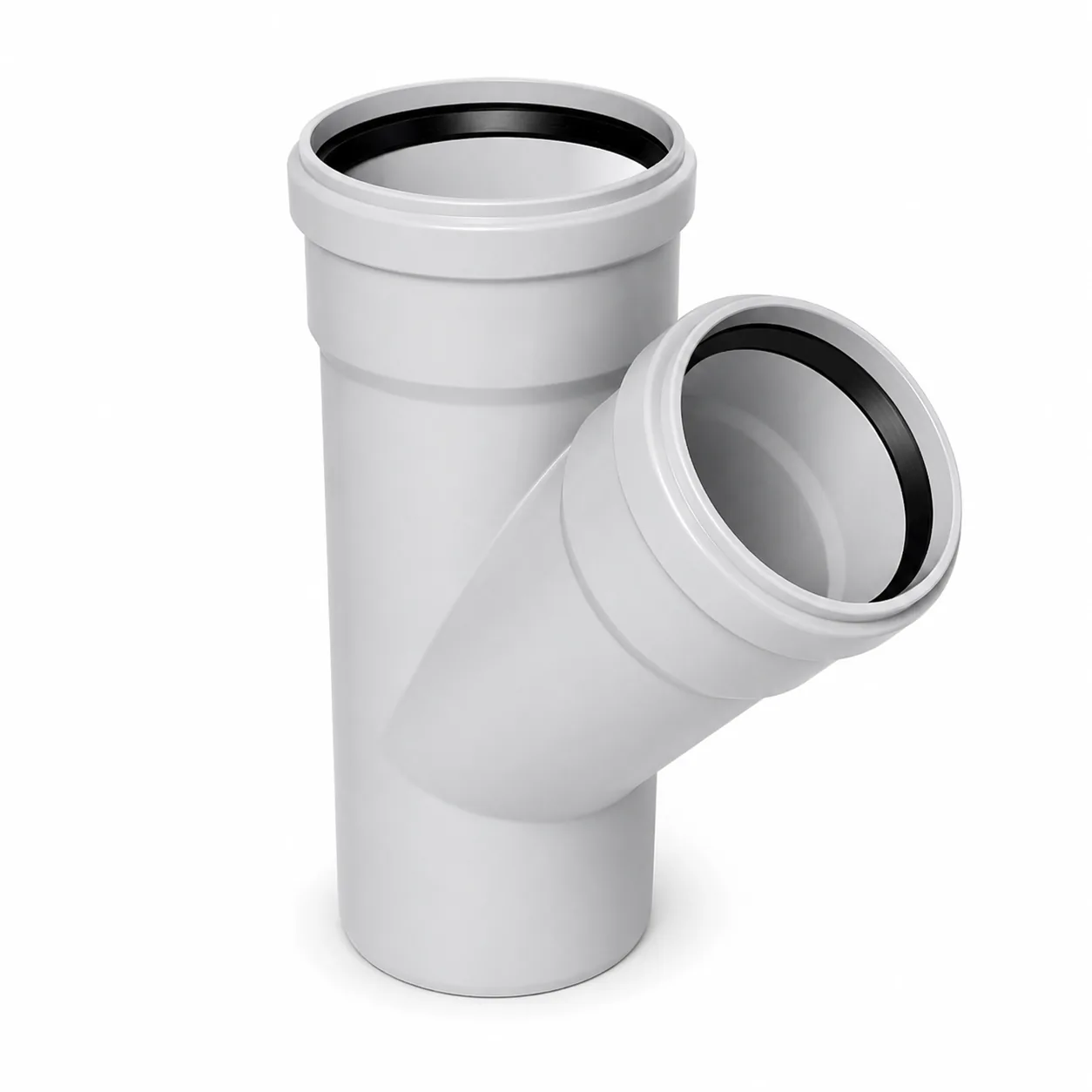
Researchers shielded sections of the rig one at a time to find out which part actually radiates. The results confirmed the bend and the pipe section close to it dominate the sound radiation. Picture the water: in the vertical section the flow leans against the wall in a helicoidal shape as it descends. At the bend it slams into a change of direction. In the horizontal section it settles into the lower half of the bore. Three different excitations, and the loudest is at the corner.
Joint tightness matters more than it looks. Pulling the pipe and bend apart by 10 mm shifted the measured level by 0.2 to 0.3 dB at 3 and 4 l/s — but by 1.4 to 1.7 dB at 1 and 2 l/s. A 10 mm assembly variation is well inside what happens on site with ring-seal push-fit sockets. At low flow, which is most of the time in a residential stack, that sloppiness outweighs the difference between two competing brochures.
Why flow rate decides the number
The standard permits a continuous flow ranging from 0,5 to 8 l/s. Published test reports typically tabulate four points: 0.5, 1.0, 2.0 and 4.0 l/s. One system, one rig, one day — four different decibel values. A supplier quoting a single number has picked one of them, and nothing obliges them to pick the loudest.
You can see the effect in how the market quotes itself. Pipelife publishes Master3Plus at below 10 dB(A) at 4 l/s. Huliot declares Ultra Silent at Lsc,A 15 dB(A) at 2 l/s. Aliaxis quotes dBlue at 16 dB at 4 l/s. Those are three honest declarations taken at different points on different rigs, not a league table. Ranking them would need all three at the same flow rate under the same edition, and that comparison is not available from public datasheets.
| Element of the claim | Why it changes the number | What to ask for |
|---|---|---|
| Edition | 2004+A1:2019 reported sound pressure; 2023 reports sound power plus structure-borne source data | The dated edition on the report cover |
| Flow rate | 0,5 to 8 l/s is permitted; reports commonly tabulate 0.5 / 1.0 / 2.0 / 4.0 l/s | The full table, not one selected row |
| Quantity symbol | Airborne and structure-borne quantities are different measurements of different mechanisms | The symbol printed next to the value |
| Clamp | The clamp is the path from pipe to structure, so it is part of the tested system | The clamp type named in the report |
| Laboratory and report number | A named lab and traceable number can be verified; “tested to EN 14366” cannot | Institute name plus report reference |
| Diameter tested | The described envelope reaches 150 mm (2004) / 160 mm (2023), below the top of many ranges | Which DN the sample actually was |
Six variables behind one decibel figure. A claim missing any of them is not comparable with a claim that states them all.
Which flow rate resembles real life? Work presented at the CIB W062 Symposium in 2012 compared constant flow against actual toilet discharge and concluded that a constant 3 l/s produces sound pressure levels comparable with a flushing toilet. That is a useful sanity anchor, and it explains why 4 l/s has become a common quoting point — it sits just above the flush-equivalent, so a good number there means something.
The 100 mm concrete wall you do not have
Here is the constraint that most product pages skip entirely. In this standard the characteristic structure-borne sound pressure level is defined as the normalized sound pressure level radiated by a reference wall made of 10 cm of concrete. The approach assumes the pipe behaves as a force source, and researchers have noted it may thus not be adapted for pipes installed in lightweight buildings.
Think about what that means on a steel-frame hotel or a timber-frame residential block. The published figure was normalised to a heavy, stiff, high-mass wall. Your riser is clamped to a stud partition with a fraction of that mass. Vibration the concrete reference wall absorbed almost silently can set a lightweight panel moving like a drum skin. The pipe has not changed; the receiving structure has, and it is half of the system that makes the noise.
This is exactly the gap the 2023 rewrite was built to close. Once a source is characterised by free velocity, blocked force and mobility rather than by a level against one fixed wall, a prediction model can pair it with whatever structure you actually have. The prediction standard is EN 12354-5:2023, which supersedes the 2009 edition and its 2010 corrigendum, and which was extended to cover both heavy and lightweight construction and to reach down to 50 Hz.
The honest chain runs: EN 14366-1 gives source data, then EN 12354-5 combines it with the receiving room’s absorption and the characteristics of the supporting and radiating elements and their junctions, and only then do you get a predicted in-situ level. A supplier who skips the middle step and tells you their pipe will be 12 dB in your building has skipped the only part of the calculation that involves your building.
The standard sets no limit — national code does
EN 14366 contains no threshold. There is no European standard for soil and waste pipes that limits water discharge noise levels. What exists are national norms regulating permissible sound transmission in buildings, and those are where a compliance obligation actually comes from.
Germany drives most acoustic drainage specification in Europe, so DIN 4109 is the reference point people reach for. DIN 4109-1:2018-01 covers minimum requirements: the maximum installation sound level, LAFmax,n, is 30 dB under the standard requirement and 25 dB under the increased requirement, both in supplementary sheet 2. DIN 4109-5 sets the increased requirements, where a noticeably higher sound insulation results from a reduction of at least 3 dB for building-technology noise. VDI 4100:2012-10 runs a parallel classification with three classes — SSt III (sound not considered disruptive), SSt II (not generally considered disruptive) and SSt I (generally considered minimally disruptive).
The misreading that causes arguments on site
Those drainage noise limits apply to sound insulation against third-party dwellings — the neighbouring unit. Noise from installations inside your own dwelling is handled separately, under the enhanced categories SSt EB I and SSt EB II. A resident complaining that they can hear their own bathroom is not describing a DIN 4109 minimum-requirement failure. If the client’s brief is about comfort within a single apartment or a hotel room, the enhanced categories are the right instrument, and the spec has to say so.
Requirements vary by country, building type and the date the project was permitted, so confirm the applicable value with the project acoustician or the local building authority rather than assuming the German numbers travel. They frequently get written into specs outside Germany, which is a commercial convention rather than a legal one.
One related point, because it comes up in every certification conversation: acoustic performance is not something to look for on a CE marking or a Declaration of Performance. No entry for EN 14366 was found in the harmonised standards list for construction products, so treat it as a test method whose output arrives as a separate report from a named laboratory. Regulation (EU) 2024/3110, the new Construction Products Regulation, applies from 8 January 2026 and repealed Regulation (EU) No 305/2011 on that date, though a number of the old provisions continue to apply until 8 January 2040. Whatever else changes in that transition, an acoustic report is still a report — ask for it by name. Our certifications page sets out which marks cover which characteristics, and acoustics is not one of them.
How much a 1 dB difference is worth
Two brochures, 15 dB(A) and 16 dB(A), same flow rate, same edition. Is the first product quieter? Probably not in any way you can rely on. Researchers dismantled a test installation and rebuilt the identical system from scratch to see how much the number moved. Variation came in below 1 dB at the higher flow rates and slightly above 1 dB at the lower ones. The measured La,A for one PP system read 65.3, 65.3, 65.2 and 66.9 dB at 1, 2, 3 and 4 l/s in the first configuration, and 64.2, 64.2, 66.0 and 67.6 dB on the repeat — differences of 1.1, 1.1, −0.8 and −0.7 dB. Same product, same lab, different day.
Site work is not more consistent than a careful laboratory reinstall. Treat a 1 dB brochure gap as a tie, and spend the attention somewhere it pays: the clamp specification, the support detail at the base of the stack, and whether the report covers the diameter you are actually buying.
Reading a test report without being fooled
A complete declaration looks like this one, published by Huliot for its Ultra Silent range: the system has a sound level Lsc,A of 15 dB(A) at a flow rate of 2 l/s, measured in compliance with EN 14366 and certified by the Fraunhofer Institut für Bauphysik of Stuttgart, report number P-BA 20/2019e, with the test conducted using Huliot acoustic clamps.
Count what that sentence carries. A quantity symbol. A value. A flow rate. A named standard. A named laboratory — Fraunhofer IBP in Stuttgart operates the acoustics test laboratory most often named on these reports. A traceable report number. And the clamp used. The one thing it does not carry is a dated edition, which is the gap you close by asking. Note the clamp disclosure especially: naming the manufacturer’s own acoustic clamp is not small print, it is an accurate statement that a different clamp is a different system.
How we check an acoustic claim before it goes into a project file
The Bekatherm PP drainage system cites EN 1451-1 as the product standard, EN 12056 for system design, and EN 14366 as the acoustic test method. What the product page does not do is publish a decibel number, and the reasoning is stated there plainly: exact sound-level figures are not published unless independently tested to EN 14366. A number without a report behind it is a marketing figure, and the specifier who repeats it in a submittal carries the risk when the acoustician asks for the source.
When an acoustic claim from any supplier lands on the desk, the sequence is the same. Request the report itself, not the datasheet extract. Check the edition on the cover and whether the values were measured or converted through Annex C. Read the full flow-rate table, not the row that was quoted. Confirm which DN was on the rig against the diameters on the bill of quantities. Identify the clamp. Then check the quoted quantity is the one the application needs — for a party-wall complaint it is the structure-borne data that matters, not the airborne headline.
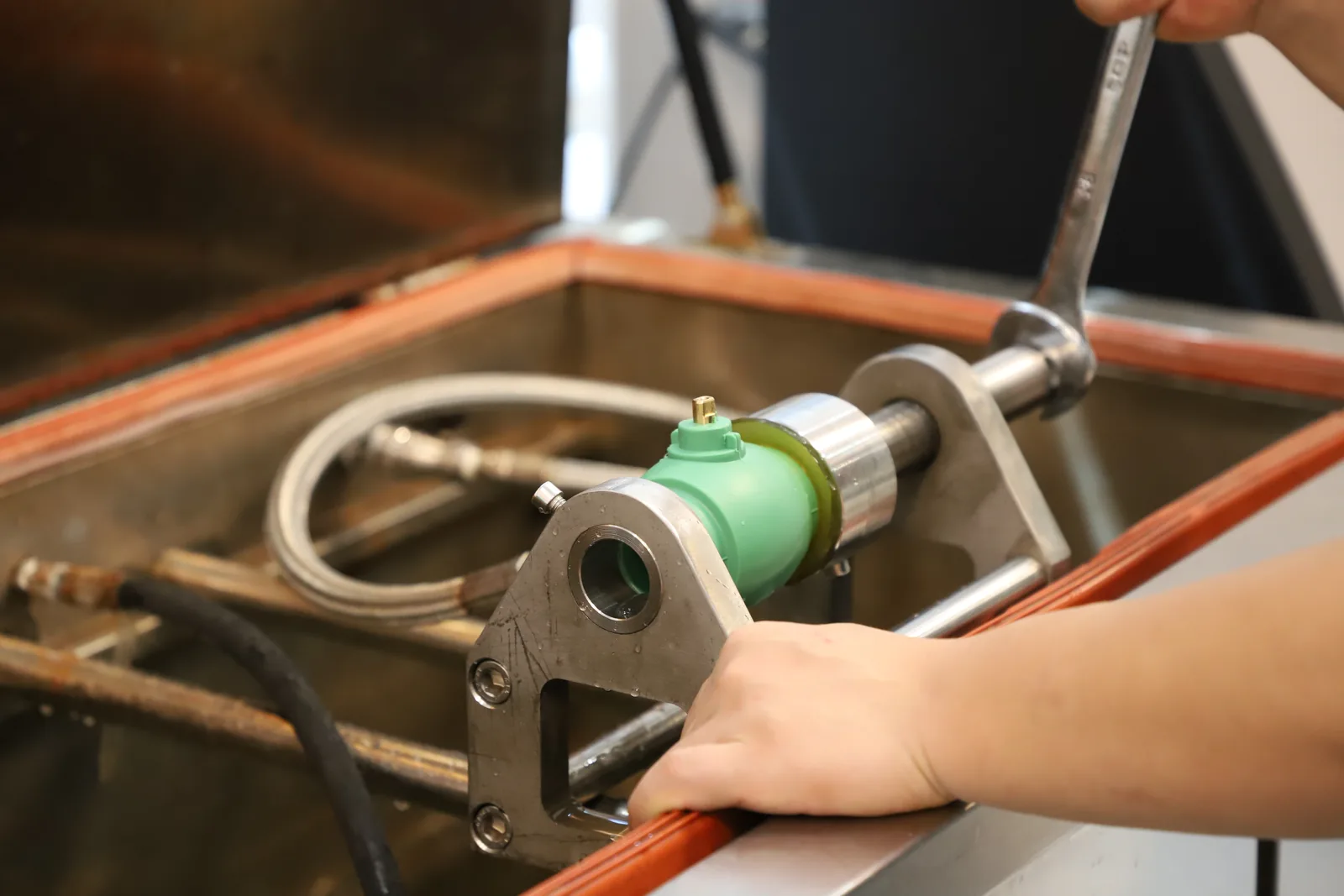
A spec clause built from that checklist is hard to satisfy with a misleading number. Rather than “drainage pipework shall be tested to EN 14366”, write the edition, name the quantity you want declared, fix the flow rate, require the laboratory name and report number, and require the clamp used in the test to be the clamp supplied. Five extra lines close almost every route to a technically true but useless answer.
Where this method helps, and where it does not
EN 14366 data earns its keep in a specific set of situations, and pretending it is universal is how it gets misused.
Best for:
- Comparing two candidate systems on equal terms. Same edition, same flow rate, same quantity, same clamp class — this is exactly what the method was built to support.
- Feeding an acoustic model. A project with an acoustician and an EN 12354-5 calculation needs source data, and this is the source data.
- Multi-occupancy buildings with a party-wall obligation. Where a national limit like DIN 4109 applies between dwellings, the structure-borne quantities are the relevant evidence.
- Testing a mitigation detail. Since 2023 there is a normative route for shaft enclosures and pipe lining, so an enclosure claim can be substantiated rather than assumed.
Not for:
- Predicting the level in a specific room. That needs EN 12354-5 and your building’s own construction data. The lab number on its own cannot do it.
- Lightweight construction, read straight off the datasheet. The structure-borne normalisation assumes a 100 mm concrete reference wall and force-source behaviour, which may not suit a lightweight building.
- Demonstrating compliance by itself. The standard sets no limit. Compliance is against a national code, and the test report is one input to that argument.
- Appliance noise. Toilets, baths and basins are outside the scope. The occupant hears them anyway.
- Settling a 1 dB argument. A careful laboratory reinstall of the same system moved the result by up to 1.1 dB.
One project, end to end
A developer is building an eight-storey residential block with a steel frame and lightweight internal partitions. The brief says bedrooms must not be disturbed by the neighbouring apartment’s drainage. Two suppliers respond. Supplier A quotes “below 10 dB(A) at 4 l/s, tested to EN 14366.” Supplier B quotes “Lsc,A 15 dB(A) at 2 l/s, EN 14366:2004+A1:2019, Fraunhofer IBP, report number supplied, tested with the manufacturer’s acoustic clamp.”
The instinct is to take A, because the number is smaller. But A’s claim is undated, quoted at a different flow rate, gives no quantity symbol, names no laboratory and says nothing about clamps — there is no basis on which the acoustician can use it. B’s claim sits against a superseded edition, which is a real weakness, but it is a weakness you can see, and B has given you the report reference to interrogate.
So pick neither yet. Go back to both with the same three requests: the full flow-rate table from the report, the structure-borne quantities rather than a headline figure, and confirmation of whether the values were measured under EN 14366-1:2023 or converted through Annex C. Then hand what comes back to the acoustician — on a lightweight steel frame the 100 mm concrete normalisation does not transfer, and the EN 12354-5 calculation is the only thing that will tell this project what its bedrooms sound like. The clamp specification and the detailing at the base of each stack will move that outcome more than the gap between the two headline numbers.
If you are specifying a drainage system rather than auditing a number
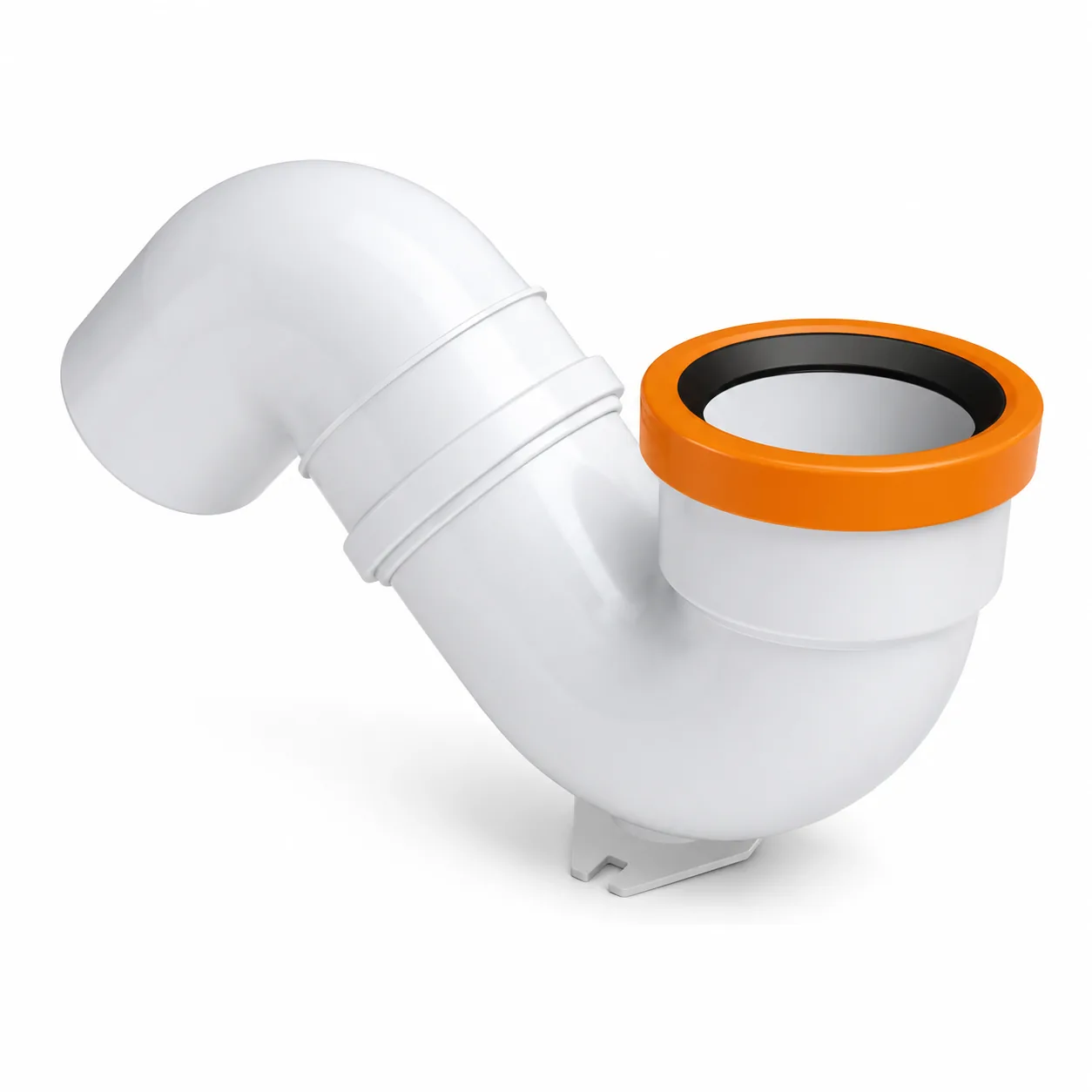
This page is about the measurement method, so it deliberately stops short of product selection. If the next question is which system, wall class and diameter range suits the building, the PP drainage system page sets out DN 50–200 with TYPE1 and TYPE2 wall classes and ring-seal push-fit jointing, and states plainly why no decibel figure is published there. For the PVC-U side of the range, see UPVC pipe and fittings.
For specifiers and technical buyers comparing systems at design stage — not a quotation request.
Frequently asked questions
What is the current edition of EN 14366?
EN 14366-1:2023. CEN approved it on 28 May 2023, BS EN 14366-1:2023 was published on 25 July 2023, and it became effective on 19 January 2024. It supersedes EN 14366:2004+A1:2019, which is withdrawn. A spec clause citing “EN 14366” without a year, or citing the 2004 or 2019 text, is pointing at a superseded document.
Can a decibel figure from a pre-2023 test report still be used?
It can be converted, but not certified. EN 14366-1:2023 includes a method in Annex C for transforming quantities measured to EN 14366:2004+A1:2019 into the quantities the current edition uses. The standard states the calculated values cannot be used as certified values obtained by test, only for comparison with new tests. If a datasheet presents a converted value without saying it was converted, ask.
What changed in the 2023 revision?
The measured quantity. The 2004 edition reported normalized sound pressure levels. EN 14366-1:2023 determines the piping system’s airborne sound power level plus three structure-borne quantities — free velocity, blocked force and mobility — matching the source characterisation approach of EN 15657:2017. The rig scope also widened to cover horizontal configurations and, in normative Annex B, mitigation measures such as shaft enclosures and pipe lining.
At what flow rate is an EN 14366 decibel figure measured?
The standard permits a continuous flow ranging from 0,5 to 8 l/s, and published test reports commonly tabulate 0.5, 1.0, 2.0 and 4.0 l/s. The same system produces a different value at each. Work presented at the CIB W062 Symposium in 2012 found a constant 3 l/s gives sound pressure levels comparable with a flushing toilet, which is why quoting points near that level are the most meaningful.
Does EN 14366 set a maximum noise level?
No. It is a measurement method with no threshold, and no European standard for soil and waste pipes limits water discharge noise. Limits come from national codes. In Germany, DIN 4109 sets a maximum installation sound level LAFmax,n of 30 dB under the standard requirement and 25 dB under the increased requirement. Confirm the applicable value for your market with the project acoustician or the local building authority.
Does the German drainage noise limit protect me from my own plumbing?
No, and this is widely misread. The drainage noise limits apply to sound insulation against third-party dwellings, meaning the neighbouring unit. Noise from installations within your own dwelling falls under separate enhanced categories, SSt EB I and SSt EB II. If the brief is about comfort inside a single apartment or hotel room, the specification has to invoke the enhanced categories explicitly.
Why does the pipe clamp appear on the test report?
Because the clamp is the path by which vibration reaches the structure, so it is part of the acoustic system being measured, not an accessory. Field results show structure-borne sound often dominates the sound pressure level in practical application. A published figure obtained with a manufacturer’s acoustic clamp does not transfer to the same pipe fitted with a standard clamp.
Is a 1 dB difference between two products meaningful?
Generally not. When researchers dismantled and rebuilt an identical test installation, the measured level varied by below 1 dB at higher flow rates and slightly above 1 dB at lower ones — one PP system read 65.3, 65.3, 65.2 and 66.9 dB in the first configuration and 64.2, 64.2, 66.0 and 67.6 dB on the repeat. A 1 dB brochure gap sits inside that scatter.
Does CE marking cover acoustic performance?
Treat it as a separate matter. No entry for EN 14366 was found in the harmonised standards list for construction products, so acoustic performance should be requested as a standalone test report from a named laboratory rather than expected as a CE-marked declared characteristic. Regulation (EU) 2024/3110 replaced Regulation (EU) No 305/2011 from 8 January 2026, with a number of the older provisions continuing to apply until 8 January 2040; confirm the current position for your product and market with a notified body or the relevant authority.