Ask a plastics pipe supplier for their CE marking paperwork and you will usually get a certificate with a CE logo on it, issued by a laboratory nobody in Brussels has heard of. The uncomfortable answer is that for plastic piping systems, that document cannot be a Construction Products Regulation CE mark, because the legal route to one has never opened. TEPPFA — the European Plastic Pipes and Fittings Association, the industry’s own body — puts it flatly: “there has been no citation of a harmonized standard for plastic pipes, meaning that it is currently neither possible, nor legal to apply the CE marking for plastic piping systems, or issue a Declaration of Performance (DoP).”
That single sentence rearranges how you vet a supplier. The CE logo on a carton of PPR pipe is not always a lie, but under the CPR it carries no declared performance and no notified body. The approvals that do carry weight are the third-party and national schemes — SKZ, WRAS, DVGW, KIWA, ACS — plus, from 2027, the EU Drinking Water Directive positive lists.
Key Takeaways
- No harmonised standard for plastic pipes has ever been cited in the Official Journal of the EU, so under the CPR there is no lawful route to CE mark a plastic piping system or issue a Declaration of Performance (TEPPFA).
- This covers every plastic pipe application a buyer sources: hot and cold water distribution, pressure conveyance of liquids buried and above ground, non-pressure soil and waste, underground drainage and sewerage, and rainwater goods.
- CE marking is a manufacturer’s own declaration, not a certification and never issued by a certification body. There is no CE marking without a Declaration of Performance naming a harmonised standard or a European Technical Assessment.
- Regulation (EU) 2024/3110 entered into force on 7 January 2025 and became applicable to economic operators on 8 January 2026 — but it did not create a harmonised standard for plastic pipes, so the position is unchanged.
- ISO 15874, EN 12201, EN 1401 and DIN 8077/8078 are product standards, not harmonised standards cited in the Official Journal. Conformity to them is meaningful; it is simply not a CE route.
- Türkiye requires G marking, not CE, for construction products with no harmonised European technical specification, under Official Gazette No. 27270 of 26.06.2009.
- Ask for four things instead: the third-party certificate number, its scope, its validity dates, and the public register entry you can look it up in yourself.

What CE marking legally is — and is not
Most catalogues get this backwards. CE marking is a manufacturer’s declaration about its own product. No body awards it, no laboratory grants it, and there is no such thing as a CE certificate in the way there is an SKZ certificate.
Under the Construction Products Regulation the mark is inseparable from one document: the Declaration of Performance, or DoP — a signed statement of the product’s performance against the essential characteristics of a specific standard. The European Commission’s guidance is explicit that a DoP is mandatory for CE marking, and that by affixing the mark the manufacturer takes responsibility for the product’s conformity with the performance declared. No DoP, no CE marking. A buyer can run that test in a single email.
The second half of the rule catches people out. A construction product may bear the CE marking only where a harmonised European standard — an hEN — has been cited in the Official Journal of the European Union, or where a European Technical Assessment has been issued for it. Those are the only two doors. The Commission’s FAQ closes the third one people try: where a product falls only under mutual recognition, it is not allowed to bear the CE mark under the CPR at all.
CE is a self-declaration tied to a Declaration of Performance. SKZ, WRAS and DVGW are third-party certifications with audits behind them. Treating the first as stronger than the second inverts the actual evidence.
Why the AVCP question has no answer for pipe
Specifiers often ask which AVCP system — the CPR’s assessment and verification of constancy of performance levels — applies to plastic pipe. The systems run from System 1+, where a notified body certifies the product and audits the factory, down to System 4, where the manufacturer declares performance with no notified body at all. For plastic piping the honest answer is that no AVCP system has been assigned, because assignment happens through a harmonised standard and none exists. If a supplier quotes you an AVCP system for PPR or HDPE pipe, ask which hEN assigned it.
Why plastic pipes have no CE route
Plastic pipes sit inside the CPR’s scope as construction products. They have simply never had a harmonised standard cited for them. Standards exist — dozens, written by CEN — but citation in the Official Journal is a separate legal act, and for plastic piping it has never happened. TEPPFA lists the applications where no cited harmonised standard exists. Read it against your own purchase order, because it covers essentially everything a piping importer buys.
| Application | Typical product | CE route under CPR |
|---|---|---|
| Hot and cold water distribution | PPR, PPR fibreglass and aluminium composite | None cited |
| Pressure conveyance of liquids, buried and above ground | HDPE / PE100 pressure pipe | None cited |
| Non-pressure soil and waste discharge | PP silent drainage, UPVC soil | None cited |
| Underground non-pressure drainage and sewerage | UPVC sewer pipe | None cited |
| Rainwater downpipes and gutters | PVC rainwater goods | None cited |
Source: TEPPFA, the European Plastic Pipes and Fittings Association. All four of the systems in a typical PPR-and-drainage container fall in this table. So do the fittings that go with them.
The one genuine exception
One lawful path exists outside the harmonised zone, and most articles overstate the ban by ignoring it. Where no harmonised standard covers a product, a manufacturer may — but is not obliged to — request a European Technical Assessment. If an ETA is issued, the manufacturer draws up a DoP against it and affixes the CE marking. It is voluntary, product-specific and expensive, and very few plastic piping manufacturers have taken it. So if a supplier claims a lawful CE mark, ask for exactly one thing: the ETA number. Bekaatherm does not hold one and does not claim a CPR Declaration of Performance for its piping — the same position as most of the industry, stated plainly rather than papered over with a logo.
Which pipes in a building actually carry a CE mark?
Under Regulation (EU) No 305/2011 only products with a harmonised standard cited in the Official Journal carry CE: copper tube, cast-iron and ductile-iron drainage pipe, concrete and vitrified clay sewer pipe, air admittance valves and drainage channels. No plastic pressure or drainage pipe is on that list.
That is worth seeing as a table, because a mixed piping package routinely contains both kinds of product. The copper tails on a PPR riser are CE-marked construction products with a Declaration of Performance behind them; the PPR they connect to is not, and cannot be. Both are lawful. Only one of them should have a CE logo on the carton.
| Product | Product standard (current edition) | Cited as hEN in the OJEU? | AVCP system (1+ strictest, 4 lightest) |
|---|---|---|---|
| Copper tube, water and gas | EN 1057:2006+A1:2010 | Yes | 1, 3 or 4 by use |
| Cast-iron drainage pipe | EN 877:1999+A1:2006 (cited; the 2021 revision is not) | Yes | 3 or 4 |
| Ductile-iron sewer pipe | EN 598:2007+A1:2009 | Yes | 4 |
| Concrete pipe | EN 1916:2002 | Yes | 4 |
| Vitrified clay pipe | EN 295-1:2013 | Yes | 1, 3 or 4 by use |
| Air admittance valves | EN 12380:2002 | Yes | 4 |
| PPR hot and cold water pipe | EN ISO 15874-2:2013+A1:2018+A2:2022; DIN 8077:2008-09 / DIN 8078:2008-09 | No | None assigned |
| PE pressure pipe | EN 12201-2:2011+A1:2013; ISO 4427-2:2019 (+Amd 1:2023) | No | None assigned |
| PVC-U soil, waste and sewer pipe | EN 1329-1:2020; EN 1401-1:2019 | No | None assigned |
| Source: consolidated list of harmonised standards under Regulation (EU) No 305/2011, OJ C 92 of 9 March 2018 and Commission Implementing Decision (EU) 2019/451; TEPPFA position on plastic piping; product editions per CEN, ISO and DIN catalogues, September 2026. | |||
Two practical consequences follow. A tender line that reads “all pipework CE marked” is unsatisfiable for the plastic part of the package and should be queried, not signed. And a supplier who offers a CE logo for PPR, PE or PVC-U pipe is either misdescribing a certificate from a different regime or printing a mark with nothing behind it. The routes that do carry weight for those products, and which markets ask for which, are compared in SKZ vs TSE vs DVGW.
What a real Declaration of Performance contains
Because the DoP is the test that settles most CE claims in one email, it helps to know what one looks like. The model is fixed by Annex III of Regulation (EU) No 305/2011 as amended by Delegated Regulation (EU) No 574/2014. Hold any “CE certificate” for pipe against these fields and the gaps appear immediately.
| DoP field (Annex III) | What it must contain | What to check on a pipe supplier’s document |
|---|---|---|
| 1. Product-type code | Unique identification of the product-type | Does it name a specific range, or “PPR pipes and fittings” in general? |
| 2. Intended use | Use(s) as defined by the harmonised specification | There is no harmonised specification for plastic pipe to define one |
| 3. Manufacturer | Name, registered trade name, contact address | Same legal entity as on the invoice and certificate of origin? |
| 4. Authorised representative | Where one is mandated in the EU | Optional; absence is not a fault |
| 5. AVCP system | System 1+, 1, 2+, 3 or 4 from the hEN | If a system is quoted for PPR, ask which hEN assigned it |
| 6. Harmonised standard or EAD/ETA | hEN reference and notified body number, or EAD, ETA and TAB | The decisive line: ISO 15874, EN 12201 and EN 1401 are not hENs |
| 7. Declared performance | Each essential characteristic with a level, class or NPD | A laboratory test summary is not a declared performance |
| 8. Signature | Signed for and on behalf of the manufacturer, with name, place, date | A laboratory or consultancy signature makes it something else |
| Source: Regulation (EU) No 305/2011, Article 6 and Annex III, as amended by Commission Delegated Regulation (EU) No 574/2014. A DoP is drawn up by the manufacturer; certification bodies such as SKZ issue certificates, never DoPs. | ||
The contrast with SKZ and WRAS is now easy to state. A DoP is written and signed by the manufacturer, refers to a harmonised standard, and is checked by nobody unless market surveillance calls. An SKZ certificate is issued by an accredited third party after a factory audit and product testing, refers to product standards such as ISO 15874-2:2013 and DIN 8077/8078, and is re-checked on a surveillance cycle. A WRAS approval is a listing against Regulation 4 of the Water Supply (Water Fittings) Regulations 1999, product-specific and time-limited. For plastic pipe, the first document cannot exist; the second and third are what the compliance file is made of. What each of the ISO 15874 parts contributes to that file is set out in ISO 15874 part by part.
Harmonised standard vs product standard
This distinction is where most of the confusion in the market lives, and it is worth getting straight because it decides what your compliance file is actually made of.
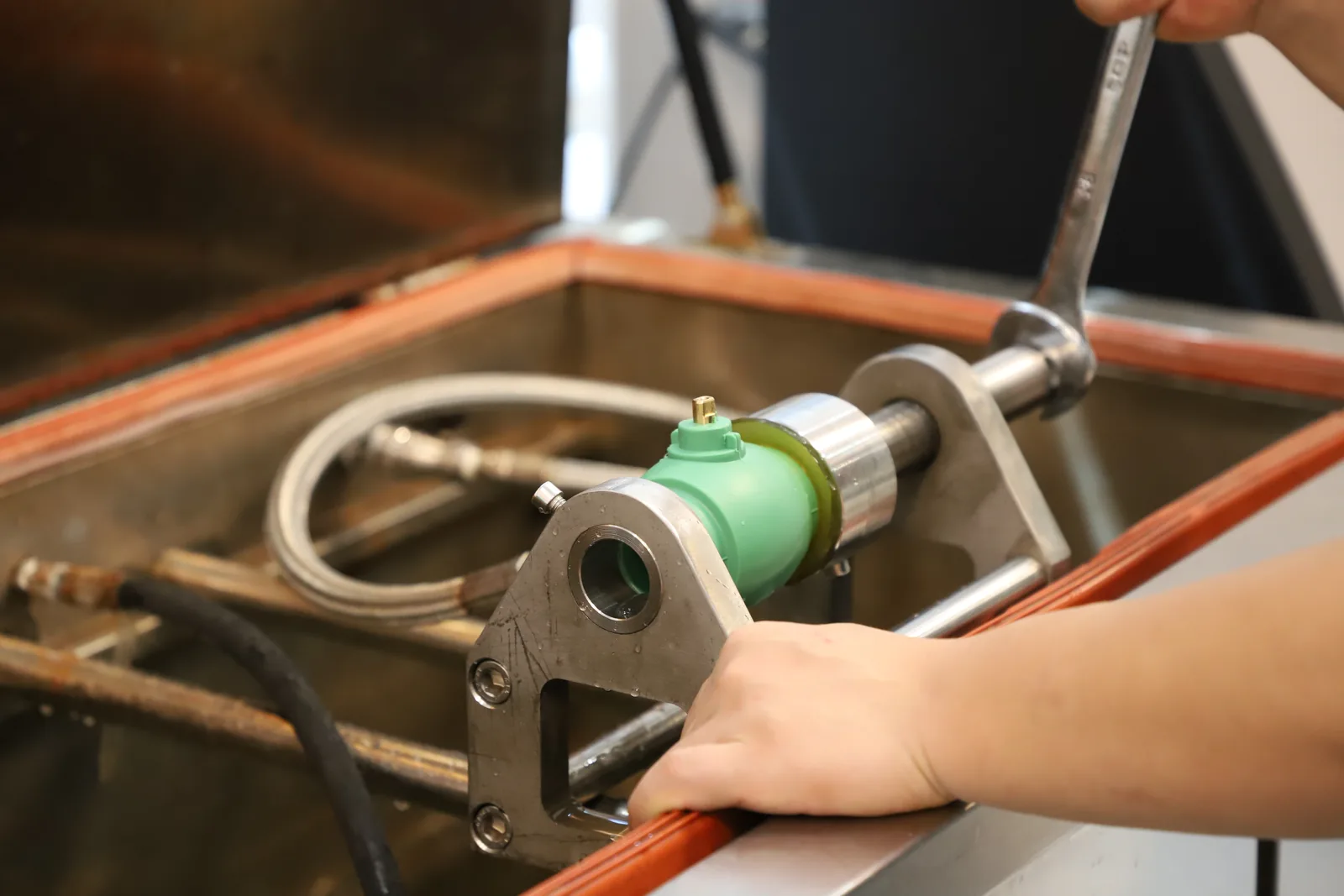
A product standard tells you how the pipe must perform and how to test it. ISO 15874-1:2013 sets the general requirements for polypropylene hot and cold water systems; ISO 15874-2:2013 covers the pipes themselves; parts 3 and 5 cover fittings and fitness for purpose of the assembled system. DIN 8077:2008-09 sets PPR dimensions and DIN 8078:2008-09 the general quality requirements. EN 12201-2:2011+A1:2013 and ISO 4427-2:2019 do the same job for PE pressure pipe; EN 1329-1:2020 and EN 1401-1:2019 for UPVC drainage and sewerage; ISO 14236 for PP compression fittings.
A harmonised standard is a different animal. It is a standard the European Commission has mandated and then cited in the Official Journal, which gives it legal effect: it defines the essential characteristics you must declare, and it triggers the CE marking obligation. Citation is what converts a technical document into a legal instrument. None of the standards in the paragraph above has been cited for plastic pipes.
This does not make product standards worthless — they are the entire technical basis on which pipe is bought, tested and warranted, and conformity to ISO 15874 is what underpins a 50-year design life at rated pressure and 20°C. It means conformity is demonstrated by testing and third-party certification, not by a CE mark. Two different evidence chains, and a buyer who asks for the wrong one ends up with paper that proves nothing.
What the 2026 CPR changed for pipes
If you last checked this question before 2025, the legal furniture has moved. Regulation (EU) 2024/3110 was published in the Official Journal on 18 December 2024 and entered into force on 7 January 2025, replacing Regulation (EU) No 305/2011 as the Construction Products Regulation. It became applicable to economic operators on 8 January 2026 — still ahead of most supplier documentation you will be handed this year.
Two things about the transition matter to a piping buyer. First, the old regulation has not vanished. Parts of Regulation (EU) No 305/2011 relevant to CE marking will not be repealed until 8 January 2040, so the two regimes run in parallel for roughly fourteen years. Anyone telling you a 305/2011-era document is automatically void is overselling.
Second, and more important: the new CPR did not create a harmonised standard for plastic pipes. A regulation sets the framework; citation of an hEN is a separate act that still has not happened for piping. The position survives the changeover intact — as of 2026, there is still no lawful CE route for a plastic piping system.
What to demand instead, market by market
Once you stop asking for CE, the real question is what governs this pipe where you sell it. TEPPFA explains the layering: mechanical aspects of products in contact with drinking water fall outside the scope of the Drinking Water Directive, and with no harmonised European legislation for those requirements, EU member states remain responsible. National systems fill the gap — the Dutch BRL guidelines, Swedish and Finnish type approval schemes, the UNI product certificate in Italy, DVGW in Germany.
So there is no single EU-wide mark to chase, and a supplier’s approval portfolio should look like a map rather than a badge.
| Mark | Who issues it | What it proves |
|---|---|---|
| CE (CPR) | The manufacturer itself | Declared performance against a cited hEN or ETA — unavailable for plastic pipe |
| SKZ | SKZ, accredited to DIN EN ISO/IEC 17065:2013 | Initial factory audit plus product testing, then ongoing surveillance |
| WRAS | WRAS (also Kiwa UK, NSF) | Voluntary evidence of meeting Water Supply (Water Fittings) Regulations 1999, Reg 4 |
| DVGW / KIWA / ACS / UNI | National bodies per market | National drinking-water and mechanical requirements |
| G marking | Ministry-designated bodies in Türkiye | Turkish conformity where no harmonised European specification exists |
Why SKZ is the useful contrast
SKZ is the structural opposite of a self-declared mark. It is a certification body accredited to DIN EN ISO/IEC 17065:2013, carrying out product monitoring in accordance with DIN EN ISO/IEC 17020 across drinking water, waste water, heating and gas schemes. Its partner certifiers include DIN CERTCO, DVGW, OeVGW, WRAS, AFNOR, SVGW and OeNORM — which is why one SKZ relationship often underpins several national approvals.
The mechanics tell you what you are buying. SKZ certificates run for five years, with possible extension after expiry. Certification starts with an audit of the production facility plus product testing, then continues with normally semi-annual auditing and testing of the certified products. That surveillance interval is the point. A self-declaration describes a product on the day it was declared; a surveilled certificate describes a factory someone keeps coming back to check, twice a year, for five years.
WRAS Approval works differently again, and buyers routinely misdescribe it. It is a voluntary route used to demonstrate that a product meets the legal requirements of the Water Supply (Water Fittings) Regulations 1999 — Regulation 4 is the legal benchmark, not the WRAS logo. Equivalent approvals can be issued by other bodies such as Kiwa UK and NSF. So “WRAS approved” is widely specified evidence of compliance, not a legal requirement in itself, and a competing body’s certificate may serve the same purpose. Requirements vary by market and by the importer’s role, so confirm the current position with the relevant water authority or your certification body before writing it into a tender.
Drinking water: the positive lists arriving in 2027
The regime that will actually reshape drinking-water pipe approvals in Europe has nothing to do with CE marking. Article 11 of the EU Drinking Water Directive — Directive (EU) 2020/2184 — sets minimum hygiene requirements for materials in contact with drinking water, supplemented by six legal acts published on 23 April 2024: Implementing Decisions (EU) 2024/365, 2024/367, 2024/368 and 2024/369, and Delegated Regulations (EU) 2024/370 and 2024/371. Decisions 2024/365 and 2024/367 establish the European positive lists — the permitted starting substances, compositions and constituents for materials touching drinking water.
The clock started this year. From 5 January 2026 onwards, economic operators and national authorities can begin notifying ECHA of their intentions to support a substance in the European positive lists. From 31 December 2026, they can start submitting applications to add new entries and to amend or maintain existing ones. If a resin grade or additive package your supplier uses is not supported through that process, it is on a path off the European market for drinking-water applications.
The transition from national drinking-water approval systems to the European framework begins on 1 January 2027. National certifications valid as at 31 December 2026 may be extended: in France, CSTB records that an ACS valid at that date can be extended until 31 December 2032. That 2032 figure is the French ACS arrangement specifically — do not assume the same runway applies to DVGW, KIWA or WRAS, since each scheme is handling its own transition. Confirm extension terms with the scheme operator rather than with your supplier.
The commercial read is straightforward. A supplier who can tell you which resin grades they run, and whether those materials are being supported through the ECHA process, is thinking about 2027. A supplier whose answer to every compliance question is a CE logo is not.
Buying from Türkiye: CE, G marking and the UK
Buyers sourcing from Turkish manufacturers often ask whether the factory can supply CE documentation. The Turkish system has its own answer, and it mirrors the EU one closely enough that the logic transfers.
Türkiye’s Building Materials Regulation — Yapı Malzemeleri Yönetmeliği, Official Gazette No. 28703 of 10.07.2013 — transposes EU Regulation 305/2011 into Turkish law. For construction materials that lack a harmonised European technical specification, a different instrument applies: the Regulation on the Criteria to be Subjected to Construction Materials, Official Gazette No. 27270 of 26.06.2009. Products in that category require G marking rather than CE marking, assessed by conformity assessment bodies designated by the Ministry, with a G Certificate of Conformity obtained before the product is placed on the market.
Plastic pipes have no harmonised European technical specification, so in Türkiye they fall on the G marking side of that line — the domestic mirror of the EU position. A Turkish manufacturer telling you they cannot hand over a CPR DoP for pipe is describing the same legal reality from the other end.
And Great Britain?
The UKCA question comes up constantly, and it has a tidy answer with an ironic edge. In September 2024 the UK government confirmed that CE marking would continue to be recognised indefinitely when placing construction products on the market in the UK, with a commitment to a minimum two-year transition period before any future change. Indefinite recognition of CE marking is welcome news for products that have a CE route. For plastic pipe it changes nothing at all, because there was never a CE route to recognise. A UK buyer should be asking for WRAS Approval or equivalent evidence against Regulation 4 of the Water Supply (Water Fittings) Regulations 1999, not for a marking scheme that does not reach the product.
How to verify a certificate in ten minutes
A logo on a brochure costs nothing to add. A register entry cannot be faked. This is the sequence Bekaatherm’s export desk works through when a customer’s consultant asks for the compliance file, and it works just as well pointed at any supplier — including us.
- Ask for the certificate number, not the logo. Valid SKZ certificates are searchable by certificate number, owner, product and guideline. A number you cannot look up has told you something.
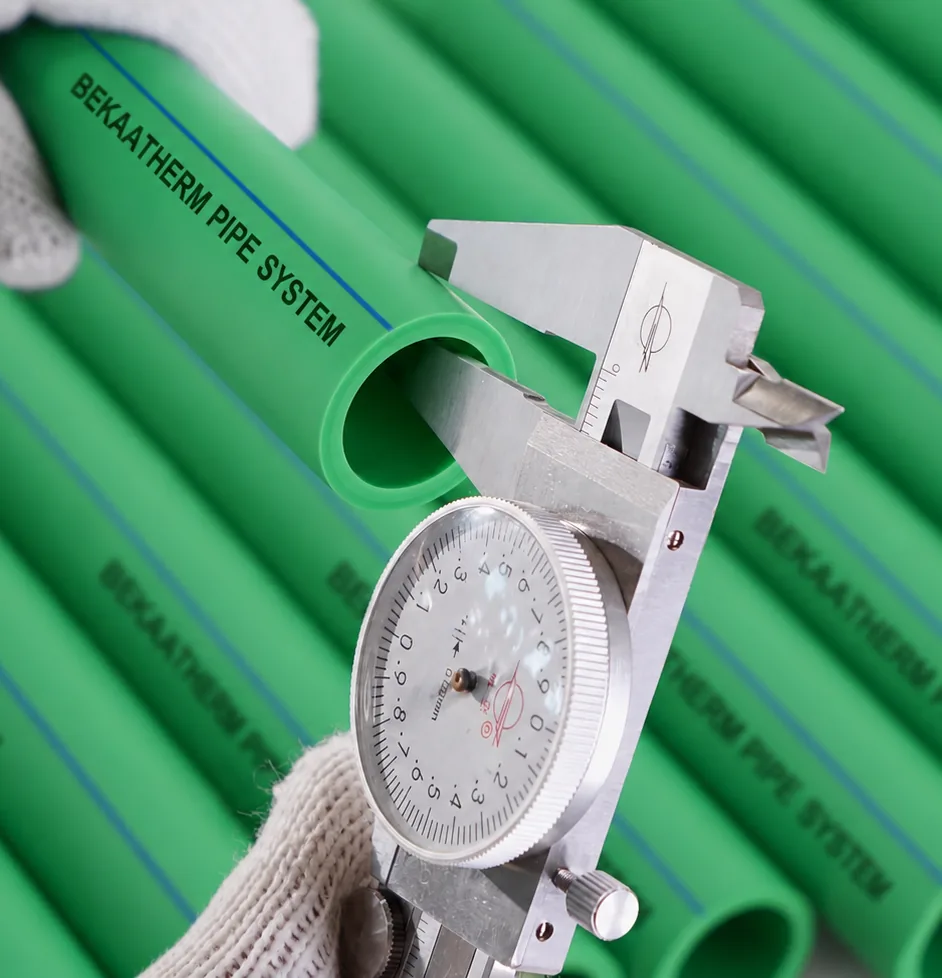
- Read the scope line. Certificates cover named products, dimensional ranges and sometimes named sites. A PPR certificate does not cover the UPVC in the same container.
- Check validity against the shipment. SKZ certificates run five years with possible extension after expiry. One that expired mid-production is a live problem.
- Ask when the last surveillance audit happened. Semi-annual factory auditing and product testing is the normal SKZ regime. A two-year gap means the chain has a hole in it.
- Request the DoP if CE is claimed. Ask for the hEN or ETA number it cites. There is no CE marking without a DoP, so an inability to produce one settles it.
- Match the documents to each other. Certificate holder, invoice name and certificate of origin should name the same legal entity. Where they diverge, ask before the deposit.
Six checks, one afternoon, no cost. They also filter out most “CE certified PPR pipe” offers in a single pass, because those offers cannot survive question five.
A worked example: one container, four markets
Take a distributor loading one mixed 20GP container — PPR pipe and fittings for hot and cold water, plus UPVC drainage — and reselling into Germany, the UK, France and a Gulf market. Chasing a CE mark produces nothing usable in any of the four. Here is what a workable file looks like instead.
Germany. Ask for the SKZ certificate covering the PPR range, with the scope naming the dimensions you are buying, and check the register entry yourself. Confirm the surveillance audit date. Where a project specifies DVGW, ask whether the certification runs through an SKZ partner arrangement, since DVGW is among SKZ’s partner certifiers.
United Kingdom. WRAS Approval or an equivalent from Kiwa UK or NSF, evidencing compliance with Regulation 4 of the Water Supply (Water Fittings) Regulations 1999. CE recognition in Great Britain is indefinite but irrelevant to the product.
France. ACS for anything touching potable water. Note the date arithmetic: an ACS valid at 31 December 2026 can be extended until 31 December 2032 per CSTB, so a certificate obtained now has a defined runway into the positive-list regime whose transition starts 1 January 2027.
Gulf market. Requirements are national and vary considerably; the ISO 15874 and EN 12201 conformity file plus third-party certification is normally the substance an authority reviews. Confirm the current local requirement with the relevant standards authority or your customs broker before shipping.
Across all four, the same evidence does the work: conformity to the product standards, third-party certification with live surveillance, and documents whose names match. For customs, rigid polypropylene pipe sits under HS heading 3917.22 — tubes, pipes and hoses, rigid, of polymers of propylene. Duty rates sit on national tariff lines and differ by destination, so confirm yours with a broker.
To see how one manufacturer’s file is put together before you start questioning your own suppliers, the Bekaatherm certifications page lists what we hold — SKZ, ISO 15874, CE and WRAS — and what each covers. Our quality control process covers the testing behind it, and the guide to PPR pipe certifications goes deeper on how the schemes differ in practice.
Conclusion
The CE mark on a pipe carton is the compliance question that looks answered and is not. No harmonised standard for plastic pipes has been cited in the Official Journal, the 2024/3110 changeover on 8 January 2026 did not change that, and the evidence that holds up in a dispute comes from third-party certification with live factory surveillance behind it. That decides whether your file survives an inspector, a water authority, or a claim on a system buried in a wall for fifty years.
Take one of your current supplier’s certificates and run the six checks above on it this week. If the scope line, the validity dates and the register entry all hold, you have a supplier worth building on; if the only thing on offer is a logo, you now know exactly which question to ask next.
Frequently Asked Questions
Is CE marking required for plastic pipes in the EU?
No. According to TEPPFA, no harmonised standard for plastic pipes has been cited in the Official Journal, so it is currently neither possible nor legal to apply CE marking to plastic piping systems or issue a Declaration of Performance for them.
Why do so many suppliers advertise CE marked PPR pipe?
Usually because the logo is treated as a generic quality badge rather than a CPR declaration, or it relates to a different product or directive. The test is simple: ask for the Declaration of Performance and the harmonised standard or ETA number it cites.
Is CE marking a certification issued by a body?
No. CE marking is a manufacturer’s own declaration, inseparable from a Declaration of Performance. By affixing it, the manufacturer takes responsibility for the product’s conformity with the performance declared. No body issues a CE certificate.
Did the new CPR from 8 January 2026 change anything for pipes?
No. Regulation (EU) 2024/3110 entered into force on 7 January 2025 and became applicable to economic operators on 8 January 2026, but it did not create a harmonised standard for plastic pipes. Parts of Regulation (EU) No 305/2011 remain in parallel until 8 January 2040.
Is ISO 15874 a harmonised standard?
No. ISO 15874 is a product standard covering polypropylene hot and cold water piping systems. Harmonised status requires citation in the Official Journal of the EU, which has not happened for plastic pipes, so conformity is shown by testing and third-party certification instead.
Do I need UKCA marking to import pipe into Great Britain?
In September 2024 the UK government confirmed CE marking would continue to be recognised indefinitely for construction products in the UK, with a minimum two-year transition before any change. For plastic pipe, ask for WRAS Approval or equivalent evidence against Regulation 4 instead.
What is G marking and why does a Turkish supplier mention it?
Türkiye requires G marking for construction materials lacking a harmonised European technical specification, under Official Gazette No. 27270 of 26.06.2009, assessed by Ministry-designated bodies. Plastic pipes fall in that category, mirroring the EU position.
How do I check an SKZ certificate is genuine?
Currently valid SKZ certificates are searchable by certificate number, owner, product and guideline. Certificates run five years with possible extension, backed by normally semi-annual factory auditing and product testing, so check the scope and the dates too.
What is the HS code for PPR pipe?
Rigid polypropylene pipe falls under HS heading 3917.22 — tubes, pipes and hoses, rigid, of polymers of propylene. Duty rates sit on national tariff lines and vary by destination, so confirm the full code and rate with your customs broker.