Choosing an HDPE pipe manufacturer is mostly a documents problem, not a factory problem. You will probably never stand on the production floor. What you will have is a quotation, a folder of certificate PDFs, a catalogue and a WhatsApp thread — and from those you decide whether to wire a deposit to a company on another continent. Almost every guide on this subject says to “evaluate their certifications” and stops there, which is useless, because a PDF is the easiest thing in the world to fake.
The nine checks below each name a public register you can search, a standard edition you can quote back, or a document you can demand before you pay. None requires an audit trip or an insider contact. Several changed in 2026, and a supplier who has not noticed is telling you something about how closely they follow the rules they claim to work under.
Key Takeaways
- WRAS approvals expire five years after the test report date. The approval number encodes that date, and the WRAS Approvals Directory is the only reliable way to confirm an approval is still live — this single check catches suppliers circulating an expired PDF.
- An offer citing EN 12201-2:2011+A1:2013 is quoting a withdrawn edition. All parts of EN 12201 were revised and republished in 2024, adding PE 100-RC materials and their test methods.
- “Certified by ISO” does not exist. ISO writes standards and certifies nobody. Management-system certificates can be validated independently through IAF CertSearch, the global database of accredited management-system certificates, searchable by company name or certificate number.
- CE paperwork changed on 8 January 2026. Regulation (EU) 2024/3110 now applies, and the Declaration of Performance becomes a Declaration of Performance and Conformity. Ask which regime your supplier issues under rather than assuming.
- HDPE is a commercial word; PE 80 and PE 100 are the specification words. The difference is minimum required strength — 8 MPa against 10 MPa — and a datasheet that only says “HDPE” has not specified anything yet.
- PN alone is not a complete spec. Without SDR — outside diameter divided by wall thickness — you have not told the factory what wall to extrude, and you cannot compare two quotes honestly.
- An A.TR certificate proves free circulation, not origin. It is the document that zeroes EU duty on a Turkish consignment, and importers routinely mistake it for a certificate of origin. They are different papers doing different jobs.
- Pipe and fittings certified separately is not a certified system. EN 12201-5 governs the assembled combination, including resistance to pull-out — the failure mode that matters on a compression joint.
Checks 1–2: Is this a manufacturer or a trading company?
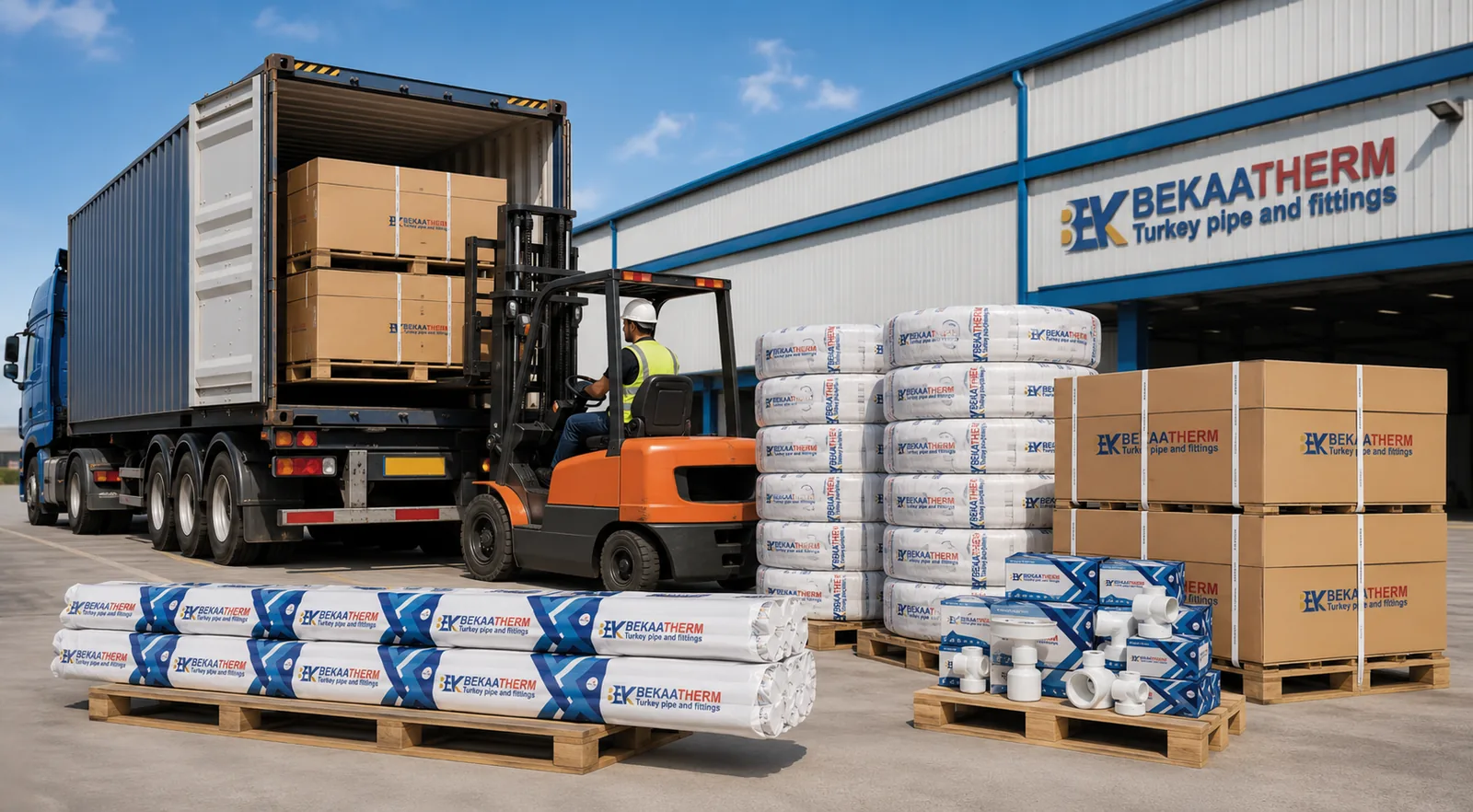
There is nothing wrong with buying through a trader. There is a great deal wrong with paying manufacturer prices to one, or with discovering after a claim that the company you paid has no control over the tool that made the part. Traders are hard to spot from a website, because everyone photographs the same pipe. They are easy to spot from two questions.
Check 1 — Ask for the article-number bands, not the catalogue
A real catalogue has continuous internal numbering, because the numbers were assigned as tools were cut, over years. A trading company’s catalogue is images gathered from several factories, and the numbering is either absent or suspiciously round. Ask for the article-number range covering one product family and see whether the answer is a band or a shrug.
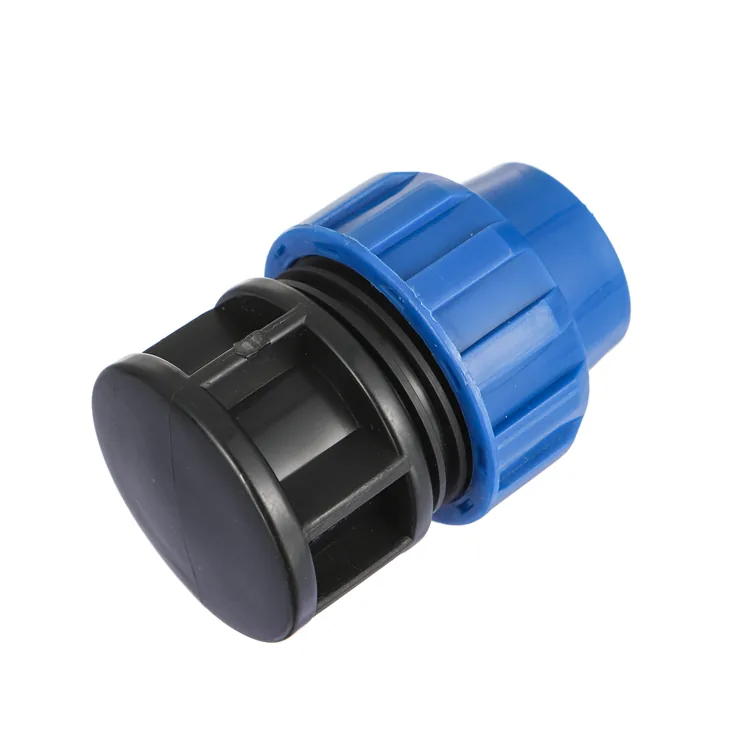
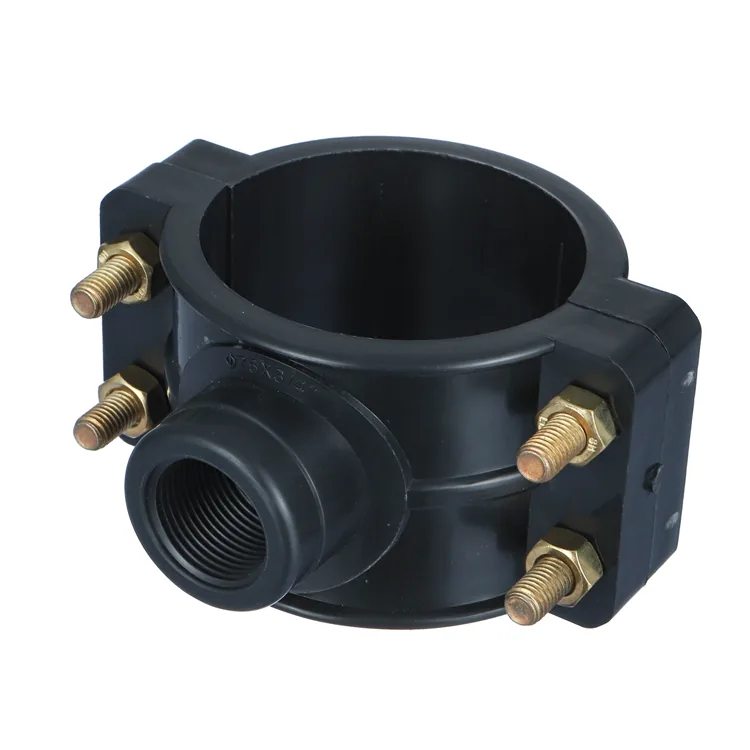
For comparison, in Bekaatherm’s HDPE compression range sockets, elbows and tees run from BK-387 to BK-505, caps occupy BK-506 to BK-514, ball valves BK-515 to BK-532, female valves BK-533 to BK-541, and saddle clamps take the long band from BK-542 to BK-669. Whether or not you buy here, that is the shape you are testing for — contiguous bands allocated by family, with no gaps where a competitor’s product would be dropped in.
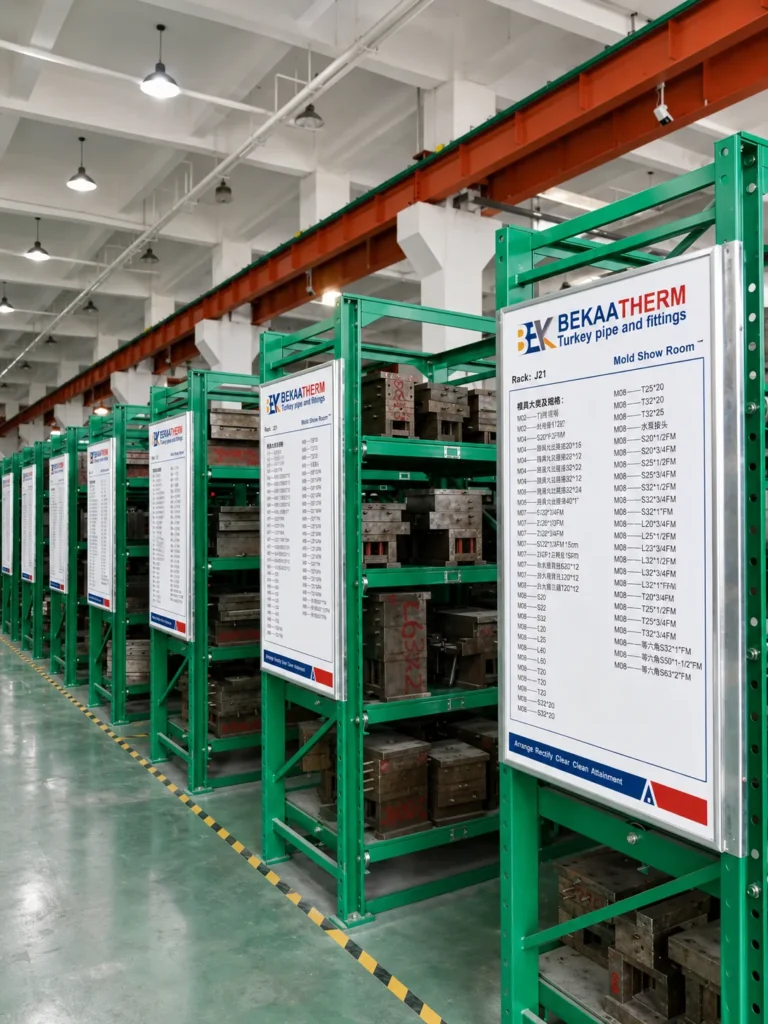
The second half of this check is tooling. A manufacturer can tell you how many moulds it owns, because that number is an asset on its books and the basis of its capacity planning. Bekaatherm’s figure is 10,000 in-house moulds across 98 items in 4 systems, on a 120,000 m² site with 1000+ staff. A trader cannot answer this at all, and the evasion usually shows in how fast the subject changes to price.
Check 2 — Ask how a resin lot is traced to a finished pipe
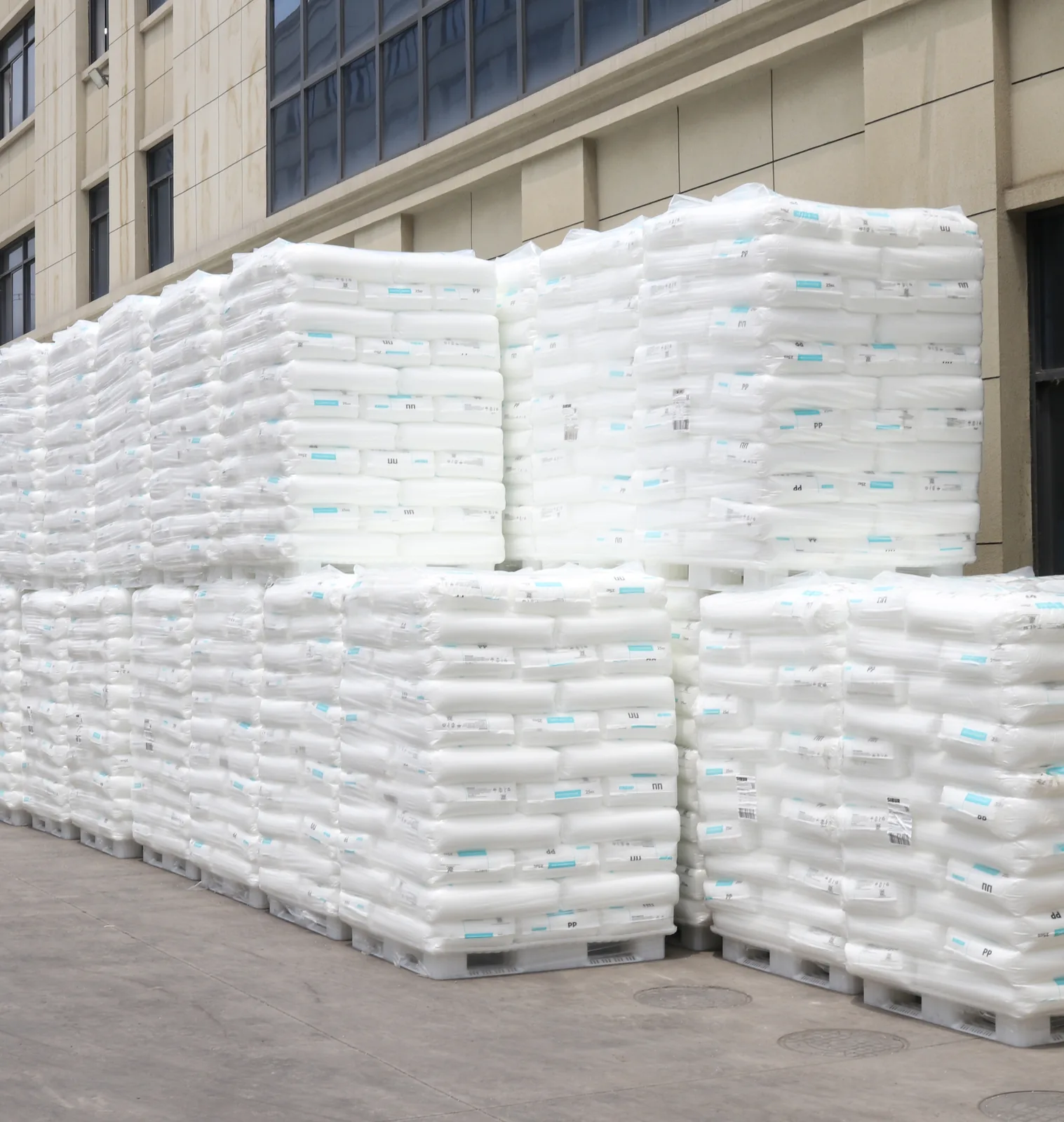
This separates a factory with a working quality system from one with a certificate on the wall. The correct answer is procedural: a lot number is established for each lot of incoming resin and carried through to the finished product, with the quality management system defining where and how resin is sampled. A supplier who cannot describe that chain cannot perform a batch recall — they would have to recall everything or nothing.
Ask it plainly. “If a customer reports a failure eighteen months from now and gives you the marking off the pipe, what can you tell me about the resin that went into it?” The answer reveals the system, and the phrasing gives them nowhere to hide behind a generic assurance about quality.
IF YOU ARE COMPARING FACTORIES RIGHT NOW
The manufacturing capabilities page and the quality control page set out the tooling count, line configuration and batch-testing routine in the form you would need to run Checks 1 and 2 against us. This is for buyers already shortlisting — if you are still deciding between pipe materials, it will be too detailed to be useful.
Checks 3–5: Verifying the certificates yourself
Here is the part every competing guide skips. Certificates are verifiable from your desk, for free, in a single sitting — and the three registers below are where you do it.
Check 3 — Look the WRAS approval up in the directory, and check its age
WRAS approval is valid for five years. The approval number is based on the date of the component test report and expires five years after that date, at which point the product must be re-tested. This is the most useful single fact here, because it turns a forgeable PDF into arithmetic: read the date encoded in the number, add five years, see whether that date has passed.
Then confirm it against the register. Approvals get modified, suspended and withdrawn, which is why a check of the WRAS Approvals Directory is the only reliable way to verify an approval is valid. It is free and searchable by company name, product type, or the product’s unique approval number. Two things must both be true: the number matches, and the company listed against it is the manufacturer or supplier you are actually buying from.
One distinction traps a lot of buyers. WRAS Material Approval covers non-metallic materials and components — rubber sheet, O-rings — and tests only for effects on water quality. WRAS Product Approval covers whole products and involves mechanical testing as well. A material approval waved around as though it approved the finished valve is a category error, sometimes a deliberate one. The BS 6920 testing behind a water-quality approval assesses odour, flavour, appearance, microbial growth and metal extraction — nothing about whether the part holds pressure.
Check 4 — Validate management-system certificates in IAF CertSearch
Listen for a specific phrase. A supplier who says they are “certified by ISO” is describing something that does not exist: ISO develops standards and does not certify, which external certification bodies do. A small tell, but it usually means nobody in that office has read the certificate they are sending you.
To check a real one, use IAF CertSearch, maintained by the International Accreditation Forum. It is the global database of accredited management-system certificates, assembled from three levels: the IAF supplies the accreditation bodies and their scopes, each accreditation body supplies its certification bodies, and each certification body supplies the certified entities and their certificates. You search by a known company name or certificate number, and a free registered account covers a small number of verifications per day. If a certificate cannot be found there, ask which accreditation body stands behind the certification body — not whether the PDF looks convincing.
Check 5 — Trace a product certificate back to its accreditation
Product certificates work differently from management-system ones, and German scheme certificates are the clearest example. SKZ — legal entity SKZ – Testing GmbH, Friedrich-Bergius-Ring 22, 97076 Würzburg — runs its certification body under DAkkS accreditation to DIN EN ISO/IEC 17065:2013, number D-ZE-19033-01. That number belongs to SKZ itself. It is not a supplier’s certificate number, and a factory quoting it as their own has misread their own paperwork.
Two structural points matter more than the number. First, SKZ certificates carry both a date of initial certification and an explicit date of expiry, so “we are SKZ certified” is incomplete until you have seen those dates. Second, the scheme is ongoing rather than one-off: SKZ is the partner for type tests, monitoring tests and process inspections, so a live certificate implies a factory still being audited, not one that passed once.
Where a supplier does not publish certificate numbers openly — Bekaatherm supplies them on request, and the certifications page works that way — that is normal commercial practice. What is not normal is refusing to provide them to a serious enquiry. Numbers you cannot check are worth nothing.
THE INDUSTRY’S OWN ADVICE ON THIS
“The British Plastics Federation (BPF) Pipes Group and its members strongly advise that compliance with the product standards listed in this guide is verified by a third-party certification scheme (for example, the BSI Kitemark or equivalent).”
A trade body telling buyers not to accept its own members’ self-declaration is about as strong a signal as this industry produces.
Checks 6–7: Reading the specification like an engineer
Check 6 — Make them name the grade, the SDR and the standard edition
HDPE is the commercial word. PE 80, PE 100 and PE 100-RC are the specification words, and the difference between them is minimum required strength: PE 80 has an MRS of 8 MPa, typically used up to about 180 mm diameter, while PE 100 carries an MRS of 10 MPa. Before international standards, PE materials were designated by density — PE 80 was called MDPE, PE 100 called HDPE — and those density terms are not recognised in the product standard. Commercially “HDPE pipe” is a normal thing to say, including on this site. On a datasheet it specifies nothing.
SDR is the second half — the ratio of nominal outside diameter to nominal wall thickness. Without it a PN rating is not a complete instruction to a factory. EN 12201-2 covers diameters from 16 mm to 3000 mm across ten SDR values from SDR 6 to SDR 41; ISO 4427-2 uses the series 6, 7.4, 9, 11, 13.6, 17, 21, 26, 33 and 41, corresponding to PN 2.5 through PN 25. Two quotes at the same PN and different SDR are not the same product, and the cheaper one is cheaper for a reason you can calculate.
Then check the edition year, where a lot of offers quietly fail. All parts of EN 12201 were revised and published in 2024, so an offer citing EN 12201-2:2011+A1:2013 is quoting a withdrawn edition. On the ISO side the current pipe standard is ISO 4427-2:2019, amended by Amd 1:2023, with a revision in progress. The conformity-assessment guidance was reissued as CEN/TS 12201-7:2026 on 17 February 2026, covering type testing, batch release testing, process verification testing and audit testing for applications up to 25 bar — those four categories are the vocabulary to use when you ask a supplier to describe their testing regime.
| What the offer says | What it means | What to send back |
|---|---|---|
| “HDPE pipe, PN16” | Grade and wall unspecified | “Confirm PE grade and SDR.” |
| “To EN 12201-2:2011+A1:2013” | Withdrawn edition | “Requote against the 2024 edition.” |
| “PE 100-RC” with no evidence | Unsupported designation | “Send the raw-material producer’s declaration.” |
| “ISO certified” | Not a real status | “Which body issued it, under which accreditation?” |
| “WRAS approved factory” | Approvals are per product, not per factory | “Send the approval number for this item.” |
Check 7 — Treat PE 100-RC as a claim requiring evidence
RC stands for resistant to cracking. The MRS is the same 10 MPa as ordinary PE 100 — what differs is slow-crack-growth resistance, proven by test rather than asserted. The methods are ISO 18488 for strain hardening modulus, ISO 18489 for the cyclic cracked round bar test, ISO 13479 for the notched pipe test and ISO 16770 for full-notch creep. The notched pipe test tells the story: conventional PE 100 is asked for more than 500 hours, RC material for more than 8760.
A pipe maker cannot self-declare this. Under the 2024 revision, a pipe may only be designated PE 100-RC if it is made from materials meeting Tables 1 and 2 of EN 12201-1:2024, declared as PE 100-RC by the raw material producer, and meeting Tables 3 and 5 of EN 12201-2:2024. The document you want is the resin producer’s declaration, not the pipe factory’s letterhead. If you are paying an RC premium for trenchless or no-sand-bed installation, that paper is what you are buying.
One note on the 50-year number every supplier quotes. It is not a warranty period dressed up as physics — it is an ISO 9080 regression. Pipes are pressure-tested at several temperatures, typically 20°C, 60°C and 80°C, for durations from one hour out past 10,000 hours, then extrapolated to the 97.5% lower prediction limit of the stress the pipe withstands for 50 years at 20°C. Classified per ISO 12162, that value is the MRS. Bekaatherm’s 50-year warranty against material and manufacturing defects sits alongside this as a contractual promise, not a restatement of the test.
Checks 8–9: Customs papers and the system argument
Check 8 — Get the customs documents straight before you order
If you are importing from Türkiye into the EU, one distinction will cost you money. The EU–Türkiye Customs Union, established by Decision 1/95 of 22 December 1995 and effective 1 July 1996, covers industrial products — excluding agricultural goods, coal and steel. The document that operates it is the A.TR movement certificate. With a valid A.TR the duty rate drops to zero; without it, standard MFN duty applies.
Now the trap. The A.TR proves free circulation — that the goods were either wholly produced in, or legally imported into, one of the two jurisdictions. It is not proof of origin. Buyers routinely file it as though it were a certificate of origin, then find they cannot answer an origin question at clearance, in a public tender, or under a rules-of-origin requirement in a third market. Ask for both papers, and ask which one your broker needs for the market you are shipping to.
Two more items belong in the same conversation. Rigid polyethylene pipe generally classifies under HS subheading 3917.21, within heading 3917 for plastic tubes, pipes, hoses and fittings — the polymer and whether the pipe is rigid or flexible decide the subheading, so confirm the full national code with your broker. And on CE marking: Regulation (EU) 2024/3110 applies to most construction products from 8 January 2026. Under it the Declaration of Performance becomes a Declaration of Performance and Conformity, adding a statement that the product complies with all applicable Union requirements, and CE marking is only permitted once a DoPC has been drawn up.
Do not conclude that your existing CE paperwork is void. Transitions are staged, mandatory compliance for priority product categories arrives by January 2028, and new harmonised standards roll out with transition periods lasting years. The practical action is one question: which regime is this declaration issued under? A supplier who can answer that in 2026 is reading the regulation.
Check 9 — Insist the pipe and the fittings are certified as a system
Almost nobody runs this check, and for compression systems it matters most. EN 12201-3 recognises compression and mechanical fittings among its fitting types, so certified compression fittings are legitimate. But Part 5 — fitness for purpose of the system — specifies performance for the assembled combination of pipe and fittings: leaktightness of joints, hydrostatic strength of the combination, and resistance to pull-out under longitudinal forces.
Pull-out is the point. A mechanical compression joint holds because a gripping ring bites into the pipe wall when the nut is tightened; nothing is fused, so resistance to being dragged apart is a property of that pipe and that fitting together. Two separately certified components from two factories with different wall tolerances have never been tested as the assembly you are about to bury. Ask whether the pipe and fittings were assessed together under EN 12201-5 — and if you buy them from different suppliers, know that you have taken that risk onto your own account.
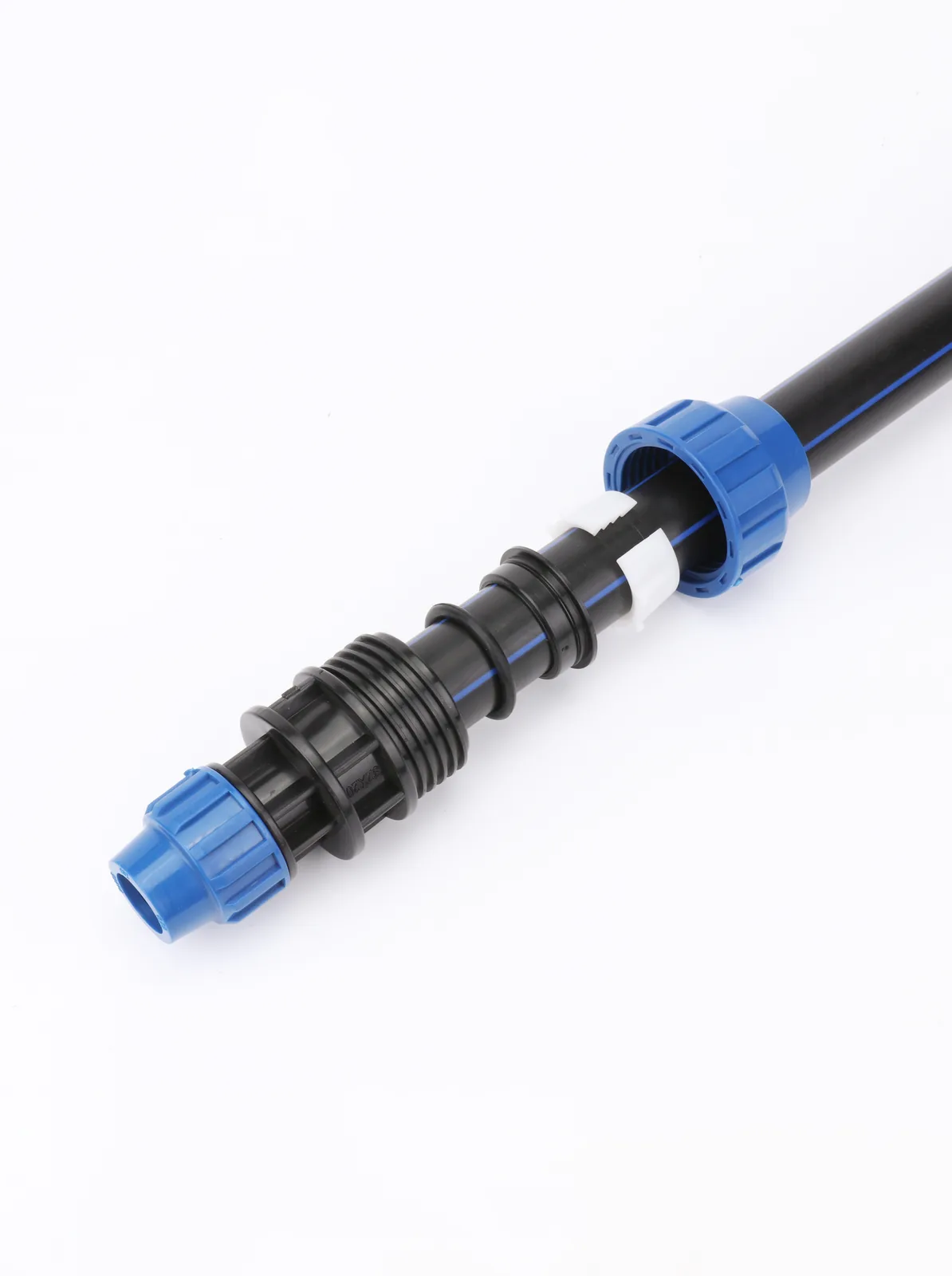
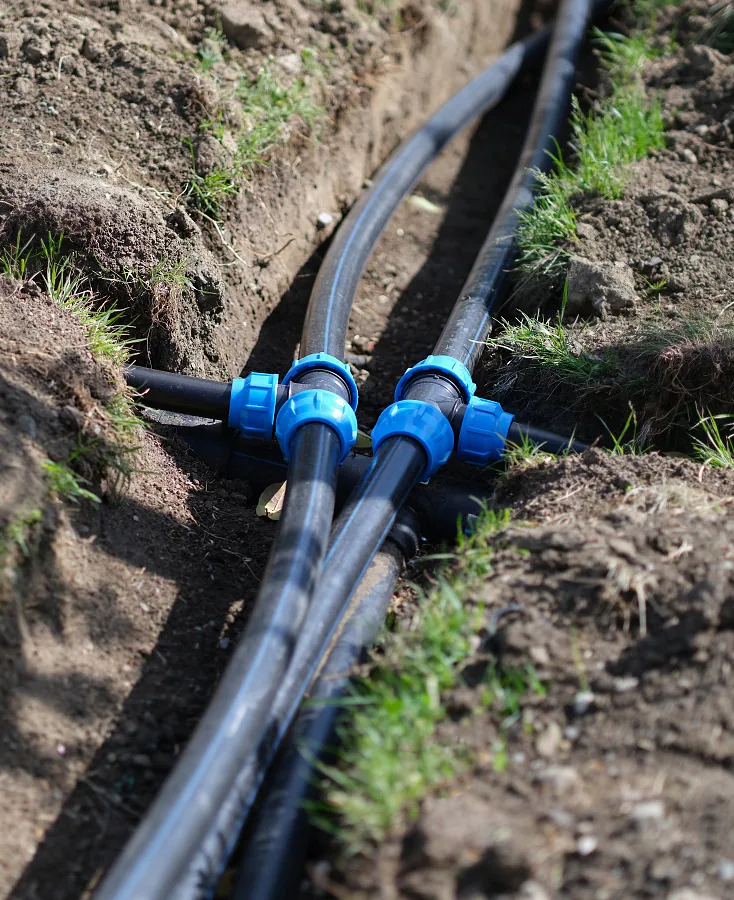
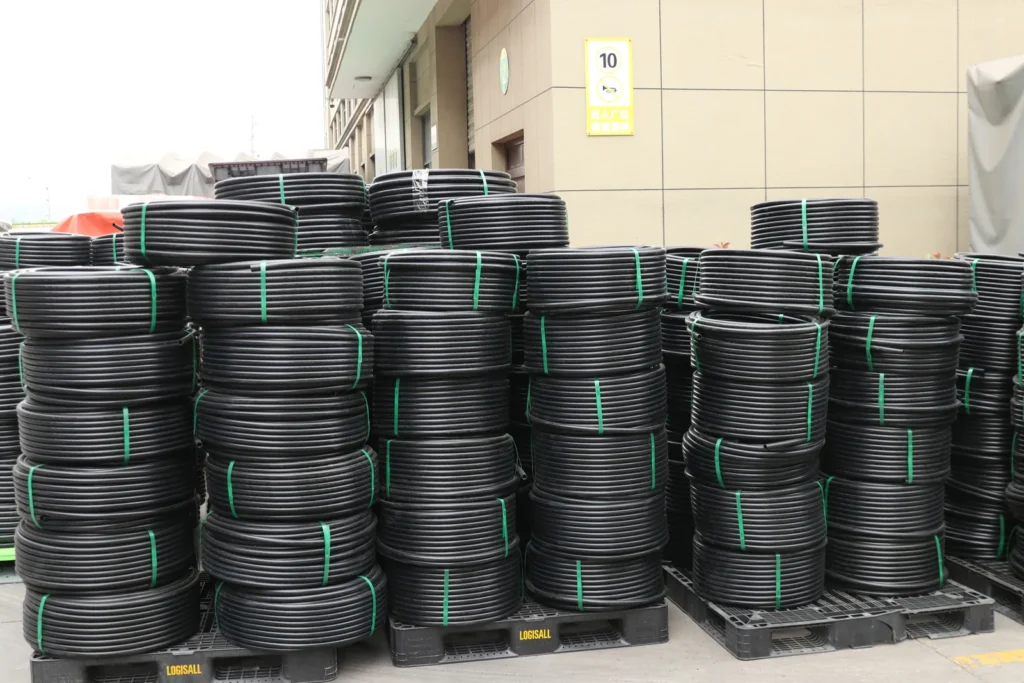
The last check costs nothing and happens when the container doors open. PE pipe must carry its identification on the pipe itself — manufacturer, nominal size, PN, material designation, production date and the applicable standard, set out in the marking clause of EN 12201-2:2024 and mirrored in ISO 4427-2. Colour is a second free check: under ISO 4427-2, blue pipe, or black pipe with blue stripes, is for water for human consumption only, while drainage and sewerage pipe is black or black with brown stripes. A potable job delivered in unstriped black is a conversation for the day of arrival, not after installation.
A worked example: running all nine on one offer
Take a realistic case. An importer supplying irrigation and rural water networks wants a first mixed container: compression fittings from 20 mm to 110 mm, saddle clamps for mains tapping, and a spread of ball valves. Three suppliers have quoted. Here is the order that wastes least time.
Day one is desk work, and it is free. Search the WRAS directory for every approval number quoted and calculate the five-year expiry from each test report date. Run the management-system certificates through IAF CertSearch. Read the edition years — anything citing the 2011+A1:2013 edition of EN 12201-2 drops to the bottom of the pile, not because the pipe is necessarily bad, but because the quotation was assembled by someone not tracking the standard. This stage usually eliminates a supplier without a phone call.
Day two is questions. Ask each survivor for article-number bands on one family, their resin-lot traceability procedure, whether pipe and fittings were assessed together under EN 12201-5, and which regime their CE declaration is issued under. You are not grading the products here — you are grading whether the person answering understands their own factory.
Then structure the order so the remaining risk is staged. At Bekaatherm the entry point is one 20GP mixed container of pipe, fittings and valves, with 500 kg per size and colour as the single-size minimum; lead time on regular in-production sizes is 15–25 days, extending to 30–45 days for private-label work and adding 7–10 days for a first colour match or new tooling. Standard samples are free up to 3 items on freight collect. Terms are 30% T/T deposit with 70% against copy B/L, FOB İstanbul or Mersin by default, and an irrevocable L/C at sight is accepted from USD 50,000 — the L/C being the route that puts a bank between you and a first-time counterparty.
For loading, a 20GP gives roughly 33 m³ of usable space against a payload of about 28 tonnes, and a 40HQ roughly 76 m³; a typical mixed load runs about 60% pipe, 30% fittings and 10% valves by volume. Plastic pipe cubes out before it weighs out, so those ratios decide what actually fits. The container loading and FOB pricing article works through the arithmetic.
One last item if you plan to put your own name on the pipe: agree territory in writing before the branded run, not after it sells. Bekaatherm offers regional exclusivity to private-label partners agreed in writing per market, with a first branded run at one 40HQ or 3 tonnes per colour.
Best for / not for
This nine-check process is worth the time if you are placing a first order with a supplier you have not used, the consignment is going into a potable or municipal network, you are importing into a market with real customs scrutiny, or you plan to put your own brand on the product. In those cases the register searching is the highest-return work in the whole transaction.
It is overkill if you are reordering a proven article number from a supplier whose certificates you verified within the last twelve months, or buying a small quantity of non-potable fittings for a private site where no inspector will ever ask. Run Check 3 on the expiry date, confirm the marking when it lands, and skip the rest.
Put these nine checks to us directly
For importers and distributors at the shortlisting stage: send the specification and we will come back with the FOB unit price, a container loading plan and the certificate package — including the numbers you need to run the WRAS and IAF searches yourself. Response within 24 hours. If you have not settled on sizes yet, the FAQ will serve you better than a quotation.
What to do with all this before you pay
The deposit is the moment you stop being able to walk away. Everything above is arranged around that fact — each check is something you can finish while the money is still in your account, and none of it depends on trusting the person selling to you.
If you only ever run three, run these: search the WRAS directory and do the five-year arithmetic, read the edition year on the standard cited in the offer, and ask whether pipe and fittings were assessed together under EN 12201-5. The first catches expired paperwork, the second catches a supplier not tracking their own standards, the third catches the failure mode that shows up in the ground. A supplier who handles all three without friction has told you more than any brochure will.
Bekaatherm’s own position is public rather than promised: 30 years of manufacturing, 10,000 in-house moulds, 98 items across 4 systems, export to 118+ countries, and SKZ, ISO, CE and WRAS certification with numbers supplied on request. The HDPE pipe and fittings range — compression fittings 20–110 mm and saddle clamps PN10 from 25×1/2″ to 315×6″, all mechanically jointed with no fusion equipment or open flame on site — is where to run Check 1 on us. Importers working through territory and stocking questions should start with the importers and distributors page.
Ready to run Check 3 on a real certificate?
Written for buyers who have a specification in hand and want to verify before committing. Ask for the certificate set by email and check every number in the public registers before you reply — that is the entire point of this article. Certificate numbers are available on request; the certifications page lists what is held.
Frequently asked questions
How long is a WRAS approval valid?
Five years. The approval number is based on the date of the component test report and expires five years after that date, after which the product must be re-tested. Because approvals can also be modified, suspended or withdrawn in the meantime, checking the WRAS Approvals Directory is the only reliable way to confirm that an approval is currently valid.
What is the difference between WRAS Material Approval and Product Approval?
Material Approval applies to non-metallic materials and components such as rubber sheet and O-rings, and tests only for effects on water quality. Product Approval applies to whole products such as valves, boilers and showers, and involves mechanical testing as well as water-quality testing. A material approval does not tell you the finished product holds pressure.
Should HDPE pipe be made to ISO 4427 or EN 12201?
Both exist and both are legitimate; which one you specify usually follows your market. What matters more is the edition. All parts of EN 12201 were revised and published in 2024, and ISO 4427-2:2019 was amended in 2023 with a further revision in progress. An offer citing EN 12201-2:2011+A1:2013 is quoting a withdrawn edition.
What changed in the 2024 revision of EN 12201?
The revision added PE 100-RC type materials and their associated test methods. A pipe may only be designated PE 100-RC if it is made from materials meeting Tables 1 and 2 of EN 12201-1:2024, declared as PE 100-RC by the raw material producer, and meeting Tables 3 and 5 of EN 12201-2:2024.
What is the difference between PE 80 and PE 100?
Minimum required strength. PE 80 has an MRS of 8 MPa and is typically used for pipes up to about 180 mm diameter; PE 100 has an MRS of 10 MPa. The older density-based terms MDPE and HDPE are not recognised in the product standard, so a datasheet that gives only “HDPE” has not stated a grade.
Does an A.TR certificate prove Turkish origin?
No. The A.TR movement certificate proves the customs status of goods in free circulation — that they were either wholly produced in, or legally imported into, the EU or Türkiye. It is not a proof of origin. With a valid A.TR the EU duty rate drops to zero, but if you need to demonstrate origin you need a certificate of origin as a separate document.
What changed for CE marking in January 2026?
Regulation (EU) 2024/3110 applies to most construction products from 8 January 2026. The Declaration of Performance becomes a Declaration of Performance and Conformity, which adds a statement of compliance with all applicable Union requirements, and CE marking is only permitted once a DoPC has been drawn up. Transitions are staged, so ask your supplier which regime their declaration is issued under rather than assuming existing paperwork is invalid.
Do compression fittings need to be certified separately from the pipe?
Compression and mechanical fittings are recognised fitting types under EN 12201-3, so they are certified in their own right. But EN 12201-5 governs the assembled system — pipe and fittings in combination — covering leaktightness, hydrostatic strength of the combination and resistance to pull-out. Parts certified separately are not the same thing as a certified system.
What should be printed on the pipe when the container arrives?
Manufacturer identification, nominal size, nominal pressure, material designation, production date and the applicable standard, per the marking clause of EN 12201-2:2024 and ISO 4427-2. Check the colour too: under ISO 4427-2, blue pipe or black pipe with blue stripes is for water for human consumption, while drainage and sewerage pipe is black or black with brown stripes.