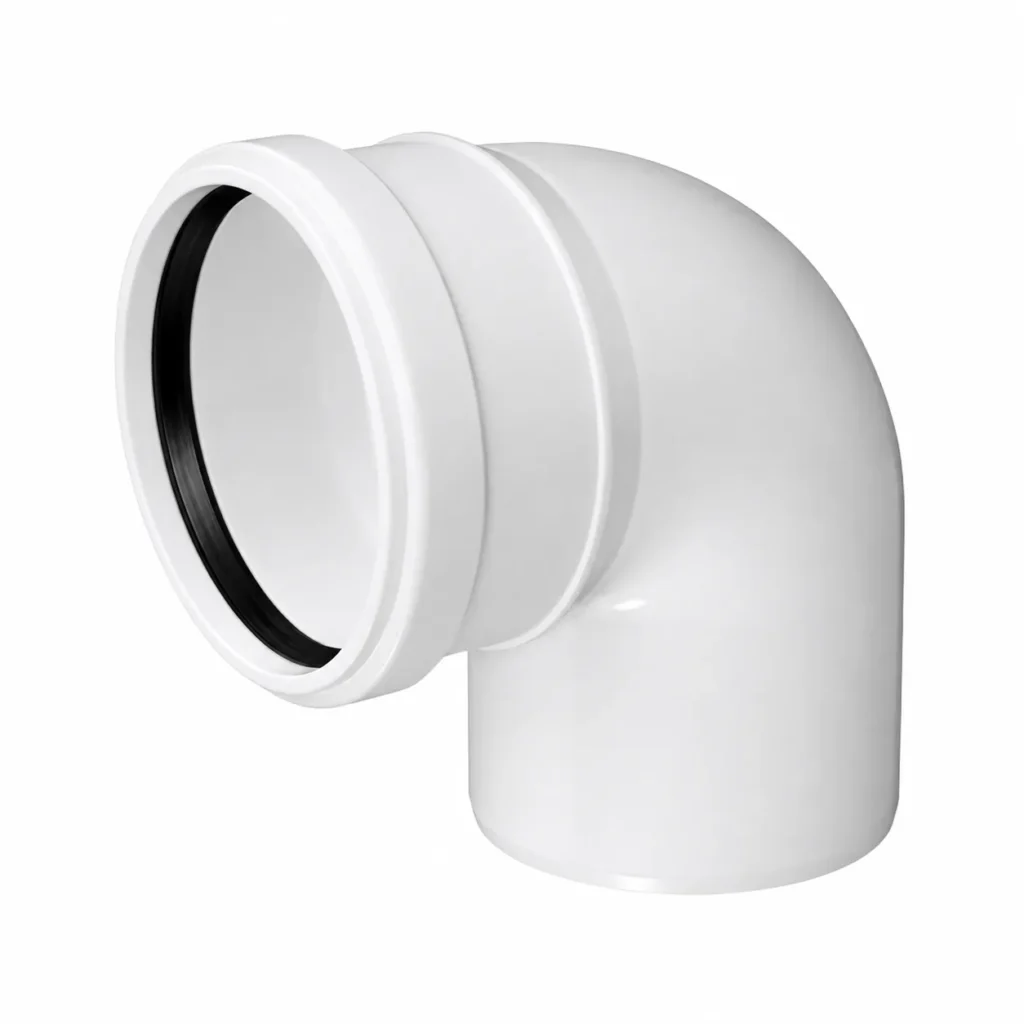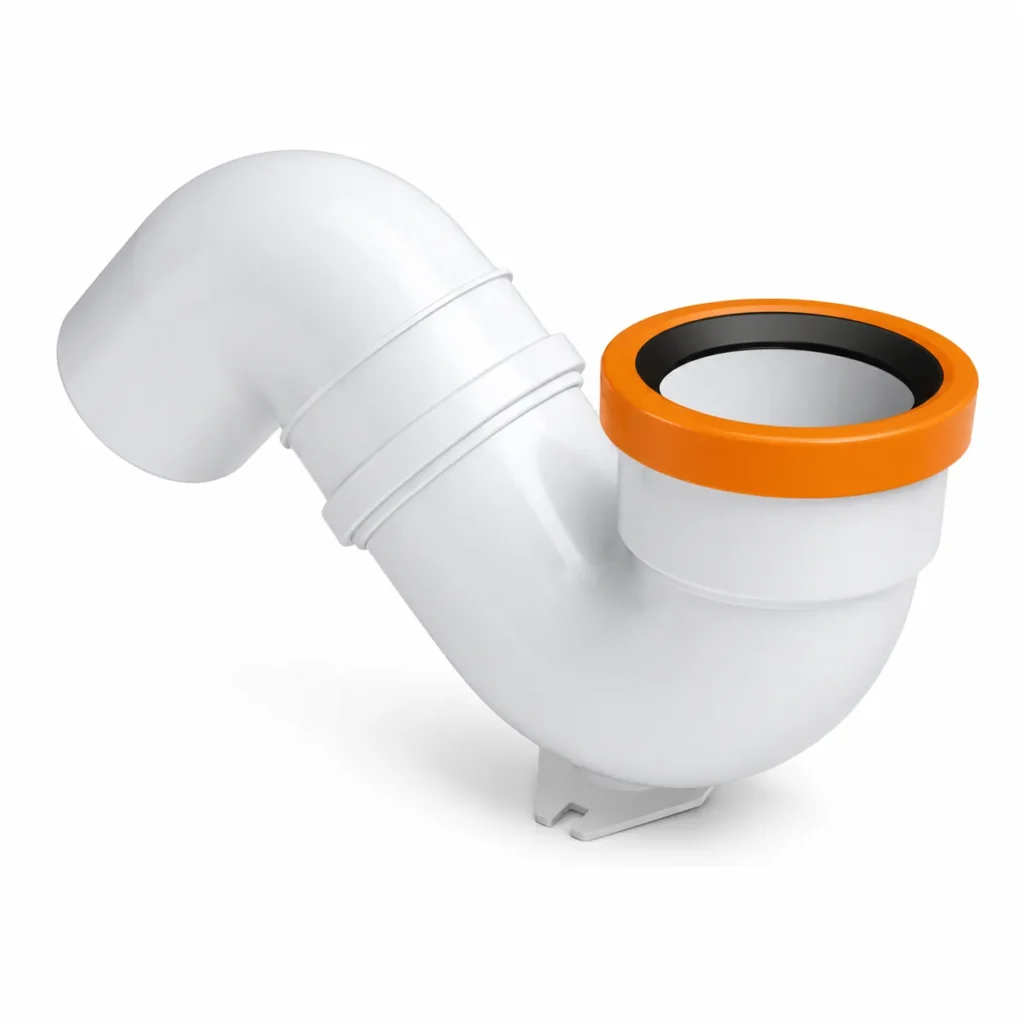
Release a PP drainage access fitting for an assigned stack position only when the exact model fits the finished shaft, its cover can come off and go back on, and the specified cleaning tool can pass through the open hatch and into the fitting. Check all three on the same coordinated drawing or representative mock-up. A duct can clear the fitting body and still block the tool that opens the cover or the rod that goes in afterward.
Use this check when the access location is already on the drainage drawing and a fitting is being offered against it. The output is one submittal row that tells procurement which part and drawing revision were checked, what failed, and who needs to resolve it.
Start with the access fitting’s exact part number
The Geberit UK Drainage Systems guide, printed page 112, shows two Geberit Silent-PP access pipes with the same DN 100, d 110 mm and 90° designation. Take the cover and dimensions from the drawing for the model on the submittal.
| Geberit article number | Service opening and cover | Dimensions as labelled on the sketch |
|---|---|---|
| 390.527.14.1 | Round opening, PP cover | L 9 cm, H 21 cm |
| 390.503.14.1 | Oval opening, cast-iron cover | A 12 cm, H 40.3 cm, h 28 cm, X 20 cm |
Use the dimension arrows to place the fitting body relative to the stack centreline. The catalogue values describe the fitting in the sketches. Cover travel, the usable opening and tool clearance each need their own evidence. These two rows illustrate the comparison within Geberit’s UK range. Assess a different model or system using its own joint and service documentation.
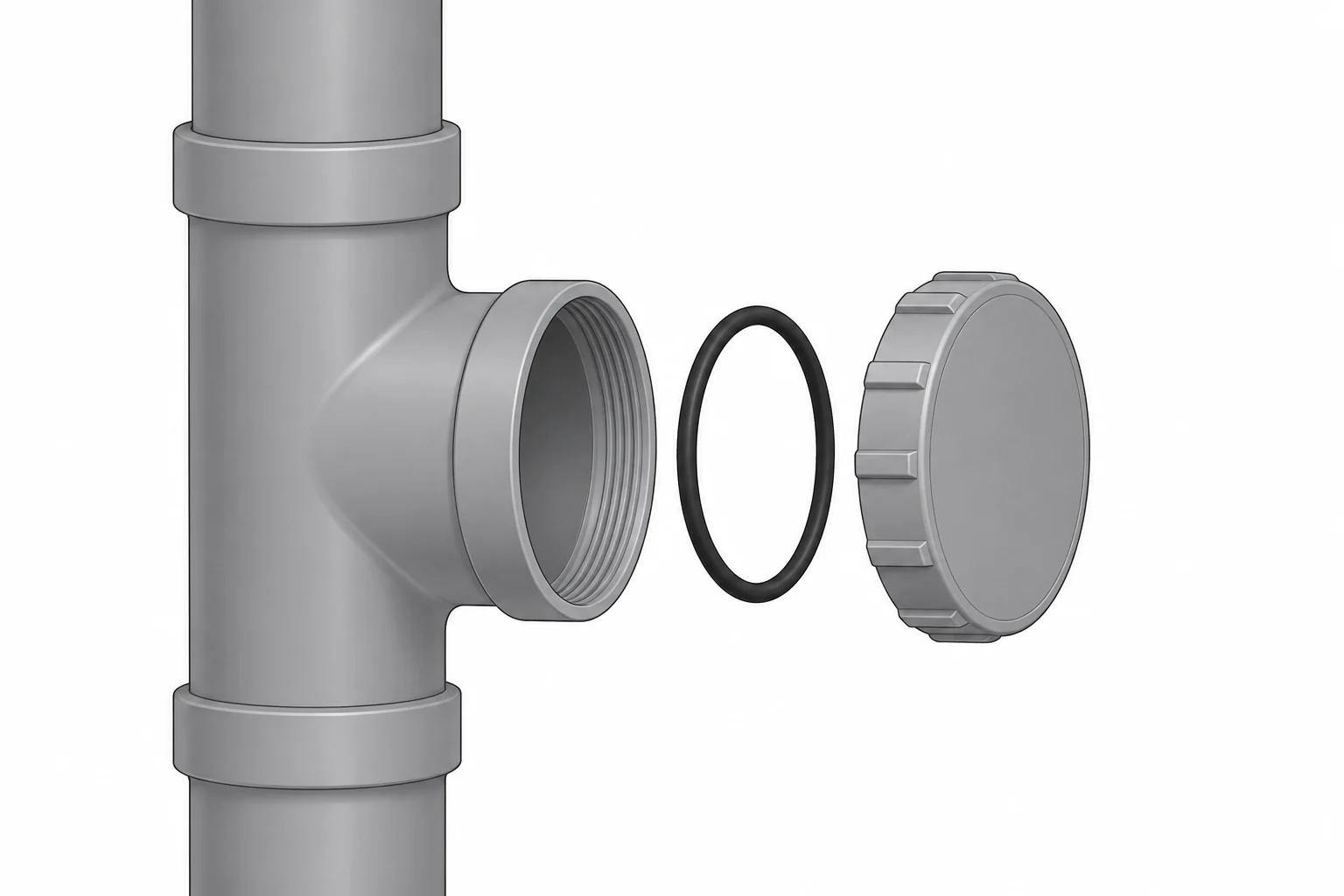
Check the fitting, cover and tool in the finished shaft
Ask for a plan and section at the access point. Use the fitting centreline and cover face as the reference points when overlaying the previous and revised shaft drawings. Mark the fitted body and cover face relative to the stack centreline. Then add the clear opening with the hatch fully open, including the frame and hinge, and show the nearest duct with its insulation, supports and any other fixed obstruction. Dimension the limiting gap between the actual surfaces that could collide.
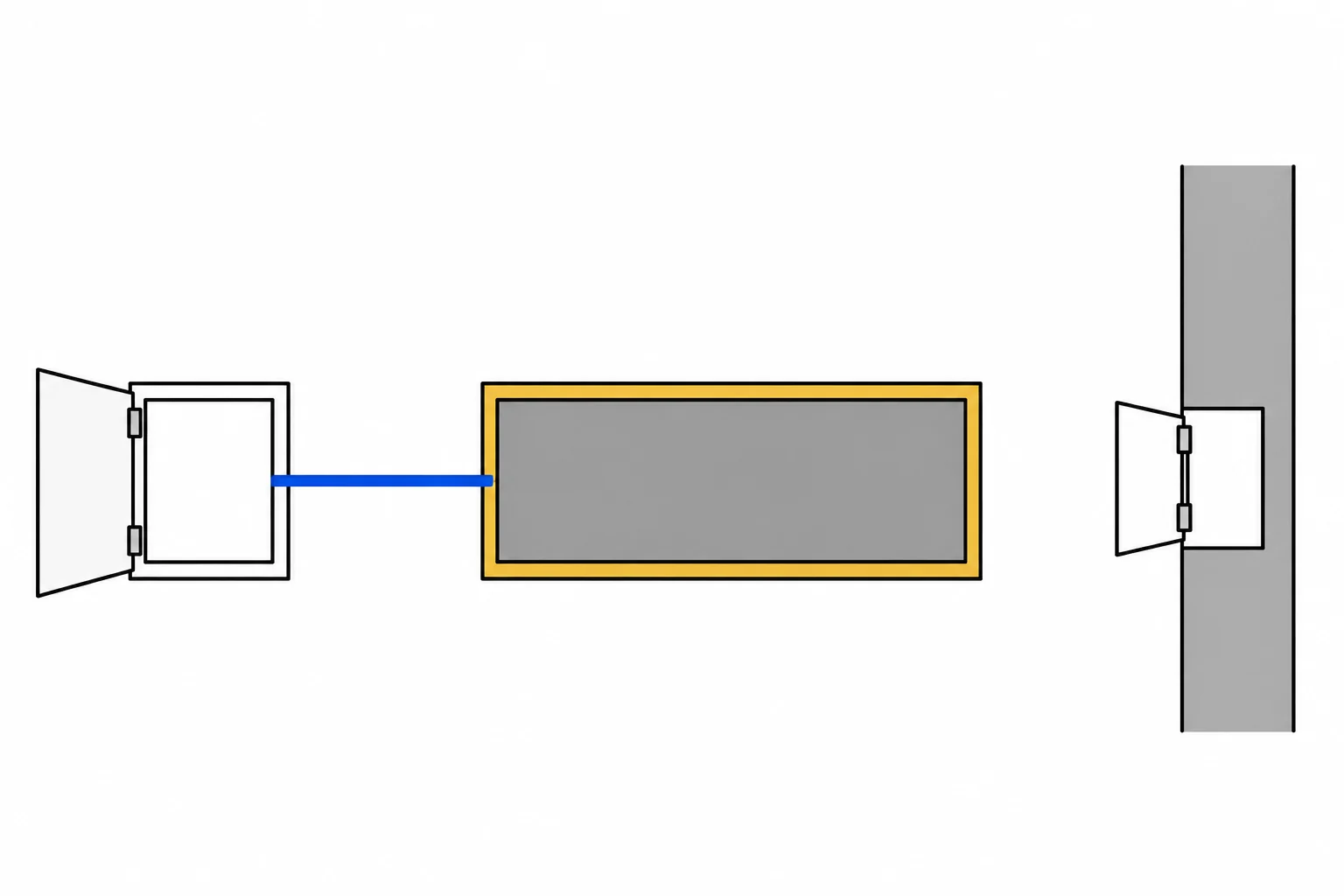
Trace the manufacturer’s cover removal and reinstallation sequence with the opening tool in place. Next trace the maintenance operator’s proposed cleaning head and its first rigid section through the hatch, into the fitting and back out. Check the approach angle at the cover face as well as the clear opening. A head that fits through the hatch can still bind when its rigid section has to turn toward an offset fitting. Wavin’s Osma manual, printed page 84, calls for room to use testing and cleaning equipment near walls and ducts. Use that principle here and take any required clearance dimensions from the actual product, tool and project requirements.
| Check | Evidence to record | Action if it fails or is unknown |
|---|---|---|
| Exact model and fitted body | System, part number, fitting drawing revision, connection and orientation. Confirm the mounted body fits the finished geometry. | Hold the offered part. Ask the supplier for the exact drawing or have coordination resolve the body clash. |
| Cover removal and reseating | Show opening-tool movement and a clear path for the cover and seal through removal and refitting. | Hold and get the opening sequence or a dry mock-up. If a clash is shown, have the coordinator revise the access detail. |
| Cleaning-tool route | Mark the approved head and first rigid section, approach angle and insertion and withdrawal path toward the intended run. | Hold for operator confirmation or a route change. Check the revised geometry and approved tool again. |
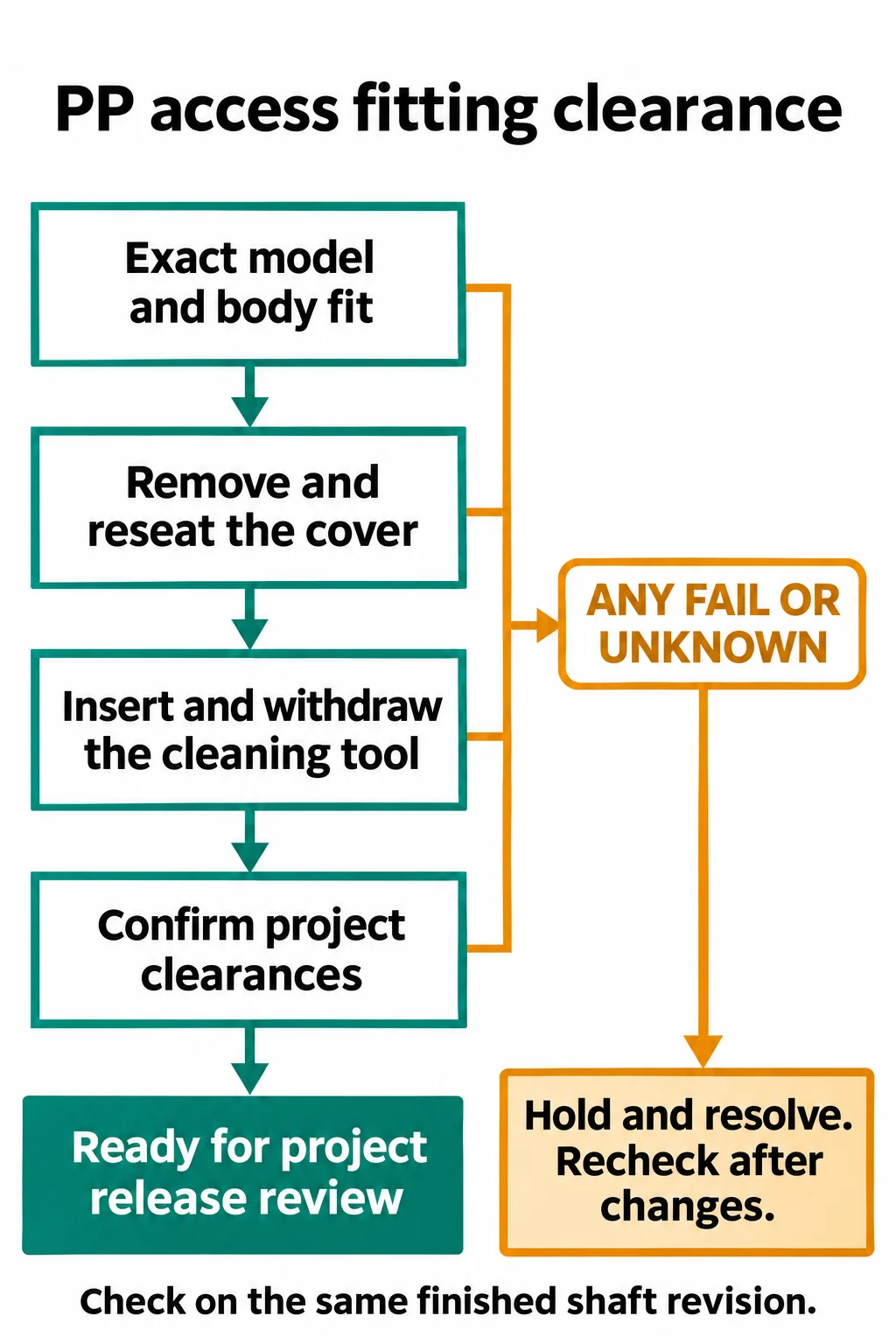
- Confirm exact model and fitted body on the coordinated drawing or representative mock-up.
- Verify the opening tool, cover and seal can move through removal and reseating.
- Verify the approved cleaning head and first rigid section can enter and withdraw on the intended path.
- Confirm the applicable project clearances on the same finished shaft revision.
Disposition: Hold and resolve any failed or unverified check. Recheck after changes. If all checks are demonstrated, record readiness for the project release review.
Record the limiting clearance and the release decision
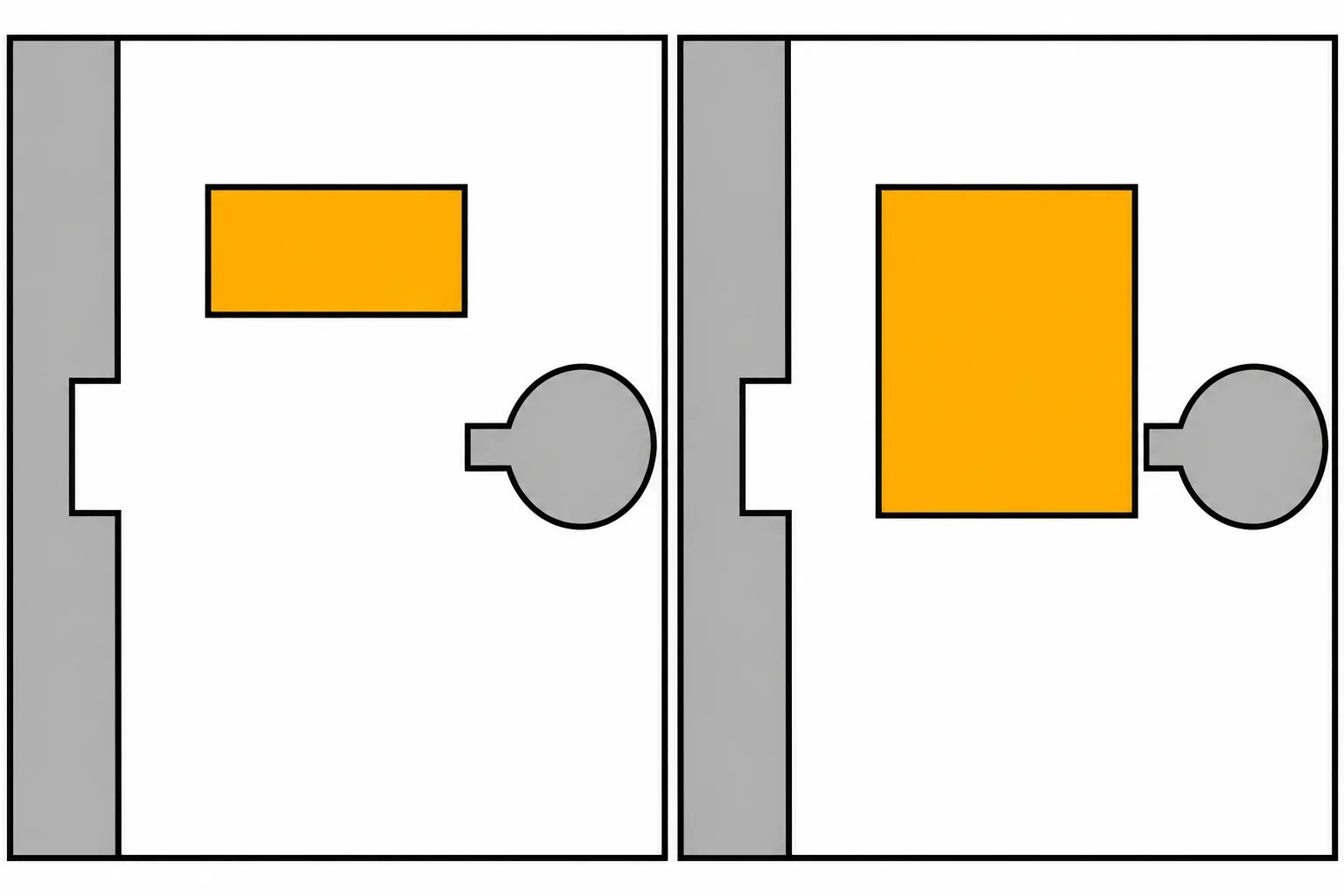
Illustrative coordination check. At one position, the body fits and the cover is removable. The supplier’s mock-up shows that the agreed cleaning head and rigid leader need 120 mm of unobstructed approach along the entry line shown in section. The previous duct drawing left 135 mm along that line. A revised duct size and insulation reduce the gap to 95 mm, with the fitting and hatch unchanged. The shortfall is 25 mm, so reopen the clearance check and hold the offered fitting at this position. A wider hatch on the same line would leave the duct clash in place. Ask the coordinator to revise the approach geometry, then verify all three checks on the revised drawing. These values illustrate the decision and carry no model or project clearance requirement.
Copy into the submittal log. Stack/access ID [ ] | system and SKU [ ] | fitting drawing rev. [ ] | finished coordination rev. [ ] | clear hatch and limiting gap on this revision [ ] | body fit [ ] | cover and opening tool sequence [ ] | cleaning tool and path [ ] | evidence refs. [ ] | status and owner [ ]. Mark the geometry check ready for project release review when all three are demonstrated and required project clearances are confirmed. Keep the row on hold if any item remains open. Route changes to a rated shaft or its access panel through the project design and approval process.
Use the same row for a fitting enquiry
The Bekaatherm PP drainage range shows an integral access point on a P-trap. If you need a separate stack access fitting, ask Bekaatherm to check fitting availability. In the message, include your destination market, the stack system and outside diameter, connection, orientation and the finished access detail. Ask for the exact part number and its drawing and cover instructions if a matching fitting is available.
Conclusion
Keep body fit, cover movement and tool access on the same revision. Record what the drawing or mock-up shows and who owns any open issue before the fitting is released.
Frequently Asked Questions
Does pipe diameter establish the service clearance?
No. Match the exact part number to its drawing and check cover movement and tool geometry separately.
Does a wider hatch resolve a duct clash?
Only if the required approach actually changes and clears the obstruction. Check the revised geometry with the approved cleaning tool.
When is the offered fitting ready for project release review?
When body fit, cover handling, the tool route and applicable clearances are demonstrated on the same finished revision. Hold the row if any item fails or remains open.