A PP drainage pipe specification fails inspection for one of two boring reasons: the spec cites a standard edition that no longer exists, or it treats a brochure decibel figure as a building performance value. Both are fixable in the ten minutes it takes to write the clause properly. This page covers polypropylene soil and waste discharge pipework inside the building structure to EN 1451-1 — not perforated subsoil pipe, not corrugated stormwater pipe, which is what most search results for this term will hand you.
Two edition changes landed in 2026 that most comparison pages have not caught up with. EN 1329-1:2026, the PVC-U soil pipe standard, was published in May 2026 and supersedes the 2020 edition. EN 1451-1:2017, the PP equivalent, is under CEN revision with an enquiry that closed on 10 June 2026. If your spec library still says “EN 1329-1:2020”, it is already out of date.
Key Takeaways
- Two different standards, two different editions. PP soil and waste pipe inside buildings falls under EN 1451-1:2017 (published 14 November 2017, currently under revision). PVC-U falls under EN 1329-1:2026, published May 2026.
- EN 14366 is a measurement method, not a pass mark. No European standard limits drainage discharge noise. The limit comes from national code — in Germany, DIN 4109 sets 30 dB(A) for living rooms and bedrooms, tightening to 25 dB(A) under increased sound-insulation requirements.
- The current acoustic edition is EN 14366-1:2023, approved 8 October 2023. It supersedes EN 14366:2004+A1:2019, which is withdrawn. An undated “tested to EN 14366” claim is a red flag.
- A lab decibel value is not an in-building value. EN 14366 results compare products against each other; in-situ levels are predicted through EN 12354-5:2009. Any “our pipe is 12 dB in your building” claim skips that step.
- Check the marking, not the datasheet. “B” means above ground inside the building. “BD” covers both inside and buried within the building structure, applies only at DN 75 mm and above, and under EN 1451-1 carries a minimum SN4 ring stiffness.
- Acoustic PP systems publish roughly 10–16 dB(A) at 4 l/s — Pipelife Master3Plus below 10 dB(A), Aliaxis dBlue 16 dB, VESBO INCOLA Exclusive 12 dB(A). A figure quoted at 2 l/s is not comparable with one at 4 l/s.
- Bekatherm PP drainage runs DN 50–200 mm, ring-seal push-fit, TYPE1 wall 3–3.9 mm and TYPE2 wall 1.8–3.2 mm, in 3000 and 6000 mm lengths.
What actually separates the two systems
Start with what does not separate them. Both EN 1451-1 and EN 1329-1 carry the same phrase in their titles: “soil and waste discharge (low and high temperature) within the building structure.” Both use the same B and BD application-area coding. A specifier who believes PP is “the hot one” and PVC-U is “the cold one” is working from a simplification the standards themselves do not support.
The real split is the test regime each material is qualified against, and the wall construction that acoustic grades add on top. A silent PP pipe is not a single-material extrusion. The industry build is three layers: polypropylene inside and out, with a middle layer of mineral-filled polypropylene (PP-MD). That middle layer adds mass, and mass is what damps the sound of water hitting a pipe wall. Plain PVC-U soil pipe has no equivalent layer, which is why it is rarely submitted for acoustic testing at all.
That last point matters more than any number. The honest comparison is not “PP is 12 dB and PVC-U is 50 dB.” It is that acoustic PP systems get tested and publish a figure, and plain PVC-U soil pipe generally does not. When a page shows you a two-column decibel table with both materials in it, ask where the PVC-U number came from and at what flow rate. Usually neither answer exists.
On temperature, resist the round number
You will see “95°C short-term, 90°C continuous” repeated across supplier sites as if it were a clause in EN 1451-1. It is not traceable to the standard text. What EN 1451-1 does involve is performance testing under elevated-temperature cycling, and that qualification regime is the defensible reason PP is the default where sustained hot discharge occurs — commercial kitchens, laundries, dishwasher-heavy branch runs. Write the reasoning into your spec, not the folklore number. Where a project needs a temperature figure to sign off, ask the manufacturer for a project-specific statement in writing.
Which standard, which edition — the 2026 position
Citing a standard number without an edition year is the single most common defect in a drainage spec clause. It reads as authoritative and commits to nothing, and when the reviewing engineer asks which edition the supplier’s test reports were written against, nobody can answer. Here is where each document stands as of August 2026.
| Standard | Covers | Edition to cite in 2026 |
|---|---|---|
| EN 1451-1 | PP pipes, fittings and system, inside the building | 2017 edition. Under revision; enquiry closed 10 June 2026 |
| EN 1329-1 | PVC-U pipes, fittings and system, inside the building | 2026 edition, published May 2026, supersedes 2020 |
| EN 1401 | PVC-U buried underground, outside the building | Different scope — do not substitute for EN 1329 |
| EN 12056-2 | Gravity drainage layout and calculation, Systems I–IV | System design basis, cite alongside the product standard |
| EN 14366-1 | Laboratory acoustic measurement for waste water installations | 2023 edition, approved 8 October 2023 |
The EN 1329-1:2026 publication is the one to act on this week. Update the edition reference in your standard clause, then send one line to every shortlisted supplier: which edition is your Declaration of Performance written against? A supplier still working to the 2020 text is not automatically non-conforming, and existing stock does not become defective overnight — but you want that conversation on record before the submittal, not during it.
EN 1451-1 sits in the opposite position. The enquiry stage closed on 10 June 2026 and no replacement edition has been published. So the 2017 edition remains the one to cite for PP. If your project runs past 2027, add a line to the spec allowing the successor edition once it publishes, which saves a variation later.
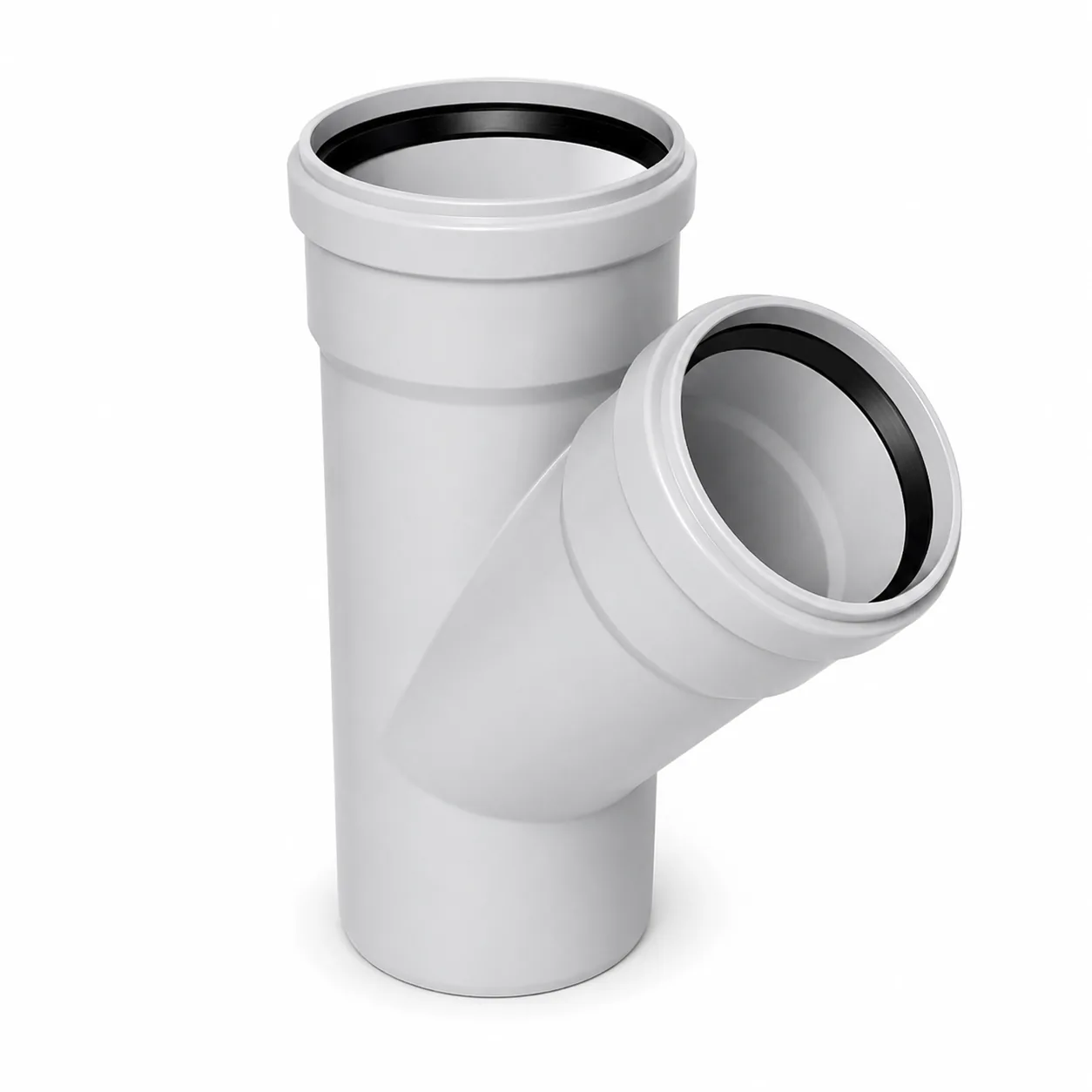
One more distinction worth writing down, because it catches people on mixed projects: EN 1329 governs the pipe inside the building structure, EN 1401 governs the buried pipe outside it. Same material, different standard, different requirements. Our own UPVC drainage and fittings range is declared against both, and the two lines are not interchangeable on a drawing.
What a decibel rating really means
This is where a specifier’s exposure is highest, because the number that gets pasted into a submittal is almost always the number that cannot support it.
EN 14366 results can be used to compare products and materials. They cannot be used as values obtained in buildings in situ — those are predicted through EN 12354-5:2009.
A laboratory decibel figure is a comparison instrument. It ranks pipe A against pipe B under controlled conditions. It does not tell you what the bedroom on the other side of the shaft wall will measure, because the shaft, the brackets and the floor build-up all sit between the pipe and the occupant. The prediction route to an in-building number runs through EN 12354-5:2009, and it needs the building’s own data, not just the pipe’s.
EN 14366-1:2023 sharpened this. It specifies laboratory methods for sound power levels and structure-borne sound quantities, covers both vertical and horizontal pipe configurations, and — the substantive change from the 2004 text — adds test procedures for mitigation measures such as pipe enclosures and pipe lining. So a published decibel value may now legitimately describe a pipe plus its shaft enclosure, not the pipe alone. Two suppliers can quote similar numbers for genuinely different things. Read the scope section of the test report, not the headline.
Three questions that expose a soft acoustic claim
- At what flow rate? The industry headline rate is 4 l/s. Some brands publish at 2 l/s, which produces a friendlier number for the same pipe. A 2 l/s figure and a 4 l/s figure are not comparable, and a claim with no flow rate stated is not a claim.
- Which edition? Bare “EN 14366” points at the withdrawn 2004+A1:2019 text. Ask for a report written to EN 14366-1:2023.
- Pipe alone, or pipe plus enclosure? Since the 2023 edition covers shaft and lining test procedures, the test object needs naming explicitly.
For benchmarking quotes you receive, published acoustic PP systems cluster in a band: Pipelife Master3Plus states below 10 dB(A) at 4 l/s, Aliaxis dBlue 16 dB at 4 l/s, VESBO INCOLA Exclusive 12 dB(A) at 4 l/s, Pestan S LINE 12 dB(A). Those are third-party figures published by those brands. Use them as a sanity band — a quoted 5 dB(A) at 4 l/s should prompt a request for the report, not a purchase order.
Where the actual limit comes from
No European standard for soil and waste pipe limits water discharge noise. None. EN 14366-1 tells you how to measure; it never tells you what passes. The binding number always comes from national building code. In Germany, DIN 4109 sets a maximum of 30 dB(A) for living rooms and bedrooms, dropping to 25 dB(A) where increased sound-insulation requirements apply, and the governing metric for waste water systems is the installation noise level LAFmax,n. Other markets set their own values or none at all. Confirm the applicable limit with the local building control authority or the project acoustician before it goes in the spec — the requirement varies by jurisdiction and by the building’s occupancy class.
Also worth knowing what the acoustic standard excludes: it applies to waste water piping and its parts, but not to the sources of waste water themselves — no lavatories, toilets or bathtubs — nor to any active units. It covers naturally ventilated pipes of any common material in diameters up to 160 mm. If your riser is DN 200, you are outside the diameter range the standard addresses.
B, BD and the wall thickness series
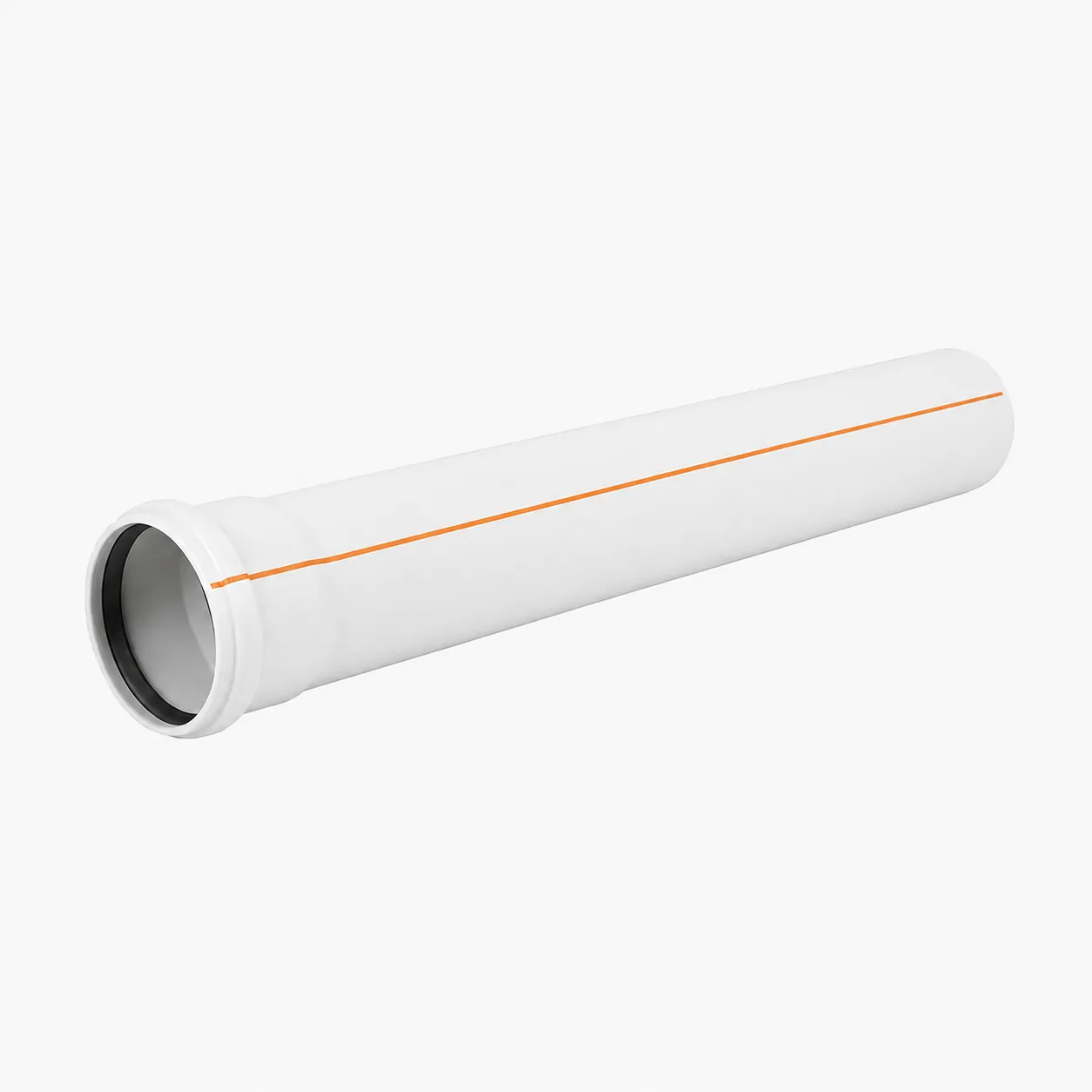
Two letters printed on the pipe settle more compliance arguments than any datasheet. Both EN 1451-1 and EN 1329-1 use the same application-area coding, and the intended use is reflected in the product marking itself.
| Marking | Where it may be used | Constraint |
|---|---|---|
| B | Above ground inside the building, or outside fixed onto the wall | Not for burial |
| BD | Inside buildings and buried in ground within the building structure | DN 75 mm and above only; under EN 1451-1, minimum SN4 ring stiffness |
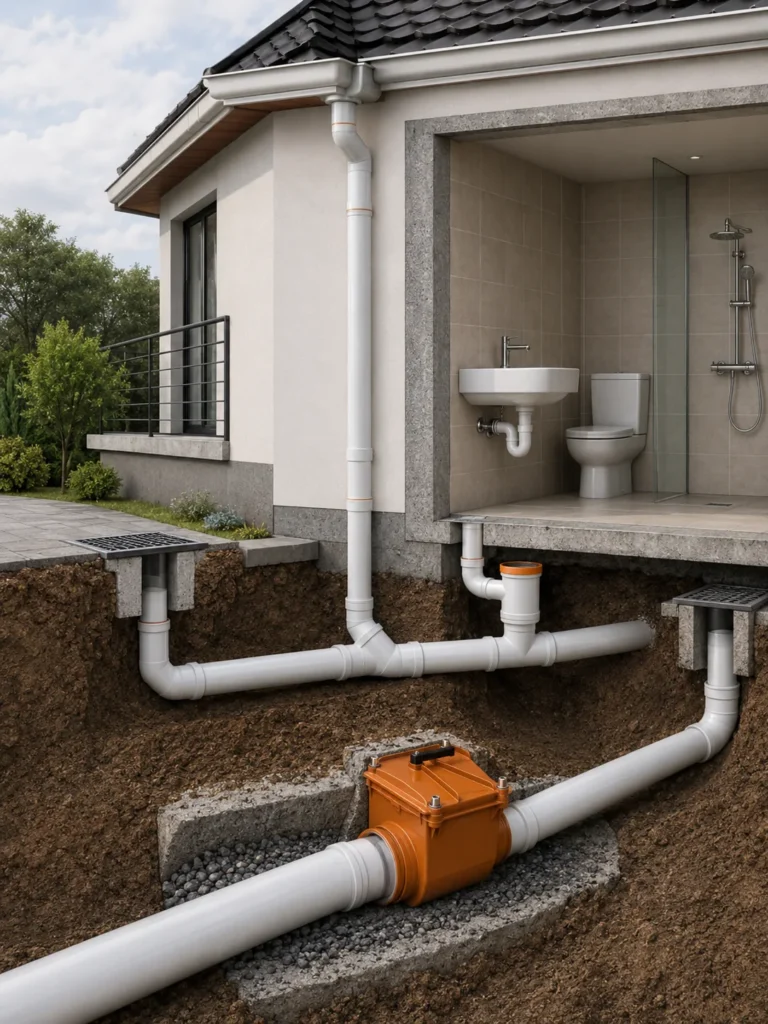
The failure mode is predictable. A design shows a stack dropping into a slab and continuing under the ground floor to the connection point. The schedule says “DN 110 PP soil pipe” with no application code. The installer buys B-marked pipe because it is what the merchant stocks, and buries it — where it is not rated for the ground load. That is a rip-out, and it is nobody’s fault but the schedule’s. If any part of the run is buried within the building footprint, specify BD explicitly and check the print on delivery.
The DN 75 threshold is the other trap. BD applies only to components with a nominal outside diameter of 75 mm or more. A DN 50 branch cannot be BD, so a design that buries a DN 50 waste run inside the building structure has a problem no procurement decision will solve. Reroute it above the slab or upsize it.
On wall thickness, EN 1451-1 offers a choice of three pipe series, and series S16 is the one recommended for above-ground situations. That is the specifier’s default for a stack or a branch run. Beware of series-by-series wall thickness tables published without an edition reference — check the dimensions against the standard you actually hold rather than against a supplier’s summary. Bekatherm publishes its PP drainage in two wall classes, TYPE1 at 3–3.9 mm and TYPE2 at 1.8–3.2 mm, in 3000 and 6000 mm stock lengths, which lets you match the wall class to the duty rather than buying one heavy wall for the whole job.
Best for / not for, by building type
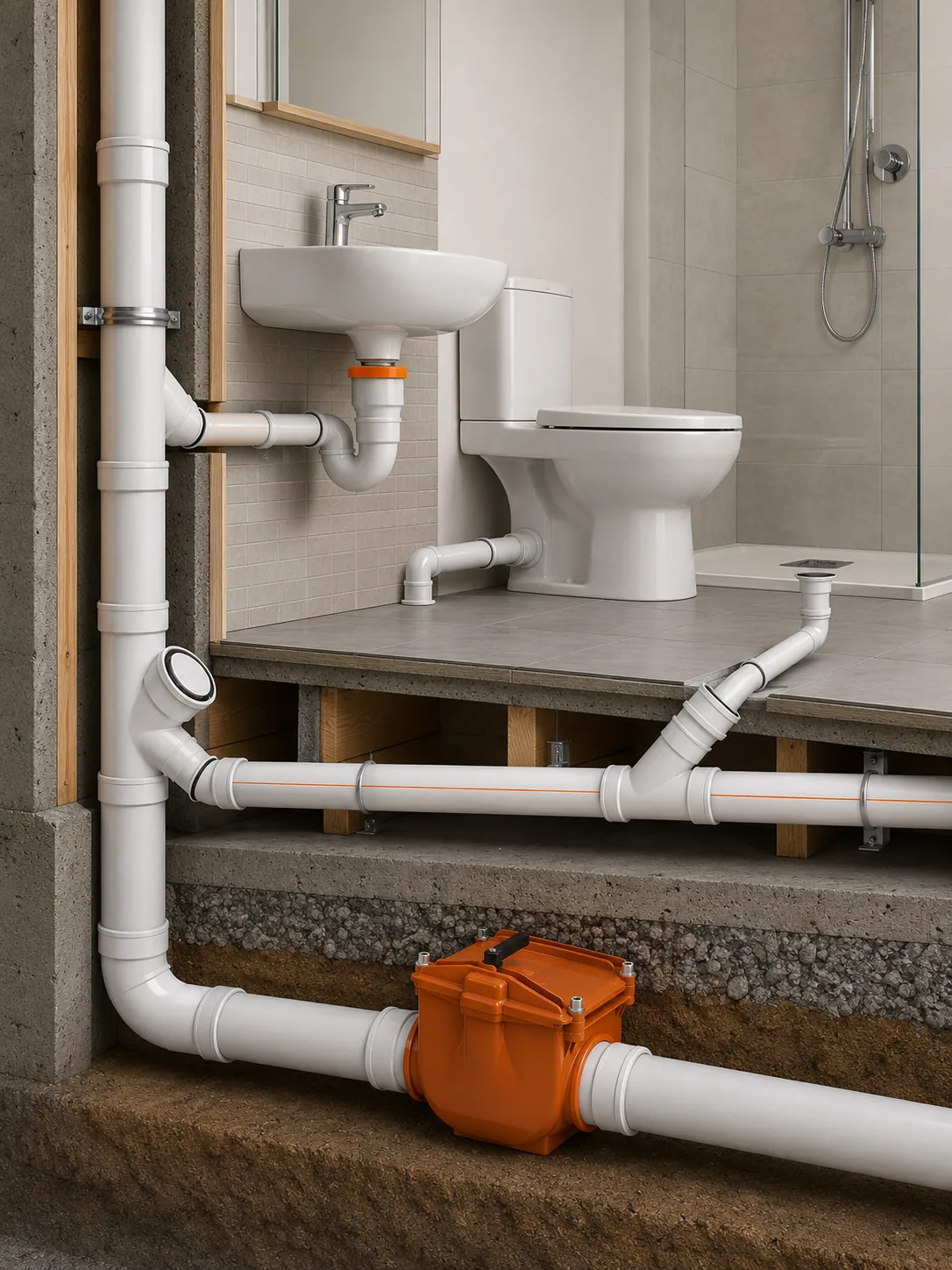
Here is the position, stated plainly: acoustic PP belongs in the riser zones of buildings where people sleep next to the shaft, and plain UPVC is entirely sufficient for the rest. Specifying silent pipe for an entire hotel — including the horizontal runs in the plant room and the back-of-house drops — spends money where no occupant will ever hear the difference.
Where acoustic PP earns its place
- Residential and hotel risers passing habitable rooms. If the shaft shares a wall with a bedroom and the market applies a DIN 4109-style limit, this is the case the product exists for.
- Runs with sustained hot discharge. Commercial kitchens, laundries, dishwasher and washing machine branches. PP’s high-temperature cycling qualification under EN 1451-1 is the reason it is the default here.
- Hospitals, student housing, serviced apartments. High fixture density, thin partitions, occupants who complain in writing.
- Where boxing-in would otherwise be needed. If the alternative to a quieter pipe is a lined shaft or an acoustic enclosure, compare installed cost, not pipe cost.
Where plain UPVC is the right answer
- Warehouses, workshops, car parks, plant rooms. No habitable rooms, no acoustic requirement, no reason to pay for mass in the pipe wall.
- Back-of-house and service cores in commercial buildings, where the shaft is surrounded by circulation space rather than bedrooms.
- Markets with no national noise limit for building services. If the code does not impose a number, the acoustic premium buys you a specification you cannot be measured against.
- Buried lines outside the building. That is EN 1401 territory and a different product line entirely.
The mixed specification is what experienced engineers actually write: acoustic PP for the riser and the branches within the sleeping zone, plain UPVC for everything else, with the transition point drawn on the riser diagram so nobody has to guess on site. It is also what keeps the container economics sane, since a mixed order lets you take both systems in one shipment.
On relative price — the question behind the question — treat it as installed cost rather than a percentage uplift. Acoustic PP costs more per metre. It can also delete a shaft lining, a boxing-in trade and a remedial visit eighteen months after handover. Whether that trade is worth making depends on your riser count and local labour rate, not on a multiplier from a blog post. Unit pricing is quoted per project, and a real quote gives you the FOB unit price, the container loading plan and the certificate pack together.
Ring-seal joints and the install sequence
Both systems are available with rubber ring-seal push-fit sockets, and Bekatherm’s PP drainage uses that jointing method across the range. The comparison people usually want is against solvent weld, and it is not close for this application.
A ring-seal joint is mechanical. It goes together cold, accommodates thermal movement along the pipe axis, and can be pulled apart and remade if a setting-out error surfaces during first fix. A solvent-weld joint is permanent within seconds, needs cure time before testing, and rework means cutting out and adding a coupling. On a soil stack where hot discharge causes real linear expansion, and where setting-out often changes once the sanitaryware layout is finalised, the demountable joint wins on both counts.
The failure mode with ring seals is boring and universal: the seal gets dislodged or the spigot goes in dry and shaves the rubber. Check that the seal is seated square in the socket groove before assembly, lubricate the spigot, and mark the insertion depth on the pipe so you can see at a glance whether a joint has been pushed home. A joint that looks fine and leaks under test is almost always a seal that rolled. Seal material and expected service life are project-specific and confirmed on request — do not assume an elastomer grade from a catalogue photograph.
The document pack to demand
This is the part of the process that protects a specifier’s signature, and it is worth being specific about what we hand over versus what nobody can honestly hand over.
What we check before a shipment leaves: the Declaration of Performance names the edition of the product standard it is written against, the marking on the pipe matches the application code on the order, the certificate of origin and the packing list and the bill of lading agree with each other, and the certificate pack matches the destination market rather than being a generic bundle. Our marks are SKZ (Germany), ISO, CE and WRAS. Where a market needs a specific document set, it gets confirmed in writing on the proforma invoice before production, not discovered at the port.
And the thing we will not do: publish a decibel figure for our own pipe. Exact sound-level figures are not published unless independently tested to EN 14366. We can describe the mechanism — the mass in the middle layer, the bracket detail, the shaft treatment — but a number without a test report behind it is marketing, and you cannot put marketing in a submittal.
Ask for these four, in this order
- Declaration of Performance naming the edition — EN 1451-1:2017 for PP, EN 1329-1:2026 for PVC-U.
- The acoustic test report, written to EN 14366-1:2023, with the flow rate and the test object stated. Only relevant if you are buying on an acoustic claim.
- The reaction-to-fire classification report. Under EN 13501-1, B means combustible with very limited contribution to fire, s1 means smoke growth rate at or below 30 m²s⁻² with total smoke production in 600 s at or below 50 m², and d0 means no flaming droplets. Which class a given pipe achieves is product- and test-specific, so demand the report rather than accepting a class quoted in a brochure.
- Marking confirmation: B or BD, and the series, as it will appear printed on the delivered pipe. You can check this in ninety seconds on site.
Certificate scope varies by market and by product line, and third-party approvals are granted against specific products rather than to a company as a whole. Confirm which certificate covers which line for your destination before you rely on it in a submittal. Our certification page sets out which marks apply to which system.
Worked example: a hotel riser, end to end
Take a mid-rise hotel in a market that applies a DIN 4109-style limit, with bedrooms backing onto the service shaft on every floor. Here is how the decision runs from the acoustic requirement to the container.
Step one — find the binding number. Not from the pipe standard, which imposes none. From national code. In Germany that is 30 dB(A) for living rooms and bedrooms, or 25 dB(A) where increased sound-insulation requirements are in play. Which tier applies depends on the contract and the occupancy, so confirm it with the project acoustician.
Step two — accept that the pipe alone does not deliver it. The acoustician predicts the in-situ level through EN 12354-5:2009, using the pipe’s lab data as one input among several. Your job is to give them a pipe with a valid EN 14366-1:2023 report at a stated flow rate, so the input is real.
Step three — set the system and the layout. EN 12056-2 covers gravity wastewater drainage for dwellings and commercial buildings, with systems designated I to IV. If the design uses System IV, branch discharge pipes are designed at a filling degree of 1.0 — one hundred per cent — with each branch separately connected to a single discharge stack. Which system applies is decided against the national annex, so fix it before sizing anything.
Step four — split the specification. Acoustic PP for the riser and the bedroom-zone branches, plain UPVC for plant, back-of-house and car park, with the transition marked on the riser diagram. Specify B above the slab; if the stack continues below it inside the footprint, specify BD and remember the DN 75 minimum and the SN4 stiffness that comes with it.
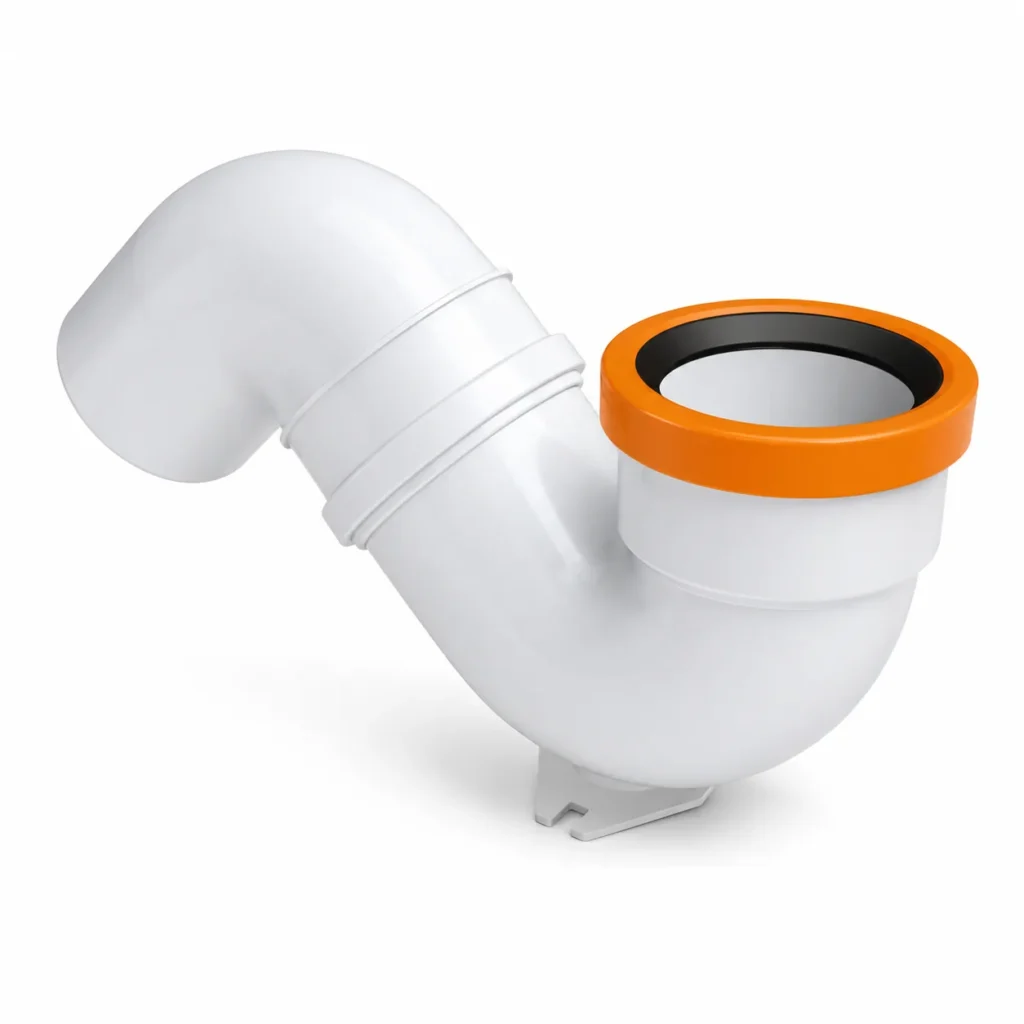
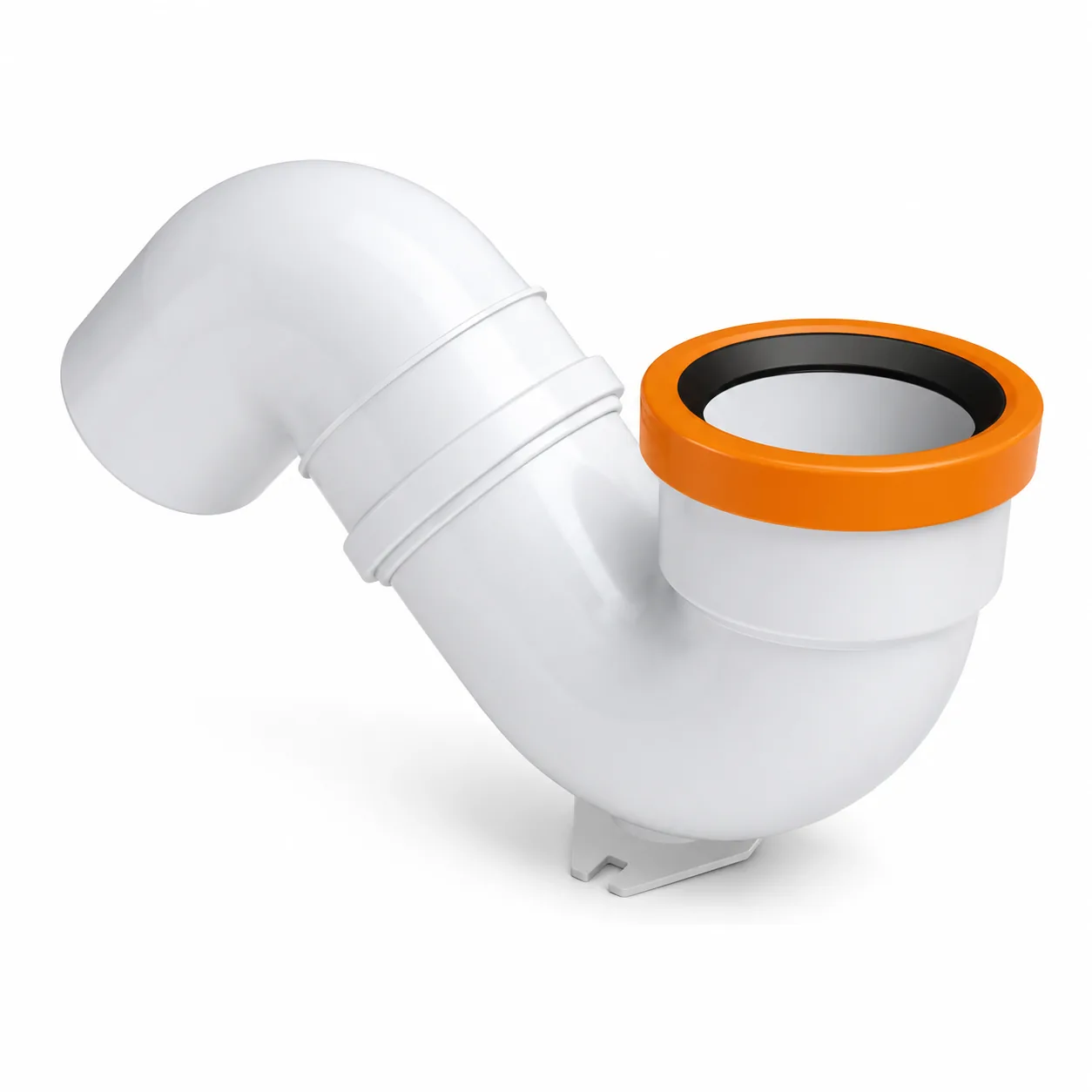
Step five — size against a real range. The Bekatherm PP drainage system runs DN 50–200 mm, with 45° and 87° elbows and branches across that range and siphons from DN 50 to 110, in 100% high-grade polypropylene with ring-seal push-fit throughout. Check that every fitting angle on your riser diagram actually exists before the schedule is issued — a 45° branch drawn where only an 87° is stocked is a four-week problem.
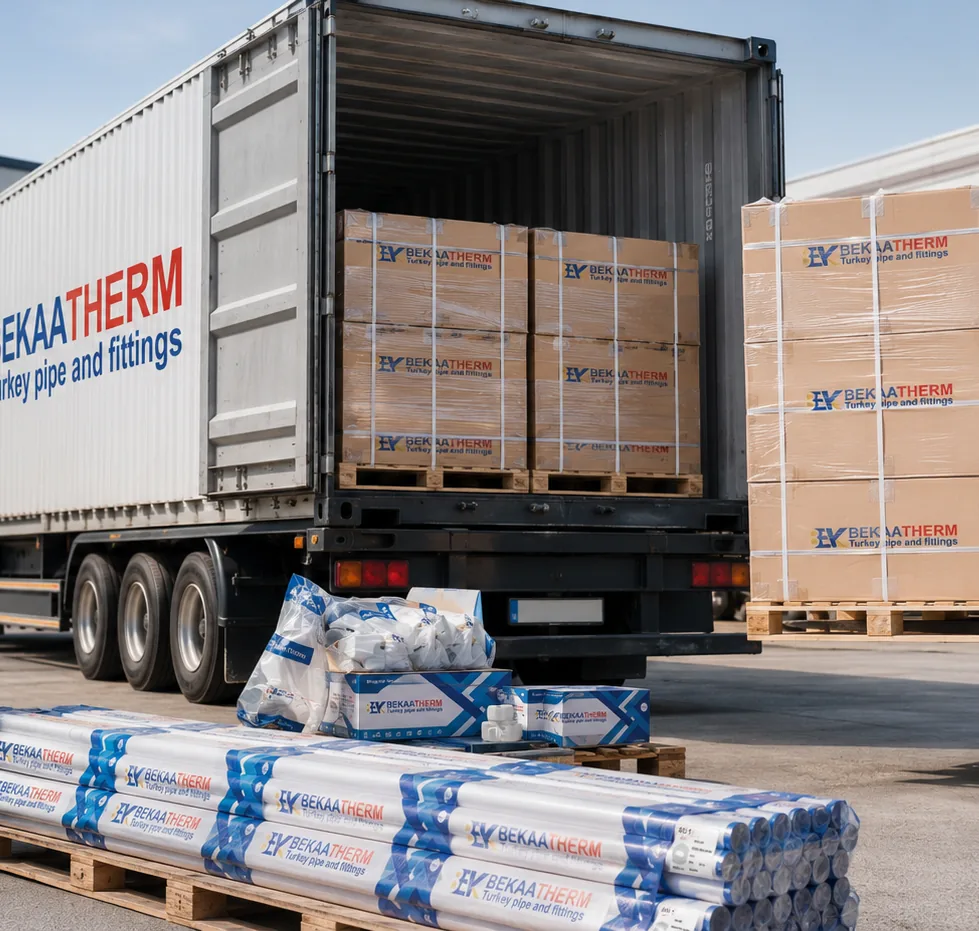
Step six — buy it as one shipment. A trial order is one 20GP mixed container of pipe, fittings and valves. A 20GP gives roughly 33 m³ of usable volume against a payload of about 28 tonnes, and a typical mixed load splits around 60% pipe, 30% fittings and 10% valves by volume. Drainage pipe is bulky and light, so you hit the volume ceiling long before the weight one — plan the load by cubic metres, not tonnes.
Sizes, order quantities and container economics
A specification that cannot be supplied on the programme is not a specification. These are the commercial parameters that decide whether your drawing survives contact with procurement.
| Parameter | Value |
|---|---|
| PP drainage diameter range | DN 50–200 mm; siphons DN 50–110 |
| Wall classes and lengths | TYPE1 3–3.9 mm; TYPE2 1.8–3.2 mm; 3000 / 6000 mm |
| Trial order quantity | One 20GP mixed container (pipe + fittings + valves) |
| Per single size and colour | 500 kg per size and colour |
| Lead time | 15–25 days regular sizes; 30–45 days private label |
| Payment and trade terms | 30% T/T deposit, 70% against copy B/L; FOB İstanbul or Mersin |
Read the two lead times together with your programme. A regular in-production size ships in 15–25 days; a private-label run takes 30–45. If the drainage package is on the critical path and someone in the client team wants their logo on the pipe, that decision costs two to three weeks and needs making early rather than at order confirmation.
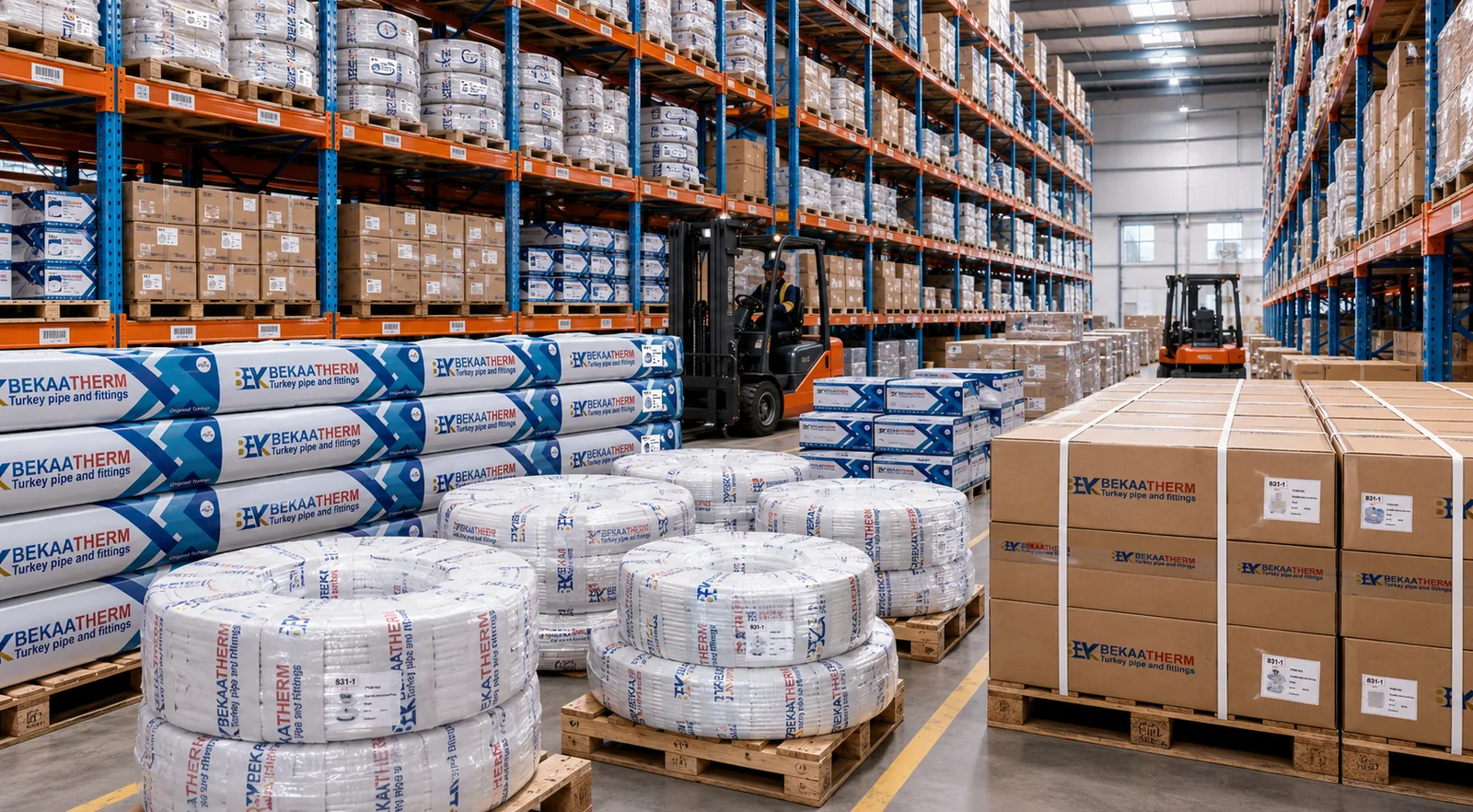
The 500 kg per size and colour threshold is the one that shapes a schedule. A project needing twelve diameters across two systems commits to a substantial minimum before a single metre is installed. The usual fix is to consolidate: fewer diameters, more repetition, odd sizes covered from an existing stock line rather than a production run. Do that rationalisation on the drawing, not in the quote. Behind those numbers sits a plant running 30 years, 120,000 m², 10,000 moulds and 98 items across 4 systems, exporting to 118+ countries — that range depth is what makes a single-container mixed order realistic.
Conclusion
The choice between PP silent and UPVC soil pipe is not a material argument. It is a question of where in the building people can hear the drainage, which national code sets the limit, and whether the documents in the submittal name the right edition of the right standard. Get those three right and either material can be specified defensibly; get them wrong and the best pipe in the world will not save the approval.
If you are drafting or reissuing a clause now, update the PVC-U reference to EN 1329-1:2026, keep PP at EN 1451-1:2017 with a line permitting the successor edition, and ask your acoustic supplier for a report written to EN 14366-1:2023 with the flow rate stated. Then check the DN range and fitting angles against what is actually manufactured before the schedule goes out.
Frequently Asked Questions
Which standard applies to PP drainage pipe inside a building?
EN 1451-1, “Plastics piping systems for soil and waste discharge (low and high temperature) within the building structure – Polypropylene (PP)”. The current edition is EN 1451-1:2017, published 14 November 2017. It is under CEN revision, with the enquiry stage closing on 10 June 2026.
Has the UPVC soil pipe standard changed in 2026?
Yes. EN 1329-1:2026 was published in May 2026 and supersedes EN 1329-1:2020. Update the edition reference in your spec clause and ask suppliers which edition their Declaration of Performance and test reports are written against.
Is PP silent pipe actually quieter than UPVC?
Acoustic PP systems carry a mineral-filled middle layer whose mass damps flow noise, and they publish measured values — typically in a 10 to 16 dB(A) band at 4 l/s across brands such as Pipelife, Aliaxis and VESBO. Plain UPVC soil pipe is generally not submitted for EN 14366 testing at all, so no comparable figure exists.
Can I use a supplier’s dB rating as the in-building noise level?
No. EN 14366 results are valid for comparing products and materials, not as values obtained in buildings in situ. In-situ levels are predicted using the procedure in EN 12354-5:2009, which needs the building’s own construction data as well as the pipe’s lab figure.
What do the B and BD markings on soil pipe mean?
B means the component is intended for use above ground inside the building, or outside buildings fixed onto the wall. BD covers both inside buildings and buried in ground within the building structure, and applies only to components of DN 75 mm and above. Under EN 1451-1, BD also requires a minimum SN4 ring stiffness.
Which noise limit does a drainage system actually have to meet?
No European standard for soil and waste pipe limits discharge noise — the limit comes from national building code. In Germany, DIN 4109 sets a maximum of 30 dB(A) for living rooms and bedrooms, and 25 dB(A) where increased sound-insulation requirements apply. Confirm the applicable value for your market with the local authority or project acoustician.
What sizes and order quantities are available?
The Bekatherm PP drainage system covers DN 50–200 mm with 45° and 87° elbows and branches, and siphons from DN 50 to 110. A trial order is one 20GP mixed container of pipe, fittings and valves; the minimum per single size and colour is 500 kg. Lead time is 15–25 days for regular in-production sizes.