Key Takeaways
- The series runs 1, 2, 3, 5, 7. There is no ISO 15874-4 and no ISO 15874-6. A supplier quoting “Part 4” is quoting something that does not exist.
- “ISO TYPE-5” is not a standard number. It is almost always a garbled ISO 15874-5, the part that tests the joint and the assembled system rather than the pipe.
- ISO 15874 recognises design pressures of 4, 6, 8 and 10 bar. PN16, PN20 and PN25 are DIN 8077/8078 pipe-series labels — a different scheme entirely. Anyone calling PN20 an “ISO 15874 pressure class” has merged two standards.
- A socket-fusion welded PP-R system faces only 2 of the 6 joint tests in Part 5: internal pressure and thermal cycling. Bending, pull-out, pressure cycling and vacuum apply to mechanical joints.
- Part 2 does not tell anyone how often to sample. The footnote reads “The sampling procedure is not specified” and defers to Part 7 — which is why a bare “complies with ISO 15874-2” claim carries little weight without a certification scheme behind it.
- A test report still citing EN 712, EN 713 or EN 12294 is running pre-2018 method references. Amendment 1:2018 replaced all three with ISO 3501, ISO 3503 and ISO 13056.
- The 2013 editions remain the ones to cite. All five parts are open revision projects at ISO, but nothing has superseded them yet.
Open a PP-R supplier’s certification page and you will usually find one line: “Manufactured to ISO 15874.” That sentence contains no information. ISO 15874 is a five-part series, the parts govern completely different objects, and each carries its own tests, pass criteria and amendment history.
A specifier needs to know which part covers what, so a claim can be checked against the right document. Every number below is read from the standard text itself, and the parts appear in the order they govern a project: the framework, the pipe, the fitting, the joint, and the paperwork that proves any of it.
Start with the gap in the numbers: there is no Part 4 and no Part 6
The foreword of ISO 15874-2:2013 lists the series in full. It reads: Part 1 General, Part 2 Pipes, Part 3 Fittings, Part 5 Fitness for purpose of the system, Part 7 Guidance for the assessment of conformity. Five parts, and the numbering jumps twice.
This is not an oversight. The plastics piping standards in this family share a common part-numbering scheme across materials — PP, PE-X, PB, chlorinated PVC — so Part 2 always means pipes and Part 5 always means system fitness, whichever material you are reading. Where a slot has no content for a material, the number is skipped. In the PP series, slots 4 and 6 stay empty.
The practical value is diagnostic. Supplier copy listing “ISO 15874 Parts 1 through 7” as a continuous run was not written by anyone holding the document, and neither was a datasheet citing ISO 15874-4. That tells you the certification section came from other people’s marketing rather than from a standard.
What “ISO TYPE-5” actually means
The phrase circulates widely on PP-R product pages, and appeared on some Bekatherm material predating our own standards review. There is no ISO standard called TYPE-5. It is a corruption of ISO 15874-5, and the supplier using it usually does hold something real behind it — a system fitness test report — but lost the number in translation. Ask for the report. The correct citation is ISO 15874-5:2013, and for socket-fusion welded joints it should show internal pressure and thermal cycling results.
The five parts and what each one governs
Each part has a different object. Part 1 sets vocabulary and application classes, Part 2 regulates extruded pipe, Part 3 injection-moulded fittings, Part 5 the joint and the assembly, Part 7 the audit. Confuse them and you end up asking a fitting manufacturer for a thermal cycling report — a Part 5 system test that no loose fitting can produce.
| Part | Title | What it actually certifies | Status |
|---|---|---|---|
| Part 1 | General | Scope, definitions, application classes and design conditions. Nothing is tested here — this part tells you which duty your project is. | ISO 15874-1:2013, plus Amd 1:2022 (impact test) |
| Part 2 | Pipes | The extruded pipe on its own: wall thickness derivation, hydrostatic strength, thermal stability, reversion, impact, melt flow rate, opacity. | ISO 15874-2:2013, plus Amd 1:2018 and Amd 2:2022 (impact test) |
| Part 3 | Fittings | The injection-moulded fitting on its own: geometry, material and pipe-equivalent performance requirements. | ISO 15874-3:2013, confirmed 2023 |
| Part 5 | Fitness for purpose of the system | The joint and the assembled pipe-plus-fitting system. Six possible tests, of which only the applicable ones run for your jointing method. | ISO 15874-5:2013, plus Amd 1:2018 |
| Part 7 | Guidance for the assessment of conformity | How conformity is assessed and how often product is sampled. A Technical Specification, not a full International Standard. | ISO/TS 15874-7:2018, confirmed 2025 |
Note the last row. Part 7 carries the prefix ISO/TS, meaning Technical Specification. It gives requirements and guidance for assessing conformity of compounds, products and assemblies, written to be folded into a manufacturer’s quality plan and used as the basis for certification procedures. Guidance, not a mandatory clause set — which matters more than it sounds.
Part 1: application classes, and why there is no Class 3
ISO 15874-1:2013 defines the application classes everything downstream references. Four apply to PP systems, and again the numbering has a gap: Classes 1, 2, 4 and 5. Class 3 exists in the shared numbering scheme across the plastics piping standards but is not tabulated for PP hot and cold water work, so a PP-R quotation naming Class 3 came from somewhere else.
| Class | Typical field of application | Max design temperature Tmax | PP-R design stress σD |
|---|---|---|---|
| Class 1 | Hot water supply at 60 °C | 80 °C | 3.02 MPa |
| Class 2 | Hot water supply at 70 °C | 80 °C | 2.12 MPa |
| Class 4 | Underfloor heating and low-temperature radiators | 70 °C | 3.29 MPa |
| Class 5 | High-temperature radiators | 90 °C | 1.89 MPa |
Read the two right-hand columns together and something counter-intuitive falls out. Class 4 has a lower maximum design temperature than Classes 1 and 2 — 70 °C against 80 °C — yet the highest PP-R design stress of the four at 3.29 MPa. Higher permitted stress means thinner permitted wall at the same pressure.
So underfloor heating is not the punishing duty people assume. Class 2, continuous 70 °C hot water supply, is harder on PP-R than Class 4 underfloor heating: 2.12 MPa against 3.29 MPa. The reason is time at temperature — a heating circuit runs seasonally and swings, a hot water riser sits hot. Specifying both off one product range, the hot water side sets the wall.
One requirement sits outside the class structure entirely. Whichever class you design to, a cold-water condition of 20 °C at 10 bar for 50 years applies in addition. That line is the standards anchor for every 50-year claim in this industry, including our own.
Part 2: the design pressures are 4, 6, 8 and 10 bar — not PN20
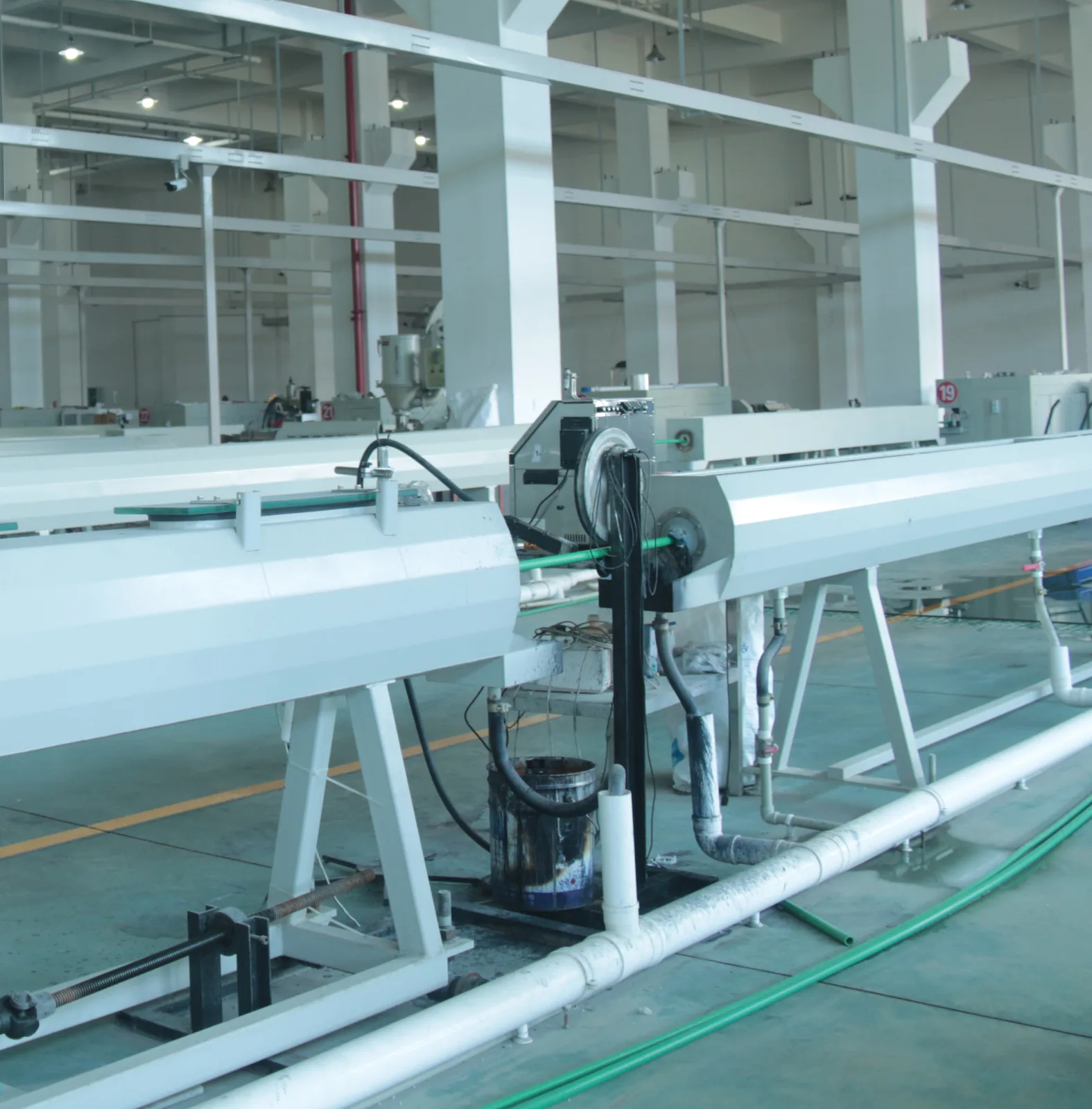
This is the most common mis-citation in PP-R specification. ISO 15874 works in design pressures of 4, 6, 8 and 10 bar — the four values Part 2 tabulates and Part 5 uses to derive joint test pressures. PN16, PN20 and PN25 are pipe-series designations from DIN 8077 for dimensions and DIN 8078 for general quality requirements. Two documents, two systems.
Both are legitimate; neither substitutes for the other. “PN20 to ISO 15874 Class 5” staples a DIN pipe series to an ISO application class and produces a citation checkable against neither document. The defensible form names both separately: dimensions and wall thickness to DIN 8077, performance and class to ISO 15874. Our breakdown of PN20 versus PN25 pressure ratings handles the wall-thickness arithmetic.
The mechanism connecting them is the S value, the pipe series number calculated from wall thickness and diameter. Part 2 tabulates a maximum, Scalc,max, per material, class and design pressure. For PP-R at 6 bar: 5.0 in Class 1, 3.5 in Class 2, 5.5 in Class 4, 3.2 in Class 5. Lower S means thicker wall, so Class 5 demands the heaviest wall of the four — exactly what a 90 °C radiator circuit should demand.
PP-RCT moves those numbers materially. At 4 bar, PP-R gives 6.9 / 5.3 / 6.9 / 4.7 across Classes 1, 2, 4 and 5; PP-RCT gives 8.2 / 8.2 / 8.2 / 7.3. That is the standards basis for PP-RCT permitting a thinner wall at equal duty — not a marketing position, a different row in the same table.
The safety factor, stated plainly
Annex A of Part 2 states the margin as a design coefficient C. At the design operating temperature C is 1.5 for PP-H, PP-B, PP-R and PP-RCT alike. At maximum design temperature it drops to 1.3, and at malfunction temperature to 1.0 — no reserve at all, because malfunction is a short excursion the system must survive, not live in. For cold water it is 1.6 for PP-H and 1.4 for the other three.
Part 2 tests: what the pipe has to survive
Five requirements in Part 2 are worth knowing by number, because they are what a real test report shows and what a fabricated one gets wrong.
Hydrostatic strength. For PP-R, four points: 16.0 MPa hoop stress at 20 °C for 1 hour, then 4.3 MPa at 95 °C for 22 hours, 3.8 MPa at 95 °C for 165 hours, and 3.5 MPa at 95 °C for 1,000 hours. Three test pieces at each point, water-in-water, Type A end cap. The 1,000-hour line is the one to look for. PP-RCT runs the same schedule at 15.0 / 4.2 / 4.0 / 3.8 MPa.
Thermal stability. One test piece, 110 °C, water-in-air, 1.9 MPa hoop stress for PP-R, test period 8,760 hours. That is one full year of continuous pressurisation, and the pass criterion is simply that it does not burst. PP-RCT runs at 2.6 MPa, PP-B at 1.4 MPa. This one requirement explains why credible PP-R type approval cannot be assembled in a quarter — someone had to start the clock a year before the certificate was issued.
Melt flow rate. The compound must be at or below 0.5 g/10 min at 230 °C under 2.16 kg. Then comes the clause that catches bad factories: the finished pipe’s MFR may differ from the compound of the same batch by no more than 30%. Melt flow rate rises when polymer chains break, and chains break when the extruder runs too hot. A pipe outside that 30% window has already lost molecular weight. Ask for both figures on the same batch, not just the compound certificate.
Two more requirements are quick to check and easy to fake, so read them off the report rather than the brochure.
| Requirement | Limit and method | What it exposes |
|---|---|---|
| Longitudinal reversion | ≤ 2%, oven test to Method B of ISO 2505, 135 °C for PP-R and PP-RCT. Exposure 1 h up to 8 mm wall, 2 h from 8 to 16 mm, 4 h above. | Frozen-in extrusion stress. A pipe shrinking past 2% was drawn too hard and will pull at its sockets. |
| Opacity | Where declared opaque, ≤ 0.2% visible light transmission, tested to ISO 7686. | Light reaching stagnant water in a potable line feeds algal growth. Only bites if opacity was declared — check whether it was. |
The clause most people miss. Tables 10 and 11 of Part 2 carry a footnote stating that the sampling procedure is not specified, and pointing to ISO/TS 15874-7 for guidance. Read that again in commercial terms: the standard defines what a pipe must pass, but not how many pipes get tested or how often. A manufacturer can test one pipe once, pass, and truthfully say the product met ISO 15874-2. Frequency lives in Part 7 and in whichever certification scheme the manufacturer submits to. This is why “complies with ISO 15874-2” is a weaker statement than it sounds, and why the certificate matters more than the claim.
Part 5: only two of the six joint tests apply to welded PP-R
Part 5 is where most specification errors happen, in both directions — suppliers claiming tests they never ran, specifiers demanding tests that do not apply. Table 1 of ISO 15874-5:2013 settles it by mapping each test against each jointing method.
| Joint test | Socket welded (SW) | Electrofusion (EF) | Mechanical (M) |
|---|---|---|---|
| Internal pressure | Applies | Applies | Applies |
| Thermal cycling | Applies | Applies | Applies |
| Bending | Not applicable | Not applicable | Applies |
| Pull-out | Not applicable | Not applicable | Applies |
| Pressure cycling | Not applicable | Not applicable | Applies |
| Vacuum | Not applicable | Not applicable | Applies |
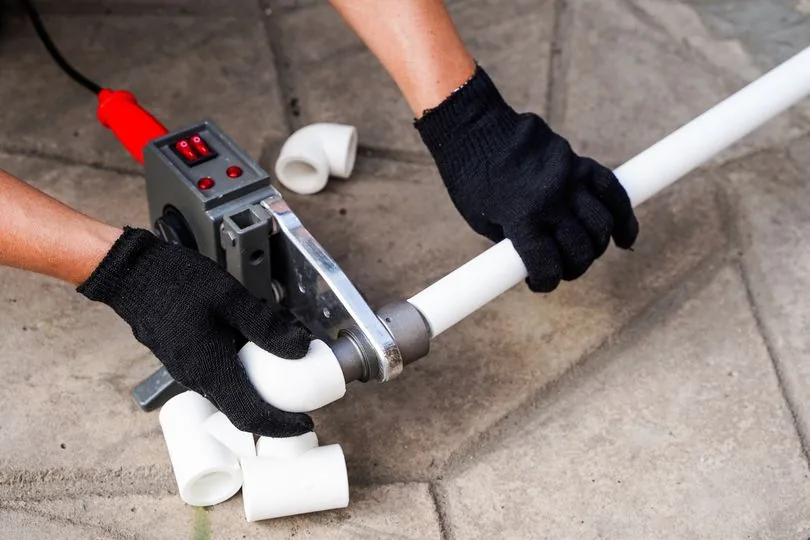
A PP-R system is socket-fusion welded, so it lives in the SW column: two tests, not six. The logic is physical. A correctly fused socket is one continuous mass of polypropylene — no interface to pull apart, no seal to unseat under vacuum, no gasket to fatigue under pressure cycling. Mechanical joints have all three failure modes, so they carry all six tests.
So a PP-R brochure claiming pull-out and vacuum compliance under ISO 15874-5 was copied from a mechanical-fitting document. And a specification demanding all six from a welded system cannot be satisfied by any compliant supplier — the tender then gets spent clarifying a requirement that should never have been written.
What the two applicable tests involve
The internal pressure test has no single fixed pressure. Part 5 derives it: pJ = pD × (σP / σDP), where pD is the design pressure of 4, 6, 8 or 10 bar, σP the hydrostatic stress for the material at the relevant temperature and time-to-failure, and σDP the design stress for the class. Duration 1,000 hours on three test pieces, highest test temperature generally the maximum design temperature plus 10 °C, capped at 95 °C. Any supplier quoting one universal test pressure has not read Clause 4.2.
Thermal cycling is more concrete. Up to 160 mm the assembly runs 5,000 cycles of 15 minutes at the high test temperature and 15 minutes at 20 °C — 2,500 hours, a little over 100 days of continuous cycling. The high temperature follows the class: 90 °C for Classes 1 and 2, 80 °C for Class 4, 95 °C for Class 5. Above 160 mm the count drops to 500 cycles, at design pressure throughout.
The date-stamp check on a test report
Amendment 1:2018 to Part 5 swapped three European test methods for ISO equivalents: EN 712 became ISO 3501 for pull-out under constant longitudinal force, EN 713 became ISO 3503 for leaktightness of assemblies under bending, and EN 12294 became ISO 13056 for leaktightness under vacuum. The same amendment replaced the old “nominal diameter greater than or equal to 32 mm” trigger for the bending test with “declared as being bendable by the system supplier”.
That gives you a fast audit tool. A Part 5 report citing EN 712, EN 713 or EN 12294 is running method references superseded in 2018. Not automatically invalid — the physics did not change — but it tells you the report predates the amendment or came off an outdated template. Ask when the testing was actually performed.
EN ISO 15874, DIN EN ISO 15874, and the CE question
Buyers in Europe see three names and assume three documents. There is one. The foreword of Part 2 records that the standard was prepared by CEN/TC 155 with ISO/TC 138/SC 2 under the Vienna Agreement on technical cooperation between ISO and CEN. Dual-developed, technically identical. EN ISO 15874 is the European adoption, DIN EN ISO 15874 the German one. A test report citing ISO 15874-2:2013 answers a specification calling for DIN EN ISO 15874-2.
CE marking is a separate question, and the answer moved recently. TEPPFA, the European Plastic Pipes and Fittings Association, published a position statement on 21 October 2025 stating that because the necessary harmonised technical specifications are not available for plastic piping products, it is currently not possible and not legal to apply a CE marking and issue a Declaration of Performance and Conformity for plastic piping systems under either CPR-2024 or CPR-2011 on the basis of harmonised standards. Plastic piping systems, hot and cold water distribution included, continue to be governed by national or European recognised product standards and are marketed across the EU under those frameworks.
Read that correctly. It does not mean PP-R piping is unregulated, or that a CE mark elsewhere in a product file is improper — CE marking arises under several EU regimes, and TEPPFA’s statement is specific to the Construction Products Regulation route. It means conformity for plastic piping runs through third-party certification and national approvals rather than a CPR Declaration of Performance. A DoP for PP-R pipe citing a harmonised standard under the CPR is the document to question.
The timeline matters for long-lead specifications. Regulation (EU) 2024/3110 repeals Regulation (EU) No 305/2011: in force 7 January 2025, most provisions applying from 8 January 2026, transition running to 8 January 2040. Documentation drafted against the old regulation stays in circulation for years, so check which one a certificate references. This position varies by member state and will keep moving — treat it as the state of play as published, not legal advice, and confirm with your certification body before it enters a contract.
Part 7 in practice: how a conformity claim gets checked
ISO 15874 is a specification, not a certificate, and ISO does not certify anyone. The distinction matters, because “ISO 15874 certified” appears constantly in supplier copy and the phrase is structurally wrong. What exists is a manufacturer conforming to the specification, and a third-party scheme verifying that conformity on an ongoing basis.
In our own case that scheme is SKZ in Würzburg, which tests PP-R pipes against the DIN EN ISO 15874-1, -2, -3, -5 and -7 series. What matters for verification is not the SKZ logo but the accreditation behind it: the Certification Body of SKZ – Testing GmbH is accredited by DAkkS, the German national accreditation body, to DIN EN ISO/IEC 17065:2013 under number D-ZE-19033-01. That number is checkable independently of anything a supplier tells you.
How we handle a certificate request, and what to demand from anyone
Bekatherm supplies from two production origins — our plant in Türkiye and a partner factory in China — with origin allocated by market and confirmed in writing on the proforma invoice for every order, so certificate of origin, packing list and bill of lading agree. That forces a discipline worth borrowing from any multi-site supplier.
A valid SKZ certificate names six things: certificate number, exact product description, trade name, specific production site, the SKZ test specification it was issued against, and an expiry date. The production site is the field almost nobody checks. Certificates are issued to a named plant, not a brand, so a group running three factories may hold one covering a single plant. Where origin is allocated per order, one question resolves it: does the certificate name the site my goods actually ship from, and has it expired? Ask before the deposit, not after the container is booked. Our certification documents keep site and expiry legible on the face of each certificate.
Then check the file against the parts. A PP-R conformity pack should contain Part 2 pipe testing including the 1,000-hour hydrostatic point and the 8,760-hour thermal stability result, Part 3 fitting testing, and Part 5 system testing showing internal pressure and thermal cycling on the welded joint. If Part 5 is missing, nobody has tested the assembly — only the components. That is the most common gap in a PP-R document pack, and the one that matters most, because systems leak at joints.
If you are compiling a submittal pack for approval — consulting engineers and contractors assembling documents for an inspector, not buyers at quotation stage — the certificate structure above is the checklist to run against whatever a supplier sends. Run it in the order the parts are numbered: pipe (Part 2), fittings (Part 3), then the welded system (Part 5). A pack that stops after the component certificates has skipped the only test that covers the joint.
Which edition to cite in 2026
Cite the 2013 editions. Parts 1, 2, 3 and 5 all carry a 2013 date, Parts 2, 3 and 5 were reviewed and confirmed in 2023, and Part 7 carries 2018 with a 2025 confirmation. Nothing has superseded them, though all five are open revision projects at ISO with no announced publication date. On a specification with a long procurement tail, record that the 2013 editions were current at the date of issue.
Amendments are where citations go stale. Part 5 has Amendment 1:2018, the one that swapped EN methods for ISO methods. Part 2 has Amendment 1:2018 and Amendment 2:2022, the latter addressing the impact test; Part 1 has Amendment 1:2022, also on impact. We will not characterise what those 2022 amendments changed technically — the catalogue confirms they exist and concern impact testing, and we have not read the text. For reference the unamended 2013 impact requirement was a true impact rate of no more than 10% at 0 °C for PP-R, PP-B and PP-RCT on 10 test pieces, to ISO 9854-1 and -2. A fully current Part 2 citation today reads: ISO 15874-2:2013 + Amd 1:2018 + Amd 2:2022.
Best for / not for
Citing ISO 15874 by part and edition is best for project specifications, tenders and anything an inspector reads, where a checkable reference protects you. It is not for a purchase order line — “ISO 15874-2:2013 + Amd 1:2018 + Amd 2:2022” clarifies nothing for the person picking stock.
Specifying by DIN 8077/8078 pipe series is best for ordering, stock control and site work, where PN20 and PN25 are the language installers and warehouses already use. It is not for demonstrating performance conformity, because a pipe series states a dimension, not a tested duty.
Does ISO 15874 support a 50-year life claim?
Yes, and the basis is specific rather than promotional. Table A.2 of Part 2 lists design stress at 20 °C for 50 years: 6.93 MPa for PP-R, 8.25 MPa for PP-RCT, 6.26 MPa for PP-H, 6.22 MPa for PP-B. The 50-year figure is not a marketing horizon someone picked — it is the extrapolation interval the standard uses to derive design stress, alongside the 20 °C / 10 bar / 50 year cold-water requirement that applies across all classes.
Bekatherm states a 50-year design life at rated pressure and 20 °C under ISO 15874, and carries a 50-year warranty against material and manufacturing defects matched to that design life. The two agree because the second was written against the first. Where a supplier quotes a design life matching no row in Table A.2, or a warranty disconnected from any design life at all, ask which document the figure came from.
Note what design life does not mean. It is a performance extrapolation at rated pressure and 20 °C, derived using Miner’s rule per ISO 13760 for cumulative damage under varying conditions — not a guarantee that a given installation lasts 50 years. An over-temperature circuit, a bad weld or mechanical damage ends a pipe’s life long before the polymer does. The standard sizes the material for the duty. Our quality control process covers the manufacturing half; the welding half is on site.
A worked check on a supplier claim
Take a common quotation line: “PP-R pipe, PN20, ISO 15874 Class 5 certified, 50-year life.” Four claims, three of them broken. PN20 is a DIN 8077 pipe series and belongs in the dimensional half of the spec, not beside an ISO class. Class 5 is the harshest PP-R duty at Scalc,max 3.2 and 6 bar, so check the PN20 wall actually satisfies it. “Certified” is the wrong word for a specification. And the 50-year figure comes from Table A.2 at 20 °C, while Class 5 duty is 90 °C — two different conditions presented as one.
None of this makes the supplier dishonest; most such lines come off a sales template. The corrected version — dimensions to DIN 8077, class and performance to ISO 15874-2:2013, conformity certified by a named accredited body against a named production site — is the one that survives an inspector, and it takes one email to obtain. Our guide to evaluating a PP-R manufacturer covers the rest of the audit.
Frequently asked questions
How many parts does ISO 15874 have?
Five: Part 1 General, Part 2 Pipes, Part 3 Fittings, Part 5 Fitness for purpose of the system, and Part 7 Guidance for the assessment of conformity. There is no Part 4 and no Part 6 in the PP series. The gaps exist because the part numbering is shared across the plastics piping standards for different materials, and unused slots are skipped.
What is ISO TYPE-5?
It is not a real standard number. It is a corruption of ISO 15874-5, the part covering fitness for purpose of the assembled system. If a supplier quotes ISO TYPE-5, ask for the ISO 15874-5:2013 test report instead. For a socket-fusion welded PP-R system that report should show internal pressure and thermal cycling results.
Is PN20 an ISO 15874 pressure class?
No. ISO 15874 recognises design pressures of 4, 6, 8 and 10 bar. PN16, PN20 and PN25 are pipe-series designations from DIN 8077 for dimensions and DIN 8078 for general quality requirements. Both systems are legitimate but they come from different documents, so cite them separately rather than merging them into one line.
Is EN ISO 15874 different from ISO 15874?
No. The standard was prepared by CEN/TC 155 together with ISO/TC 138/SC 2 under the Vienna Agreement, so the ISO and EN versions are technically identical. DIN EN ISO 15874 is the German national adoption of the same text. A report citing ISO 15874-2:2013 satisfies a specification calling for DIN EN ISO 15874-2.
Which ISO 15874 application class is underfloor heating?
Class 4, which covers underfloor heating and low-temperature radiators at a maximum design temperature of 70 °C. It is not the most severe class for PP-R. The design stress for Class 4 is 3.29 MPa against 2.12 MPa for Class 2 hot water supply, so a 70 °C hot water riser is a harder duty than an underfloor circuit.
What pressure is PP-R tested at under ISO 15874-5?
There is no single figure. Part 5 calculates it as pJ = pD × (σP / σDP), using the design pressure, the hydrostatic stress for the material at the test condition, and the design stress for the application class. The test runs 1,000 hours on three test pieces, with the highest test temperature generally the maximum design temperature plus 10 °C, capped at 95 °C.
Does ISO 15874 conformity mean the product is CE marked?
Not through the Construction Products Regulation. TEPPFA stated on 21 October 2025 that because harmonised technical specifications are not available for plastic piping products, it is currently not possible and not legal to apply CE marking and issue a Declaration of Performance and Conformity for plastic piping systems under CPR-2024 or CPR-2011 on the basis of harmonised standards. Conformity runs through third-party certification and national approvals instead. Confirm the current position with your certification body before writing it into a contract.
Which edition of ISO 15874 should I cite in 2026?
The 2013 editions for Parts 1, 2, 3 and 5, and ISO/TS 15874-7:2018 for Part 7. Parts 2, 3 and 5 were reviewed and confirmed in 2023 and Part 7 in 2025. Include the amendments where they apply: a fully current Part 2 citation reads ISO 15874-2:2013 + Amd 1:2018 + Amd 2:2022. All five parts are under revision at ISO, but nothing has been published to supersede the 2013 text.
Checking a PP-R conformity pack and finding gaps? If you are a specifier or contractor who needs to see which parts of ISO 15874 a certificate actually covers, and for which production site, the document set is the place to start. Buyers who only need pricing at this stage should not need this page.