Search for HDPE pipe manufacturers and you get a list of companies. Not one of them tells you the thing you actually need in order to compare them: what a minimum order is, how long production really takes, when your money leaves your control, or which of these companies extrudes pipe at all rather than buying it from someone who does.
That gap is not an accident. A supplier’s own website exists to make the supplier look capable, and disclosed commercial terms make a supplier look expensive to anyone who has not read the alternatives. So the terms stay off the page, the buyer sends six identical enquiries, and the comparison happens in an inbox with no reference point.
This article supplies the reference point. It covers the decision that comes before certificate verification: sorting a list of company names into counterparty types, matching those types to the size of order you actually have, checking a capacity claim with arithmetic, and reading commercial terms against a published set instead of against nothing.
Key takeaways
- Three different businesses answer an HDPE enquiry — a producer, a trading company, and a stockist-distributor. Each has a different margin structure, a different degree of specification control, and a different answer when a batch fails.
- Order size decides which type you should want. A 500 kg single-size requirement, a one-container mixed order and a private-label programme are three different customers, and the right counterparty for one is the wrong one for another.
- Quoting “ISO 4427” without an edition year is not a specification. ISO 4427-1:2019 is being revised (committee draft ISO/CD 4427-1), and the European equivalent moved to EN 12201-2:2024 in March 2024.
- Conformity is not the same as certification. South African works specifications commonly require the SABS mark against SANS ISO 4427 — a supplier with a genuine ISO 4427 test report can still be unusable there.
- A claimed monthly tonnage can be tested. Extrusion output per line is published by machine builders, so lines × kg/h × hours is arithmetic you can run before you believe anyone.
- Disclosure: Bekaatherm is itself an HDPE pipe and fittings manufacturer in Türkiye. We are not a neutral party. Our own terms are published below so you can measure them against the other quotations on your desk, rather than take our word for anything.
Who Is Actually Selling You HDPE Pipe
The companies returned for this search are not one kind of business. They are three, and the distinction decides what your quotation means.
The producer
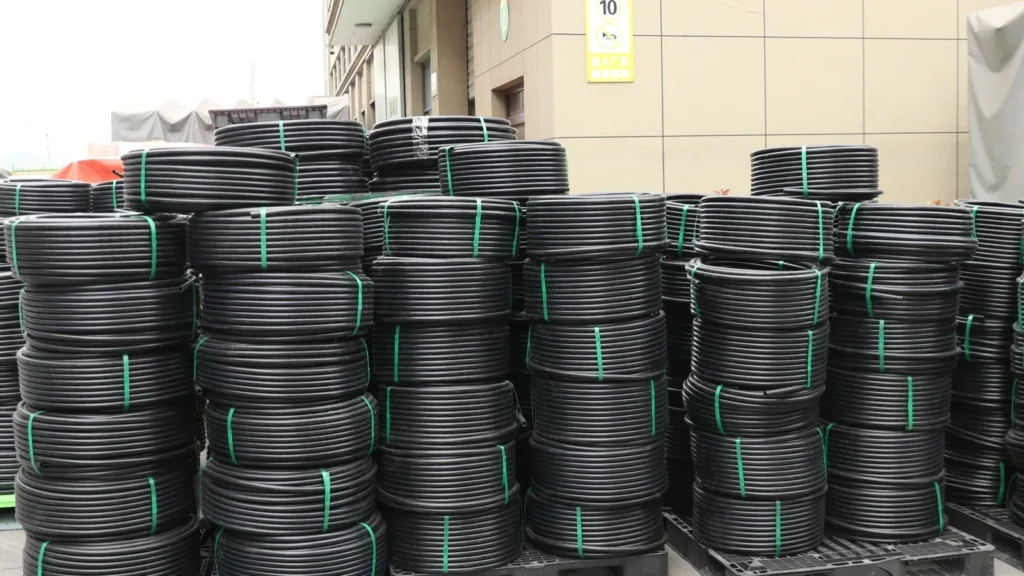
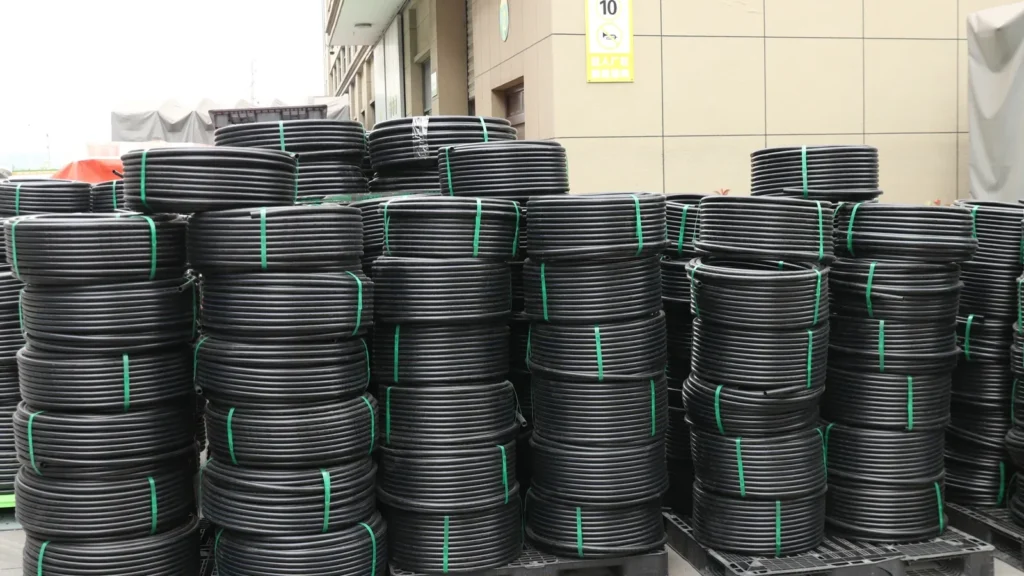
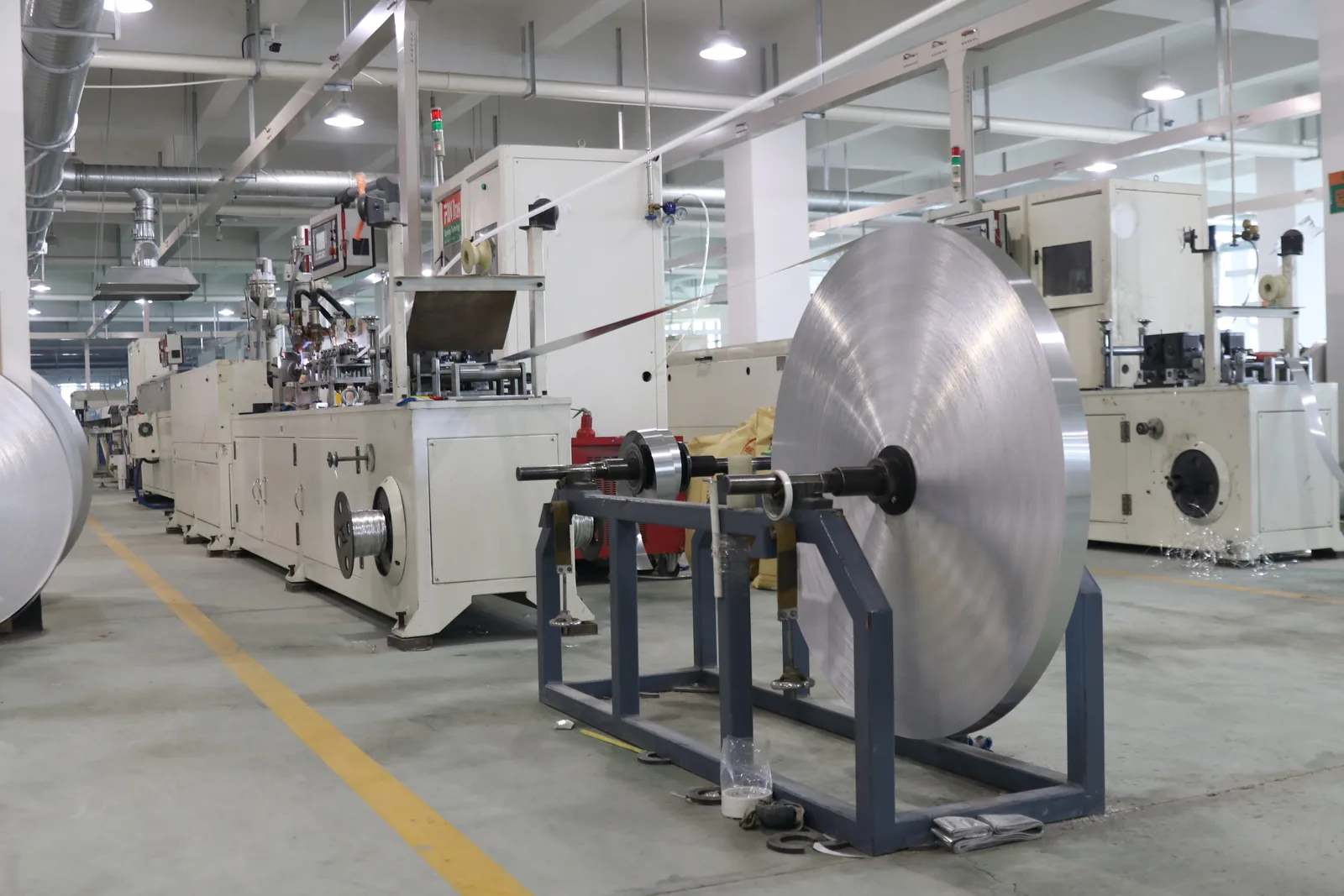
A producer owns extrusion lines and injection moulding tools. It converts resin into pipe and fittings on its own floor. Its economics reward long runs of the same size, which is why its minimum order is expressed in weight or in container volume rather than in pieces, and why an unusual diameter carries a lead-time penalty rather than simply a higher price. When a batch is wrong, a producer can trace it to a resin lot and a production date, because that record exists inside its own building.
The trading company
A trading company sells pipe made by somebody else. This is a legitimate business and sometimes exactly what you want — a good trader consolidates several factories into one container, manages documents competently, and absorbs the nuisance of dealing with producers who do not answer email in your language. What it cannot do is control specification at source. When you ask a trader to change a wall thickness tolerance or add a co-extruded stripe, the request goes into a queue at a factory that has no contractual relationship with you and no particular reason to prioritise your order.
The risk that matters is not the extra margin. It is recourse. If 3,000 metres arrive with the wrong pressure class printed on them, your counterparty is a company that also has to persuade somebody else to accept fault.
The stockist-distributor
A stockist holds inventory locally and sells from the shelf. It is the only one of the three that can deliver next week, and it prices that convenience openly. For a contractor who has miscounted a job by 400 metres, a stockist is unambiguously the right answer and a factory is the wrong one — no producer’s lead time competes with a warehouse forty kilometres away.
The test that settles it
Three checks, in the order that costs you least time:
- Read the registered business scope, not the website. A producer’s registration names manufacturing or production of the relevant category. A trading entity’s names wholesale, trade or import-export. Websites are written by marketers; registration documents are filed under legal penalty.
- Compare the registered address with the claimed plant. Production registers to an industrial zone. An address in a city-centre office building, with a plant described only in photographs, is a trading company until proven otherwise.
- Ask the question directly and listen to the shape of the answer. “Are you the manufacturer or a trading company?” A producer answers in four words. The hedge to listen for is “we have our own factory and also work with partner factories”, which in practice means the second half of the sentence.
None of this requires an audit firm. It requires two documents and one direct question, and it is worth doing before you invest a week in negotiating with a company whose role you have not established. These three tests work on public records, which is why they come first — they cost nothing and they run before anyone has sent you a document. The product-level versions of the same question, such as asking for the article-number bands across a family or asking how a resin lot is traced to a finished pipe, are sharper but need the supplier’s cooperation; those belong to the verification stage linked at the end of this article.
Where we sit, stated plainly
Bekaatherm is a producer. We extrude and mould in Türkiye, across a 120,000 m² plant with 1000+ staff and 10,000 moulds, exporting to 118+ countries, and everything below about our own terms is the disclosure of an interested party. That is precisely why the terms are printed rather than described. A buyer who takes the numbers in this article and uses them to negotiate a better deal with a competitor has used this page correctly.
Match the Supplier Type to Your Order Size
The most expensive sourcing mistake in this category is not choosing a bad supplier. It is choosing a supplier whose business model does not fit the order you have, and then negotiating for six weeks against a structural mismatch that no amount of goodwill resolves.
Minimum order quantity is where the mismatch shows first. Published as a single number it looks like a barrier; in reality it is a structure, and reading the structure tells you what kind of counterparty you are dealing with. Ours is set out below as a worked reference, not as an industry norm:
| Order shape | Bekaatherm minimum | Lead time | What it signals |
|---|---|---|---|
| Single specification | 500 kg per size and colour | 15–25 days if the size is in production | Priced per run. Below this the changeover costs more than the order earns. |
| Mixed trial order | One 20GP mixed container (pipe + fittings + valves) | 15–25 days | The normal entry point for a new importer testing a market. |
| OEM / private label | One 40HQ, or 3 tonnes per colour on a first branded run | 30–45 days, plus 7–10 days for a first colour match or new mould | Branding is a production change, not a labelling step. |
Read that structure against a quotation you have in hand. A supplier quoting a 100-piece minimum on a 250 mm diameter is not running the extrusion line for you — someone else ran it, and you are buying from stock. That is fine if you need speed, and it is an expensive way to buy a container if you do not.
Lead time deserves the same suspicion in the opposite direction. A producer’s honest answer separates sizes already in production from sizes that require a changeover, and separates both from a first branded run. A flat “10 days for everything, any size, any colour” is a stockist’s answer or an optimistic one; nobody schedules a 630 mm run and a colour change inside a fortnight and also has the line free.
Best for / not for
- Best served by a producer: repeat programmes, container-scale orders, private label, anything where the specification must be controlled or the same product must arrive identically next year.
- Best served by a stockist: a shortfall on a live job, mixed small quantities, anything where the delivery date beats the unit price.
- Best served by a good trader: a first small consolidated order across several product families, or a market where you need one counterparty to handle documents you are not yet set up to handle.
- Not for us, honestly: if you need 200 metres next Tuesday, no factory in another country is your answer, and you should be calling local stock. Our minimums exist because the extrusion line does.
If your requirement is genuinely container-scale and you want to see what the range looks like by article number before you write to anyone, the HDPE pipe and compression fittings range lists the compression fittings, valves, saddle clamps and threaded transitions with the part numbers a purchase order needs.
Writing the enquiry and need part numbers to quote against?
For buyers who have already settled on a counterparty type and want the compression range — fittings 20–110 mm, saddle clamps to 315 mm, valves and threaded transitions — listed by article number before they send the size mix. Not needed if you are still deciding between a factory and local stock.
Which Standard Your Destination Market Actually Enforces
Here is the failure that costs importers real money, and it does not involve a dishonest supplier. A factory holds a genuine, current ISO 4427 test report. It ships. The goods are rejected at the destination, because the market in question does not accept conformity to the international standard as evidence — it requires certification against its own adoption of that standard, carrying its own mark.
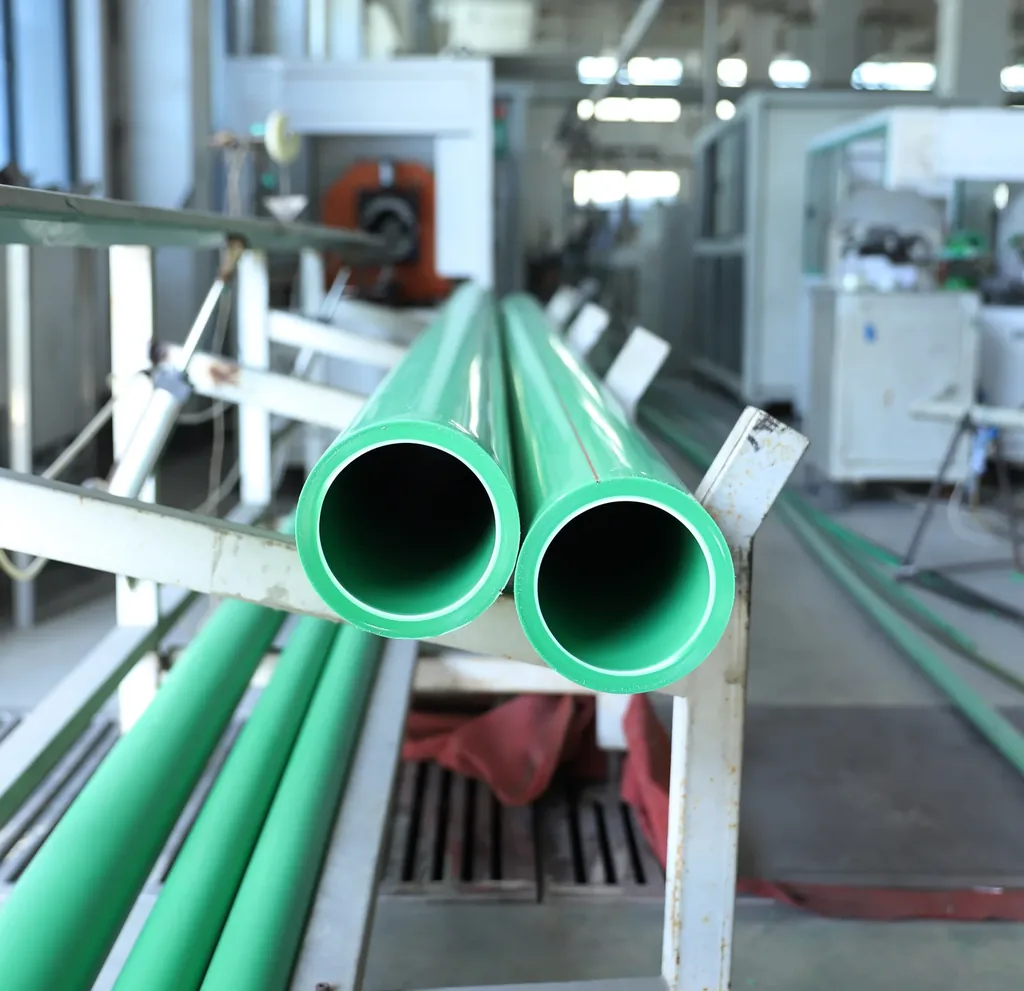
Name the edition, not just the number
“Manufactured to ISO 4427” is not a specification you can enforce, because the document has changed materially. ISO 4427-1:2019, published on 15 August 2019, is titled Plastics piping systems for water supply and for drainage and sewerage under pressure — Polyethylene (PE) — Part 1: General. The 2007 edition it replaced covered water supply only; the drainage-and-sewerage-under-pressure scope arrived with the 2019 revision.
The 2019 edition is itself now being revised: a committee draft, ISO/CD 4427-1, has been registered to replace it, and the companion pipes part has already moved further along to ISO/DIS 4427-2. Check the ISO catalogue for the current development stage before you write an edition year into a contract — a standard mid-revision is exactly when “ISO 4427” with no year does the most damage.
The European route moved more recently. EN 12201-2:2024, released on 14 March 2024, covers PE pipes for water supply and for drains and sewers under pressure, and Parts 1, 3, 4 and 5 were revised in the same cycle. Both families bound their scope the same way: an allowable operating pressure up to and including 25 bar at a 20 °C reference temperature, with continuous service above 20 °C and up to 50 °C handled in an annex rather than the main body.
So put the edition year in the purchase order. A supplier who conforms to the 2007 text has not lied to you if your PO said “ISO 4427”, and you will discover the difference at the worst possible moment.
The South African case, which is the instructive one
South Africa is where this distinction has teeth, and it is why the supplier search so often carries that country as a modifier. Municipal works specifications there commonly require pipe to carry the SABS standardisation mark against the relevant SANS specification — SANS ISO 4427 for polyethylene pressure pipe — as a minimum, rather than accepting a conformity report against ISO 4427 itself. The City of Ekurhuleni’s water and sanitation material schedule states the SABS/SANS mark requirement in exactly those terms, and SANS 4427-2:2023 makes the pipe marking mandatory. The South African adoption covers three designated materials: PE 63, PE 80 and PE 100.
The practical consequence for a buyer: if you are importing into a market that operates a national certification mark, “we meet ISO 4427” is the beginning of the conversation, not the end of it. Ask which certification body issued the mark, for which sizes, and when it expires — because scope and expiry are where these things fail, not authenticity.
What PE 100 means, and what PE 100-RC does not
The grade designation is arithmetic, not marketing. Under ISO 12162, a material is classified by its Minimum Required Strength — the 97.5% lower confidence limit of long-term hydrostatic strength at 20 °C extrapolated to 50 years — and the designation is that MRS in MPa multiplied by ten. PE 100 means MRS 10.0 MPa. PE 80 means MRS 8.0 MPa.
PE 100-RC also has an MRS of 10.0 MPa. The “RC” denotes resistance to slow crack growth, which matters for trenchless installation and for bedding without a sand surround. It is not a higher strength class, and a supplier who prices RC as though it were a stronger pipe rather than a differently-tested one has told you something about how well he knows his own product.
| Destination | What to name in the PO | The trap |
|---|---|---|
| EU / UK | EN 12201-2:2024, with part numbers for fittings and valves | Citing a pre-2024 edition on a new tender |
| South Africa | SANS ISO 4427 with the SABS mark, sizes stated | Accepting an ISO 4427 report in place of the mark |
| MENA / Central Asia | ISO 4427-1:2019 by edition, plus any local approval named | Assuming the international standard is sufficient everywhere |
| Fittings, all markets | ISO 14236 for PP compression fittings, certified with the pipe | Pipe certified, fittings not — the commonest gap of all |
Test the Capacity Claim Before You Test the Price
Capacity claims are the least examined sentences in this industry. “We produce 2,000 tonnes a month” appears on hundreds of company profiles and is almost never checked, because buyers assume checking requires a factory visit. It does not. It requires one published table and a calculator.
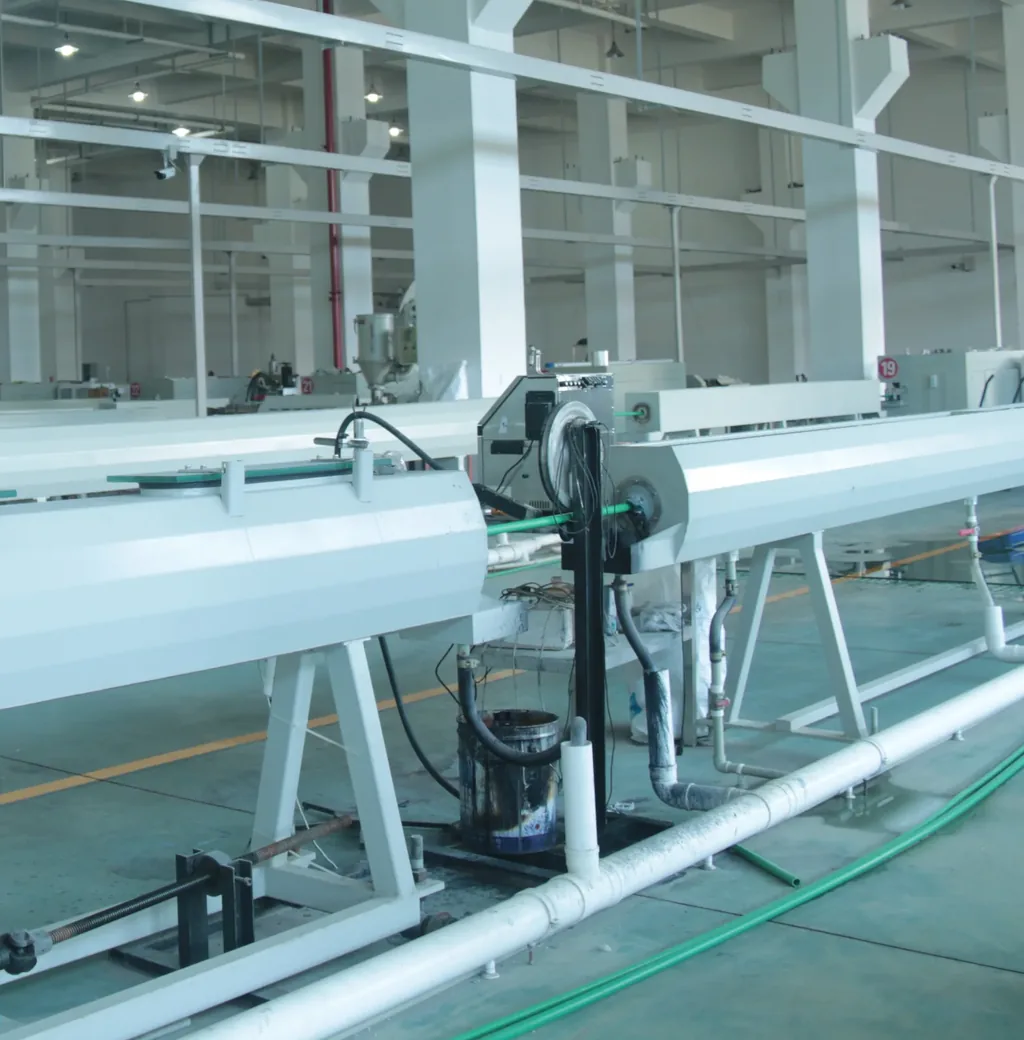
Extrusion output is a function of the machine, and machine builders publish it. Read the equipment maker’s own production-range table and the picture is consistent: a line configured for 16–63 mm pipe runs 350–450 kg/h, a 75–250 mm line runs 500–650 kg/h, and a whole class of mid-size lines on the same extruder — 110–315 mm, 160–450 mm, 200–500 mm, 250–630 mm — all run 850–1,000 kg/h. A 500–800 mm line runs 1,000–1,200 kg/h, and a twin-extruder line for 710–1,200 mm is rated 1,500–1,800 kg/h.
Read those numbers with one correction applied, because the same manufacturer publishes them twice and the two sets do not agree. Alongside the range table, each individual machine page quotes a single “max output” for the configuration it is selling — 640 kg/h for the 75–250 mm line, 1,000 kg/h for 200–450 mm and 315–630 mm, 1,200 kg/h for 400–800 mm, and 1,600 kg/h for the 710–1,200 mm line. That is not a contradiction so much as a lesson in how equipment specs are written: the table quotes a band across a model family and its best-case die and resin, the product page quotes one build.
Take the lower figure when you are testing somebody’s claim, and then derate it again. A line that never stops for a die change, a resin switch, a scrap start-up or preventive maintenance does not exist, and a realistic sustained figure is roughly 70–80% of any rated maximum.
Now do the arithmetic, and do it with the derated number rather than the brochure one. A single mid-size line rated at 850 kg/h, run at a realistic 600 kg/h across two shifts of sixteen hours for twenty-six days, produces about 250 tonnes a month. To reach 2,000 tonnes a supplier needs roughly eight such lines running that hard, or fewer larger ones — and a plant with eight lines has a building, a resin silo farm and a payroll to match. Ask how many lines, in which diameter bands. The answer either supports the tonnage or it does not, and the arithmetic takes a minute.
Two related figures are worth reading carefully, because they are often quoted as if they proved capacity when they measure something else. Plant area tells you the ceiling on how much equipment can exist, not how much is installed or running — ours is 120,000 m², and that number describes a site, not an output. Mould count is a fittings figure, not a pipe figure: 10,000 moulds says a supplier can produce a wide range of injection-moulded fittings without commissioning new tooling, which matters enormously for a mixed container and not at all for a straight pipe order.
The questions that separate a real production schedule from a sales answer are unglamorous. Which sizes are running this week? What is the next free slot on the line for my diameter? If I add a colour, where does that sit in the queue? A production planner answers these immediately because he is looking at the schedule. A salesperson without a factory behind him answers them in generalities.
The Commercial Terms That Decide Whether the Deal Works
By this point you have established who the counterparty is, whether your order fits, whether the standard suits your market, and whether the capacity claim survives arithmetic. What remains is the structure of the transaction, which is where a deal that looked fine becomes a deal that costs you.
Everything in this section is Bekaatherm’s own published terms. They are here as a benchmark you can hold other quotations against, from a party with an obvious interest in your reading them favourably.
| Term | Published position | What to ask a competing supplier |
|---|---|---|
| Payment | 30% T/T deposit, 70% against copy B/L | What triggers the balance — shipment, or arrival? |
| Letter of credit | Irrevocable L/C at sight accepted from USD 50,000 | Is there a threshold, and who pays the bank charges? |
| Trade terms | FOB İstanbul or Mersin by default; CFR and CIF on request | Which named port, and who books the vessel? |
| Standard samples | Free, up to 3 items, freight collect | Are samples from production, or hand-made? |
| Branded samples | 7–10 days; cost credited against the first bulk order | Is the sample charge refundable or absorbed? |
| Warranty | 50-year warranty against material and manufacturing defects | Is it written into the contract, or stated on a website? |
| Exclusivity | Regional exclusivity available to private-label partners, agreed in writing per market | Will they put territory protection in writing? |
Where your money is actually exposed
A 30/70 split against a copy bill of lading means the balance falls due when the goods are on the water and documents exist, not when the container reaches you. That is the ordinary structure in this trade and you should expect it. What varies, and what is worth reading closely, is what the deposit buys: at a producer it funds a scheduled production slot, and at a trader it funds a purchase from a third party you cannot see. The same percentage carries different risk depending on which of those you are financing.
The letter of credit threshold exists because L/Cs are expensive to process. Below roughly the USD 50,000 mark the bank charges on both sides start to rival the risk being managed, which is why a supplier who cheerfully accepts an L/C at any value is either much larger than he appears or has not priced the paperwork.
Container economics, which quietly set your real minimum
Freight is charged by the container, so a partly filled container is a per-metre price increase you did not negotiate. A 20GP gives roughly 33 m³ of usable space against a payload of about 28 tonnes, and a 40HQ gives roughly 76 m³. HDPE pipe reaches the volume limit long before the weight limit, which is the fact that governs how these orders are built: you are buying space, not tonnage.
That is also why mixed containers are the norm for a first order. A working mix runs at about 60% pipe, 30% fittings and 10% valves by volume — fittings and valves are dense and fill the voids that pipe bundles inevitably leave, so the mix improves the economics of the same shipment rather than merely broadening the range.
Price, and why this article does not print one
No credible per-metre HDPE price can be published in an article and still be true when you read it, because the resin cost underneath it moves with the petrochemical market and the freight on top of it moves with the shipping market. Our position is that price is quoted on request.
The honest thing to disclose is therefore not a number but the contents of the quotation: an FOB unit price against your named sizes and pressure classes, a container loading plan showing what your mix actually fills, and the conformity documents that apply to your destination market. A supplier who returns only a per-metre figure with none of those three has not quoted your order; he has quoted a commodity.
Put these terms against your own size mix
For importers and distributors who have a size mix and a destination market, and want a quotation structured the way this article describes — FOB unit prices against named sizes, a container loading plan, and the conformity documents that apply to your market. If you are buying a few hundred metres for a live job, a local stockist will serve you better than we will.
Running the Shortlist: Three Quotations, Scored
Here is the whole method applied once, to a realistic enquiry, so you can reuse the shape of it. The scenario: an importer needs 20,000 metres of PE 100 pipe in mixed diameters from 32 mm to 110 mm, plus compression fittings, delivered to a market that operates a national certification mark. He sends the same enquiry to three companies from the search results.
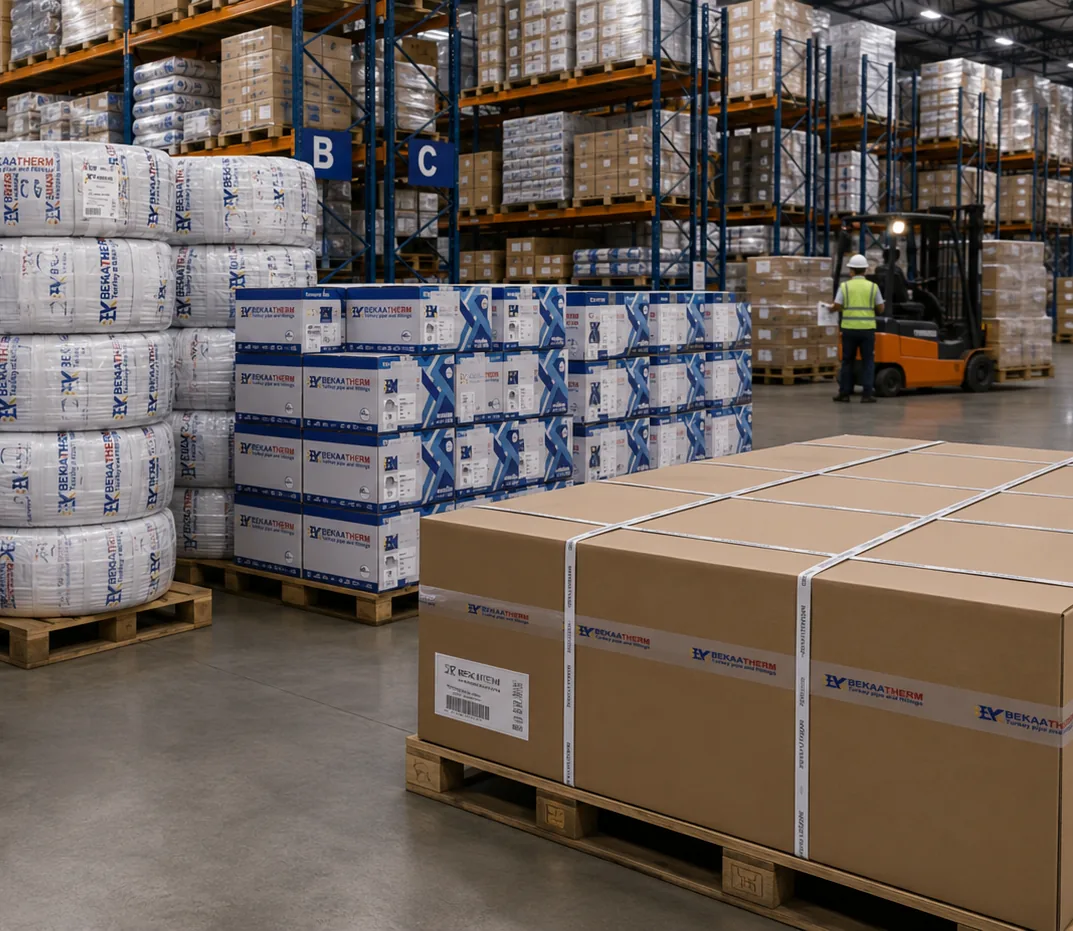
Company A replies in two hours with a per-metre price, no questions asked. The price is the lowest of the three. It does not mention diameters individually, does not ask which market the goods are going to, and quotes a 10-day lead time for the whole scope. Read against the sections above: nobody schedules twenty thousand metres across six diameters in ten days without existing stock, and no producer quotes a market-certified product without asking which market. This is a stockist or a trader quoting from availability. That is not disqualifying — but the price is for goods that already exist, and the certification question is still unanswered.
Company B replies in a day, asks for the size breakdown and the destination, and returns a quotation naming ISO 4427 with no edition year, a 25-day lead time, 30/70 payment terms, and sample terms matching the ones set out above. It answers the capacity question with “2,000 tonnes monthly” and, when asked, says it runs three lines.
Three lines do not produce 2,000 tonnes a month at any realistic output rate. Run the division: that is about 926 kg/h on every one of the three, twenty-four hours a day, thirty days a month, with no die change, no maintenance and no downtime — above the derated output of all but the largest lines, sustained in conditions no plant achieves. On the two-shift basis a real factory works, the same three lines make roughly 750 tonnes. The lead time and terms are credible; the capacity claim is inflated, and the missing edition year needs fixing before the PO.
Company C replies within a day, asks the same questions plus one more — whether the destination requires a national mark — and returns a quotation with FOB unit prices by diameter, a loading plan showing the mix fills a 40HQ at about 76 m³, an edition-specific standard reference, and a note that the certification for that market covers sizes up to 315 mm only. That last line is the most valuable sentence in all three replies, because it discloses a limit rather than concealing one.
The scoring sheet
| Check | A | B | C |
|---|---|---|---|
| Counterparty type established | Stock/trade | Producer | Producer |
| Asked for destination market | No | Yes | Yes |
| Standard cited with edition | No | No | Yes |
| Capacity claim survives arithmetic | n/a | No | Yes |
| Loading plan supplied | No | No | Yes |
| Disclosed a limitation unprompted | No | No | Yes |
The lowest price came from the counterparty who understood the order least. That is the normal result, not a contrived one, because a price quoted without questions is a price for a different order than the one you have.
Where the document-by-document verification takes over
Everything above sorts a list into a shortlist. It does not verify that any certificate is real, current, and in scope — that is a separate discipline with its own procedure: looking an approval up in the issuing directory rather than accepting a PDF, validating management-system certificates against the accreditation body, checking that a certificate’s scope covers your sizes, and confirming that pipe and fittings are certified as a system rather than separately. Once you have two or three names you take seriously, work through the nine checks to run before you pay a deposit, which covers exactly that ground.
One duty note for EU buyers
If you are importing Turkish-made goods into the EU, the A.TR movement certificate lets industrial products move at 0% duty under the EU–Türkiye Customs Union rather than at MFN rates. HDPE pipe is an industrial product, so it sits squarely inside that scope — the customs union excludes agricultural products and coal and steel, which travel instead on origin-based preferential agreements. One distinction matters when you are assessing a supplier, and it is worth getting right because plenty of trade guidance blurs it.
What the A.TR establishes is a customs status. In the European Commission’s own words, it is the proof that goods are “either wholly produced or put in free circulation after their importation from third countries in either Turkey or the EC.” That is what free circulation means here — and it is why the document alone cannot tell you where a pipe was extruded. Goods imported into Türkiye from a third country, cleared there, can move onward under an A.TR exactly as Turkish-made goods do.
In practice the A.TR usually does accompany genuinely Turkish-made goods, and a good deal of national trade guidance describes it loosely as proving Turkish origin for that reason. Treat that as a working generalisation rather than a guarantee. If proof of manufacturing location matters for your own onward paperwork — a re-export, a local-content rule, a tender requiring country of manufacture — ask for a separate Certificate of Origin, or an EUR.1 where the goods fall under an origin-based arrangement. It costs the supplier nothing to issue and closes a gap the A.TR was never designed to close.
What To Do Next
The order of operations matters more than any individual check, because each step removes counterparties cheaply before the next step costs you time:
- First, establish type. Business scope, registered address, direct question. Ten minutes, removes the mismatches.
- Second, match to your order. Compare their MOQ structure and lead-time bands against the order you actually have — 500 kg per size and colour, a 20GP mixed container, or a 40HQ for a branded run are three different conversations. If your requirement is 200 metres next week, stop here and call local stock.
- Third, fix the standard and edition for your destination market before you request pricing, and establish whether a national mark applies.
- Fourth, test the capacity claim with lines × kg/h × hours. One minute of arithmetic, and it reliably separates the plants from the profiles.
- Fifth, compare terms, not just prices — payment trigger, L/C threshold, named port, loading plan, warranty in writing.
- Then verify the documents on the two or three names that survive.
If your requirement is container-scale and you want the container-mix and written regional-exclusivity terms before you shortlist anyone, the importer and distributor supply programme sets out how the mix, the exclusivity and the loading are agreed. It is written for buyers taking a first container or building a territory — not for one-off project purchases.
Frequently Asked Questions
How do I tell an HDPE pipe manufacturer from a trading company?
Read the registered business scope: a producer’s names manufacturing or production, a trader’s names wholesale or import-export. Check the registered address is an industrial zone rather than a city-centre office. Then ask directly — a hedged answer about “partner factories” is itself the answer.
What is a normal MOQ for HDPE pipe?
It is a structure rather than one number. Ours is 500 kg per size and colour for a single specification, one 20GP mixed container for a trial order, and one 40HQ or 3 tonnes per colour for a first private-label run. A supplier quoting a small piece-count minimum on a large diameter is selling from stock.
Is ISO 4427 enough for South Africa?
Usually not on its own. South African works specifications commonly require the SABS standardisation mark against SANS ISO 4427, rather than accepting a conformity report against ISO 4427. Ask which body issued the mark, which sizes it covers, and when it expires.
What is the difference between PE 100 and PE 100-RC?
Both have a Minimum Required Strength of 10.0 MPa under ISO 12162 — the designation is MRS in MPa times ten. RC denotes resistance to slow crack growth, relevant to trenchless installation and bedding without sand surround. It is not a higher strength class.
How long should HDPE pipe production take?
For sizes already in production, 15–25 days is a realistic band; a private-label run is 30–45 days, and a first colour match or new mould adds 7–10 days. A flat ten-day quote covering every size and colour describes stock, not production.
Why do suppliers not publish HDPE pipe prices?
Because the resin cost underneath the price and the freight on top of it both move with markets that change faster than a web page. What a supplier can honestly disclose is what the quotation contains: FOB unit prices against your named sizes, a container loading plan, and the conformity documents that apply to your market.
How much HDPE pipe fits in a container?
A 20GP offers roughly 33 m³ of usable space against a payload of about 28 tonnes; a 40HQ offers roughly 76 m³. HDPE pipe hits the volume limit well before the weight limit, so these orders are built by space. A mixed load of about 60% pipe, 30% fittings and 10% valves by volume uses the voids efficiently.
Does an A.TR certificate prove the goods were made in Türkiye?
Not by itself. A.TR proves customs status — that goods are in free circulation in the customs union — so third-country goods cleared in Türkiye can travel on one too. If you need proof of manufacturing location, request a separate Certificate of Origin.