Most guidance on UPVC drainage pipe tells you to check the wall thickness. On the most commonly ordered size in the world, that advice is worthless. At DN110, an EN 1329 pipe marked “B” for above-ground use inside a building and an EN 1401 pipe in stiffness class SN4 or SN8 for burial are both specified at 3.2 to 3.8 mm. Identical numbers, two standards, two different permitted uses — and a calliper cannot separate them.
What separates them is a letter. Both standards require the manufacturer to mark each component with an application area code stating where the pipe may be used. There are four of those codes, not two, and the boundary they draw is not the material and not the diameter — it is the building structure itself. This page covers what each code permits, where the two standards collide, and how to write the distinction into a schedule so it survives contact with a site.
Key Takeaways
- EN 1329 governs soil and waste discharge within the building structure; EN 1401 governs non-pressure drainage and sewerage buried underground. Same material, different standard, not interchangeable.
- There are four application area codes, not two: B and BD under EN 1329, U and UD under EN 1401. The code is marked on the product.
- BD applies only to components with a nominal outside diameter of 75 mm or greater. A DN50 branch can never be BD-marked, so it can never be buried within the building structure.
- At DN110 both standards can specify a 3.2–3.8 mm wall. Wall thickness cannot identify the standard at the size you order most.
- Buried classes are ring stiffness, not wall class: SN2 = SDR 51, SN4 = SDR 41, SN8 = SDR 34. Some supplier catalogues in circulation label these wrongly.
- Cite the current editions: BS EN 1329-1:2026 (published 27 May 2026, superseding the 2020 edition withdrawn the same day) and BS EN 1401-1:2019+A1:2023.
- Both standards cover solid-wall pipe only. Foamed-core and multilayer pipe fall under EN 1453-1 and EN 13476-2 — a common and legal substitution that does not meet a schedule calling for EN 1329 or EN 1401.
Two standards, one material: where the boundary actually falls
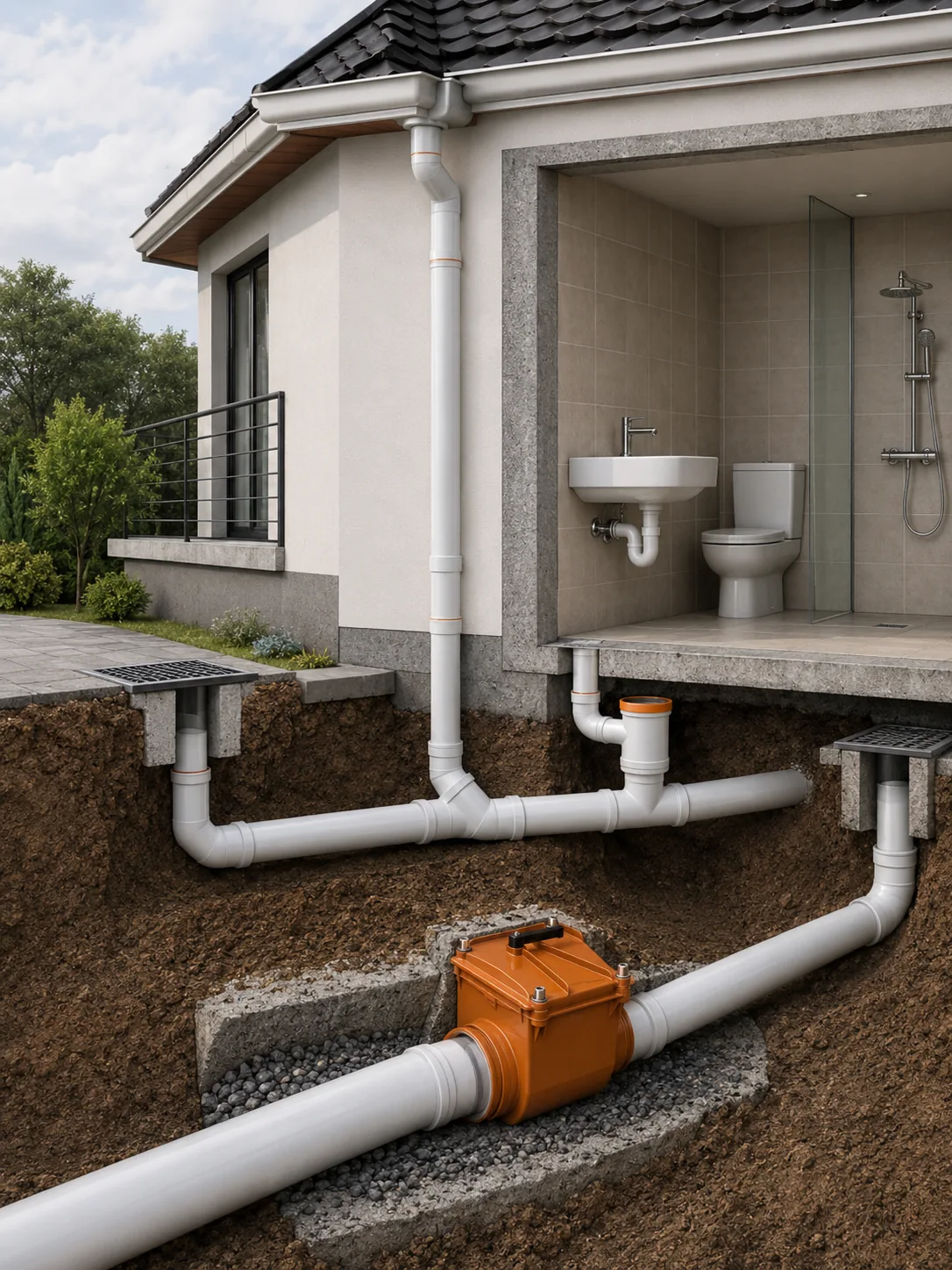
The two standards announce their own scope in their titles, and the titles are the fastest way to settle an argument. EN 1329-1 is Plastics piping systems for soil and waste discharge (low and high temperature) within the building structure. EN 1401-1 is Plastics piping systems for non-pressure underground drainage and sewerage. One is a building standard. The other is a below-ground infrastructure standard. Both are written for unplasticised PVC, and both cover solid-wall pipe extruded from the same formulation throughout the wall.
The distinction people expect — that one is for small pipe and one is for large, or that one is for waste and one for sewage — is not the distinction the standards actually draw. Both cover DN110. Both carry soil and foul water. The boundary is physical and architectural: is this length of pipe inside the building structure, or is it buried in ground outside it? Everything else follows from that answer.
The editions to cite in late 2026
This matters more than usual this year, because one of the two numbers moved three months ago. A specification citing “BS EN 1329-1:2020” was correct until spring and is now citing a withdrawn document.
| Standard | Scope | Edition to cite now |
|---|---|---|
| EN 1329-1 | PVC-U soil and waste discharge, low and high temperature, within the building structure | BS EN 1329-1:2026, released 27 May 2026, 54 pp. Supersedes the 2020 edition, withdrawn the same day. |
| EN 1401-1 | PVC-U non-pressure underground drainage and sewerage | BS EN 1401-1:2019+A1:2023, released 19 May 2023, 46 pp. |
If you hold a supplier declaration issued before June 2026 that names the 2020 edition of EN 1329-1, it is not automatically invalid — but it is a question worth asking, because it tells you when the supplier last reviewed its paperwork. Both documents are published through the national standards bodies of CEN members, including DIN in Germany, and conformity of the pipe itself is what bodies such as SKZ assess. On the PP side of the same building, the parallel standard is EN 1451, which this site covers separately in the EN 1451 soil and waste explainer.
B, BD, U and UD: the four codes and what each one permits
Each standard defines its own application area codes, and each requires the intended use to be reflected in the marking on the product. Read together, they produce four codes covering a continuous journey from a first-floor branch to a sewer connection. Most published comparisons stop after B and BD, which is why the buried half of the picture is the half buyers get wrong.
| Code | Standard | Where it may be used | Constraint |
|---|---|---|---|
| B | EN 1329 | Above ground inside the building, or outside buildings fixed onto the wall | Not for burial anywhere |
| BD | EN 1329 | Both inside buildings and buried in ground within the building structure | Nominal outside diameter 75 mm or greater only |
| U | EN 1401 | Buried in ground outside the building structure | Outside the footprint only; ring stiffness class applies |
| UD | EN 1401 | Buried in ground both within the building structure and outside the building | Ring stiffness class applies |
The overlap zone nobody draws on the plan
Look at BD and UD together and something awkward appears. Both reach into the ground beneath the building footprint, from opposite directions. BD is a building product licensed to go underground for the length it stays inside the structure. UD is a buried-drainage product licensed to come inside the footprint.
For a run under a ground-floor slab, either can be correct. But they are certified against different standards, tested against different requirements, and specified by different class systems. A schedule that says only “DN110 UPVC” has left that choice to whoever is standing at the merchant’s counter.
The 75 mm floor under BD is where this stops being a paperwork question. BD applies only to components with a nominal outside diameter of 75 mm or greater, so a DN50 waste branch cannot be BD-marked — no such product exists within the standard.
Bury a DN50 waste run inside the building structure on an EN 1329 specification and there is nothing compliant to buy at any price. The fix is a design fix: reroute above the slab, upsize, or move into the EN 1401 family. All three are far cheaper to find in a drawing review than in a delivery.
The near half of this boundary — B against BD, entirely within the building — is covered in more depth in the PP silent versus UPVC soil pipe comparison, which walks the same codes through an acoustic specification. The rest of this page stays on the ground boundary, because that is the side the buried standard governs and the side that goes unexplained.
Why wall thickness will not tell you which standard you received
Buyers reach for the calliper because it feels like the one check that cannot be faked. On this particular question it fails, and it fails precisely at the diameter that dominates orders. Set the two dimension tables side by side at DN110 and the numbers land on top of each other.
| DN | EN 1329, area B | EN 1401, SN4 (SDR 41) | EN 1401, SN8 (SDR 34) |
|---|---|---|---|
| 110 | 3.2 – 3.8 | 3.2 – 3.8 | 3.2 – 3.8 |
| 160 | 3.2 – 3.8 | 4.0 – 4.6 | 4.7 – 5.4 |
| 200 | 3.9 – 4.5 | 4.9 – 5.6 | 5.9 – 6.7 |
| 250 | 4.9 – 5.6 | 6.2 – 7.1 | 7.3 – 8.3 |
| 315 | 6.2 – 7.1 | 7.7 – 8.7 | 9.2 – 10.4 |
Read the DN110 row again. Three different specifications, one wall thickness range. From DN160 upward the tables separate cleanly and a measurement starts to mean something, but DN110 is the workhorse size of building drainage and the one most likely to be sitting on the pallet in question. At that size the pipe’s own geometry carries no information about which standard it was made to.
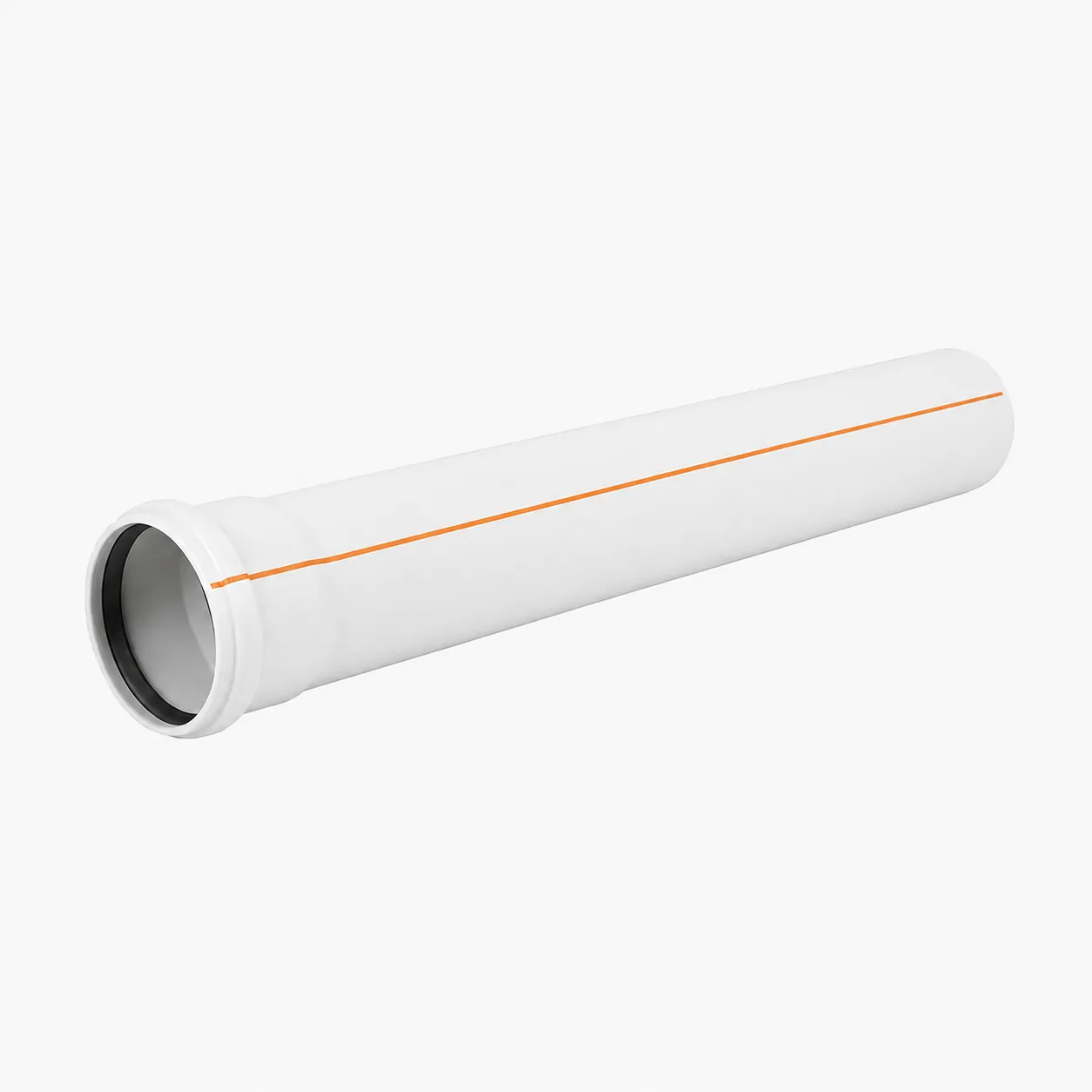
Ring stiffness is a different axis, and catalogues get it wrong
Buried pipe is not classified by wall class at all. It is classified by ring stiffness — its resistance to being deformed by the weight of soil and traffic above it — and the class name encodes a standard dimension ratio. SN2 is SDR 51 and a ring stiffness of 2 kN/m². SN4 is SDR 41 and 4 kN/m². SN8 is SDR 34 and 8 kN/m². A higher SN number means a thicker wall for the same diameter and a pipe that tolerates deeper cover and heavier loads.
This is worth checking rather than assuming, because at least one widely circulated Gulf supplier catalogue prints a DN110 column headed “SN2 SDR 41”, which is two classes crossed: SDR 41 is the SN4 series. If you are pricing against a catalogue that mislabels its own stiffness classes, the quotation you compare against may not be the product you think it is. Take the SN class from the marking and the declaration, not from a column header.
EN 1401-1 is also explicit about who owns this decision. The standard covers a range of nominal sizes, series and stiffness classes and gives recommendations concerning colours, and it states that it is the responsibility of the purchaser or specifier to make the appropriate selection, taking into account their particular requirements and any relevant national regulations and installation practices or codes. The standard will not choose SN4 or SN8 for you, and neither will the factory. That choice belongs to whoever signs the drawing.
What does identify the standard
- The marking on the pipe. Both standards require the intended use to be reflected in the product marking. The letter is the primary evidence, and it is printed down the length of the pipe.
- The declaration on paper. Which standard, which edition, which application area, which class — named explicitly, not “conforms to EN standards”.
- Colour, as a weak secondary signal only. Building drainage is typically supplied light grey or white and buried drainage orange-brown or dusty grey, but this is market convention. EN 1401-1 makes recommendations concerning colours; it does not make colour the compliance test. Never accept colour as proof.
- Length, as a hint about the intended market. Above-ground UPVC is commonly cut to 4.0 m and 5.8 m; buried pipe typically ships in 4 to 6 m lengths.
What both standards leave out, and the substitution that follows
Here is a scope limit that costs money and almost never appears in a comparison article. EN 1329 and EN 1401 both cover solid wall pipe, extruded from the same formulation throughout the wall. Pipe built any other way is outside both documents. EN 1329-1 states that multilayer pipes with different formulations throughout the wall and foamed core pipes are covered by EN 1453-1. EN 1401-1 says the same thing and points to EN 13476-2.
Foamed-core and multilayer PVC pipe is a legitimate, standardised, widely used product. It is lighter, it uses less virgin material, and it is cheaper per metre. It is also not EN 1329 or EN 1401 pipe, and a schedule that names one of those two numbers has not been satisfied by it.
How the substitution actually reaches a buyer
Nobody has to lie for this to happen. An enquiry goes out for “DN110 UPVC drainage pipe”. Quotations come back, and one is noticeably cheaper per metre. That supplier is quoting foamed-core pipe against EN 13476-2 and will say so accurately if asked directly. The buyer, comparing on diameter and price, sees a better number and takes it. The mismatch surfaces at inspection, when the marking on the pipe names a standard the schedule never mentioned, and by then the container has landed.
One question closes this gap at enquiry stage: “Is this solid-wall pipe to EN 1329 or EN 1401, or is it foamed-core or multilayer to EN 1453-1 or EN 13476-2?” Any honest supplier answers it in one line, and the answer makes the two quotations comparable for the first time.
Writing it into the schedule: a worked drainage run, slab to boundary
Take one continuous DN110 foul run in a small residential block. It starts at a first-floor WC branch, drops down a stack in a service riser, turns below the ground-floor slab, crosses under the building footprint, leaves the footprint, and runs across the plot to a manhole at the site boundary under a driveway. It is one pipe run in the plumber’s mind and four different compliance situations on paper.
| Segment | Standard and code | Why |
|---|---|---|
| Branch and stack, first floor to ground | EN 1329, area B | Above ground inside the building, never buried |
| Below the slab, still inside the footprint | EN 1329 area BD, or EN 1401 area UD | Buried within the building structure — both families are licensed here; pick one and name it |
| Crossing out beyond the footprint | EN 1401, area U or UD | Buried outside the building structure; B and BD both stop here |
| Under the driveway to the boundary manhole | EN 1401 area U, stiffness class per cover and load | Vehicle loading is a ring-stiffness decision, and the standard puts it on the specifier |
The line to write, and the one that causes the argument
A schedule line that says “DN110 UPVC drainage pipe” has specified almost nothing. It fixes the diameter and the material and leaves the standard, the application area and the stiffness class to be resolved by whoever is buying. A line that survives site reads closer to this: “DN110 PVC-U, solid wall, to BS EN 1401-1:2019+A1:2023, application area UD, minimum SN4, ring-seal jointed” — and where the run is above ground, “DN110 PVC-U, solid wall, to BS EN 1329-1:2026, application area B”. Naming the edition, the area code and the class turns three unstated assumptions into three checkable facts.
Two traps to walk around while you write it:
- Anything under DN75 buried inside the footprint has no compliant answer. EN 1329 BD cannot serve it, and no amount of procurement effort will find product that can. That is a design change, not a purchasing problem.
- Never let the transition point be implied — draw it. The place where the specification changes from one standard to the other is a real location on a real drawing. If it is not marked, the installer will put the transition wherever the pipe happens to run out.
How the two families are jointed to each other is its own decision, covered in the ring-seal versus solvent-weld joint comparison. Sizing the stack that feeds this run is covered in the EN 12056 stack sizing guide.
The document pack to demand before the container ships
Everything above is checkable on paper before anything is loaded, and the checks are cheap. This list works against any supplier, including one that is not us — it is the list an inspector will effectively be working from.
- The standard, the edition and the application area, in writing. “EN 1329” alone is not a specification. If the declaration names the 2020 edition of EN 1329-1, ask when the paperwork was last reviewed — that edition was withdrawn on 27 May 2026.
- Confirmation that the pipe is solid wall, not foamed-core or multilayer to EN 1453-1 or EN 13476-2.
- The ring stiffness class for anything buried, stated as SN with the matching SDR, and consistent between the quotation, the declaration and the pipe marking.
- A photograph of the actual marking on production pipe from the run being shipped, showing the application area code. This takes a supplier two minutes and settles the question that a calliper cannot.
- Certification scope, read carefully. Bekaatherm holds SKZ (Germany), ISO, CE and WRAS approvals; certificate numbers and copies are available on request. Check what each certificate actually covers rather than treating a logo as blanket coverage.
What we check, and where we stop
Bekaatherm manufactures white UPVC soil and waste drainage from DN50 to DN200 in two wall classes, TYPE1 at 3–3.9 mm and TYPE2 at 1.8–3.2 mm, in cut lengths from 150 mm up to 6000 mm, with integral rubber ring-seal push-fit sockets and article numbers running from BK-223 to BK-386. It is declared against EN 1329 and EN 1401, and it is built for building drainage: stacks, branches, waste runs and the connections around them.
It is not a deep-burial sewer range. The published range stops at DN200 and is specified by wall class rather than by SN ring-stiffness class. If your project needs DN315 or DN400 buried pipe under a trafficked road at an SN8 rating, that is a different product family and you should be talking to a supplier who lists it that way. Saying so costs an enquiry occasionally and saves a rejected shipment more often — and a specifier who has been told honestly where a range ends tends to believe the rest of the datasheet.
On commercial terms, so a first enquiry can be written without a second round of questions:
- MOQ. One 20GP mixed container of pipe, fittings and valves for a trial order, or 500 kg per size and colour for a single specification.
- Lead time. 15–25 days for standard in-production sizes; 30–45 days for private-label runs.
- Samples. Standard samples free for up to three items, freight collect.
- Payment and terms. 30% T/T deposit, 70% against copy B/L; FOB İstanbul or Mersin by default, CFR and CIF on request.
- Pricing. Quoted on request against the actual size mix. The number moves with the mix, so a mixed-container quotation is worth more than a single-size price.
Duty and classification for the destination market are covered in the HS code and duty breakdown, and the full certification set is on the certifications page. Behind the range: 30+ years of manufacture, a 120,000 m² plant, 1000+ staff, 10,000 moulds and export to 118+ countries, made in Türkiye.
Conclusion
The trade-off in this decision is not cost against quality — it is precision against convenience. Writing “DN110 UPVC drainage pipe” is fast, reads as a complete specification, and pushes four unresolved questions down the chain to people who will answer them by availability. Writing the standard, the edition, the application area code and the stiffness class takes one extra line and moves those questions to the only stage where answering them is free. EN 1329 stops at the edge of the building structure; EN 1401 starts in the ground; BD and UD overlap beneath the slab; and at DN110 no measurement will tell you which one arrived.
If you are specifying or importing building drainage and want to check a schedule line against what is actually manufacturable, the UPVC drainage range lists real diameters, wall classes and article numbers to compare against — and the PP drainage system covers the acoustic alternative for the same building.
Frequently Asked Questions
Can I use EN 1329 pipe underground?
Only if it is marked BD, only within the building structure, and only at DN75 or larger. B-marked pipe may not be buried anywhere, and no EN 1329 pipe is intended for burial outside the building footprint — that is EN 1401 territory.
Which edition of EN 1329 should a 2026 specification cite?
BS EN 1329-1:2026, released on 27 May 2026. It superseded the 2020 edition, which was withdrawn the same day. For the buried standard, cite BS EN 1401-1:2019+A1:2023.
What is the difference between SN4 and SN8?
Ring stiffness. SN4 is SDR 41 at 4 kN/m²; SN8 is SDR 34 at 8 kN/m². SN8 has a thicker wall for the same diameter and tolerates deeper cover and heavier surface loading. EN 1401-1 places the selection on the purchaser or specifier.
Does pipe colour tell me which standard it meets?
No. Grey for building drainage and orange-brown for buried drainage is common market convention, and EN 1401-1 gives recommendations concerning colours rather than requirements. Verify by the application area code marked on the pipe and by the supplier’s declaration.
Why can a DN50 pipe never be buried inside the building structure?
Because the BD application area applies only to components with a nominal outside diameter of 75 mm or greater. Below that size no BD-marked product exists, so the situation has to be resolved by design — reroute above the slab or upsize the run.
Is foamed-core PVC pipe acceptable against an EN 1401 specification?
No. EN 1401 covers solid-wall pipe extruded from one formulation throughout the wall; foamed-core and multilayer pipe falls under EN 13476-2, and EN 1453-1 on the building side. Both are legitimate products, but neither satisfies a schedule naming EN 1401.