Most brass fittings plumbing failures are not sudden. A threaded PPR fitting that leaks in year four failed on paper long before it failed on site — in the alloy designation nobody checked, the thread family nobody matched, the certificate that covered a different part of the fitting than everyone assumed. By the time water reaches the screed, the mill certificate that would have predicted it is three years old and in a folder somewhere.
Here is the one that catches experienced buyers. The 4MS positive list of metallic compositions — the document governing which alloys may touch drinking water across Germany, France, the Netherlands and the UK — does not list “CW617N”. It lists CW617N-DW, a restricted composition with tighter impurity caps, and accepts it only for certain classes of part. A purchase order saying CW617N has not specified the drinking-water grade. That two-letter suffix separates a compliant insert from a container your inspector can reject on the paperwork alone.
Key takeaways
- The suffix is the specification. The 4MS list accepts CW617N-DW (CuZn40Pb2) with Cu 57.0–60.0%, Pb 1.6–2.2% and Ni capped at 0.1% — not generic CW617N. Ask for the -DW designation by name.
- CW614N is the substitution to watch for. The 4MS list places CW614N-DW (CuZn39Pb3) in product groups C and D only. A fitting body is a group B product, so CW614N in that role sits outside the acceptance.
- The current revision is the 23rd, dated 5 December 2025. Pages still quoting older revisions are quoting a superseded list.
- 31 December 2026 is the date on the clock. Commission Implementing Decision (EU) 2024/367 applies from that day. Nationally approved substances may continue until 31 December 2032 under Article 3.
- A WRAS certificate does not approve the brass. WRAS material approval runs on BS 6920, which evaluates non-metallic products. The metal travels a separate route.
- Mixing G and Rp threads is the most common install failure. ISO 7-1 threads seal on the thread with sealant; ISO 228-1 G threads seal on a face against a washer or O-ring. They look interchangeable and are not.
- An EN 12165 mill certificate proves composition and product form. It does not prove drinking-water acceptance. Those are two different documents.
Four ways a brass insert fails
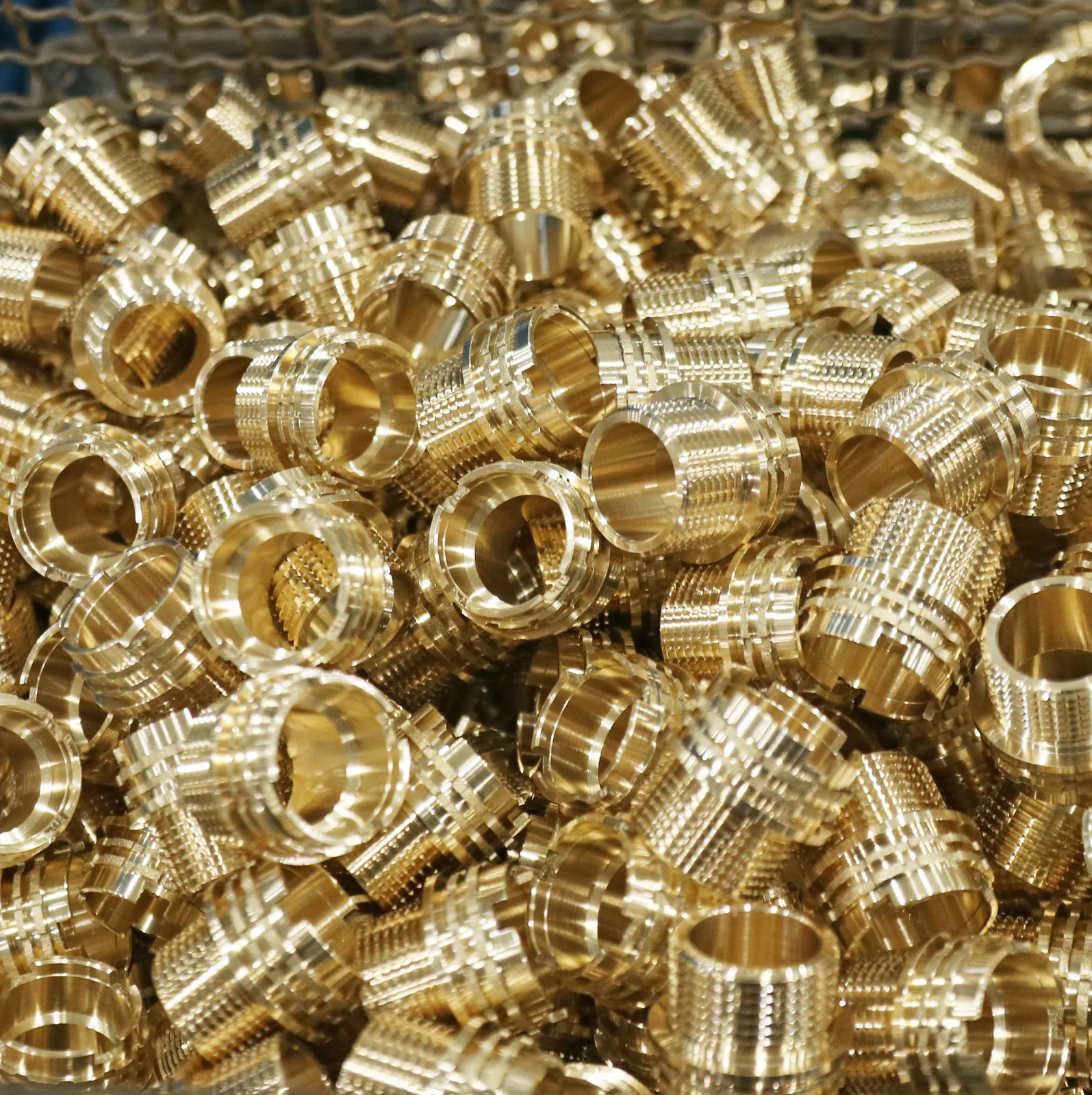
A PPR fitting with a moulded-in brass insert is two materials doing two jobs. The polypropylene welds to the pipe; the brass carries the thread that meets the tap, valve, meter or pump. Everything that goes wrong lives at that boundary or inside the metal, and it sorts into four buckets. Chemical: the alloy releases metal into the water, or loses its zinc and crumbles. Mechanical at the interface: the insert spins or pulls out. Mechanical at the thread: two thread families were mated. Structural: the plastic splits from installation stress. Three are catchable before the container ships; the fourth is not a supplier defect at all, which is why it generates the most disputes.
Failure 1: the wrong alloy, correctly certified
This failure survives inspection, because the paperwork is real. The mill certificate is genuine, the alloy is genuine, and the alloy is genuinely the wrong one for the job.
What the 4MS list actually says
The 4MS Common Approach Part B — the positive list of compositions for metallic materials in contact with drinking water, published by the German Environment Agency — is on its 23rd revision, dated 5 December 2025. Section 10.3.1 lists CW617N-DW* (CuZn40Pb2) alongside CW612N-DW, for product groups B–D. That asterisk carries weight: contents of certain elements are further restricted beyond the base specification.
The restricted composition runs Cu 57.0–60.0%, zinc remainder, Pb 1.6–2.2%, with impurities capped at Al ≤0.05%, Fe ≤0.3%, Ni ≤0.1%, Si ≤0.03% and Sn ≤0.3%. Base EN 12165 CW617N runs Cu 57.0–59.0%. Different copper window, tighter nickel cap — two documents describing two things, and a supplier can satisfy one without satisfying the other.
Product groups decide what may go where
The list does not approve alloys in the abstract. It approves them for product groups defined by how much wetted surface they represent. Group A: pipes in building installations and uncoated pipelines, assumed contact surface 100%. Group B: fittings and ancillaries in building installations, such as pump, valve and water meter bodies, at an assumed 10%. Group C: components of group B products like a pump spindle, where all such components together stay under 10% of the product total; assumed 1%. Group D: components of fittings in water mains at treatment works.
A PPR fitting with a brass insert is a group B product. That 10% assumed contact surface is the whole reason an insert can legitimately use an alloy a full brass pipe could not.
The substitution that shows up on the certificate
Section 10.3.2 lists CW614N-DW (CuZn39Pb3) — the common free-machining brass — for product groups C and D. Not B. Its restricted composition is Cu 57.0–62.0%, Pb 2.5–3.5%, with Ni allowed to 0.2%, double the CW617N-DW cap.
CW614N machines faster and costs less, which makes it the alloy a margin-squeezed supplier is most tempted to slide into an insert — and the easiest substitution to catch. You do not need a lab. You need the mill certificate. CW614N named in a group B fitting body sits outside the 4MS acceptance for that application. That is a documentation finding, not a judgement call.
| Designation | Composition (restricted -DW) | 4MS product groups | Read this as |
|---|---|---|---|
| CW617N-DW (CuZn40Pb2) | Cu 57.0–60.0%, Pb 1.6–2.2%, Ni ≤0.1% | B–D | Accepted for a fitting body. The default correct answer. |
| CW612N-DW (CuZn39Pb2) | Listed with CW617N-DW, section 10.3.1 | B–D | Also acceptable for a fitting body. |
| CW614N-DW (CuZn39Pb3) | Cu 57.0–62.0%, Pb 2.5–3.5%, Ni ≤0.2% | C and D only | Not accepted for group B. Query it if you see it. |
| CW724R-DW (CuZn21Si3P) | Cu 75.0–77.0%, Si 2.7–3.5%, P 0.02–0.10%, Pb ≤0.1% | B–D | Silicon brass. The low-lead route where Pb is the constraint. |
| CW602N (CuZn36Pb2As) | Classic arsenical DZR brass | Does not appear on the Part B list | A legitimate DZR alloy, but not evidence of 4MS acceptance. |
Where CW602N sits, stated carefully
A full-text search of the 23rd revision returns no entry for CW602N or CuZn36Pb2As. That is an absence of listing, not a ban — CW602N remains a real dezincification-resistant alloy under EN 12165 with decades of service behind it. But a supplier answering a 4MS compliance question with a CW602N certificate is answering with the wrong document. If low lead is the driver, silicon brass CW724R-DW at Pb ≤0.1% is what the list accepts for group B, with cast equivalent CC768S listed too.
Failure 2: dezincification, and what ISO 6509 does not tell you
Dezincification is selective leaching. Zinc migrates out of the copper-zinc alloy and leaves a porous, copper-rich residue that holds the shape of the part but not much of its strength. The fitting looks intact, then splits under normal line pressure or weeps through pinholes nobody drilled. Field symptoms are easy to spot once you know them: reddish patches on a fitting that should be uniformly yellow, white or blue-green deposits at the thread, pinhole leaks. Hot, soft, acidic or chloride-rich water accelerates it. Microstructure is the most significant factor in susceptibility, which is why two fittings with identical composition on paper can behave differently after heat treatment.
The test, and the question everyone forgets to ask
DIN EN ISO 6509-1 sets the method. Samples are wet-ground to at least P500 grit, then immersed in roughly 1% aqueous copper(II) chloride at 75 °C for 24 hours, held at least 15 mm off the bottom of the vessel. Dezincification depth — plug type or layer type — is characterised by light microscopy and evaluated to DIN EN ISO 6509-2.
Here is the part that trips people up. ISO 6509-1 gives the method and refers evaluation to Part 2, but publishes no pass/fail threshold. Acceptance limits come from the product standard or national approval scheme. A certificate reading “passed ISO 6509” is incomplete on its face. So the useful question is not “did it pass” but “what limit was it judged against, and who set that limit?” Ask for the measured maximum and mean depth in microns, the acceptance criterion, and the document it came from. A supplier with a real test report answers in one email. One reselling someone else’s certificate goes quiet, and that silence is your finding.
How metal release is actually assessed
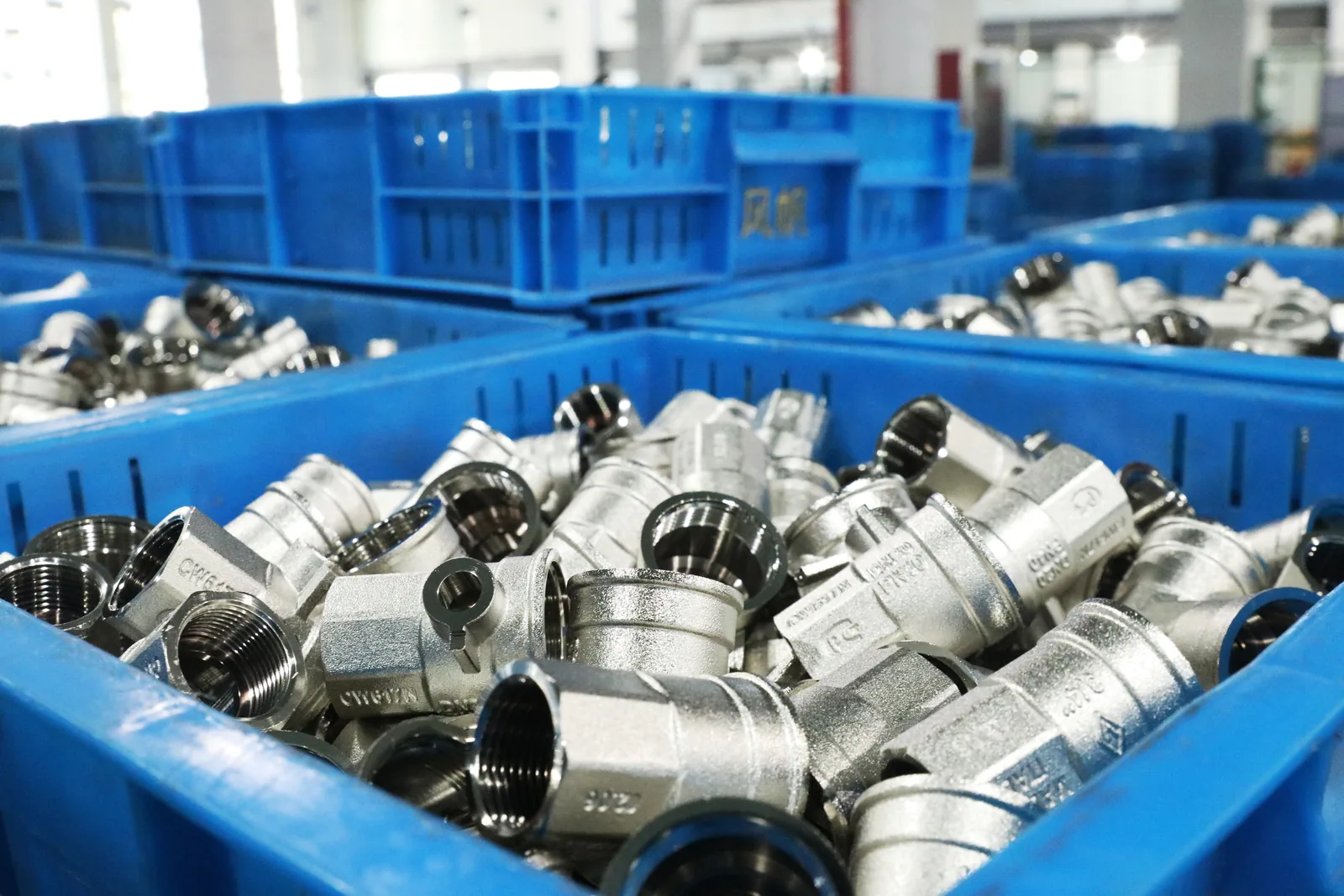
Behind a 4MS acceptance sits EN 15664-1, a dynamic rig test alternating through-flow and stagnation periods to simulate a domestic distribution system, with EN 15664-2 defining the test waters — very hard neutral, soft slightly acidic, soft alkaline. For the copper-zinc category the Part B list names test water 1 as the most critical, and lists copper, nickel, lead and zinc as the elements for consideration in the migration water for the CW617N category.
This is a multi-month rig programme, not a bench dip. That matters commercially: acceptance is slow and expensive to obtain, so a supplier who switched compositions last quarter and still claims the same acceptance is describing something that does not happen quickly.
Failure 3: the thread family mismatch
This one leaks on day one, gets blamed on the fitting, and is almost always an assembly mismatch. Two thread families dominate, they share nominal sizes, and they seal by entirely different mechanisms.
ISO 7-1 covers pipe threads where pressure-tight joints are made on the threads: taper external R, parallel internal Rp, taper internal Rc, at a 1:16 taper, sizes 1/16 to 6. The seal forms in the thread flanks as the taper wedges, and sealant is required. ISO 228-1 covers threads where pressure-tight joints are not made on the threads — parallel G threads, which need a gasket, washer or O-ring seating against a face. Male G threads only go into female G threads.
| Marking | Standard | Form | How it seals |
|---|---|---|---|
| R | ISO 7-1 | External taper, 1:16 | On the threads, with sealant |
| Rp | ISO 7-1 | Internal parallel | On the threads, mated to R, with sealant |
| Rc | ISO 7-1 | Internal taper | On the threads, mated to R, with sealant |
| G | ISO 228-1 | Parallel, both genders | On a face, against a washer or O-ring |
The classic field failure: a male G thread wound into a female Rp with PTFE tape and no washer. It engages. It feels tight. It holds through the pressure test and weeps three weeks later, because there was never a sealing face and the tape was doing a job it was not designed for. The installer blames the fitting. The fitting was fine.
Two habits prevent this. Require the thread designation printed on the fitting or its label — R, Rp, Rc or G, not just “1/2 inch BSP”, which names a size family rather than a sealing method. And when a mixed-brand job is unavoidable, specify union fittings with a flat face and gasket at the transition instead of trusting a threaded seal between two suppliers’ interpretations.
Failure 4: pull-out, spin-out and the cracked body
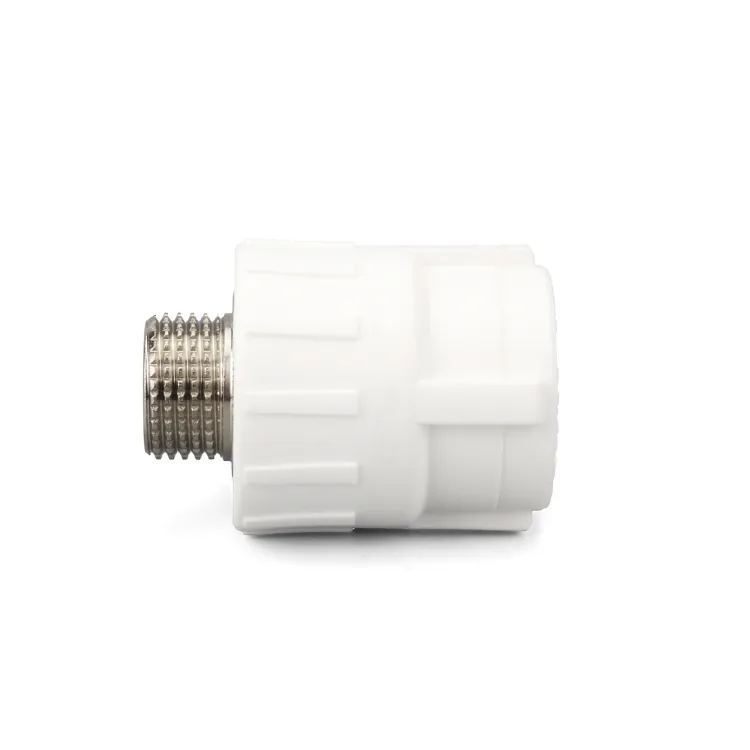
The insert resists two motions: rotating in the plastic when a wrench turns the mating part, and pulling out axially under line load. Knurling and the moulded profile handle both. When they fail, the joint usually spins before it pulls.
Why you cannot cite one test number here
Buyers ask which standard qualifies the insert, expecting one answer. There isn’t one, and understanding why is the actual expertise. ISO 3501:2015 covers resistance to pull-out under constant longitudinal force for mechanical joints between fittings and plastic pressure pipes, tested at a force producing 1.5 times the maximum permissible working stress of the pipe material. It explicitly does not apply to fusion-welded joints.
See where that leaves a moulded-in insert. The socket-fusion side is a fusion weld, outside ISO 3501’s scope. The insert-to-body interface is neither a mechanical joint nor a fusion weld — it is over-moulded. So no single pull-out figure qualifies the part, and a supplier quoting one as though it settles the question has misread the standard. Companion methods sit in the same family: ISO 3458:2015 for leaktightness under internal pressure on assembled mechanical joints, ISO 3503 for leakproofness under pressure with bending applied.
What governs the fitting as a system is ISO 15874-3, with ISO 15874-1 for general requirements and ISO 15874-5 for fitness for purpose. Bekaatherm builds to those parts, dimensions to DIN 8077 and general quality requirements to DIN 8078. Specify the system standard and the alloy designation together; neither alone describes the part.
The cracked body, and who owns it
A polypropylene body that splits in a ring around the insert, days or weeks after installation, is nearly always installation stress rather than a material defect. A taper thread is a wedge. Every extra turn, and every extra wrap of PTFE tape, drives it further and raises hoop stress in the plastic around the brass. Polypropylene creeps. The stress applied on Tuesday is still there in March, and the crack appears without anyone touching the joint.
Torque values here are size- and design-specific, and the figures circulating on trade forums trace back to no standards body or manufacturer datasheet. Treat any universal number with suspicion. Tighten to the fitting manufacturer’s stated torque — and require that the manufacturer publish one. A supplier who cannot state a torque figure for their own product has not characterised the interface they are selling you.
What each certificate actually covers
Certificate stacking works as a sales technique because every document named is real. The gap sits between what each one proves and what a buyer assumes it proves.
WRAS covers the plastic, not the metal
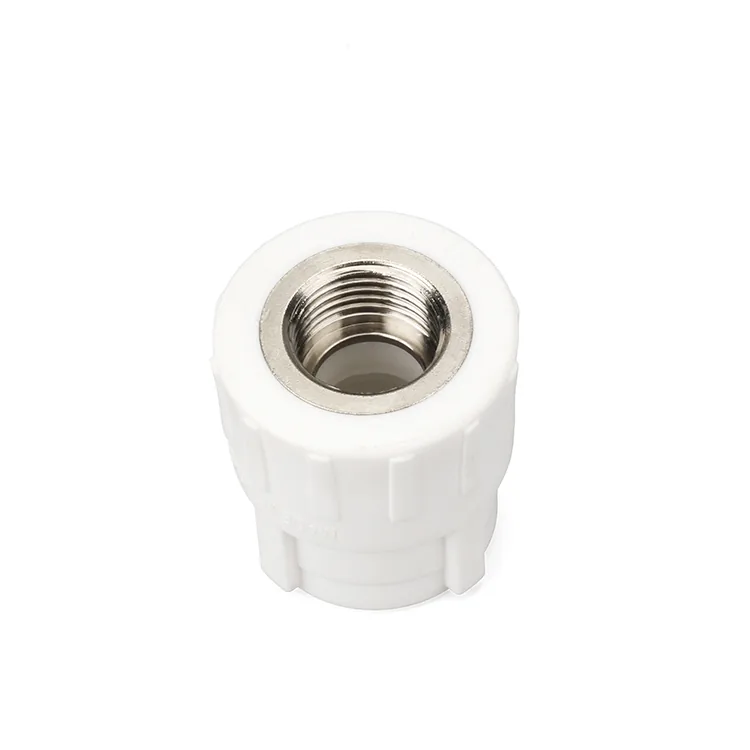
WRAS material approval goes to materials satisfying BS 6920 Parts 1 and 2, plus Part 3 for hot water — and BS 6920 evaluates non-metallic products in contact with drinking water. So a WRAS claim on a brass-insert fitting speaks to the polypropylene and any elastomer. The brass travels the metallic route, not BS 6920. Bekaatherm holds WRAS alongside SKZ, ISO and CE, and it is worth saying plainly what that covers: the polymer side. Conflate the two and you have a fully certified fitting with an unevidenced insert. Since the 2024 WRAS changes, fittings also require separate approval even where the material matches an already-approved product.
A mill certificate is not an approval
EN 12164 covers copper alloy rod for free-machining purposes; EN 12165 covers forging stock. Both are product-form standards, proving what the material is and what form it came in — not drinking-water acceptance. You need both documents. One note on older paperwork: BS EN 12165 replaced BS 2872:1989 and legacy designations still circulate, CZ122 being the old name for CW617N and CZ132 for CW602N. A certificate in CZ codes is not wrong, but it predates the -DW restricted compositions entirely.
| Document | What it proves | What it does not prove |
|---|---|---|
| EN 12164 / EN 12165 mill cert | Alloy composition and product form | Drinking-water acceptance |
| 4MS Part B listing | The composition is accepted for stated product groups | That your specific part was made from it |
| WRAS approval | Non-metallic materials meet BS 6920 | Anything about the brass insert |
| ISO 6509 test report | Measured dezincification depth by the stated method | A pass, unless the acceptance limit is named |
| ISO 15874-3 conformity | The fitting meets the PPR system fittings standard | Which alloy the insert is |
If you want the fuller picture of how SKZ, CE and WRAS differ in scope and who audits what, that comparison is set out in our guide to PPR pipe certifications.
The 31 December 2026 clock
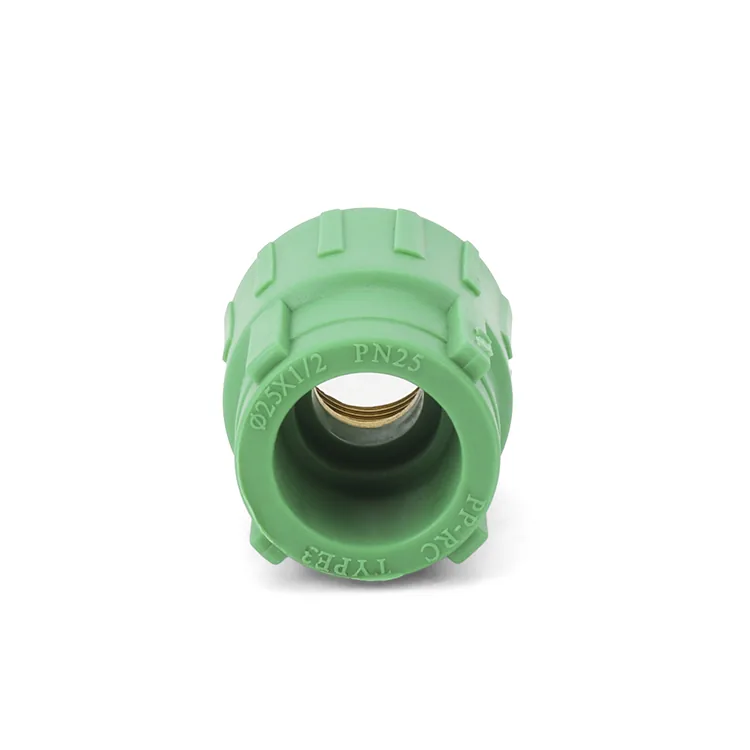
If you are specifying fittings now, this is the fact that changes your paperwork. Commission Implementing Decision (EU) 2024/367 of 23 January 2024 establishes the European positive lists of substances, compositions and constituents authorised for materials in contact with water intended for human consumption, under Drinking Water Directive (EU) 2020/2184. Article 1(b) establishes the positive list of metallic material compositions in Tables 1 and 2 of Annex II. Per Article 4, it applies from 31 December 2026.
It is one of six legal acts of that date supplementing the Directive — three Implementing Decisions, (EU) 2024/365, 2024/367 and 2024/368, and three Delegated Regulations, (EU) 2024/369, 2024/370 and 2024/371. Decision (EU) 2024/365 sets the methodologies for testing and accepting substances for the lists.
What it does not mean
It is not a cliff. Article 3 permits substances approved nationally between 13 July 2021 and 31 December 2026 to continue in use until 31 December 2032, subject to lead compliance at the tap. Anyone telling you the shelf becomes illegal at the end of 2026 is selling urgency. The practical read: you are ordering into a changeover, so a supplier’s answer to “which list is your acceptance under, and what happens to it after 31 December 2026” tells you whether they track the regime or coast on an old certificate. Requirements vary by member state, product type and the importer’s role — confirm your market’s position with the national regulator before relying on any single reading.
Shipping to the US as well
The two regimes are built differently, and a fitting can satisfy one while failing the other. The US caps composition on wetted surfaces: Section 1417 of the Safe Drinking Water Act defines “lead free” as a weighted average of not more than 0.25% lead across the wetted surfaces of pipes, fittings and fixtures, and 0.2% for solder and flux. The EU instead works from a positive list of whole compositions plus migration testing. So CW617N-DW at Pb 1.6–2.2% is acceptable in the EU under 4MS and would not meet the US lead-free definition on a heavily wetted part. Sell into both markets and that is not one product with two certificates — it is potentially two alloys, which is precisely why the low-lead silicon brass route exists.
The document request that settles it
Everything above compresses into one email, sent before the deposit rather than after the pressure test. A supplier who answers all seven points in a week controls their own insert supply chain.
- Alloy designation in full: with the -DW suffix if drinking water is in scope. “CW617N-DW”, not “brass” and not “CW617N”.
- Mill certificate per batch: to EN 12164 or EN 12165, showing measured Cu, Zn, Pb and impurity elements — not just a designation.
- Product group confirmation: in writing, that the alloy is accepted for group B.
- Dezincification report with its limit: ISO 6509 measured max and mean depth, plus the acceptance criterion and its source document.
- Thread designation on the label: R, Rp, Rc or G per fitting reference, carried onto the packing list, not just a nominal size.
- Published installation torque: per size. If none exists, that answers how well the interface is characterised.
- Origin, confirmed in writing: on the proforma invoice per order, with certificate of origin, packing list and bill of lading consistent.
How Bekaatherm handles the origin question
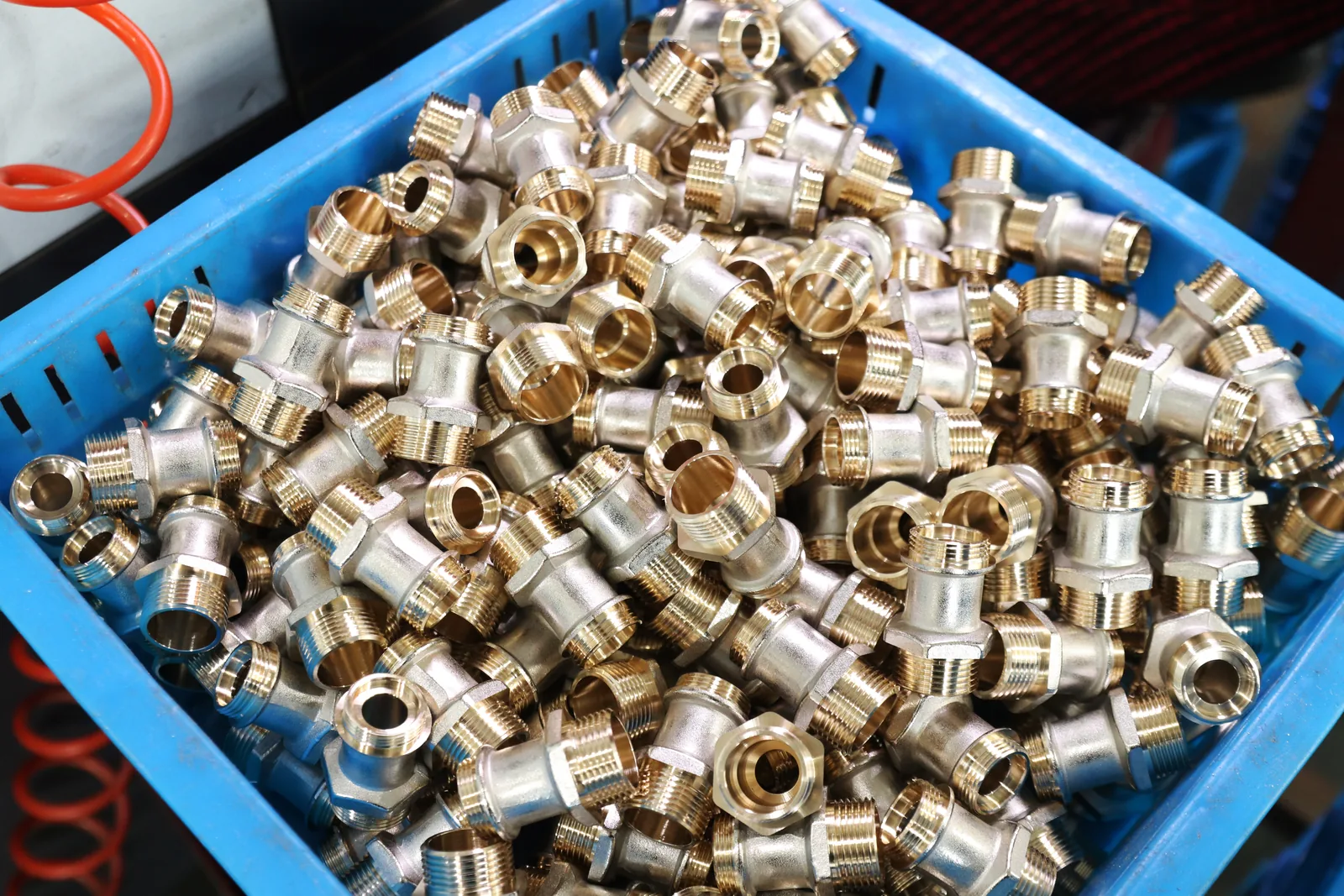
That last point deserves a straight answer rather than a marketing one. Bekaatherm supplies from two origins — Türkiye and a Chinese partner factory — allocated by market, confirmed in writing on that order’s proforma invoice, with certificate of origin, packing list and bill of lading issued consistent with it. Insert sourcing differs between plants, which is exactly why the alloy designation belongs on the order rather than in an assumption. Any supplier with more than one production site has this situation; the difference is whether they put it on the invoice.
Be careful what a proforma tells you about tariff classification. Heading 3917.40 covers plastic pipe fittings; 7412.20 covers copper alloy ones. For a composite article, classification turns on essential character under GRI 3(b) — a determination for a customs authority, not a supplier. If duty exposure matters to your margin, obtain a Binding Tariff Information ruling in the EU or a CBP ruling in the US rather than trusting the code a supplier prints.
One order, end to end
Take a distributor in a WRAS-recognising market placing a first mixed trial order: one 20GP mixed container of pipe, fittings and valves, with 1/2 inch and 3/4 inch threaded transitions as the commercially sensitive line.
Before the deposit. Send the seven-point request and ask for standard samples — free for up to 3 items, freight collect. When they arrive, check three things by hand: the thread designation is marked, the moulded legend matches the order, and the insert does not rotate under a firm wrench. Then put the alloy designation, thread standard and origin into the proforma text itself, alongside the commercial terms — 30% T/T deposit with 70% against copy B/L, or an irrevocable L/C at sight from USD 50,000. A specification living only in an email thread is one you cannot enforce at destination.
Through production and shipment. Regular in-production sizes run 15–25 days; private label runs 30–45 days, plus 7–10 days for a first colour match or new mould. Request the batch mill certificate inside that window rather than after loading, then check the certificate of origin, packing list and bill of lading all name the same origin under FOB İstanbul or Mersin. File the mill certificate and dezincification report where you will find them in year four — the 50-year warranty against material and manufacturing defects, matched to the 50-year design life at rated pressure and 20 °C under ISO 15874, is only as useful as your ability to identify which batch the failed fitting came from.
Best for, and not for
- Best for: importers stocking a branded range they will warrant for years; contractors whose submittals get consultant review; anyone in a market where a regulator can ask for the metallic acceptance in writing; buyers shipping to both the EU and the US.
- Not for: a one-off container of irrigation or non-potable fittings. Demanding group B evidence for a part that never touches potable water adds cost and delay for nothing.
- Also not for: buyers whose only criterion is unit price. These checks take a week and will occasionally disqualify the cheapest offer, which is the point of running them.
The threaded transition fittings covered here sit in the wider PPR fittings range, and the inspection routines behind the certificates are set out under quality control. If the joint itself is what you are working on, the socket fusion side has its own failure modes, covered in our guide to welding PPR pipe.
Conclusion
Three of the four failure modes are visible on paper before the goods ship: the alloy designation with its -DW suffix and product group, the dezincification report with its acceptance limit named, and the thread designation carried onto the label. The fourth, installation stress, is settled by a published torque figure and a competent installer. None of this requires a laboratory — only asking for the right document and reading what it actually covers.
If you are specifying threaded PPR fittings for a range you will stand behind, pin the alloy designation and thread standard into the order text, then compare what different suppliers will put in writing. You will learn more from who hesitates than from any certificate they send.
Frequently Asked Questions
What is the difference between CW617N and CW617N-DW?
CW617N-DW is a restricted-composition version accepted on the 4MS positive list for drinking water, at Cu 57.0–60.0%, Pb 1.6–2.2% and Ni capped at 0.1%. Plain CW617N to EN 12165 has a different copper window and looser impurity limits. Specify the -DW suffix explicitly.
Can CW614N be used in a PPR fitting brass insert?
The 4MS Part B list places CW614N-DW in product groups C and D, which cover small components rather than fitting bodies. A fitting is a group B product, so CW614N in that role falls outside the acceptance. Query any mill certificate naming it.
Does a WRAS certificate cover the brass insert?
No. WRAS material approval rests on BS 6920, which evaluates non-metallic products in contact with drinking water. It speaks to the polypropylene and any elastomer seals. The brass is covered through the separate metallic route.
Why does my G thread leak in an Rp fitting?
Because it was never designed to seal there. ISO 228-1 G threads seal on a face against a washer or O-ring, while ISO 7-1 R, Rp and Rc threads seal on the thread flanks with sealant. The sizes look compatible and the sealing mechanisms are not.
What changes on 31 December 2026 for drinking water fittings in the EU?
Commission Implementing Decision (EU) 2024/367 applies from that date, establishing European positive lists including compositions of metallic materials. Substances approved nationally between 13 July 2021 and 31 December 2026 may continue until 31 December 2032 under Article 3. Confirm your market’s position with the national regulator.
Does ISO 6509 give a pass or fail limit for dezincification?
ISO 6509-1 gives the method — roughly 1% copper(II) chloride at 75 °C for 24 hours — and refers evaluation to ISO 6509-2. Acceptance limits come from the product standard or national approval scheme. Always ask which limit the report was judged against.
Does ISO 3501 qualify a moulded-in brass insert?
Not directly. ISO 3501:2015 covers pull-out resistance for mechanical joints at 1.5 times the maximum permissible working stress of the pipe, and excludes fusion-welded joints. An over-moulded insert is neither, so no single pull-out figure qualifies the part.
Why did the plastic crack around the brass insert?
Usually installation stress. A taper thread acts as a wedge, and excess turns or excess PTFE tape raise hoop stress in the polypropylene around the insert. Polypropylene creeps, so the crack can appear weeks later. Tighten to the manufacturer’s stated torque.