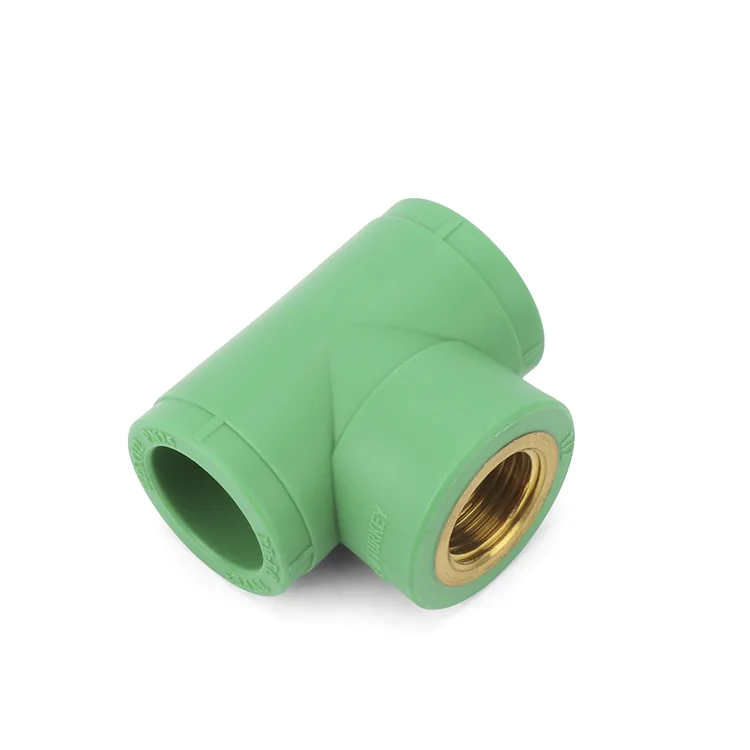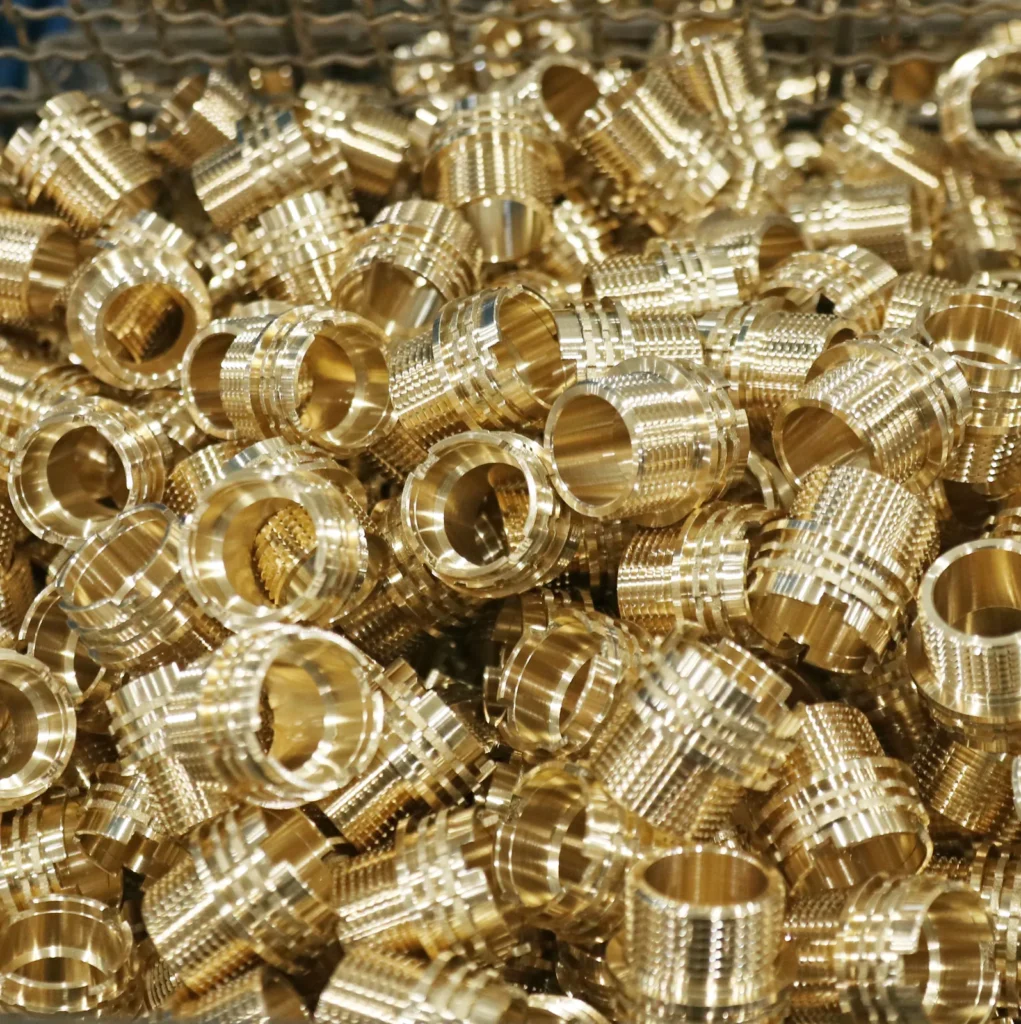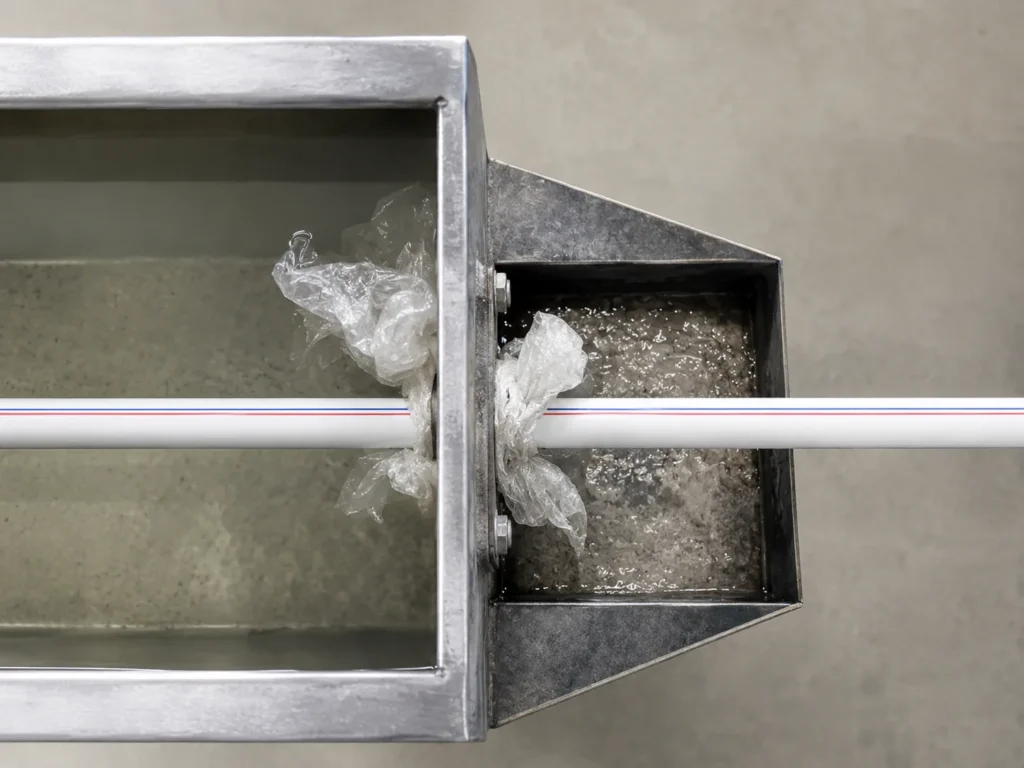
The plastic body of a PPR valve is almost never the part that fails. The brass core is. It carries the thread, holds the seat, takes the spanner load on installation day, and sits in contact with the water for the next fifty years — and most valve datasheets describe it with one unhelpful word: “brass.”
That word is about to stop being good enough in Europe. The first EU Positive Lists under the recast Drinking Water Directive apply from 31 December 2026, specifying a lead content of maximum 0.1% weight by weight for materials in contact with drinking water. Standard DZR brass — the corrosion-resistant grade the trade already treats as the good stuff — still carries lead at roughly 1.5–2% as a machining aid. Those two facts do not agree, and the gap is what an importer buying valves this year should be putting to suppliers in writing.
Key takeaways
- A gate valve is a fully open or fully closed device. Throttling with one causes wire-drawing and seat erosion, which is why gate valves on main lines fail early.
- A threaded brass-core PPR valve is a Mechanical (M) joint under ISO 15874-5 Table 1 — a different test set from a plain socket-welded joint. Ask for the M column.
- The five reports that actually prove a valve: ISO 1167 internal pressure (1 000 h, 3 test pieces), EN 713 bending, EN 712 pull-out, ISO 19893 thermal cycling, ISO 19892 pressure cycling.
- Socket fusion for PP-R follows DVS 2207-11, not 2207-1 — 260 ± 10 °C, and cooling times of 2–6 minutes for 20–63 mm before the joint may be loaded at all.
- DZR is not the same as lead-free. ISO 6509-1 tests dezincification (200 µm is the recognised DZR criterion); the 2026 lead question is separate and unanswered by a DZR certificate.
- A fused-in valve without a double-union body is a valve you will cut a wall open to replace. This is the whole service-access argument.
- PPR valves clear customs under HS 8481 (valves), not 3917.40 (plastic fittings). Different chapter, different duty.
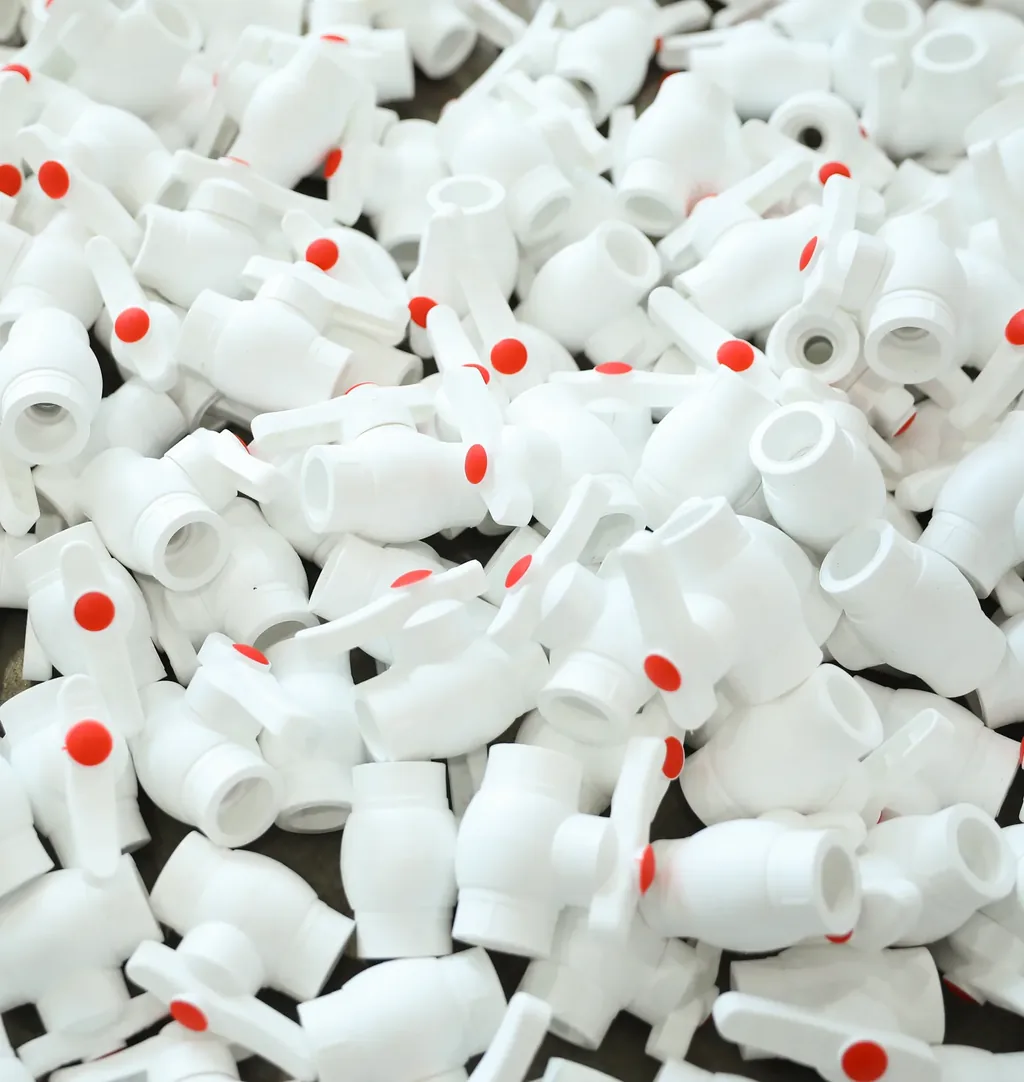
Gate or ball: what each one is actually for
Most comparisons of these two valves end at “ball valves seal better,” which is true and nearly useless. A gate valve raises a wedge out of the flow path, so fully open it is genuinely full bore. A full-port ball valve also creates very little pressure loss, because the bore can match the pipe’s internal diameter. The flow argument is close to a draw. The failure argument is not.
Gate valves are highly susceptible to wire-drawing and seat erosion if used for throttling, so they must remain strictly fully open or fully closed. Wire-drawing is what it sounds like: water forced through a narrow gap at high velocity cuts a groove across the seat, and once that groove exists the valve never shuts off completely again. It is usually the work of a well-meaning person leaving the handwheel half-turned to “balance” something.
Ball valves win a second argument that has nothing to do with sealing. The lever shows the state of the line from across the room — inline open, crosswise shut. A handwheel tells you nothing without counting turns. On a plant room wall with fourteen isolators, that is not a nicety.
Best for / not for
| Valve type | Best for | Not for |
|---|---|---|
| PPR gate / stop valve | Rarely-operated line isolation; risers left open for years; full-bore runs where a lever handle would be knocked | Any throttling or balancing duty; frequently cycled branches; anywhere position must be read at a glance |
| PPR ball valve (single body) | Frequently operated branch isolation; appliance legs; anywhere quarter-turn shut-off speed matters | Concealed positions where the whole valve would have to be cut out to service it |
| Brass double-union ball valve | Concealed and boxed positions; plant room manifolds; anything a maintenance team will meet again | Tight chases where the union nuts leave no spanner access — measure before specifying |
| Slow-opening angle valve | Terminal fittings where a fast quarter turn would slam the line; direction changes at the outlet | Emergency isolation duty where speed of shut-off is the point |
A position, since you asked for one: specify ball valves as the default and reserve gate and stop valves for the rare-operation full-bore case. Quarter-turn PTFE seats resist wear better than sliding gates and stems in frequently cycled systems, and visual position indication removes a whole class of commissioning error. Our PPR valves and manifolds page is built around that assumption, covering ball, stop and brass double-union ball valves, America stop valves, slow-opening angle valves, radiator valves in elbow, straight and angle patterns, valve heads with air-vent plugs, and PPR and iron-body filters.
The brass core is the part that fails
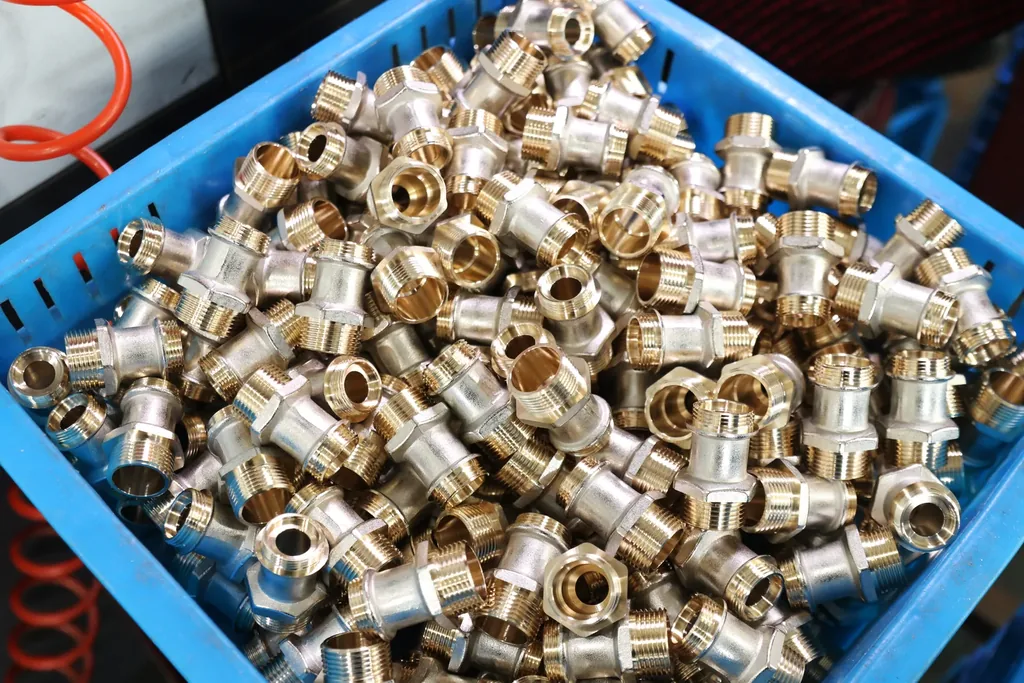
Brass is copper and zinc. In water of the wrong chemistry — soft, acidic, high in chloride, or simply hot and stagnant — the zinc leaches out and leaves a porous copper skeleton that looks like brass and has almost no strength. That is dezincification, and it is why a valve can look perfect from outside while the thread it holds has turned to biscuit.
The industry has a named test for it. ISO 6509-1:2014, Corrosion of metals and alloys — Determination of dezincification resistance of copper alloys with zinc — Part 1: Test method, is what your supplier’s metallurgy claim should reference. The method is reproducible: a polished sample is exposed to a 1% copper(II) chloride solution at 75 °C for 24 hours, then sectioned and measured. The recognised acceptance criterion for DZR-grade material is a maximum dezincification depth of 200 µm or less. That is the number separating dezincification-resistant brass from ordinary brass, and it belongs on a purchase order.
The alloy codes to write down
Two European designations do most of the work. CW602N (CuZn36Pb2As) is an arsenical duplex brass and the standard material for DZR plumbing fittings, valves and meter bodies across Europe and Australasia — the arsenic inhibits the dezincification mechanism. CW614N is the free-cutting reference grade it is compared against, and CW617N is the ordinary free-cutting brass that most unspecified “genuine brass” turns out to be. Rod is bought against EN 12164, with EN 12420 covering forgings. Write those codes into the specification instead of the word “brass,” and a supplier either has an answer or does not.
Purchase-order lines worth copying
- Brass insert alloy designation stated on the proforma invoice (EN designation, e.g. CW602N or CW617N — the point is that it is named).
- Rod supplied to EN 12164; forgings to EN 12420.
- Dezincification test report to ISO 6509-1, with the measured depth in µm, if the destination market or water chemistry demands DZR.
- Declared lead content by % w/w, with the test method named — needed for the 2026 question below.
- Country of origin per shipment, confirmed in writing before production starts.
A note on our own valves, stated plainly. The double-union ball valves carry a genuine brass insert moulded on our own tools, with bodies in 100% high-standard resin in green, white and coffee. We do not publish a blanket alloy grade for the whole range here, because grade is specified per order and per destination market, and one number on a blog page would be a claim we could not honour on every line item. Ask for the alloy on your quotation and it comes back in writing on the proforma invoice.
What changes for brass on 31 December 2026
The recast EU Drinking Water Directive, Directive (EU) 2020/2184, makes materials in contact with drinking water a legal duty rather than a quality gesture. Article 11 requires those materials not to compromise human health directly or indirectly, adversely affect colour, odour or taste, enhance microbial growth, or cause contaminants to leach at levels higher than necessary. The enforcement machinery arrived on 23 April 2024 as six acts: Implementing Decisions (EU) 2024/365, 2024/367 and 2024/368, and Delegated Regulations (EU) 2024/369, 2024/370 and 2024/371 — with 2024/368 laying down the procedures for testing and accepting final materials.
The dates matter more than the act numbers. The first European positive lists apply from 31 December 2026; until then national positive lists and other national provisions apply. The Positive List specifies a lead content of maximum 0.1% weight by weight. New products must comply from December 2026, while existing products have until December 2032, unless national authorities opt for an earlier transition. Separately, at the tap, the Directive’s Annex I sets lead at “10 μg/l — 15 years after entry into force; thereafter 5 μg/l” — and since it entered into force in January 2021, the 5 μg/l value applies from 12 January 2036.
Now put the two halves together. Standard DZR brass (CW602N) still contains lead at roughly 1.5–2% as a machining aid. A 0.1% w/w cap is more than an order of magnitude below that. So a DZR certificate, on its own, does not answer the 2026 question — and a supplier who meets “what is your lead content?” with “our brass is DZR” has either misunderstood the question or is hoping you will not notice the difference.
Offered as guidance rather than a determination, since the detail varies by market and by the importer’s role: if you ship into an EU member state, put the lead-content question to every valve supplier in writing this year, ask which transition applies to your product line, and confirm the position with your notified body or the competent national authority before finalising a specification. National provisions still govern until the end of December 2026, and they are not identical.
Shipping valves into an EU market in 2027?
Useful if you are an importer or distributor whose current valve line was specified before the positive lists were published. Send us the sizes and destination country and we will come back with the alloy and material declarations we can support for that market, in writing on the proforma, rather than a generic statement.
Torque: the number nobody publishes, and what to do instead
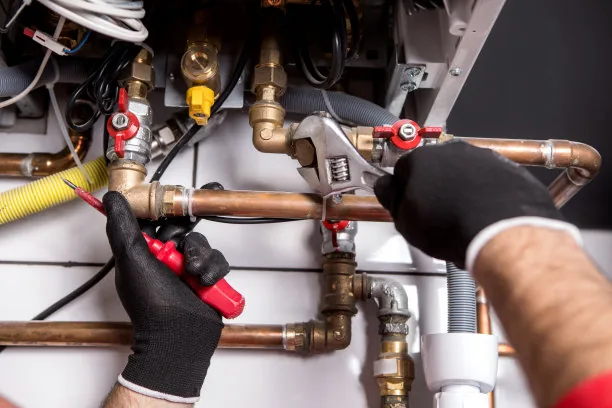
Here is an honest answer most vendor pages will not give you: there is no published tightening torque in newton metres for threading into a PPR valve’s brass insert. No standards body publishes one, and a search for a manufacturer technical document that does turns up marketplace listings rather than test data. Ask anyone quoting a precise N·m figure where it came from.
That is less a gap in knowledge than a mismatch of concepts. “Torque” in a PPR valve is not a handwheel specification. It is the risk of over-tightening a threaded brass insert against a plastic body — a hoop stress problem in a moulded polymer, not a bolted-joint problem — and it depends on insert geometry, the mating fitting, the sealant and the workshop temperature. A single number would be false precision. The technique answers it instead, in four rules.
- Back-hold the brass. Put a spanner on the brass hexagon and turn the mating fitting against it, so the torque closes on itself between two metal parts and never reaches the plastic. A cracked valve body almost always traces to a single spanner, torque reacted through the moulding.
- Thread first, then fuse. Make the threaded connection while the valve is loose in your hands and you can feel resistance building. Once it is fused in, the pipe holds the reaction load and you will not feel the plastic yielding until it has.
- PTFE tape, not hemp. Hemp and paste swell to seal, and swelling inside a threaded plastic-bodied component is the mechanism you are trying to avoid.
- Follow the maker’s instruction sheet where one exists. If a manufacturer publishes a figure for their specific insert, theirs beats every general rule above, including ours.
Which standard actually covers a brass-insert valve
Naming “ISO 15874” without a part number is the tell of a page that has not opened the standard. Two parts matter for a valve. ISO 15874-3 is the fittings part, and its scope explicitly covers socket fusion fittings, electrofusion fittings, mechanical fittings, and fittings with incorporated inserts. A brass-core valve sits squarely in that last category, so you may demand conformity against it.
ISO 15874-5 is the more useful one, because Clause 4 governs fitness for purpose of the joints and the piping system — not the pipe alone, and not the fitting alone. Its Table 1 specifies the tests applicable for each type of jointing system, naming three: SW (socket welded), EF (electrofusion) and M (mechanical), with Y denoting a test applicable and N not applicable.
That table is the leverage. A threaded brass-insert valve sits in the M column, which is a different test set from a plain socket-welded joint. So when a supplier sends you a pressure test on a fused coupling and calls it valve evidence, they have answered a question you did not ask.
The five reports to demand, and why each exists
| Test | Method standard | The site failure it predicts |
|---|---|---|
| Internal pressure | ISO 1167-1/-2/-3/-4 | Long-term creep failure of the assembly under sustained pressure |
| Pull-out | EN 712 | The brass insert pulling out of the plastic valve body under longitudinal load |
| Bending | EN 713 | Leakage when a mis-aligned riser stresses the valve sideways |
| Thermal cycling | ISO 19893 | Brass and polypropylene expanding at different rates, cycle after cycle, until the seal opens |
| Pressure cycling | ISO 19892 | Fatigue at the joint from pump starts and water hammer |
| Vacuum | EN 12294 | Seal collapse under negative pressure when a system drains down |
Two of those titles explain themselves. EN 712 is End-load bearing mechanical joints — Test method for resistance to pull-out under constant longitudinal force: precisely the failure mode of a brass insert leaving a plastic valve body. EN 713 covers leak tightness under internal pressure of assemblies subjected to bending — the valve pushed sideways by a riser that was never quite plumb.
Know the shape of the internal pressure test before you read a report. ISO 15874-5 Table 2 sets 1 000 hours on 3 test pieces for Classes 1, 2, 4 and 5, at a temperature deliberately above service: Tmax is 80 °C for Classes 1 and 2 while Ttest is 95 °C, since the highest test temperature is generally Tmax + 10 °C capped at 95 °C. The joint is overstressed on purpose.
One more line from the same table settles a recurring specification argument. The 50-year design life is anchored to a stated condition: “The 20 °C, 10 bar, 50 years, cold water requirement, being higher, determines this value,” referring to ISO 15874-1:2013, Clause 4. Cold water governs. So PN20 at 20 bar and the 50-year design life are two different statements about two different conditions — a distinction worked through in the PN20 versus PN25 breakdown. The general part of the series is ISO 15874-1:2013.
Fusing a valve in: the DVS 2207-11 numbers
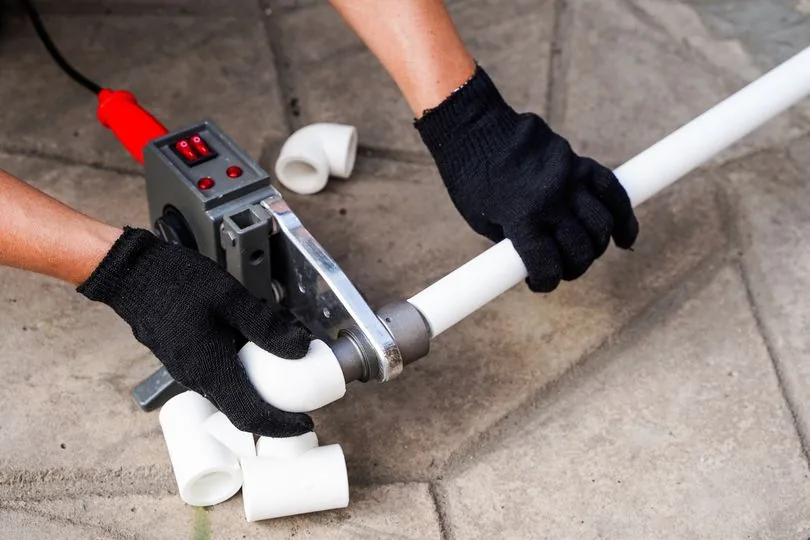
Start with the part number, because getting it wrong is a common spec error. DVS 2207-11 is the PP part of the series; DVS 2207-1 is the PE-HD / PE 100 table. If your welding procedure sheet cites 2207-1 for a PP-R job, someone copied the wrong page. For heated-tool socket welding of PP-R the tool temperature is 260 ± 10 °C, and these are the times for exactly the diameters our valve range covers, at SDR 11 and 20 °C ambient.
| Outside diameter | Warming time | Change-over, max. | Cooling — fixed | Cooling — total |
|---|---|---|---|---|
| 20 mm | 5 s | 4 s | 6 s | 2 min |
| 25 mm | 7 s | 4 s | 10 s | 2 min |
| 32 mm | 8 s | 6 s | 10 s | 4 min |
| 40 mm | 12 s | 6 s | 20 s | 4 min |
| 50 mm | 18 s | 6 s | 20 s | 4 min |
| 63 mm | 24 s | 8 s | 30 s | 6 min |
Two columns there are routinely confused, and the confusion costs money. “Fixed” is how long you hold the joint still by hand; “Total” is how long before the joint may be loaded at all. DVS 2207-11 states it directly: the joint may be subjected to loading by the other laying operations only when the cooling time has elapsed. On a 63 mm valve that is 30 seconds of holding and six minutes before anything touches it.
Change-over is the tightest constraint on site. On a 20 mm joint you have a maximum of 4 seconds between pulling the parts off the heated tool and seating them — not enough time to reposition a ladder or find the fitting you set down. Lay both parts within reach before the tool goes near them.
One more warning belongs in every specification: for the thin-wall SDR 17 column at 16–50 mm, DVS notes it is “not to be recommended because wall thickness is inadequate.” If a supplier offers thin-wall in the small diameters to hit a price, that footnote is your answer. The table also gives times, not socket depths, so mark insertion depth off the fitting socket with a pencil before the tool is heated. The full method is in our heat fusion welding guide.
Service access: unions, manifolds and two isolation points
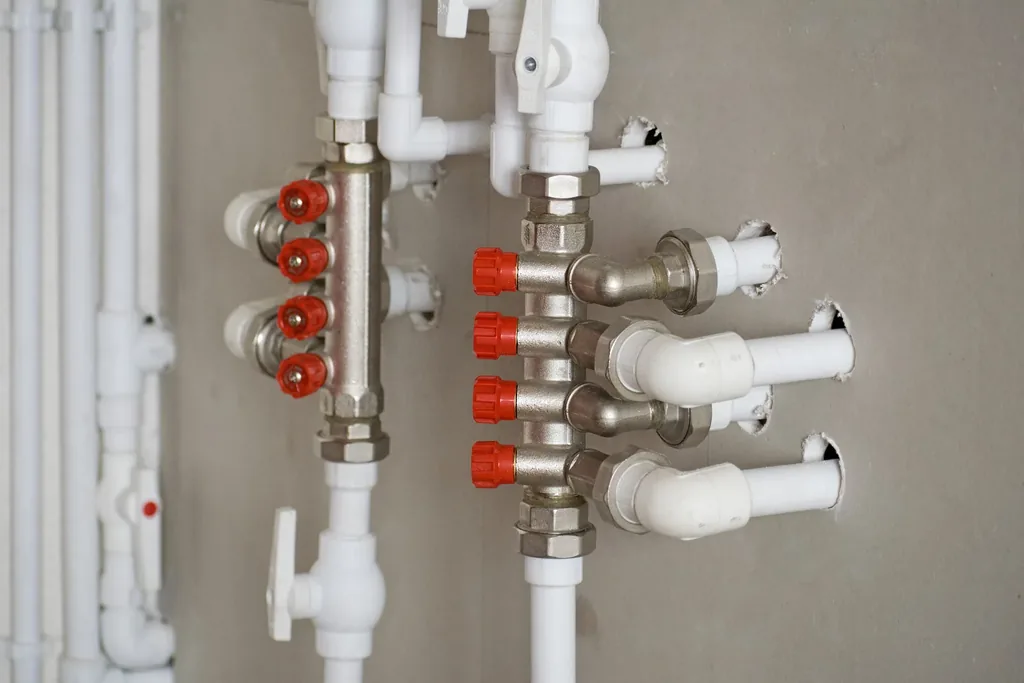
Socket fusion makes a joint stronger than the components it joins, and permanent in the most literal sense. A single-body PPR valve fused into a chase is welded into that wall for the life of the building, and the only way to replace it is a saw and a plasterer.
That is the entire case for the double-union body, and it is about labour cost rather than valve quality. Seals in multi-piece and union-bodied ball valves are much easier to replace, which reduces downtime. Undo two nuts, lift the centre section out, reseal, put it back. The fused sockets never move.
Manifolds apply the same logic to a whole floor. A manifold carries isolation on the flow arm and manual isolation or a lockshield on the return arm — two isolation points per circuit, so one leaking loop can be worked on while the other five stay in service. Our range runs 2-way to 5-way distribution manifolds, manifolds with female threads, and underfloor heating manifolds, coded 32/40 × 1/2″F × 2W · 3W · 4W · 5W, with solar and radiator sets, air-vent plugs, shelves and end caps completing the assembly — context on our solar and underfloor heating page.
Choosing the number of ways is simpler than it looks. Count circuits, then add one. The spare port costs very little at order time and is the difference between adding a bathroom loop in year six and rebuilding the manifold.
End to end: a six-circuit manifold, wall to pressure test
Take a six-circuit underfloor installation on a 32 mm primary, fed through a wall-mounted manifold, to be screeded the following week.
- Specify. Six circuits plus one spare means a 5-way manifold will not do — decide that at order time, not at the wall. Brass double-union ball valves at 32 mm on flow and return let the manifold be isolated and lifted out later without disturbing fused pipework.
- Thread before you fuse. Make every threaded connection into the manifold arms and union valves on the bench, spanner back-holding the brass, PTFE on the threads.
- Fuse. Tool at 260 ± 10 °C. On the 32 mm primary: 8 seconds warming, maximum 6 second change-over, hold 10 seconds. Then wait — the joint may not be loaded for 4 minutes.
- Test before the screed. Standard practice under EN 1264-4 is a pressure test at twice working pressure, minimum 6 bar, held 24 hours before screeding with isolators and flow meters fully open. Confirm against your project specification and national annex, as these vary.
- Balance after commissioning. Set each circuit’s flow meter to its calculated target, starting with the longest or highest-resistance loop, and recheck every circuit after each adjustment because the circuits interact. Expect at least two full passes.
The failure worth naming is the four-minute one. An installer fuses the 32 mm primary, and because the joint looks solid at ten seconds, he clips the pipe and hangs the manifold on it inside the first minute. Nothing leaks. The pressure test passes, because 6 bar for 24 hours does not find a joint that is only mostly sound. The screed goes down. Eighteen months later a slow weep starts under 60 mm of concrete. The material did not fail. Three minutes of patience did.
How we check a valve before it ships — and how you check us
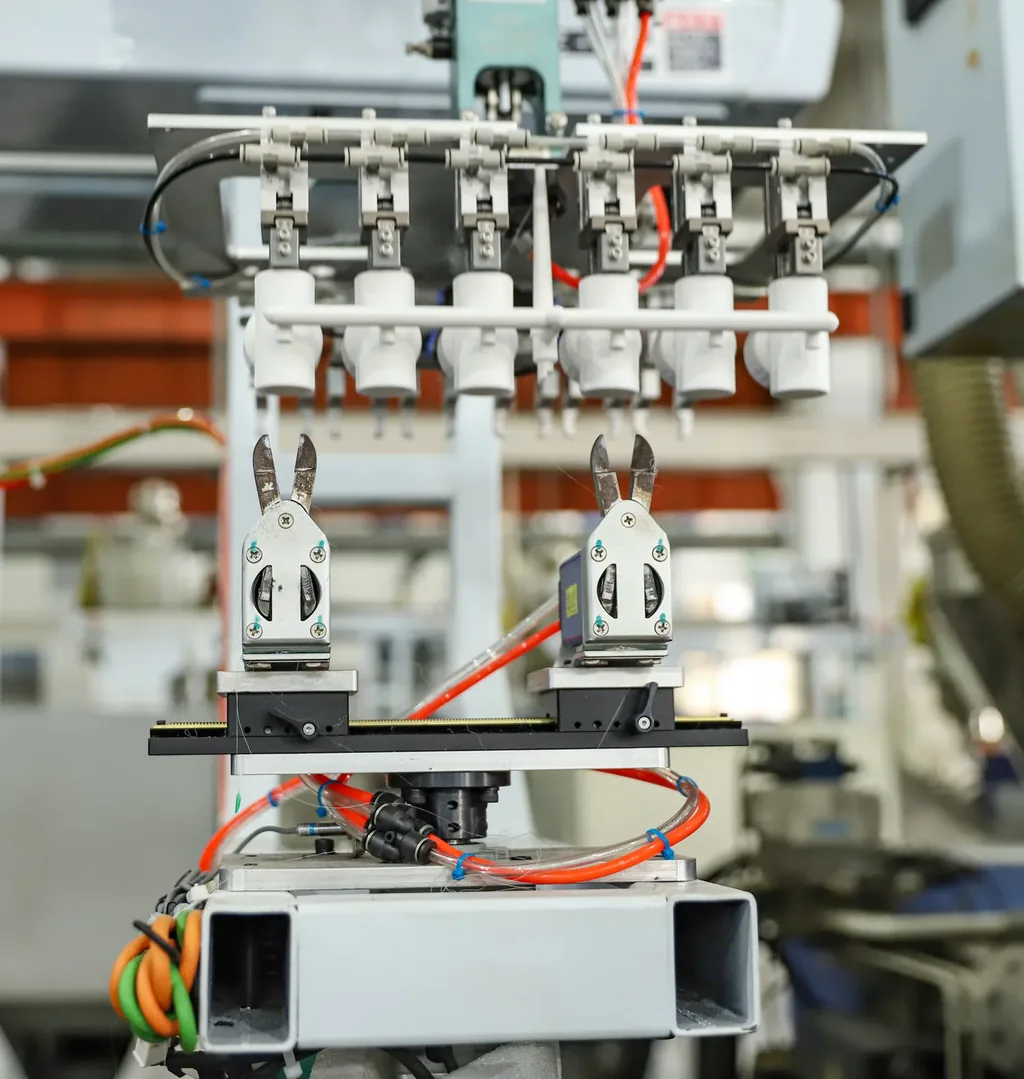
Some context, because it explains the checks rather than decorating them. Thirty years of manufacturing, a 120,000 m² plant, 1000+ staff, 10,000 moulds in house, 98 items across 4 systems, shipping to 118+ countries. The mould count is the number that matters for valves: bodies moulded on our own tools means the insert seat geometry is ours to control, and geometry is what EN 712 measures. We state compliance with ISO 15874-3 and ISO 15874-5, a certification set of SKZ, ISO, CE and WRAS, and a 50-year warranty against material and manufacturing defects. Our quality control process and certifications are published rather than described.
Verify any supplier’s WRAS claim in three minutes
This is the check we would want a customer to run on us, because it separates a real approval from a PDF someone edited.
- Know which approval you are shown. WRAS Product Approval covers whole products such as valves, boilers and showers, which undergo mechanical and water quality testing; fittings are only mechanically tested against the Regulator’s Specification. A valve needs the whole-product one — a material-level certificate for the resin is the most common substitution in a certificate pack.
- Check the date. WRAS Fitting Approvals are valid for a maximum of five years, with retesting every five years to maintain approval. An expired certificate is not a weaker certificate; it is not a certificate.
- Look it up yourself. The WRAS Products and Materials Directory is searchable by approval number, company name, product type or keyword, and shows “Valid From” and “Expiry Date” for each entry.
Two minutes in that directory beats an hour reading a certificate pack. The same discipline applies to the German testing and certification body SKZ: ask what the certificate scope covers, because a scope naming pipe does not automatically name valves. The full certificate-reading exercise is in our SKZ, CE and WRAS guide.
We do not print certificate numbers in article copy, ours or anyone’s, because a number on a blog page cannot be kept current and a stale one is worse than none. Ask for the current set against your SKU list and destination market, and it arrives with scopes and dates attached.
Want the certificate scopes for a specific valve list?
For contractors and importers who are being asked by a consultant to evidence a valve schedule. Send the SKU list and the destination market and we will return the certificate scopes and dates that apply to those exact items, so your consultant can check them against local rules.
Sizes, PN, HS codes and order terms
Valves run 20 · 25 · 32 · 40 · 50 · 63 mm, with threaded variants at 20×1/2, 25×3/4 and 32×3/4, in PN20 (20 bar at 20 °C) and PN25. Remember what that rating is: the 20 bar figure is a cold-water statement, and the 50-year design life is anchored to the 20 °C, 10 bar, cold-water condition in ISO 15874-1 Clause 4. Hot duty derates both, which is why matching valve PN to the pipe and fittings in the same circuit is not optional. Dimensions are in the sizes chart.
The customs point nobody mentions
A PPR valve is not classified as a plastic fitting. Plastic pipe fittings sit under heading 3917, subheading 3917.40. Valves sit under heading 8481: taps, cocks, valves and similar appliances for pipes. HS 2022 gives six subheadings under 8481 — 8481.10, 8481.20, 8481.30, 8481.40, 8481.80 and 8481.90 — with 8481.80 the residual, chosen only after the others are ruled out. Different chapter, potentially different duty rate, on the same pallet as your pipe. Only the six-digit level is globally harmonised, so confirm the national code with your customs broker before the proforma is issued rather than after the container has sailed.
Order terms
| Term | Position |
|---|---|
| Minimum order — trial | One 20GP mixed container (pipe + fittings + valves) |
| Minimum order — single size | 500 kg per size and colour |
| Typical mixed container split | About 60% pipe, 30% fittings, 10% valves by volume |
| Lead time — regular sizes | 15–25 days |
| Lead time — private label | 30–45 days |
| Payment | 30% T/T deposit, 70% against copy B/L |
| Trade terms | FOB İstanbul or Mersin by default; CFR and CIF on request |
| Samples | Standard samples free up to 3 items, freight collect |
Valves are roughly a tenth of a mixed container by volume and a much larger share of the trouble, so load the sample allowance with valves rather than pipe. Three items is enough to fusion-test a joint, back-hold a thread and check whether the union nuts clear your typical chase.
On origin, stated straight: supply is dual-origin, from Türkiye and from a partner plant in China, allocated by market. The origin for your order is confirmed in writing on the proforma invoice before production starts, with certificate of origin, packing list and bill of lading issued consistent with one another. If your market has an origin requirement, raise it at quotation stage so it is written into the proforma rather than assumed.
Pricing a valve and manifold schedule?
For contractors and importers who already have sizes, PN and ways settled. Send the schedule and we will quote FOB with a loading plan showing how the valves fit alongside the pipe and fittings in the same container. If you are still costing the wider package, the price list page is the better starting point, and common commercial questions are answered on the FAQ page.
Conclusion
Three decisions carry the risk in a PPR valve specification, and none is gate versus ball. Name the alloy, demand ISO 6509-1 evidence where water chemistry justifies it, and get lead content declared as a number before the 2026 positive lists arrive. Ask for the Mechanical column of ISO 15874-5 Table 1 — EN 712, EN 713, ISO 19893, ISO 19892 — rather than a pressure test on a fused coupling. And settle service access at order time, because a single-body valve fused into a chase is installed permanently.
On site it compresses into one number: the Total cooling column. Six minutes on a 63 mm joint, and the temptation to move at thirty seconds is the most expensive impulse in the trade. The full range is on the valves and manifolds page.
Get a valve and manifold schedule reviewed before you order
For installers and buyers who want a second pair of eyes on PN, ways, union type and thread sizes before the proforma is issued. Send the schedule by email to sales18-ifan@ifangroup.com, or send it on WhatsApp if you would rather photograph a drawing than type it out.
Frequently asked questions
What is the difference between a PPR gate valve and a PPR ball valve?
A gate valve lifts a wedge out of the flow path and must be left either fully open or fully closed. A ball valve rotates a drilled sphere a quarter turn and shows its position on the lever. Both can be full bore with very little pressure loss, so the real difference is duty: gate valves are for rarely-operated isolation, ball valves for anything cycled regularly. Throttling with a gate valve causes wire-drawing and seat erosion.
How tight should I do up a threaded PPR valve?
No standards body publishes a newton-metre figure for threading into a PPR valve’s brass insert, so treat any quoted number with suspicion unless it comes from that valve’s own manufacturer. The technique is what protects the body: back-hold the brass hexagon with a second spanner so the torque never reaches the plastic, make the threaded connection before fusing the valve into the line, and use PTFE tape rather than hemp, which swells.
Is DZR brass the same as lead-free brass?
No. DZR means dezincification-resistant, tested to ISO 6509-1 with a recognised acceptance criterion of 200 µm maximum dezincification depth. Standard DZR brass such as CW602N still contains lead at roughly 1.5–2% as a machining aid. The EU Positive List specifies a maximum lead content of 0.1% weight by weight for materials in contact with drinking water, so a DZR certificate does not answer the lead question.
When do the EU Positive Lists apply to valves?
The first European positive lists apply from 31 December 2026; until then national positive lists and other national provisions apply. New products must comply from December 2026, while existing products have until December 2032, unless national authorities opt for an earlier transition. Separately, the Drinking Water Directive’s Annex I moves the lead parametric value at the tap from 10 μg/l to 5 μg/l from 12 January 2036. Confirm the current position for your market with the competent national authority.
Which standard covers a brass-insert PPR valve?
Two parts of ISO 15874. Part 3 is the fittings standard and its scope covers mechanical fittings and fittings with incorporated inserts, which includes a brass-core valve. Part 5 covers fitness for purpose of the joints and the piping system, and its Table 1 splits the test requirements into socket welded, electrofusion and mechanical jointing systems. A threaded valve is tested under the mechanical column.
How long after fusing a PPR valve can I pressure test?
Wait for the full cooling time, not the hold time. DVS 2207-11 gives total cooling of 2 minutes at 20 mm and 25 mm, 4 minutes at 32 mm, 40 mm and 50 mm, and 6 minutes at 63 mm. The shorter “fixed” times of 6 to 30 seconds are only how long you hold the joint still by hand. The standard states that the joint may be loaded by other laying operations only once the total cooling time has elapsed.
Why should a concealed PPR valve have a union body?
Because socket fusion cannot be undone. A single-body valve fused into a chase can only be replaced by cutting the pipe and opening the wall. Seals in multi-piece and union-bodied ball valves can be replaced by undoing two nuts and lifting out the centre section, leaving the fused sockets in place. On a manifold the same logic gives two isolation points per circuit, on the flow arm and the return arm.
What HS code do PPR valves ship under?
Valves fall under heading 8481, which covers taps, cocks, valves and similar appliances for pipes, not under 3917.40 for plastic pipe fittings. HS 2022 provides six subheadings under 8481, with 8481.80 as the residual chosen only after the preceding subheadings are ruled out. Only the six-digit level is globally harmonised, so confirm the full national code with your customs broker.
How do I check that a supplier’s WRAS approval is genuine?
Search the WRAS Products and Materials Directory by approval number, company name or product type, and read the Valid From and Expiry Date fields. WRAS Fitting Approvals are valid for a maximum of five years and products are retested every five years. Also check you are being shown a Product Approval, which covers whole products such as valves with both mechanical and water quality testing, rather than a material-level certificate.
What is the minimum order for PPR valves?
One 20GP mixed container of pipe, fittings and valves for a trial order, or 500 kg per size and colour for a single item. A typical mixed container runs about 60% pipe, 30% fittings and 10% valves by volume. Lead time is 15–25 days for regular in-production sizes and 30–45 days for private label. Payment is 30% T/T deposit with 70% against copy B/L, FOB İstanbul or Mersin by default.