Most datasheets you receive for polyethylene pressure pipe cite ISO 4427 and EN 12201 with no edition year attached. That bare citation is the problem. EN 12201 was reissued in 2024, and national standards bodies across Europe had to withdraw conflicting national standards by July 2024 — so a supplier still quoting the 2011 edition is pointing you at a document that has been superseded.
ISO 4427-2 sits at its second edition, published August 2019, and carries a separate Amendment 1 dated 2023. Neither standard, in its own words, tells you whether the pipe is fit for drinking water — both hand that question to national approval schemes. This article walks the two standards part by part, shows where they diverge, and gives you the four questions that separate a real conformity claim from a logo on a PDF.
Key Takeaways
- Cite the edition, always. The current documents are EN 12201-1:2024 and EN 12201-2:2024, and ISO 4427-2:2019 plus Amendment 1:2023.
- EN 12201:2011 is superseded. CEN approved the 2024 editions on 10 December 2023; conflicting national standards had to be withdrawn at the latest by July 2024.
- EN has a valves part, ISO does not. EN 12201-4 covers valves for water supply systems. There is no ISO 4427-4, so a spec written only to ISO 4427 leaves valves uncovered.
- PE 100-RC shares PE 100’s MRS of 10,0 MPa. The difference is the notched pipe test: over 500 hours for conventional PE 100, over 8760 hours for PE 100-RC.
- Conformity is not potable approval. EN 12201-2:2024 states it “provides no information as to whether the product may be used without restriction” — that comes from national schemes.
- Both standards stop at 25 bar and 20 °C. Above 20 °C you leave the main tables and go to Annex A of Part 1 of whichever series you cite.
- Recycled material from outside sources is banned. ISO 4427-2:2019 Clause 5.3 rules out reprocessed material from external sources and recycled material outright.
Which edition is current right now
Start here, because getting this wrong invalidates everything downstream. A conformity certificate that cites a withdrawn edition is not evidence of much.
On the European side, the whole EN 12201 series was revised. EN 12201-1:2024 and EN 12201-2:2024 were approved by CEN on 10 December 2023 and carry the date January 2024. EN 12201-2:2024 supersedes EN 12201-2:2011+A1:2013, and EN 12201-1:2024 supersedes EN 12201-1:2011. The European foreword of both documents sets a hard deadline: the texts had to be given the status of a national standard at the latest by July 2024, and conflicting national standards had to be withdrawn at the latest by July 2024.
Read that deadline again from a buyer’s seat. If a mill sends you a datasheet in 2026 that says “EN 12201-2:2011”, it is citing a document its own national standards body was obliged to withdraw. That is not automatically a bad pipe. It is reliable evidence that nobody has refreshed the paperwork since the revision, which tells you something about how the quality documentation is maintained.
On the ISO side the picture is different but needs the same discipline. ISO 4427-2 is at its second edition, published August 2019, which cancelled and replaced ISO 4427-2:2007 and absorbed the 2014 amendment to that older edition. Then in 2023 a separate Amendment 1 was published against the 2019 edition — BSI designates the combined document BS ISO 4427-2:2019+A1:2023. So the correct citation on a purchase specification is the edition plus the amendment, not the bare year.
One honest limit: the technical content of that two-page amendment is behind the ISO paywall and no public source describes what it changed. Anyone who tells you confidently what Amd 1:2023 altered is guessing. The actionable point is narrower and still useful — ask whether the supplier’s test house worked to the amended text.
A revision of the ISO series is also moving: ISO/CD 4427-1, ISO/CD 4427-2 and ISO/CD 4427-5 sit at committee draft stage and will eventually replace the 2019 editions. No publication date is public, so do not write one into a programme. Just build the habit of citing edition years, because the ground is moving under both series.
| Document | Current citation | Replaces |
|---|---|---|
| EN, general | EN 12201-1:2024 | EN 12201-1:2011 |
| EN, pipes | EN 12201-2:2024 | EN 12201-2:2011+A1:2013 |
| ISO, pipes | ISO 4427-2:2019 + Amd 1:2023 | ISO 4427-2:2007 and its Amd.1:2014 |
Part by part: what each document actually covers
Both series are multi-part. Writing “to EN 12201” or “to ISO 4427” without a part number is like specifying a car without saying which components come with it. The parts split the system into general rules, pipes, fittings, valves and whole-system fitness.
EN 12201 runs to five parts plus a technical specification: Part 1 General, Part 2 Pipes, Part 3 Fittings, Part 4 Valves for water supply systems, Part 5 Fitness for purpose of the system, and CEN/TS 12201-7 Guidance for the assessment of conformity. There is no Part 6.
The ISO series mirrors that structure with one gap that matters. ISO 4427-1 covers general, ISO 4427-2 pipes, ISO 4427-3 fittings and ISO 4427-5 fitness for purpose of the system. There is no ISO 4427-4 for valves.
That asymmetry is the practical takeaway of this section. If your project specification says “all PE components to ISO 4427”, the valves in that network have no standard assigned to them. On a municipal tender that gap surfaces at inspection, not at ordering. Where valves are in scope, cite EN 12201-4:2024 explicitly, or name a separate valve standard — do not assume the ISO series covers it.
| Scope of the part | EN series | ISO series |
|---|---|---|
| General | EN 12201-1 | ISO 4427-1 |
| Pipes | EN 12201-2 | ISO 4427-2 |
| Fittings | EN 12201-3 | ISO 4427-3 |
| Valves for water supply | EN 12201-4 | No equivalent part |
| Fitness for purpose of the system | EN 12201-5 | ISO 4427-5 |
| Conformity assessment guidance | CEN/TS 12201-7 | Not in the 4427 series |
One more piece of context that specifiers in this region tend to miss. EN 12201-2:2024 names the countries whose national standards organisations are bound to implement the European Standard, and Türkiye appears in that list alongside the EU member states, Switzerland and the United Kingdom. Türkiye also has TS EN adoptions of the series in its national catalogue. A Turkish mill is inside the CEN implementation obligation, not adjacent to it.
Scope limits: pressure, temperature and what is excluded
Both standards draw the same box. ISO 4427-2:2019 Clause 1 covers pipe with a maximum allowable operating pressure — PFA, the pressure the system may run at continuously — up to and including 25 bar. EN 12201-2:2024 Clause 1 words it as an allowable operating pressure up to 25 bar. Same ceiling. In both cases 1 bar equals 0,1 MPa, and 20 °C is the reference temperature.
The 20 °C trap
Every pressure rating printed on a PE datasheet is a 20 °C number. Run the line warmer and the rating drops. Both standards refuse to handle that in the main tables and push you to an annex instead: for constant service above 20 °C and up to and including 50 °C, EN 12201-2:2024 sends you to EN 12201-1:2024 Annex A, and ISO 4427-2:2019 gives the equivalent pointer to ISO 4427-1:2019 Annex A.
This bites on buried mains in hot climates and on above-ground irrigation runs in summer. A PN 16 pipe specified against a 20 °C table and installed in a line that sits at 35 °C for months is not carrying PN 16 in service. Derate it against the annex before you sign off the hydraulics, not after.
Two applications these standards deliberately exclude
EN 12201-2:2024 excludes industrial application from its scope and notes that industrial applications are covered by EN ISO 15494. If you are piping process fluid rather than water supply, EN 12201 is the wrong document to be citing.
The second exclusion is contaminated ground. Barrier-layer pipe constructions are not covered by EN 12201-2:2024, and the standard points to ISO 21004 as an alternative solution for use in contaminated soils. ISO 4427-2:2019 makes the same point. This matters on brownfield sites and near fuel stations, where hydrocarbons can permeate plain PE. A pipe fully conformant to EN 12201-2:2024 is simply not the product the site calls for, and no amount of certificate-checking will change that.
PE 80, PE 100 and PE 100-RC: what the designations mean
The number after “PE” is not a marketing grade. It is the MRS — minimum required strength, the hoop stress in megapascals the material is predicted to survive for 50 years at 20 °C, extrapolated by regression analysis on long-term pressure test data under ISO 9080. PE 80 has an MRS of 8,0 MPa. PE 100 has an MRS of 10,0 MPa.
PE 100-RC is where supplier literature goes vague. It carries exactly the same MRS as PE 100: 10,0 MPa. It is not a stronger material in the pressure sense. “RC” means resistance to crack, and the difference shows up in slow crack growth — the failure mode where a scratch or a point load from a stone propagates through the wall over years.
In the notched pipe test to ISO 13479:2022, conventional PE 100 must exceed 500 hours. PE 100-RC must exceed 8760 hours — one full year of continuous testing.
That seventeen-fold gap in required test duration is the entire commercial case for PE 100-RC, and it explains the price difference better than any brochure. It is also why the EN series was revised: the European foreword of EN 12201-2:2024 states that the revision was carried out to add the PE 100-RC type materials with enhanced resistance to slow crack growth, with EN 12201-1:2024 Annex C discussing how the material type performs.
Both 2024 EN parts also bring further slow-crack-growth methods into their normative references — ISO 18488 for strain hardening modulus and ISO 18489:2015 for the cracked round bar test under cyclic loading. The pass thresholds for those sit in the paywalled material tables, so treat any supplier quoting a specific modulus figure with the scepticism any unverifiable number deserves.
The mislabelling rule buyers should memorise
EN 12201-2:2024 Clause 5.1 closes an obvious loophole. A pipe may only be designated PE 100-RC if it is produced from PE 100-RC materials meeting EN 12201-1:2024 Tables 1 and 2, and declared as PE 100-RC by the raw material producer. And critically: a co-extruded pipe made of a combination of PE 100 and PE 100-RC layers shall be regarded as PE 100 and marked accordingly. A thin RC skin over a PE 100 core is a PE 100 pipe, full stop. If you are paying an RC premium for trenchless work or rocky bedding, ask for the resin producer’s declaration rather than the pipe maker’s word.
PE 40 is on the way out
ISO 4427-2:2019 carries an unusually direct note from the committee: since PE 40 is not commonly used for pressure applications, ISO/TC 138/SC 2 intends to withdraw all references to this compound at the next revision of the ISO 4427 series. PE 40 pipe is currently limited to diameters up to and including 63 mm. Writing PE 40 into a new specification today means writing against the declared direction of the committee that owns the standard.
From MRS to a pressure rating: the calculation basis
Specifiers get asked to defend the pressure class on a drawing. The chain is short and worth knowing, because it lets you sanity-check a supplier’s SDR-to-PN table rather than trusting it.
You start with MRS, the 50-year extrapolated strength described above. You divide it by a design coefficient, written C, which is defined in ISO 12162 — the standard that classifies thermoplastics materials by MRS and sets that coefficient. The result is the design stress:
σS = MRS / C, with a minimum design coefficient C = 1,25 for PE 80 and PE 100 in water applications.
That design stress then combines with the pipe’s geometry — expressed as SDR, the ratio of outside diameter to wall thickness — to give the nominal pressure class. A lower SDR means a thicker wall relative to diameter, so a higher pressure rating from the same material.
We are deliberately not reproducing an SDR-to-PN table here. Those tables live inside the paywalled clauses of both standards, and the versions circulating on supplier blogs are copies of copies with no edition traceability. Read the class off the standard you are actually specifying to, or off a supplier datasheet that names its edition. For the geometry side in more depth, see our breakdown of HDPE pipe and compression fitting systems, where SDR and wall thickness are handled against the product range.
Dimensional tolerances are tighter than people assume
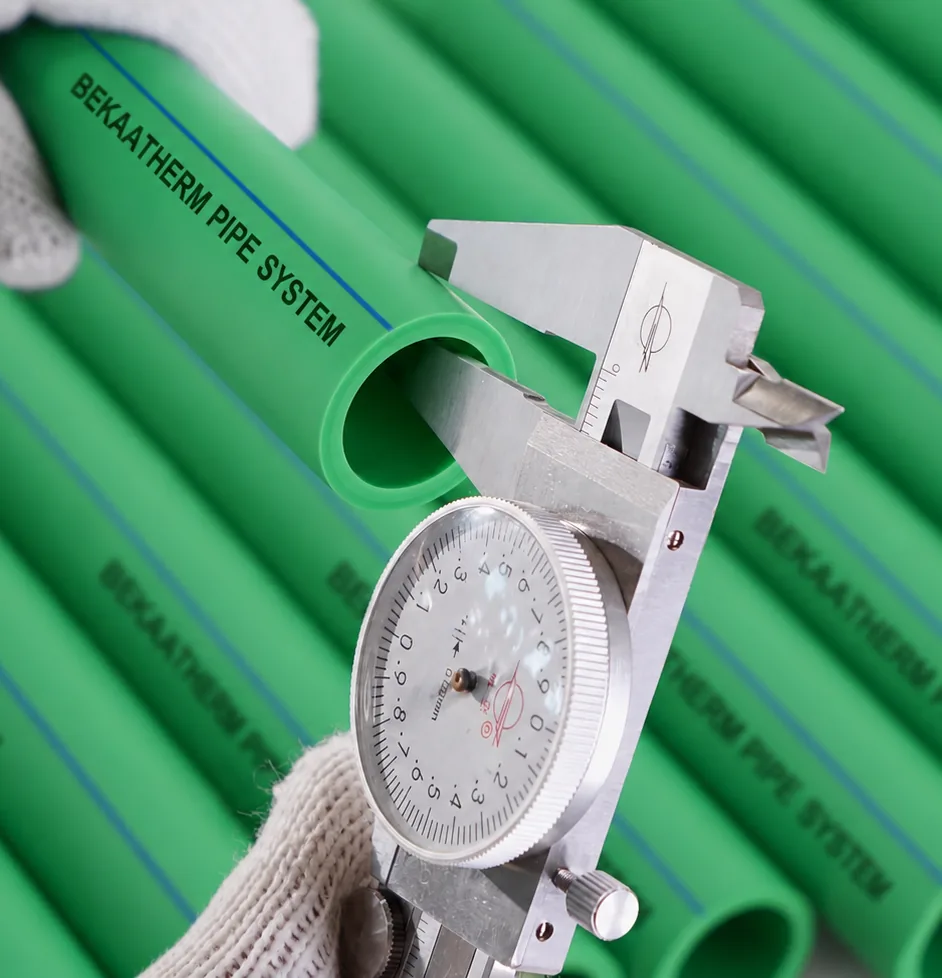
ISO 4427-2:2019 Table 1 fixes mean outside diameter and ovality by nominal size, and the band is narrow. At dn 20 the mean outside diameter runs 20,0 to 20,3 mm with maximum ovality 1,2 mm. At dn 110 it is 110,0 to 110,7 mm with maximum ovality 2,2 mm. At dn 315 it is 315,0 to 316,9 mm with maximum ovality 11,1 mm. Table 1 extends from DN 16 up to DN 3000.
Tolerances follow ISO 11922-1:2018, grade B for sizes up to and including 630 and grade A for 710 and above. Grade B computes as 0,006 × dn rounded up to the next greater 0,1 mm, with a floor of 0,3 mm and a ceiling of 4,0 mm. Ovality is the one people skip, and it is the one that ruins electrofusion joints on coiled pipe — an out-of-round end will not seat properly in the coupler, and re-rounding clamps exist precisely because of it.
What the pipe may be made from
This is the clause that separates standard-conformant pipe from the cheap material on the market, and it is written in unusually blunt language.
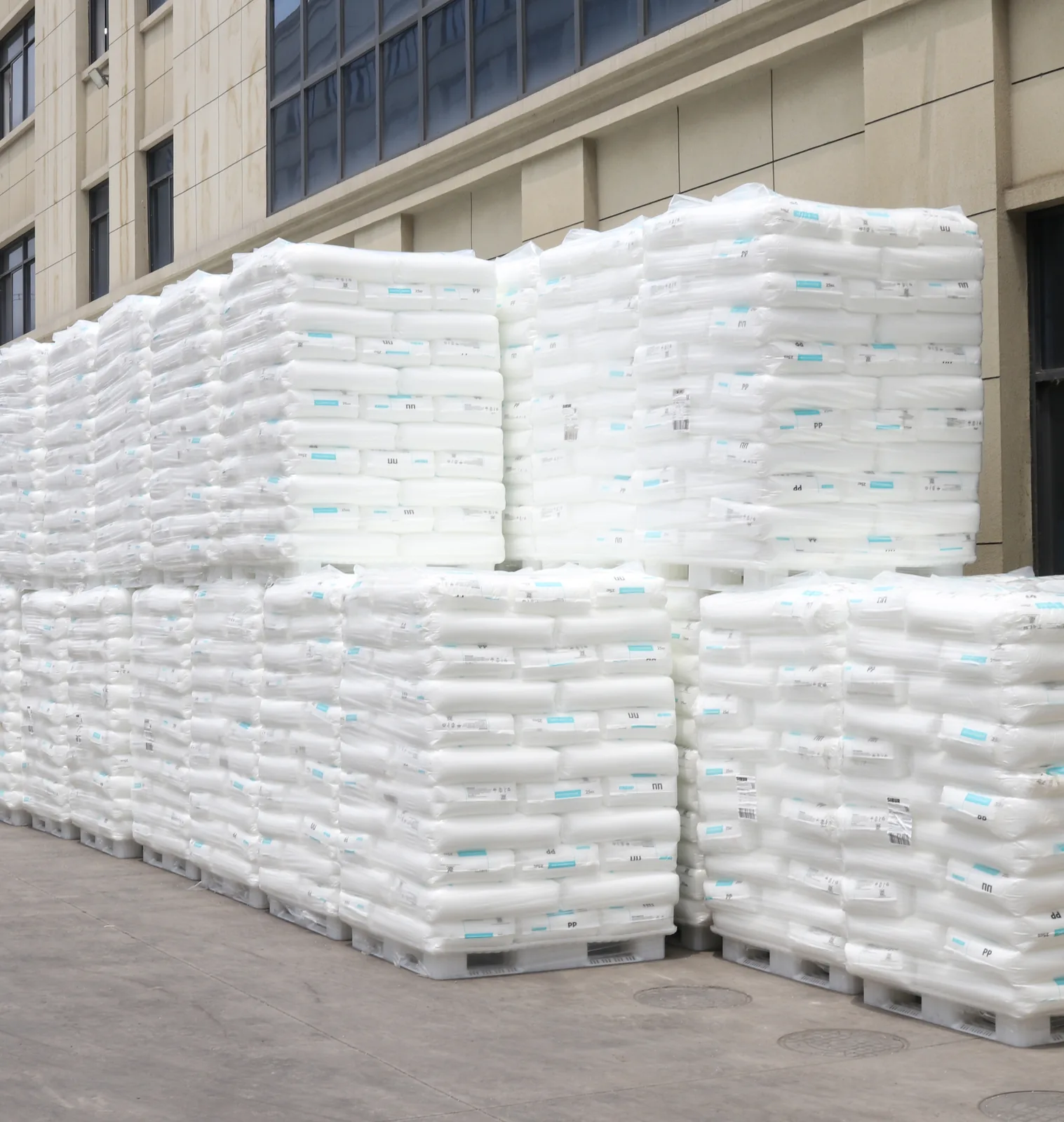
ISO 4427-2:2019 Clause 5.3 allows clean, reprocessed material generated from the manufacturer’s own production and works testing of products to the ISO 4427 series, provided it comes from the same compound used for that production. Then it draws the line: reprocessed material obtained from external sources and recycled material shall not be used.
EN 12201-2:2024 Clause 5.1 lands in the same place with more detail. Pipes shall be made from virgin material, reworked material from the extrusion process, or reworked material from the injection moulding process from the same PE compound from one of the manufacturer’s own plants — or a mixture of the three. It adds a rule aimed squarely at the RC-pipe supply chain: reworked material from co-extruded pipes, or from pipes reworked with the peelable layer attached, shall not be used for monolayer pipes.
Practically, “we use recycled content to keep the price down” and “conforms to ISO 4427-2:2019” are mutually exclusive statements for externally sourced material. If a quotation is materially below the rest of your bid set, the resin is the first place to look. Ask which compound and which producer, and ask whether any regrind entering the line originated outside the manufacturer’s own plants.
Marking and colour coding are normative
The print line on the pipe is the cheapest incoming inspection you will ever run. It is also a requirement, not a courtesy.
ISO 4427-2 requires, in its marking clause, a minimum set of information repeated not less than once per metre: the standard number, the manufacturer’s identification as name or symbol, the dimensions as dn × en (for example 110 × 10), the SDR series for DN above 32 (for example SDR 11), the material and designation (for example PE 80), the pressure rating in bar (for example PN 12,5), and the production period as a date or code (for example 0204). Coils must be sequentially marked with the metreage. The word “water” or the code “W” may also appear where the pipe is intended for drinking water.
Legibility is itself normative. Pipes shall be permanently and legibly marked so that the marking does not initiate cracks or other types of failure, and so that normal storage, weathering, handling, installation and use do not affect legibility. The marking must be legible without magnification, and where printing is used the print colour must differ from the base colour of the product.
Run that list against a sample from the container before you release the balance payment. Missing metreage on coils, a print interval that drifts to two or three metres, or a pipe with no SDR on a 110 mm size are all findings you can raise with the standard’s own text behind you.
What the colours mean
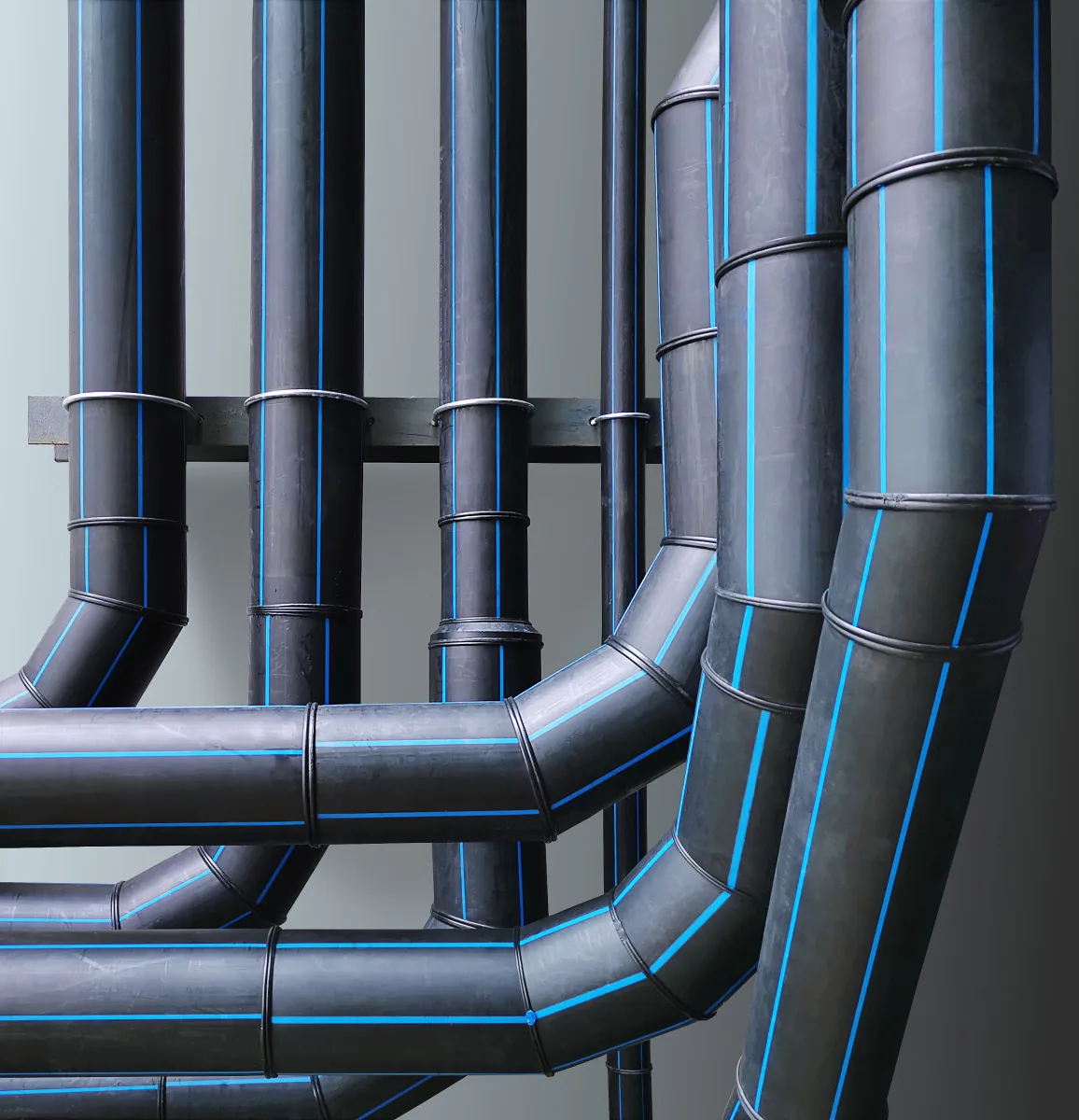
ISO 4427-2:2019 Clause 6.2 treats colour as a normative signal, not a convention. One note to carry to site: for above-ground installations, components in colours other than black should be protected from direct UV light.
| Colour | Intended service |
|---|---|
| Blue, or black with blue stripes | Water for human consumption only |
| Black, or black with brown stripes | Drainage and sewerage under pressure, or per national preference |
| Yellow and orange | Gas applications only, under the ISO 4437 series |
The tests behind the certificate
A conformity certificate is a summary. The test report behind it is the evidence, and a specifier who knows what should be in that report can read it in five minutes.
Hydrostatic strength
ISO 4427-2 requires three hydrostatic regimes, each at a material-specific hoop stress, tested water-in-water on three test pieces with no failure of any piece during the test period, under ISO 1167-1 and ISO 1167-2. The long-standing ISO 4427 set is 20 °C for 100 h at 10,0 MPa for PE 80 and 12,4 MPa for PE 100; 80 °C for 165 h at 4,5 MPa and 5,4 MPa respectively; and 80 °C for 1000 h at 4,0 MPa and 5,0 MPa respectively. The 80 °C regimes are accelerated ageing — they compress decades of service into weeks.
A report showing only the 100-hour room-temperature test is an incomplete report. The 1000-hour run at 80 °C is where marginal material fails, which is exactly why it is the one most often absent.
Oxidation induction time and physical properties
Oxidation induction time, or OIT, measures how long the stabiliser package holds before the polymer starts to oxidise. ISO 4427-2 sets it at 20 minutes minimum at 200 °C on three test pieces taken from the inner wall surface, per ISO 11357-6, with testing permitted indirectly at 210 °C where a clear correlation exists — and 200 °C as the reference in case of dispute. On the European side, EN 12201-2:2024 Clause 5.2 sets a separate requirement for the identification stripe compound: OIT of at least 10 minutes at 210 °C, measured by the compound supplier to EN ISO 11357-6.
Two more physical checks round out the set. Elongation at break must be at least 350 %, per ISO 6259-1 and ISO 6259-3. Longitudinal reversion must be no more than 3 % with no effect on the surface, tested to ISO 2505 at 110 ± 2 °C. Reversion is the shrink-back test — it catches pipe that was hauled off too fast and carries frozen-in stress that will surface later.
Where PE 100+ criteria sit relative to the standards
The PE 100+ Association maintains its own listing requirements for qualifying PE 100 materials, and they sit on top of the ISO and EN minimums rather than replacing them. All performed on 110 mm SDR 11 pipe: creep rupture at 20 °C and 12 MPa for at least 200 h; stress crack resistance by pipe notch test at 80 °C and 9,2 bar for at least 500 h; and resistance to rapid crack propagation by S4 test at 0 °C to at least 10 bar. If a datasheet cites PE 100+ listing, that is a claim about the resin, not a substitute for pipe conformity testing.
Why conformity does not equal drinking-water approval
This is the single most common misreading of both standards, and the standards themselves correct it in their own Introduction.
EN 12201-2:2024 states that the document “provides no information as to whether the product may be used without restriction in any of the Member States of the EU or EFTA”, and adds a note drawing attention to the presence of national regulations and testing arrangements for products intended for use in water supply, to ensure fitness for contact with drinking water.
Read that carefully. A pipe can be fully conformant to EN 12201-2:2024 and still not be approved for potable water in your market. Conformity covers the mechanical and material performance of the pipe. Fitness for contact with drinking water is handled separately, and typically comes through national or regional approval schemes — WRAS in the United Kingdom, KTW and the relevant DVGW arrangements in Germany, ACS in France, NSF-related certification in North America, among others. Which scheme applies, and what it requires, depends on the market and on your role in the supply chain, so confirm current requirements with the relevant approval body or water authority before you rely on any single document.
The practical consequence for a tender package: ask for two things, not one. A conformity declaration against the pipe standard with its edition year, and separately the potable-water approval for the destination market. A supplier who offers only the first and calls the question answered has told you they have not been through a market that asks for the second.